Software
Houzz Logo Print
rosanne4153

Oleander Bush Dying

18 years ago

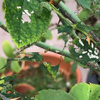
I have two oleander bushes, about three feet apart. Right around last March or April, the tips of the leaves on one of the bushes started turning brown. However, there were at that time new leaves growing nice and green, but not too long after those green leaves grew, their tips turned brown too. Now most of the leaves have more than just their tips brown. The leaves are more than half brown and we just can't figure out what to do. We also now notice that there are a lot of what look like aphids on it. The bush looks terrible, like it is slowly dying.

Through all of this for the past year, the other oleander bush right next to it has stayed just as healthy as ever.

Any suggestions as to what is happening and what can be done to save this bush?

Comments (10)

  • 18 years ago

    The bad news is that it may be oleander scorch.

    Take a look at this info to see if it sounds right.
    http://www.ipm.ucdavis.edu/PMG/PESTNOTES/pn7480.html

    Here is a link that might be useful: oleander scorch

  • 18 years ago

    When I bought my house eleven years ago, one of the attractions was an 80 foot mature hedge of Oleander, variety Eugenia Fowler. It had gorgeous double pink flowers somewhat reminiscent of camellias. I planted blue morning glory in it and it was a spectacular mix of pink and blue.

    In the second or third year since I bought the house I saw the same symptoms you described. This was after the county clipped the hedge. I could not get out there and do it because I had just had a baby (everything goes to pot after a baby). I think they had dirty clippers. In two years the entire hedge died. It took me years to remove all of the dead wood because I simply could not afford to remove it all at once. Once the wood was dry enough my kids and I pulled them apart and filled up seven big trash cans -twice. It took two trash days to haul it all away.

    Since then I have been nickel and dimeing -buying a couple plants at a time to replace the hedge. Nothing grows terribly well there except California rose. Not very hedge-like but it does discourage fence hoppers. I have cape honeysuckle (3), Privet (Growing sloooowly)(5), that pale purple Lavatera from the Mediterranean(1), Pyracantha (1)and Lady Banks rose(3) plus the aforementioned California Rose. The Cal native is the tallest at 6 feet. I'm hoping the Lady Banks will get huge and all over. Then I can just clip it out of the road like I did the Oleander. In the meantime everyone gets to look at my epically ugly wobbly chain link fence that I cannot afford to replace. No privacy in the meantime.

    I'm afraid I will be very old when I finally have a decent hedge there again.

  • 18 years ago

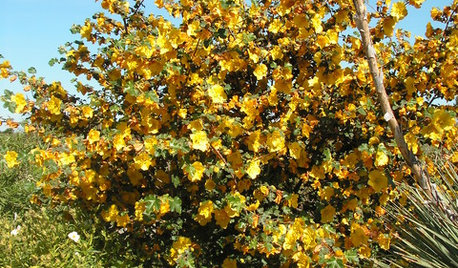
    Dis you might look at Dendromecon harfordii for a replacement for the Oleanders. They get up to 4 to 6 feet,relatively dense fairly fast growing, evergreen, native, drought tolerant, a spectacular spring bloom of clear yellow flowers. The only pest I have ever had was Bud Worm, easily controlled with BT. Al

  • 18 years ago

    Thanks for the info. It sure looks like Oleander Scorch, unfortunately. I guess we should remove the plant and put something else in its place. I just hope the other Oleander bush doesn't succumb to the same thing. Like I said, at the present time, that one looks healthy. Thanks again.

  • 18 years ago

    I have a couple of huge Oleanders here in San Diego and one that sits next to the house was protected from all our weather this winter and did fine but the one out in the open that never fails me turned brown like yours and crunchy but is showing great new growth but I'll cut it back to the new growth underneath to get rid of the brown or maybe just knocking off the crunch will work , anyway I think that very hardy bush will be just fine. In 22 years here, my ground cover and Epidendrums also got pitted from the cold and wet and that's not pretty but they are blooming just fine without any help.

  • 18 years ago

    I have a Dendromecon harfordii growing in my backyard. It's the most wonderful plant. I've had it for six years I think. I won it in a drawing from Matilija nursery. I never have to water it and it blooms from March through December. I love seeing it all yellow, silver and good smelling when it's as dry as a bone back there. It has the most intriguing scent: Like fruit salad.

    As for using it as a hedge, my only concern is that I have kids that live on my street who take delight in destroying things. Especially if they are eye catching. I caught one of them stabbing my beautiful pancake cactus with a sharp stick until it was in tiny pieces. They also snapped off the first branch to show pretty bracts off of a Barbara Karst Bougainvillea.

    Now I could put D Harfordii on the inside of my fence out of their hairy reach. They'd have to get through the California Rose to get to it.

  • 18 years ago

    We have three oleanders in our back yard, and one of them is struggling. The leaves turn brown, but the thing we notice most is that the bark is no longer light colored and smooth - instead, it appears ruptured and black. Very uneven, compared to the healthier appear branches.

    Could this also be caused by the same bacteria/sharpshooter that causes oleander scorch?

  • 18 years ago

    That's the Scorch.

    I heard somewhere of someone cutting the plant to the ground and it surviving and coming back. I don't know how long it survived. It would also recommend having a bucket of a bleach solution to dip the cutters in between each cut.

  • 18 years ago

    When my spectacular white oleander got scorch five years ago I cut it back to its forty-year old trunk and it came back beautifully-- until this year. The scorch finally reestablished itself, and I am not looking forward to losing my privacy and finding a replacement. I was thinking about plumbago or a viburnum. Any other suggestions?