Software
Houzz Logo Print
prayerrock_gw

Aloe ID please

17 years ago

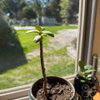
Can anyone ID this Aloe for me?

{{gwi:590399}}

{{gwi:590401}}

Mary

Comments (17)

  • 17 years ago
    last modified: 11 years ago

    I was told it was aloe..but it looks like a kalanchoe to me...either way anyone know what kind it is?

    Mary

  • 17 years ago
    last modified: 11 years ago
  • 17 years ago
    last modified: 11 years ago

    Hehehe:)

    Ah, TY my friend good to see also:)

    Mary

  • 17 years ago
    last modified: 11 years ago

    More properly, for the splitters among you, Bryophyllum delagoense, right?

  • 17 years ago
    last modified: 11 years ago

    or.... Kalanchoe houghtonii

    Mary

  • 17 years ago
    last modified: 11 years ago

    Splitters call it Bryophyllum, Mary. That's why they're called splitters. The Lumper faction, on the other hand, has them with Kalanchoe. They're different enough from the proper Kalanchoes for me to see that the name change is likely warranted.

    It's not Kalanchoe/Bryophyllum houghtonii.

    Who told you it was an Aloe? Some Aloes do come from Madagascar, all Bryophyllums come from Madagascar, but only some Kalanchoes come from there.

  • 17 years ago
    last modified: 11 years ago

    Sorry totally confused..I dont know what a splitter is. Dont know what Lumper faction is either. All I know is I was told on another website it is an Kalanchoe houghtonii.

    I dont know what Bryophyllum is...is that a type of kalanchoe?

    You have to spell if out for me I dont know all the tech stuff.

    Mary

  • 17 years ago
    last modified: 11 years ago

    I know you're new to using scientific (Latin) names, so here are the basic ideas. For the most part, we are concerned with the Family, Genus, and Species of a plant. Families are large groups comprised of many different genus'. Each genus has one to many species. Crassulaceae is a very large Family, encompassing the genus' Echeveria, Sempervivum, Pachyphytum, and many others, including Kalanchoe and Bryophyllum. Some Kalanchoe have been reclassified as Bryophyllum, so you may see the same plant under either name.

    Because plants are often named and published at different times by different authors, the same plant can have many different published names, often placing the plant in another Genus. As botanists discover that the same plant has been given multiple names, they defer to the oldest 'correct' name. Sometimes that means a name with which we have become familiar is suddenly changed. This process has led to many changes in scientific names over time, and you will often see that a name has many synonyms.

    Every few years an international committee meets to discuss the evidence for proposed changes in plant nomenclature. Sometimes these meetings produce changes in the plant names we have been using, and we all have to learn new names for the same old plants.

    There are two sides to this nomenclatural battle: lumpers and splitters. Lumpers want to include many distinct species under the same species name (the oldest published name). Similarly, lumping can join two different genus'. Lumpers argue that two plants, from geographically distinct populations, and having significant morphological characteristics, are really the same plant. So they lump all of these 'different' plants under the same name, using the oldest published name as precedent.

    Splitters like to argue that because two different forms of a plant grow in distinct populations, and have significant differences in morphology (size, shape, number of ribs, spination characteristics, flower color and form), they really should be considered different species. Similarly, a splitter may argue that plants in the same genus really should be classified in different genus'.

    So there is this constant tension between those lumping plants with different names under the same name, and those who argue that the differences between them are sufficient to justify different names.

    Evidence from DNA has produced some surprising results in recent years, often resulting in lumping many different plants under older, and unfamiliar names. For example, the South American cacti genus Trichocereus (large columnar cacti) has been lumped with small globular cacti called Echinopsis. Since Echinopsis is the oldest published genus name, officially at least, there are no longer any Trichocereus. But there are Huge differences in form and distribution between these plants, so some people object to the lumping of Trichocereus into Echinopsis. Human nature being what it is, some of us just don't want to learn new names for plants we have known for decades under another.

    There is no real, final, correct classification for any plant. Since these are Scientific names, we must be willing to change our minds in the face of new evidence. But there will always be different opinions about how good, or bad, that evidence is, and whether it makes us a lumper, or a splitter.

    I'm sorry, I thought I could explain this quicker. I hope you don't think I'm splitting hairs. I'm just trying to keep from lumping to conclusions. :)

  • 17 years ago
    last modified: 11 years ago

    Nicely done Para, thank you for taking the time & thought to do so. Wish I knew how to have this added to the FAQs, I think it'd be a worthwhile addition.

    Mary,

    The quick give away that this plant was NOT an Aloe were the baby plantlets developing along the leaf edges. While this is characteristic of some Kalanchoes/Bryophyllum, it is definately not of Aloes.

  • 17 years ago
    last modified: 11 years ago

    Thank you so very much Para that helps a LOT. Great explanation! I appreciate you taking the time to write all that.

    And thank you also PG:)

    Mary

  • 17 years ago
    last modified: 11 years ago

    With that great explanation, Para, I think I could be sometimes a "lumper" and other times a "splitter." I still call that a Kalanchoe just because that's the name I learned it under. When writing about it, I usually do the "Kal/Bryo" thing to be clear...

    And I'd like to add, Mary, that this plant becomes a HUGE nuisance! I got one from my ex-MIL over 30 years ago and thought it an interesting plant. When my plant collection started to grow, I started finding forests of the little plantlets growing in my other pots. About 8 or 9 years ago, I got rid of my last "mama" plant and started diligently "weeding" my other plants when I found the babies growing. To this day, I still occasionally find a baby plantlet growing in a pot. With no "mama" plant producing plantlets, I'm stumped by where they come from. I understand those that live in climates where it never freezes consider it an invasive weed - I know why!

    Denise in Omaha

  • 17 years ago
    last modified: 11 years ago

    Thank you Denise.

    I am not sure what to do with this plant now, I honestly never wanted this plant for just that reason. Its to ba the person I got it from didnt know what it was because I was expecting an aloe..lol

    I have it set away from all the other plants now. Its a tiny thing, only about 2 inches tall and already it is producing those plantlets. I though I could just compost it but it might take over the compost..lol

    Mary

  • 17 years ago
    last modified: 11 years ago

    I bet if you did want one, you'd never be able to keep it alive, thus the parady of plant growing.

  • 17 years ago
    last modified: 11 years ago

    Well I dont understand your statment but thats ok..lol

    Mary

  • 17 years ago
    last modified: 11 years ago

    I don't mean to hijack your thread, Mary, but I also have a succulent that was named "Mother of Thousand".
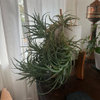
    But my "Motherofthousand" doesn't look like yours. What is it? Here's a pic:

    {{gwi:590402}}

    I'd appreciate your advice. Many thanks.

    Xuan

  • 17 years ago
    last modified: 11 years ago

    I'm sorry Mary, I wasn't clear. I was in a round about way I was saying they thrive on benign neglect, however I could never keep one alive for more than a few months because it gets too hot and just cold enough to kill it quick. I've tried more time than I could count to keep one.

    Xuan,
    You have a different Bryophyllum, which, I couldn't tell you. Mother of Thousands is a common name for many Bryophyllum.

  • 17 years ago
    last modified: 11 years ago

    Hi Xaun,

    You have Bryophyllum tubiflorum. It too can become quite invasive, so if you're putting it in your succulent bed, be prepared for years of pulling out the new plants.