Software
Houzz Logo Print
lkbum_gw

Help for Marquette, Mich

12 years ago
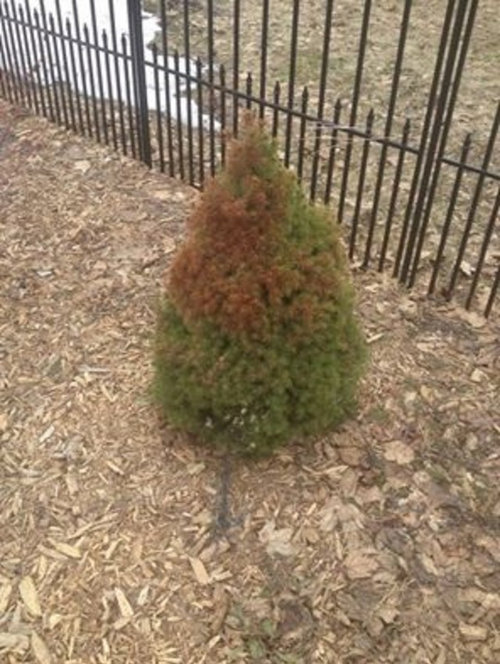
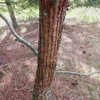
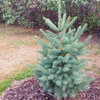
Upper Michigan, like the rest of the county had a really hard winter. As the snow melts its exposing lot of damaged conifers. A photo is shown. Any advice going forward? Prune? Leave alone etc.
Thanks

Comments (14)

  • 12 years ago

    Another photo

  • 12 years ago

    One last photo

  • 12 years ago

    I'd considered that minimal damage. Leave it alone until June...you'll know what to do then.

  • 12 years ago

    a lot looks similar down here in adrian MI

    and it seems like we are 3 to 4 weeks until they bud out enough to see what is dead and what is live ...

    after that is when we decide if we can live with it.. or put it out of OUR misery ...

    ken

  • 12 years ago

    To be honest, I'm surprised to not see snow on the ground up there still! Our land, some hundred miles south of Marquette, still had a solid two feet covering up until about two weeks ago.

    In any case, this thread points up something I'm noticing again and again as this spring unfolds: Lots of winter burn on conifers? You bet, but very nearly all of it is on landscape cultivars-your dwarf Alberta spruce, your dainty version of arborvitae, your Jap. yews. In my woods, heavily dominated by native Thuja occidentalis, no winter burn whatsoever. If anything, they look especially good this spring! I'm not making that up.

    I did see to my chagrin that some of my Norway spruce have areas of such damage on them. That is a new thing for me-never happened before at that location. I'm also wondering about the vitality of my thousands of hybrid larch. These things should be greening out any day now, although granted, we've had precious little warmth. That would really blow if those things were damaged. But I digress....the overwhelming damage I'm seeing-and there is a lot of it-is on relatively foo-foo landscape cultivars. Not saying rare plants per se, just things that are very far away from their natural origins.

    +oM

  • 12 years ago

    i dont know why you would worry about the larch +om... they are leafless .. and probably small enough to have been snow covered ..

    NOTHING in my yard.. that was covered in snow is damaged ..

    but i do have a lot of half green. .. half brown conifers.. related to snow depth .. BUT.. all buds look good as of now...

    do understand.. that the future is all in the buds.. and we have to wait.. to see.. what flushes out .. before we come to conclusions as to what might be dead..

    no conifers holds it needles forever.. most in the 1 to 3 year range.. hopefully all the winter did.. was speed up that process ..

    BTW.. i would get rid of the juniper regardless ... its past its prime.. and even if not damaged.. its going to get real ugly.. in the nest few years.. in my world.. removal when i can do it for free.. is the key ... who knew that cute little thing planted would grow up to be an ugly mature plant ...

    also ... this might all have been complicated by heat and drought the last 2 summers .. as well as water management problems related to using landscape fabric under mulch ... did you have drought the last two summers like i did .. plus intense heat .. out of the ordinary????

    how do you water these plants .. if at all ..... in summer drought???

    and in regard to that.. how long ago were the line of arbs planted????

    winter showed the 'effect'.. i am suggesting.. there can be other 'causes' ....

    ken

    ps: why does the fence get exponentially higher in one of the pix????

  • 12 years ago

    Ken, I've got larch, planted 4 years ago as pencil-sized plug stock, that are now 12 or more feet tall. They have really grown, to put it mildly. With those, it's not the needles obviously. No, I'm actually concerned about the Jap heritage part of these hybrids leaving them less hardy for the truly cold winters like we just had. I want to see green-out real soon! They're always super-early, but in truth, we've had scant warm weather thus far. So that's the deal with them-overall hardiness,not the winter burn as this thread is actually about.

    Some of the Norway spruce buds look "blasted". I've never seen this before. It gets cold where my land is.....real cold. I don't know exactly, of course, but I'd not be at all surprised if Suring, Wisconsin-the nearest town-hit minus30 this winter.

    The most amazing thing to me remains the absolutely perfect condition of the native Thuja o's. Not so much as a blemish. Some folks think of them as a picky plant. I sure don't!

    +oM

  • 12 years ago

    Thanks everyone for the information. I'm definitely a gardening newbie. We are in Northern Michigan (on the balmy southern shores of Lake Superior. :) Seeing evidence of this browning all over town, so I am sharing your info with many others. We had a brutally cold winter, setting all kinds of records for prolonged below freezing and below zero temps.

    Ken - the line of arbs - actually in my neighbor's yard. He planted about 2-3 years ago. The juniper - I have two actually (not shown in pic) - I have them flanking a gate. You may laugh at this but I saw a photo where they connected the trees at the top and formed a natural arch over the gated area. That's where I was going with them. Perhaps I should just purchase an arched trellis and plant vines. Again, thank you all for your insight. Will sit back and wait for warm weather and see what that tells us.

    BTW - 4-6 inches of snow on its way as I write.

    This post was edited by LIz906 on Thu, Apr 24, 14 at 9:47

  • 12 years ago

    just so it does not get too confusing, I (lkbum) posted the photos for Liz906 (my wife grew up with her in Marquette). I showed her this site because you guys helped me last year with some crytomeria in Georgia.
    thanks again

  • 12 years ago

    Just returned from my visit to Rich's Foxwillow Pines Nursery...in Illinois, just south of Wisconsin border. They had a lot of dessication and "possible" death this winter. I'm referring to trees IN the ground for anywhere from 1-25 years. Like everyone else, they are waiting to see and are not counting anything as dead...yet. I mention this because they really don't have any "dainty" or cheap, common nursery stock like the Alberta Spruce. Everything on their property is quite remarkable, and barely a common shrub is there to be seen. Susie (co-owner) was helping me look for Parvifloras and we saw a few 15 footers in the ground that look like they may not have made it, right next to others that looked fine. (No rhyme or reason as to why "this one" and not "that one".) I am just learning and do not know names of most of what I saw there, but while the majority of the plants looked great (and gorgeous), one could not miss the dessication in nearly any direction of almost every type. One of their sales staff said losses MAY prove to be nearly a million $ in field stock. They have views on why it happened... a sort of trifecta of weather events that occurred there. I will not attempt to share, as I would not get it right....but I thought it might be helpful to know that both common and not-so-common conifers could have suffered in this last winter due to temps, winds, sudden/severe temp drops, etc....
    I already want to go back there...if you are within driving distance, I would not miss going there...be sure to bring your truck/trailer...and your credit card.

  • 12 years ago

    Thanks for that update, Mary.

    tj

  • 12 years ago

    Yes, helpful info. There is something about this damage which indeed suggests some as yet undetermined combination of events. Where I live, it got plenty cold before snow covered the ground. Then once snow started, it never stopped. But most of these snow events were modest and were surrounded on both sides by very cold temps. I believe the ground here froze deeply before we got all this snow.

    I've been around long enough to have seen colder winters than the one just finishing up. 93/94 for instance featured a day where the high temp. here in this city was -20 F. That occured in the midst of a weeks-long cold snap which, by my memory, was far more severe than anything we encountered this past winter. So it's not simply a matter of coldness.

    Another thing I'm wondering about is hardening off in the fall. We had plentiful moisture throughout the growing season last year, and that continued right into Oct. and Nov. Combine that with generally cool summer temps and it was a conifer-growing paradise. Yet I wonder-could the plants have not hardened off normally? Many of my Norway spruce up at the tree farm grew prodigiously and also had lamas (Sp?) growth. I just have to wonder about that aspect.

    I've never seen so many beat-up looking conifers as this spring. At the same time, as I keep mentioning, native stands of Thuja o. look better this spring than they usually do! No damage whatsoever. Landscape cultivars? That's another story.

    +oM

  • 12 years ago

    It is really sad to hear that there was so much damage at Richs Foxwillow Pines. They have some beautiful and pricey plant material. Its very unfortunate.

    I recently traveled back to Cleveland at Easter and there was considerable damage to plant material. I recall some of the winters in the 70's and 80's and this probably ranks up there with them. I dont recall 1994, with the all time low of -20F, producing as much damage to plant material. Very basic plant/landscape material looks horrible. Azaleas, Rhododendrons, meserve hybrid Hollies and boxwoods are incredibly burned, some with significant dieback. Knockout roses, which are weedlike in NE Ohio have been killed out right or to the ground. There appears to be considerable damage to newly planted acer palmatums, even hardy varieties such as Bloodgood and Crimson Queen. Some more tender varieties killed to the ground. I noticed some dieback on newly planted cornus kousa and cornus florida. Peaches and cherries are not blooming. Only the hardiest varieties of forsythia are blooming this year. The vineyards along the lake in Lake, Geauga and Ashtabula counties have considerable damage. To top it off most of the area had a very heavy snowfall in Late October, while leaves were still on the trees that caused a lot of broken limbs/damage to everything.

    As far as conifers go, I dont know if there are any living cupressus left in NE Ohio. Cedrus look horrible, especially the blue atlas; I think many have likely died. Gold and variegated varieties of thuja plicata, thuja occidentalis, chamaecyparis obtusa have some significant winter burn. Pseudotsugas are showing burn. Dwarf alberta spruce are a mess. Pinus strobus planted in open areas show winter burn (though that could be road salt related). Chamaecyparis nootkatensis that were newly planted look discolored/burned. It was not a pretty Easter visit.

  • 12 years ago

    Pinus strobus, while a sun-lover like all pines, actually regenerates in forest environments best in pockets of shelter. So, even with no salt spray, open-grown specimens can burn easily. Kind of odd how such a prominent native tree can look so rough in so many locations. But yes, add in road salt spray and the damage is much worse.

    +oM