Software
Houzz Logo Print
abc222001_gw

Avoid Tree Spikes On Arborvitae

18 years ago

I planted new Arborvitae about three years ago. These were, I believe, Carolina grown arborvitae purchased from Lowes in Chicago. Some have single headers and some have multiple headers.

I made the BIG MISTAKE of giving each a tree spike at the end of the first year after planting, even though the spikes were planted according to instructions.

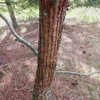
Every arborvitae BROWNED OUT entirely in the quarter to half of the conifer where the spike had been planted for Winter.

It looked like all five would die because the entire quarter to half of each was browned out.

I patiently waited and left them all alone, and all five are slowly recovering year by year.

I will never plant a tree spike again, even for my younger Chanticleer Pears and Royal Red Maples.

Comments (24)

  • 18 years ago

    The main problem with spikes is the fertilizer is concentrated into a spike. Roots are spread out so fertilizer should be broadcast over the ground instead of inserted as a compact unit in one or more spots. With fertilizing generally need for fertilizer also varies with the makeup of the soil and seasonal conditions, sampling and testing soil should precede fertilizing.

  • 18 years ago

    Thank you bboy. Always amazes me how long some bad ideas/products/techniques hang around. The advancement of knowledge is a very uneven process!

    +oM

  • 18 years ago

    Can anyone recommend a good mail order fertilizer (in granules) for conifers (spruce and pine)? Due to the dry soil of the SW, a spike will never break down, and that is all that the local stores sell, unfortunately.

    Thanks.

  • 18 years ago

    Formulation required depends on mineral content of your soil. There aren't any One Size Fits All fertilizers. Look for web site of New Mexico Cooperative Extension and see if they have something about getting your soil tested through them, or call nearest office and ask about it.

  • 18 years ago

    You don't want the fertilizer concentrated into small areas, either as a solid spike or as a powder poured down a hole made by a drill. The purpose of grinding the spikes up would be to enable the broadcasting of the fertilizer, as though it was purchased as a powder in a bag in the first place - the preferred situation. Grinding the spikes up and then pouring the resulting powder down holes is working in circles.

    You also don't want to be drilling through the root zones of trees and shrubs with roots large enough to be barked, scraped or drilled through.

  • 18 years ago

    I would avoid all fertilizing any conifers with any kind of fertilizer in the fall or winter. I had a bad experience with this which I reported on a year or so ago in this forum.

    --Spruce

  • 18 years ago

    So using any "Avoid tree spikes" altogether would be good advice...?

    Probably cheaper ways to hurt your trees with fertilizer anyway

  • 18 years ago

    The problem is you have paid to have granular fertilizer molded into a spike so you can pound it into the ground, the idea being granular fertilizer needs to be placed beneath the surface of the soil. It doesn't. The plants have a network of roots just below the surface, granular fertilizer broadcast over the surface will wash into the soil and be dispersed among the roots - instead of concentrated in small zones where only a small percentage of the roots will encounter it.

    With hardy plants generally fall is a good time to fertilize. Don't know or remember what the circumstances were of the particular episode alluded to here and why it was concluded the timing was the cause for difficulty, rather than something like an unsuitable formulation or means of application.

  • 18 years ago

    bboy:

    I am not sure you were in the discussion last year--several people expressed skepticism about my idea that the timing was responsible. All I can say is this--I have been using the same fertilizer for years--exactly the same because I bought several hundred pounds of it about 15 years ago and have been using the same batch since. And I applied it at the same rate I have always done. I applied it in late February, thinking that it would dissolve in the early spring rains and be fully available at just the right time. But a couple days after I applied it we had some warm rains--all the fertilizer was dissolved fast. There was no trace left on the surface of the ground. Then we had a real sharp cold spell with really terrible winds for three or four days. And the relative humidity got as low as it ever gets in the winter. Two days after that I saw that most of the conifers I had fertilized had turned brown and they never broke bud that spring. None of the unfertilized trees had any problem. And the hardwoods I fertilized showed no adverse effects.

    So, that is the story and the basis of my very, very strong suspicion that the timing was at fault, along with the fairly unusual weather conditions.

    --Spruce

  • 18 years ago

    Organic fertilizers, compost and mulch are way much better. Soybean meal is my favorite CHEAP organic fertilizer and it has good amount of protein that will feed beneficial microbes in the soil and slowly release nutrients to the roots. They will also make K and P more available in the soil to the roots. Mycorhizal fungi does a great job at bringing phosphorus to the roots. I've also used a mixture of seaweed liquid and hydrolyzed fish solution directly into the root zone on young trees. They seem to really have responded to it.

  • 18 years ago

    If by arbovitae we are talking thuja occidentalis, they are usually pretty tolerant of alkaline, clay soils, thus maybe fertilizer is not needed.

    I like Lou's idea of more natural fertilizers and compost to improve soil, however.

  • 18 years ago

    As bboy stated, I would use granular pellets rather than spikes. I was ready to purchase several of cases of pellets/spikes before researching whether this made sense or not. I've been reading many papers that have studied this exact topic. Slow realease fertilizer broadcast at the surface will provide benefits and not harm the tree/environment. Optimal timing is in March. State tree nurseries also provided the same advice. Just make sure it is SLOW release fertilizer with a high % of WIN - this is the key to fertilzing trees. This will fertilizie for up to a year, prevent burning, and prevent contamination of groundwater.

    Spruce- What % WIN (water insoluble nitrogen) is in the fertilizer you used? I have a feeling this caused your problem. The beauty of WIN is that it does not dissolve in a short period of time due to rain. It costs more, but is worth it. I have never heard of anyone having problems using WIN. Have you? I'm planning on using WIN on my 6000 seedlings for the first time this coming spring. Am curious to see the response.

    John

  • 18 years ago

    John:

    Yes, I think you are exactly right. The fertilizer I used dissolved too fast and destroyed the natural osmotic balance between the water in the ground and that in the roots. And/or perhaps there was a more direct toxic effect of the fertilizer hitting the roots in such a concentrated form. The kind of fertilizer I used might not produce much harm if applied in the spring, and if it did not dissolve so fast in the unusual kind of dissolving rains that hit.

    Thanks for the tip about WIN.

    --Spruce

  • 18 years ago

    John,

    Which synthetic fertilizer that has high %WIN? I googled for the information but didn't find much. Maybe I'm looking for it in the wrong place?? If I had gone with synthetic fertilizer, I would have made sure it has very low salt index but your recommendation of getting high %WIN was interesting esp for synthetic since most organic fertilizers are probably high in WIN.

  • 18 years ago

    Lou, look for IBDU-isobutyldiene urea, I think-for one example of a largely water insoluble nitrogen source.

    +oM

  • 18 years ago

    Thanks Tom. I'm going to google IBDU for trees...

    One more thing, I've come across some information, something about very high fungal population in conifer forest compared to deciduous forest...

    The ratio of fungi to bacteria is characteristic to the type of system. Grasslands and agricultural soils usually have bacterial-dominated food webs  that is, most biomass is in the form of bacteria. Highly productive agricultural soils tend to have ratios of fungal to bacterial biomass near 1:1 or somewhat less. Forests tend to have fungal-dominated food webs. The ratio of fungal to bacterial biomass may be 5:1 to 10:1 in a deciduous forest and 100:1 to 1000:1 in a coniferous forest.

    Makes you think about conifers growing in the lawn where the ratio is 1:1. Interesting...

    Here is a link that might be useful: {{gwi:865509}}

  • 18 years ago

    The product I am using is Scotts Field Fertilizer 27-3-6 with IBDU - hard to find. 23.4% of the 27% Nitrogen is slow release (coated Nitrogen or WIN). Thus, almost 90% of the Nitrogen is slow release. Approximately 1/2 is WIN and the other 1/2 coated. Osmocote is another Scotts slow release product, but I don't believe it has any WIN - just coated Nitrogen. I added a link below about fertilzing trees and WIN.

    Lou- Interesting about the fungus. When I planted my seedlings I added Mycorrhizal root dip in my buckets (along with the water gel). I read something long ago on this forum about the importance of this fungus for tree growth. I have also purchased Mycorrhizal tablets to put around some larger trees. This stuff is not cheap! Have you or anyone else added Mycorrhizal during or after planting?

    John

    Here is a link that might be useful: Fertilizing Trees

  • 18 years ago

    Lou, yes, there's been much talk of late about the differences between grass-dominated systems with their high bacterial populations, and forest soils, dominated by fungi.

    John, despite the above, all studies I've seen so far re: mycorrhizal preparations have been dissapointing. I WANT these products to work as I've been fascinated by this stuff for years, but as I said, so far, in normal soils, they've not seemed to do any good under controlled conditions. I believe they may have shown a benefit in essentially sterile soils, like mine tailings and such. I'm at home and all my stuff's at work, so I can't offer any references. And I don't claim to be the last word on this stuff, just citing what I've read in journals.

    +oM

  • 18 years ago

    I agree. Mycorihizal is helpful in some situation. It just depends on some factors. It looks like VAM is very common. Grassland depend on them. They are everywhere. The ecto type is not as common and pine and oaks need them. It probably would be beneficial to use it if you are planting pine or oaks right in the middle of grassland with no large pine or oak trees nearby where their root system spread out that are aided by ECTO type. It seems very helpful in desert setting from what I've read. Maybe newly developed subdivisions where the land was extensively razed over (like mine may warrant for myco inoculation ;I've observed this just behind my backyard where they are adding new phase of subdivision.) I don't think it does much for older settings where the mature trees are but you never know. If you basically turned your land into wasteland after many years of chemical usage of all kinds, it could be helpful if you're trying to go back to organic/natural ways! It's like you stopped giving cracks to crackheads! It does make a while to dramatically improve the soil for myco to thrive in. I guess some papers in journals aren't well designed or they don't know what exactly they're looking or, etc, etc. I personally like listening to Dr. Elaine Ingham because she really makes me think about stuff. I ask a simple question and she asks back with a lot more questions of why,what,when, and everything to pinpoint the exact problem. Basically, she says to STOP WITH INORGANIC fertilizers now! It's always about salts. The reason I'm looking at IDBU is because of very low salt index, comparable to organic fertilizer.

  • 18 years ago

    John,

    How did you happen to find it? I googled it and came up with nothing on how to find it. How much did you pay for it?

    Root dip myco is the easiest and most cost effective. The one i used, 3oz goes a long way! We're talking about hundreds of seedlings for 5 bucks worth of myco root dip. Of course I didn't have that many seedlings so I used a little bit in a small deep container or cup to dip roots into and plant away.

  • 18 years ago

    I purchased at Forrest Keeling near St Louis - I believe around $30 per 50lb bag. Stopped there on my way back from Iowa last fall. Worth stopping by if you are in the area. I've purchased hundreds of their RPM trees - pretty good quality but sometimes have encircled roots.

    john

  • 18 years ago

    I'd think mycorrhizal fungi would have to be pretty specifically targeted to produce a consistent benefit, same as with fertilizers.

  • 3 years ago

    This just happened to me and was searching for a cause. This happened to my arborvitae and my Taylor junipers. Glad to know that yours eventually recovered and will hope mine do the same!

Sponsored
Peabody Landscape Group
Average rating: 3.5 out of 5 stars8 Reviews
Columbus' Reliable Landscape Design & Contracting