Software
Houzz Logo Print
kip2004

Quince Honey

19 years ago

When I was young, 40+ years ago, my grandmother made quince honey from the fruit of the quince bush in her backyard. I would so love to plant and harvest quince in an effort to make some of this quince honey that no one else besides me and my family members seems to know anything about.......can any one out there help me? The quince honey was pulpy, golden and syrupy as I remember and oh so good on toast!!! I've read there is a quince tree and quince bush and I am sure the fruit she used was from a bush. Is a quince bush hard to start...how long before it will bear fruit?? Thanks for any help you can give.

Comments (7)

  • 19 years ago

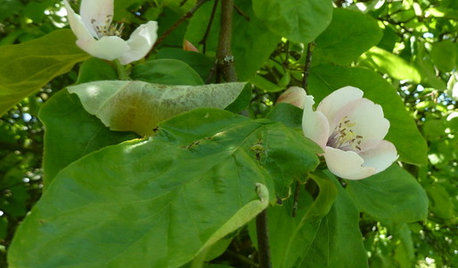
    Quince trees are what I am familiar with. They are fairly low height trees (not over about 15 foot tall) and can even send off a runner that will sprout nearby, which look a bit like a bush. The fruiting will start to occur after about 3-4 years. ONce you start to see a few big white flowers in mid to late spring, they will set a few fruits. The fruits are quite hard and a bit fuzzy. This helps to keep insects from damaging the fruits. The syrupy texture was from either adding some sugar and/or honey, or the natural high pectin that these fruits contain. You can even make jelly from quince without having to use any added pectin. My dad had planted the yellow skinned variety, which are light green, then turn yellow whe ripe. We used to get a few brown scab spots on them, but that was because my dad never sprayed them with anything, ever. Because they were planted very close to a shed, I had to dig them up and remove them some years ago. I do miss them, and will plant another quince tree a distance away from where it used to grow. No pruning, or other culturing is needed either. Quince is one of those fruits that you just can't eat off the tree (very tart, dry, and puckery), and insects or animals will avoid them too. The quince tree would give you some decent fruits after about 5 years. If you find a source that sells them in sizes based on years, then pick one that has more years (2-3) of growth before its planted in your soil. A quince is also self pollinating, so there is no need for more than one tree. I do have some apples nearby, but that will only help everything to fruit better.

  • 19 years ago

    Quince honey is basically just a quince preserve. Quince are high in both acid and pectin so making preserves is with them is no problem.

    From The Jamlady Cookbook
    Quince Honey requires 5 cups quince to be peeled, chopped and cooked with 4 cups sugar and 2 tablespoons lemon juice.

    That is all the jamlady book says. I saved this recipe from an article in a magazine about Iranian food.

    Quince Preserves
    2 to 3 large quinces, peeled, quartered and cored
    2 cups sugar
    2 to 3 whole cardamon pods, lightly crushed (I would consider this optional)
    juice of one small lemon
    Slice the quinces into 1/3 inch vertical slices or grate them using the wide holes of a cheese grater. In a large non-reactive pot, combine quinces, water (I don't see that listed), sugar and cardamon pods, and bring to a boil. Wrap the pot lid in a kitchen towel to absorb any steam and cover the pot. Reduce heat and simmer, covered, for 40 minutes. When preserves are done, they will have a beautiful rosy colot. Add the lemon juice to taste, though the preserves should have a sweet flavor. Spoon the preserves into a clean jar with a lid and store in the refrigerator.

    These could be processed in a boiling water bath in half-pints jars for 10 minutes. Have you made preserves before, or do you need more instructions for processing?

    There are ornamental quince bushes in my neighborhood. I have picked the quince from them, but I have only made jelly with them. The ornamental quince are quite small and it would be a real hassle to try to peel and core them.

  • 19 years ago

    The quince my dad grew were the size of medium apples. He did make jam from them one time, but because they needed a lot of prep work and sugar, he decided not to bother with them very much.
    A friend wanted a jam spread added to the layers of a chocolate cake. Instead of the usual apricot or raspberry in the layers, I told her to try quince jam. Everyone who ate it was surprised at the unusual flavor that went well with chololate.

  • 19 years ago

    Quince, whether it is the tree or the bush is edible, but in reality they are two different species. The fruit from the tree is much larger than the bush. The bush is beautiful in the spring, grows fast and reaches about 5 feet. It is covered in flowers in the spring. Beware where you plant it because the roots go deep, so digging it out to move is hard. We had to move ours and it took my neighbor's farm tractor to pull it out, my 4X4 could not do it, the lawn tractor didn't even budge it even if we had dug about three feet all around. And it took a chain saw to split it, it's a tough bugger, but oh so beautiful!

    I bought a box of quince this week and made the most beautiful jelly of a mix of quince, apples and cranberries. No pectin added and it jelled in less than 5 minutes. Than I made a jelly with the rest of the box and that would not jell at all. I was really surprised at that one, I thought quince jelled with no problem. I also made paste from the leftover fruit and that is delicious.

    Marie

  • 19 years ago

    More sugar may have been needed for the all quince batch. Keep in mind that cranberries are very high in pectin too, so they may have helped push it over the edge to firmess. Give it a week or so, if it doesn't set up, then you can recook it adding a bit more sugar and maybe a little pectin to help it along. I didn't have much trouble digging out the quince tree here. The roots were big, but were not too long or deep. Since it was removed about 4 years ago, there has been no sprouting of a new tree. The only plants tha I have problems getting rid of are grapes. These roots are always sprouting new greens every year, even though I cut them off and try to chop up the roots with a big shovel..

  • 19 years ago

    From your description, you had the real quince tree as opposed to the decorative bush, which probably explains the difference of roots.

    More sugar! Yuck! After boiling down for quite a long time, I have heavy syrup I would not even put on ice cream and it has not jelled at all. Obviously, the other jelly with apples and cranberries added was much more likely to take but I have always heard quince was an easy to make jelly. Maybe the fruits were too ripe therefore low in pectin. In any case, I will add juice of cranberry or something like that and recook it. I don't use pectin so that should do it.

    Marie

  • 19 years ago

    Mash up the crans and, yes no extar sugar is needed if its already too sweet. Pectins may be inevitable for the quince jelly alone. Pectins aren't a bad thing, and usually never affect flavor very much, but will give a more reliable set compared to just the fruit and sugar alone. Anyone who doesn't use pectin can attest that they have probably had failed batch, or have even scorched a batch or two.