Software
Houzz Logo Print
mhhess

Potted Herbs

19 years ago

We love to cook, so this spring my boyfriend finally found herbs and planted a bunch in little plastic pots so we could use them in cooking. We had basil, oregano, thyme, lime basil, cilantro and mint. Unfortunately, it seems I've managed to kill most of them. I'm not the best with plants, but I have been doing better, so I don't know what the problem is. I think the plastic pots must have been a bad idea, and hope to try and repot what is still alive in larger terracotta pots. They were in a West facing window with the rest of my plants. I water most of my plants every week, but have been watering the herbs (esp. the basil) every couple of days because they always seem to be drying out. Any advice? Particularly with soil and such when initially potting (whats the best thing to do for drainage?)? I just need a good crash course in potted herbs for the indoors. And i don't have anywhere outside to put them (I'm a college student with no balcony, and I do not trust my neighbors). THANKS!!!

Comments (3)

  • 19 years ago
    last modified: 11 years ago

    Hi. I'm somewhat of a newbie too, having really just started doing this less than two months ago. I've had some pretty good successes, much of which I attribute to what I've learned from the 'masters' who frequent this forum. You've come to the right place!

    I just wanted to say that I don't think that the pots being plastic is a problem in and of itself. I just transplanted all (eight) of my herbs from a communal container to individual 8 inch plastic pots. They each have four drainage holes, and I also put an unbleached coffee filter in the bottom prior to planting in them. This keeps the soil from leeching out when you water.

    You said that the pots are 'little'. Are they the size that a seedling plant might come in? That could possibly be part of the problem you're having.

    As for soil, as a newbie, you might want to keep it simple and just get a good quality commercial potting mix that drains well. I've had good luck with MG moisture control (but do not get the MG organic mix...that stuff compacts like crazy and will drown your plants).

    From what I've read on here, it can be challenging to get your herbs to thrive indoors. That may be part of your problem, of which, it sounds like there isn't too much you can do about improving upon their location.

    Good luck to you!

  • 19 years ago
    last modified: 11 years ago

    "Little plastic pots", huh! "Little" being the operative word. Do you have any idea just how BIG these herbs can get?

    Your plants are drying out because they're trying really, really hard to grow bigger. They need more space - lots more.

    basil: mine are almost as tall as myself (I'm not a dwarf) and at least twice as wide (I'm not obese either). In a cooler climate, expect it to get to to 1 metre high with a spread of about 30-40cm.

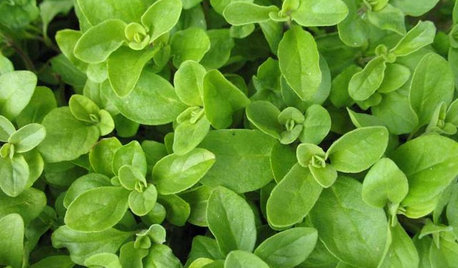
    oregano: 30-60cm high thyme with a spread as far as the eye can see and beyond if you don't control it.

    lime basil: just another basil.

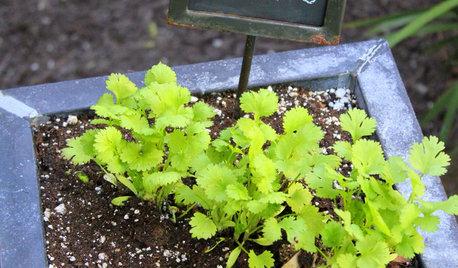
    cilantro: I call it coriander. We don't speak Mexican in Australia. 60cm tall and about 40cm wide. It bolts to seed before you can blink, especially in warm or hot weather, and will self-seed all over the place. Best to get new plants every 2-3 weeks for the leaves.

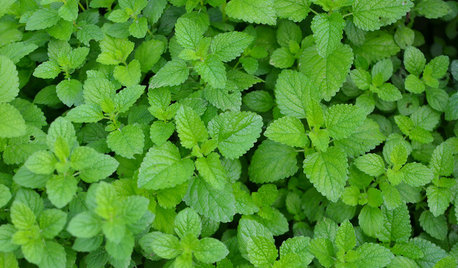
    mint: Ah me! Mint has a yen to take over the entire planet. It has a very aggressive root system, spreads also by runners above and below ground and just about every other method known to mankind. It must be contained in a pot, but make it a LARGE one. If you can sit comfortably in it, it's almost big enough! Well, get one as large as you can manage, anyway, and you'll have to repot and divide it at least once a year, maybe more often.

    Another problem you've got is environmental. Most of these plants need FULL sun for a minimum of 6 and preferably 10 hours. Real sun, not the filtered stuff you get through glass windows. Fresh air-type sun. Have you put your hand on the glass in the heat of a summer afternoon? Imagine how that feels to a poor plant for hours at a stretch! Mint can take partial shade in a hot climate, but otherwise full or dappled sun.

    More on the environment. All these plants need excellent drainage - you won't get that if there's a saucer under the pots to collect excess water. Mint likes it moist, but not soggy.

    Best thing for drainage is to remove those saucers (messy indoors) and put the plants outside. Put pots up on 'feet' for best drainage. Use any commercial general-purpose potting mix. The more expensive ones are better composted.

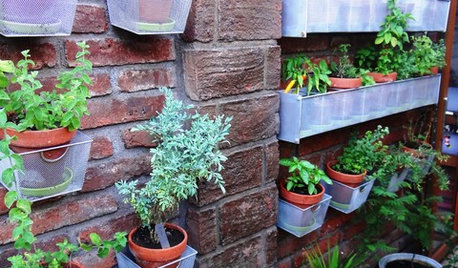
    There's no harm in plastic pots, unless you're Thingy about plastic in general. I've got a lot of my herbs in plastic pots - I've painted them with the names of each plant stencilled on with spray-paint. You need to make sure there are plenty of holes on the base of the pot. One single hole in the centre simply isn't enough. If you're worried that the soil might leak out, cover the base with some panty-hose material or something similar. Shade-cloth is good.

    Another thing about trying to grow herbs indoors - they are subject to greater fluctuations in temperature - kitchens can get HOT. Kitchens also get greasy and smoky. Plants don't like that. It clogs up their pores, so to speak.

    Think about it - plants have exactly the same needs as people. Fresh air, sunlight, protection from extremes in weather, room to stretch out, appropriate food and water - blah blah. How would you like to live in a teensy box?

    Also, once your plants are in suitable-sized pots, you don't need to water so often. Do the Finger Test. Poke your finger down into the soil as far as it will go. If the tip of your finger feels moist and cool, you don't need to water. Very scientific!

    Never allow potting mixes to dry out completely. They become water-repellent if that happens. Any water you apply will just run down the sides and out the holes - it won't be absorbed by the soil, which means the plant roots can't access it either. The larger the pots you use, the less frequently you'll need to water.

    When you transplant your plants, expect them to look and feel much as you would after a transplant operation. Sad and droopy. That's a result of 'transplant shock' - they should recover nicely after a week or two. Meantime, don't feed them, and don't overwater them. When transplanting, make your you remove the entire rootball - don't yank it out - that damages the roots. Be gentle and kind, and leave plenty of the old soil around the roots so as to disturb them as little as possible. Put the rootball into a hole at least twice as big as the rootball, and bury it to the same level.

  • 19 years ago
    last modified: 11 years ago

    Daisy has said it all nicely. I'm in full agreement.