Software
Houzz Logo Print
belindach

Eggplant

20 years ago

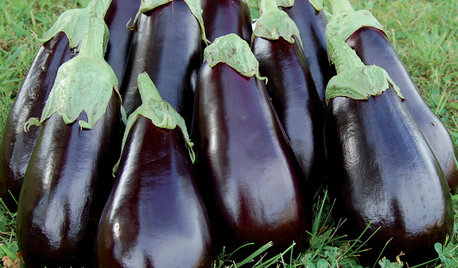
My eggplant is covered with blooms and I have visions of eggplant everywhere. What is the best way to preserve excess eggplant? Thank you for any suggestions you care to make.

Comments (9)

  • 20 years ago
    last modified: 11 years ago

    It needs to be frozen, not canned, unless you want to make an antipasto for canning. It is the only recipe I know of safe for canning. If you want it, I can post it.
    FREEZING EGGPLANT

    --------------------------------------------------------------------------------

    Preparation: Harvest before seeds become mature and
    when color is uniformly dark. Wash, peel and slice 1/3-inch
    thick. Prepare quickly, enough eggplant for one blanching
    at a time.

    Water blanch 4 minutes in 1 gallon of boiling water
    containing 4 1/2 teaspoons citric acid or 1/2 cup lemon
    juice.

    Cool, drain and package, leaving 1/2-inch headspace.
    Seal, label and freeze.

    For Frying: Pack the drained slices with freezer wrap
    between slices. Seal, label and freeze.

  • 20 years ago
    last modified: 11 years ago

    Linda Lou, any way of canning an eggplant spread like the red pepper one? I'm thinking of a spread like the Eastern European avjar (eye-var)...tomatoes, garlic, eggplant, onions, vinegar cooked down to a paste. One recipe (and I am never adverse to adding vinegar or lemon since I love sour food.)

    Ajvar is popular appetizer or side dish made of roasted paprika, ripe tomatoes, and even string beans can be combined into ajvar. Ajvar is a seasonal dish in Macedonia, always made in late summer and early autumn, just after the paprika harvest, when many households also can or bottle their own ajvar for use throughout the winter season.

    8-12 fresh red paprika (mild or medium-hot, to taste)
    4 medium-size eggplants
    1/2 to 3/4 cup olive oil ( Eliminate most of this oil?)
    1 large onion, minced
    3 large garlic cloves, chopped
    1 to 2 tablespoons lemon juice (or 1 tablespoon red wine vinegar) (Increase this ?)
    Salt and pepper to taste
    Chopped fresh parsley for garnish
    Roast the paprika and eggplants over charcoal or a gas flame, or bake them in a preheated 475 F oven, until the skin is blistered and darkened. Place the roasted vegetables in a paper bag and let them steam in their own heat for 10 minutes. Peel off and discard the burnt skin along with the steams and seeds. Mash the peppers and eggplant pulp together to form a slightly chunky mass. You can do this with a fork or in a food processor.

    Heat 3 tablespoons of oil in a large skillet and saute the onion until very soft. Add garlic and cook for 2 more minutes. Remove from the heat and stir in the pepper-eggplant pulp, mixing well. Slowly drizzle the remaining oil into the mixture, stirring constantly to incorporate all of the oil. Add lemon juice or vinegar, and salt and pepper, to taste. Transfer to a serving bowl and garnish with parsley.

    Serve as an appetizer to spread on thick slices of country-style white bread or flat pita bread with chunks of feta cheese, or use as a side dish to accompany grilled or roasted meats.

    Yield: 6 to 8 servings, as an appetizer or side dish.

  • 20 years ago
    last modified: 11 years ago

    No, I am sorry, it would be unsafe. You need to stick with safe, tested canning recipes from a reliable source, such as the USDA/extension sites or the Ball Blue book.
    From USDA:
    Caution: Do not attempt to can pureed vegetables, red meats, or poultry because proper processing times for pureed foods have not been determined for home use. Instead, can and store these foods using standard processing procedures. Puree or blend them at serving time. Heat the blended foods to boiling, simmer for 10 minutes, cool, and serve. Store unused portions in the refrigerator and use within two days for best quality.
    Individuals who can food at home and do not use methods approved by the Minnesota Extension Service, other state extension services, United States Department of Agriculture (USDA), or other reputable sources (Kerr, Ball, etc.) are taking a great risk with the health of those who eat the canned product.

    Here is a link that might be useful: Safe home canning.

  • 20 years ago
    last modified: 11 years ago

    Thanks. I'll freeze them. I have several casserol recipes which call for eggplant which would make a lovely winter meal.

    Next year I'll do the pesto because this next year I'm planting a bunch of eggplant.

  • 20 years ago
    last modified: 11 years ago

    Eggplant is one of those that goes very mushy once frozen. If you plan to bread and fry tem, it may be wise to do this before freezing as they will not be very easy to handle once thawed.

  • 20 years ago
    last modified: 11 years ago

    What's the antipasto recipe for canning LL? I might try that sometime. I love home canned antipasto items.

  • 20 years ago
    last modified: 11 years ago

    Wow, I am racking up the money today from sharing these recipes, LOL !
    VEGETABLE ANTIPASTO
    Makes about 7 (500 m)l jars

    This antipasto recipe was specifically formulated to be processed safely in a boiling water canner. Do not deviate from the recipe ingredients and quantities as any change could affect the safety of the end product.

    2 1/2 cups (625 ml) green beans cut into 1/2 inch (1 cm) pieces
    2 1/2 cups (625 ml) cauliflower florets, about 1/2 medium head
    2 cups (500 ml) diced onion, about 2 large
    2 cups (500 ml) diced green pepper, 2 medium
    2 cups (500 ml) diced red pepper, 2 medium
    1 1/2 cups (375 ml) diced carrots, 3 to 4 medium
    1 1/2 cups (375 ml) diced celery, 4 to 5 stalks
    2 cups (500 ml) lightly packed brown sugar
    3 tbsp (45 ml) pickling salt
    2 cups (500 ml) red wine vinegar
    3 cans (each 156 ml) tomato paste
    4 tbsp (60 ml) worcestershire sauce
    2 tbsp (30 ml) hot pepper sauce
    4 garlic cloves, minced
    2 cups (500 ml) diced peeled eggplant or unpeeled zucchini
    3 tbsp (45 ml) dried basil
    1 tbsp (15 ml) dried mustard

    Prepare, measure and combine vegetables (including zucchini if using), except garlic and eggplant; set aside.

    Place 7 clean 500 ml mason jars on a rack in a boiling water canner; cover jars with water and heat water to a simmer (180F/82°C). Set screw bands aside; heat SNAP Lids in hot water, NOT boiling (180°F/82°C). Keep jars and SNAP Lids hot until ready to use.

    Combine brown sugar, salt, vinegar, tomato paste, worcestershire and hot pepper sauce and garlic in a large stainless steel saucepan. Stirring occasionally, bring to a boil.

    Prepare eggplant (if using); stir into hot sauce along with remaining vegetables. Stirring occasionally, return mixture to a boil; boil gently, 5 minutes to begin to soften vegetables. Remove from heat; stir in basil and mustard.

    Ladle antipasto into a hot jar to within 1/2 inch (1 cm) of top rim (headspace). Using nonmetallic utensil, remove air bubbles. Wipe jar rim removing any stickiness. Centre SNAP Lid on jar; apply screw band securely & firmly until resistance is met Âfingertip tight. Do not overtighten. Place jar in canner; repeat for remaining antipasto.

    Cover canner; bring water to a boil. At altitudes up to 1000 ft (305 m), process Âboil filled jars  25 minutes.* When processing time is complete, turn heat off and remove canner lid. When boil subsides - bubbles no longer rise to surface (3 to 5 minutes) - remove jars without tilting. Cool jars upright, undisturbed 24 hours. DO NOT RETIGHTEN screw bands.

    After cooling, check jar seals. Sealed lids curve downward and do not move when pressed. Remove screw bands; wipe and dry bands and jars. Store screw bands separately or replace loosely on jars, as desired. Label and store jars in a cool, dark place.

    Note: Because antipasto is available commercially, many people believe they can preserve their own recipe at home. Most traditional antipasto recipes cannot be home canned safely in a boiling water bath canner. (However, some can be frozen successfully.) When the recipe adds low acid foods such as tuna (or other canned seafood), olives, mushrooms, vegetables and/or oil the resulting food mixture needs to be processed at temperatures higher than those that can be reached in a boiling water canner. These higher temperatures are essential to avoid the risk of deadly botulism poisoning. Processing filled jars of homemade antipasto in a pressure canner is unsuccessful because the temperature/time combinations required to eliminate the risk of botulism destroys the integrity of the vegetables resulting in a product that is almost spreadable. This Vegetarian Antipaso recipe has been specially formulated and tested to allow low acid vegetables (with added vinegar) to be processed safely in a boiling water canner. It yields a product with a well-balanced flavour and varied texture. Do NOT alter ingredients or measures.

    When ready to serve, to make a traditional antipasto, toss the contents of a jar of Vegetarian Antipasto with tuna, salmon or shrimp and add your personal finishing touchesÂmushrooms, olive oil and/or olives. Or, just serve this delicious Antipasto on its own. It`s delicious as a spread, dip or appetizer.

  • 20 years ago
    last modified: 11 years ago

    Thank you so much Linda Lou! That recipe sounds heavanly. Like my "end of the garden" pickles, only saucier and tastier. I hope I can make some.

  • 20 years ago
    last modified: 11 years ago

    You are welcome for the recipe.