Software
Houzz Logo Print
groundhog_too

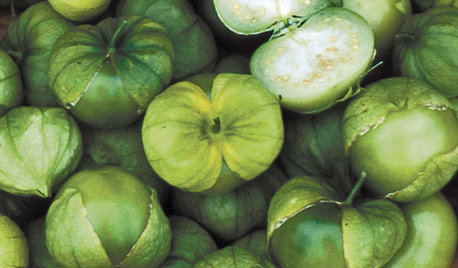
tomatillos

17 years ago

Have questions on these beauties...the only recipe I've found that is good is in the Bernardin Canning book and it uses alot of vinegar. I love a commercial product we'll call "green sauce" and it is hot and sweet. Anybody have a resource or a reason so much vinegar is needed? Is it the amount of peppers? Onions? I would like to Pressure can rather than BWB due to altitude issues. I have ALOT of these and need options.

Comments (6)

  • 17 years ago

    You need the added vinegar to make it acidic enough to can. It is partly due to the other low acid vegetables, but also even plain tomatoes and tomatillos must be acidified, even in a pressure canner. All of them are taken into consideration when determining how much added acid is needed. Don't cut back on it.
    I don't have any "formula" for converting the BWB times to pressure canning times. So, basically I would just tell you to still use the BWB times for pressure canning. That way we will know the food is safe.

  • 17 years ago

    Linda, I am a bit confused by your response. The purpose of a pressure canner is to allow canning of things that are not acidic enough. Tomatoes are not reliably acidic enough to can in a boiling water bath, so many people add lemon juice or ascorbic acid. If only acidic foods were canned, every canned good in the word would be pickled, and pressure canners would be obsolete.

    I say oven-roast a bunch of them, can some in salt water, and make some into salsa and can that. That way, you can use the plain roasted ones for other stuff like sauce, tomatillo guacamole, etc, etc.

    Here are recipezaar instructions for roasting:

    Directions


    1
    Preheat broiler.

    2
    Line rimmed baking sheet with foil.

    3
    Place tomatillos on prepared baking sheet; broil until tomatillos are just blackened in spots and tender, about 8 minutes per side.

  • 17 years ago

    groundhog - linked below is a great tomatillos recipe and unlike the ones from recipezaar this one is tested and approved for canning. Simply canning in salted water would not be safe per the guidelines.

    It is hot and sweet and can be pureed into green sauce after you open the jars. It uses lime juice rather than vinegar.

    Keep in mind that in any recipe that calls for vinegar you can safely substitute bottled lemon or lime juice for all or part of the vinegar (you cannot sub vinegar for either of them however). Both bottled juices are more acidic than vinegar but impart a very different taste.

    Jessica - I'm not sure which part of Linda Lou's response you find confusing but as she teaches this for a living I do know for a fact that you can trust her advice. ;)

    I think part of your confusion may lie in this statement you have made several times now.

    The purpose of a pressure canner is to allow canning of things that are not acidic enough.

    That isn't quite accurate. Pressure canning serves several different purposes and its use is growing, not declining. Indeed many recipes that used to be approved for a BWB are now pressure canned only per the current guidelines and even more changes are anticipated with the upcoming revised guidelines.

    Further, depending on one's altitude it may be required for even highly acidic foods. And for many folks pressure canning is their personal preference as it allows for much faster/shorter processing times and an over-all better quality food they feel. And elective use of the pressure canner is readily approved as pressure canning is always safer than a BWB.

    Hope this helps clarify. If you want more details I'd refer you to NCHFP as it is readily available online and is regarded as the primary source of canning safety research and guidelines.

    Dave

    Here is a link that might be useful: Tomatillo Green Salsa

  • 17 years ago

    Pressure canning meats and low acid ingredients that are not too dense are very safe to do, no matter what the paranoid people preach. Lately its getting very confusing to see a new person canning and seeing remarks that are unfounded being stated by so called experts in the field. Some time ago, Pomona pctin was unheard of, and Clear Jel, the modified food starch were considered unsafe to home can, but that has changed in recent years and its due to the facts that these things have been found to be very safe to use in home canning. Everything we can has a safe solution if you dig deep enough and find the really true answers. The NCHFP is only GUIDELINES and is not cast in stone, and it is meant to simply reinforce COMMON SENSE in home canning.

  • 17 years ago

    Remember also the following:
    1/2 teaspoon of Citric Acid is equal to:
    2 Tablespoons of bottle lemon or lime juice (not fresh), or
    4 Tablespoons of 5% Vinegar.

    The above is also scaled in taste:
    Citric acid will have the least taste in the finished product.
    Lemon/lime juice will be in the middle (and may be a preferred flavor).
    Vinegar will have the most pronounced flavor and often the least desired.

    Bite the bullet folks. Buy yourself a pound of Citric Acid, keep it dry in a bottle, and try it out. As Ken will tell you, it has lots of uses including fruit preserves. If you learn what it is used for, it comes in handy for more than one inclusion in a recipe.
    Jim in So. Calif.

  • 17 years ago

    Jessica,
    There is no reason to not process tomatoes in a boiling water bath as long as they are properly acidified and done for the right time according to whether they have added water, juice, packed raw in the jars, etc. Each has their own processing time. The bottled lemon juice or citric acid is still needed in both the BWB and pressure canner.
    The person mentioned a sauce with tomatillos, which would need added acid. Then, the addition of the low acid things like onions and peppers would need even more acid added in the BWB. I thought the person wanted to use the pressure canner instead of the BWB for the same recipe. There is no way to take the time of using a BWB canned recipe and figure out how long to pressure can it instead unless that has already been done and tested in the lab, like in the BWB/vs pressure canned tomatoes. It was my understanding they wanted some "formula" for converting the BWB times to a pressure canning one. We don't have a formula. That is why I said to use the same processing time if wanting to use the pressure canner instead of the BWB canner. I didn't read that they wanted to pressure can them in salt water. Even at that they still must be acidified to pressure can them, just like regular tomatoes. Tomatillos are canned using the same guidelines as tomatoes. It would be unsafe to just can in salt water.
    You will find that many sites and books, including recipezaar, have recipes and methods posted by people who have no idea what is safe or unsafe in food preserving. They make up their own recipes, make up processing times for those recipes and recipes that were only meant to be used as cooking recipes. This is why most of us here stress the use of tested, safe recipes and methods by reliable sources.

    Ken, I certainly don't see any paranoid people say it is not safe to pressure can meats or low acid things as long as the safe recipes and guidelines are being used. Who says you cannot can meats ?? When did they post that ?
    I sure missed that one.