Software
Houzz Logo Print
crafting4goddess

Lacto-Fermented Tomato Balls

16 years ago

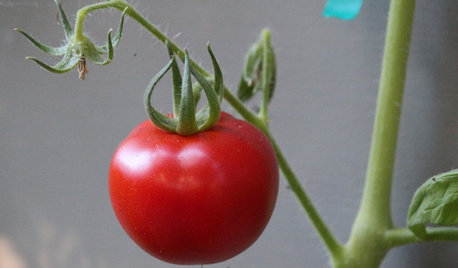
I am trying a technique I found in the book "Persevering without Canning or Freezing" with tomatoes I bought at a bargain at our local organic coop because they were over-ripe. I was wondering if others had tried fermenting sliced tomatoes for making these tomato "balls" that are eventually stored in oil with herbs. While the book says to set out in the sun until they start to ferment & foam, we have had no sun in the three days since I put them in a jar to ferment. While I read that salt is the key in lacto-fermenting, the instructions don't add salt to this method until the partially fermented tomatoes are dried & ready to be immersed in oil. It seems kinda opposite to me. My tomatoes are starting to look...icky, & there is cottony mold forming. Is that bad?

Comments (17)

  • 16 years ago

    I'm not familiar with that particular recipe, but I do ferment foods; sauerkraut, roasted chili, beans, cucumbers, etc.

    I'd toss the tomatoes if they're looking funky. You'd be starting off a culture with who-knows-what bacteria, yeasts, and fungus dominant, something thats already spoiling the food, not the sort of bacteria and yeasts that develop during lacto-fermentation.

  • 16 years ago

    Humm, I placed them on top of my dehydrator & it is really foaming away now. They don't look so bad now & smell just fine. Guess it needed a little more heat that the last three days have givin us.

  • 16 years ago

    While I read that salt is the key in lacto-fermenting,

    Yes indeed it is.

    the instructions don't add salt to this method until the partially fermented tomatoes are dried & ready to be immersed in oil. It seems kinda opposite to me.

    I'd trust your instincts on this one. ;)

    You know that just because it is printed in a book doesn't mean it is safe food processing? There are all sorts of really strange, and correspondingly really unsafe, food preservation ideas out there.

    So if you found an "icky, cotton moldy, foaming" tomato growing on the vine or in the bin at the store would you eat it? I sure wouldn't.

    Dave

  • 16 years ago

    I agree with Dave. Tomatoes like that would scare me and immersing them in oil really ups the stakes. A lot of nasty things can grow in that kind of environment.

    Carol

  • 16 years ago

    Obviously not a home cannable recipe!

  • 16 years ago

    I say throw them out. Sounds rotten to begin with if you don't salt them and ferment them properly. Then, the whole oil thing sound like a bad idea to me. If not done properly, dried tomatoes in oil can breed botulism.
    I agree, just because this is in a book doesn't mean it is safe to follow.

  • 16 years ago

    I'm not following where salt is essential to lactofermenting. Don't the bacteria eat sugar? Is the salt used to dry the food and then rinsed off?

    It's not surprising, though, that tomatoes left in the sun without any preservatives or special microbes would spoil. I know people can use things like wild yeast starters to harvest desirable microorganisms from the air, but that's done with starter materials that create a hospitable climate for yeasts, and it seems a little risky anyway. A rotting tomato seems like it would create an environment for tons of microbes, both good and bad. Seems like kind of a crapshoot whether any of them make you sick.

  • 16 years ago

    I can only speak about salt in fermented cucumber pickles (done in brine), but here's why it's important there, as I understand it. The salt concentration stacks the deck in favor of the lactic acid bacteria. They prefer a particular concentration, and other bacteria don't like that concentration. The salt makes the environment in the brine hospitable to the guys you want, and then they eat whatever they eat and produce lactic acid to preserve the pickles.

    I would never eat anything with cottony mold on it. This recipe sounds like bad news.

    Melissa

  • 16 years ago

    Agree with Melissa. Salt is a desiccant and a preservative. The association between salt and fermenting is discussed in the BBB pg. 46 (new edition) where it explains how the role of the salt "is to draw juices and sugars from the foods to form lactic acid." So it both dries by drawing out the juices but also aids in converting them to lactic acid.

    A too-weak salt brine during fermentation is listed as the primary cause of fermenting problems such as bacterial contamination, scum formation, discoloration, shriveling, etc.

    Per the Fermenting Guidelines available at NCHFP:

    However, the salt used in making fermented sauerkraut and brined pickles not only provides characteristic flavor but also is vital to safety and texture. In fermented foods, salt favors the growth of desirable bacteria while inhibiting the growth of others. Caution: Do not attempt to make sauerkraut or fermented pickles by cutting back on the salt required.

    Dave

  • 16 years ago

    Well said! Low salt equates to spoilage, listeria, slime, mold, and scum, all nasty. Next comes a very bad smell, except for kraut which is always smelly.

  • 16 years ago

    I guess that makes sense. Lactobacillus can certainly thrive in a salt-free environment (yogurt, for example) but I guess too many other microbes can as well. Salty liquid would be less hospitable to yeast and many bacteria. Still don't see how it would have any effect on lactic acid production (other than keeping other microbes from eating up the sugars and turning them into undesirable products that are smelly or dangerous), but I can see how salt would be helpful in engineering bacterial growth.

  • 16 years ago

    Thank you all for your insight & informations. I dumped the batch because I just didn't feel it was safe to eat. I'll try a different method next time...with SALT.

  • 16 years ago

    Some time back, here on the Harvest Forum, there was a poster from Germany who was explaining how they added bacteria to their fermentations, making sure that the 'good guys' got a head start. They had mentioned using Kefir, and I've been doing that ever since with my fermented stuff - adding a few pinches of the dried powder starter.

    I think it helps with most stuff, I know it's essential when I ferment roasted chili, because the roasting destroyed any of the natural yeasts/bacteria. Certainly doesn't hurt.

  • 10 years ago

    So I'm in the middle of this process right now, same book. Found the same recipe here: http://www.culturesforhealth.com/lacto-fermented-dried-tomato-balls-recipe. So I'm going to see it through.

  • 10 years ago

    I have that book and will admit that some of the recipes I would try... in times of desperation. I'm just not that desperate yet.

    Besides the contamination issue, I find the recipe wasteful. Also wasteful is the recipe for fermented tomato sauce which immediately follows the tomato balls recipe. In both cases, you are told to sacrifice some of the flavorful juice (which carries nutrients after all). You throw it away.

    That said, I do know someone who tried the fermented sauce recipe, which does not add salt until after the fermentation is done. He said it did make lots of white (kalm yeast?) growth on top and attracted flies, but he was satisfied with the results. I did not get to see it.

  • 10 years ago
    last modified: 10 years ago

    I'm not gonna comment on the safety of the recipe (I'm not experienced enough plus I think it's all been said above). But it seems to me that a similar product, minus the fermented part, could be made simply by partially drying some tomato slices, mincing them finely in a food processor, and then rolling them into balls before finishing drying them. Not too sure about storing them in oil (although kept in the fridge they might be okay).

    Rodney

  • 10 years ago

    There is a UC Davis method for storing dried tomatoes in oil that involves using vinegar. I still keep them in fridge.

    http://ucanr.edu/sites/fresnonutrition/files/14349.pdf

Sponsored
Urban Upkeep LLC
Average rating: 5 out of 5 stars6 Reviews
Columbus High Quality Painting Expert