Software
Houzz Logo Print
miamimary_gw

round leaf hostas

16 years ago

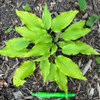
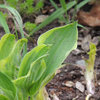
I like Hostas with big round leaves. I noticed the picture of Sum and Substance on the Hosta Farm web site is very round while most pictures on the Forum's site are more pointed. Is this a sub-type or varient difference or a cultural characteristic? Do factors such as soil type (red clay, loam, sand), moisture and nutrients (fertilizer, pH, iron) alter shape or color - particularly for blues?

Thanks!

Comments (8)

  • 16 years ago

    Often the leaves of round-leaf varieties - particularly the larger varieties - start out more pointy in younger years and develop the roundness in the mature plant. As you note, Sum and Substance as a young plant is really a pointed, heart-shaped leaf and only gets its round character in a more mature plant.

    Some of the big blues - the sieboldianas - do the same thing. Blue Mammoth and Big Daddy, as a young plants, are more heart-shaped - looking more like Halcyon - than the big roundish leaves they will develop in maturity.

    Of course, the only thing consistent with hostas is inconsistency, so it is often just the reverse in small varieties. I've grown a lot of mini and small seedlings where the young plants have nice rounded leaves and I think I'm on my way to the next Blue Mouse Ears - only to have the leaves get longer and heart-shaped as the plant matures...

    I haven't found that culture - soil or light - have much effect on actual leaf shape in hostas. There are certainly lots of examples in other perennials of leaf shape being affected by growing conditions, but in hostas it is mostly limited to differences in color and leaf size - but not shape...

  • 16 years ago

    Very good commentary, idiothe. One thing I would add is that there are certain cultivars, of course, that are known to have very round leaves. So, if you're particularly attracted to round leaves, it would be worthwhile to search some of those out.
    Here's a list of very round-leaved hostas.

  • 16 years ago

    its all in the dna ....

    the long thinner ones .. are montana based.. somewhere back in time ....

    round comes from tokuda and sieboldiana ...

    you gotta learn all about grandma and g-pa.. and even further back.. if you want to really learn ...

    ken

    ken

  • 16 years ago

    darn head cold ...

    what i meant to say ....

    growing culture or fert .. or anything else..

    is NOT going to change the genetics ..

    is NOT going to change the shape ...

    i think that sums up what i meant to say .. but you never know.. lol

    ken

  • 16 years ago

    Thanks for the replies and yes, I do want to learn so I will be haunting the site frequently.

  • 16 years ago

    idiothe, a local grower/seller mentioned to me that leaf shape may be affected by shade vs sun - more rounded in shade vs narrower/more pointed in sun - related to moisture loss. i.e. narrower in sun to minimize leaf area and thus lessen moisture loss. I suppose it might depend also how much moisture is being supplied as well. I don't have many in sun ... moved an extra Paul's Glory and Sun Power in '08 to more sun, so hoping to observe any differences (leaf shape/size and growth rate) over next couple of years.

    Paul

  • 16 years ago

    i do agree with paul.. in the sense that shape can vary depending on the intensity of sun ...

    heck a lot of stuff van wade grows to mammoth size.. is a bit different than mine might look ... a little thicker.. a little longer ... 10 times larger.. lol .. but the plants are recognizable as the same ....

    but not to the point that a long montana leave is going to morph into a round shape.. or that tiny tears will morph into big daddy .... [now that would be cool .. lol]

    agree paul ...???

    ken

  • 16 years ago

    Sun will affect appearance a great deal, though I've found the difference to be more in size of leaf than in shape. I'm sure there is some shape change, but I've never seen anything dramatic...

    As Ken notes, shape is primarily a genetic character. Selection may have adapted hostas to tolerate lower light conditions than other temperate zone plants, with leaf size moderation being a structural adaptation that can occur within a particular plant... meaning a lot of plants, hostas included, produce smaller leaves to prevent moisture loss if they suddenly get increased sun exposure.

    But shape alteration, given the genetics of layers of cells and vein counts, is more complicated - so change is minor at best in the varieties I've grown.

    You mentioned one variety that has really led to a lot of confusion about the leaf shape issue - Sun Power. As a youth, Sun Power has narrowish pointyish kind-of-twisty leaves. As it matures, they get somewhat wider but still give an overall impression of twistyish sticking out in all directions. But after enough years (for me something like 7 years to maturity), the plant settles down into a more traditional arching mound shape, with leaves that are quite wide.

    So here's where the confusion often sets in. People have their first Sun Power in a nice dappled shade condition. It is very large with large wide yellow leaves. They divide it and put a piece into a sunier location. Sun Power is notorious for the way that divisions revert to the original skinnier leaves and take quite a long time to mature into the wider leaved form. Still - even in direct midday sun - the mature leaves of the Sun Power will take on the wide form of the leaf - but don't be surprised if it takes 5 years or more to happen. But for several years, the obvious impression is that the leaves become skinnier in bright light.

    Another notorious leaf-shape changer is Ginko Craig, though this one is only related to light conditions in that they affect the growth/maturity process. As a youth, it has narrower leaves with a neat white margin. We go along enjoying its look, especially in the spring when it gives us a nice white margin early. But if we just let it grow and don't pay it close attention, it matures into a plant with wider leaves and the margin is not nearly so bright and neat - and it becomes a pretty nondescript white-margined hosta. I think my first one, growing in a lot of shade in a kind of out-of-the-way spot took about 6 years to do this - but I remember the first time I noticed it I thought I'd somehow got labels mixed up.

    Luckily, Ginko Craig, like Sun Power, reverts to its juvenile look when divided and stays that way for a long time. So, when GC starts looking a little less interesting, all we have to do is chop it in half and it will go back the the plant we liked for a few more years.