Software
Houzz Logo Print
newgeneral

Tips for managing organic fertilizers

20 years ago

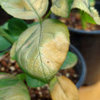
I'm trying to get the knack of using organic fertilizers. Last spring I began using several on my potted plants, especially my citrus and bananas. I mostly used teas from bat guano, and also kelp meal and fish emulsion. In late summer some of my plants started to develop yellow spots on the leaves. I tested the soil with a do-it-yourself kit, and found the soil was fairly high in P & K, and very low in nitrogen. As a result, I added blood meal.

No wonder so many people rely on Miracle Grow or equivalent! All of the various organic components are beginning to boggle my brain. Is there a good, concise guide out there. The web searches I've done have not been helpful.

Comments (9)

  • 20 years ago

    Rather than using single source organic products like bat guano, kelp meal, blood or bone meal, etc., which are often referred to as amendments rather than fertlizers (often lacking the "guaranteed analysis" that qualifies them as a true fertilizer), try using a blended product that is formulated specifically for your plant's particular requirements. There are a number of commercially prepared blended organic products available in this area - Whitney Farms, Dr. Earth, E.B. Stone, to name 3 of the more common ones. These will provide a much more well rounded nutrient array as well as micronutrients and trace elements that can be missing in single source organic products.

  • 20 years ago

    Bananas are very heavy feeders.. a local banana nursery grower recommended to me a few years ago to feed them with pure ammonium nitrate, about a handful per plant (in the ground) alternating with a 20-20-20 chemical fertilizer. Of course lots of compost can't hurt either. I'm sure you could get by growing them organically, as long as you don't skimp with the fertilizer.

    Also keep in mind that the yellow spots may not necessarily be from a nutrient deficiency. Look for mealybugs (fuzzy white things especially under the leaves) and check your watering. Yellow spots are from overwatering in many cases.

    I feed my containerized lemon with whitney farms rhododendron/azalea food.. they like acid soil.

  • 20 years ago

    I really like the Down To Earth line of fertilizers. I use quite a bit of their fish fertilizer, corn gluten and blood meal. Most plants seem to be happy with some combination of these three fertilizers and don't need anything else; they probably get some micros from the soil mixes I use. I've yet to find an organic fertilizer that provides the quick release of nutrients available from something like miracle gro. On the plus side that means I don't risk burning the plants by applying too much.

  • 20 years ago

    Ian, does Down to Earth provide some guidance on how much of these amendment/fertilizers to use? I'm beginning to agree that buying a blended/balanced fertilizer is the way to go. Less complicated, anyway. But I was hoping to educate myself on the use of the organic components so that I could meet the various needs of all of my different plants without buying numerous formulations.

  • 20 years ago

    I think you can go crazy trying to find that "perfect" fertilizer, and also buying into fertilizer hype.

    I've gone down to three basic fertilizers:

    1) A balanced organic blend, 5-5-5 for new and established plantings.

    2) A balanced organic blend for acid-loving plants.

    3) Organic Lawn fertilizer.

    And, sometimes some rose food, also organic.

    I've pretty much gone to Whitney Farms for everything. It's readily available here in the Northwest (Fred Meyer, Emery's, Ace Hardware), and it's good stuff. I used to buy stuff over the Internet, buying into the hype, but didn't find the products any more useful than good old WF.

  • 20 years ago

    You don't need to buy numerous formulations and you don't need to buy bulk ingredients to make your own fertilizers. Plants can't read labels - they won't know that you're feeding your perennials with rose fertilizer. You need a balanced blend and you need something with some nitrogen punch for the heavy feeders. That's it. And a lawn fertilizer if you have a lawn. I like to have a blend for the shrubs, including the rhodies etc (our soil is already quite acid enough, don't need to give them an acid fertilizer) and something like a rose fertilizer for everything else that needs more nitrogen. I also keep on hand alfalfa pellets for alfalfa tea for the heavy feeders. You can fertilize with dry pellets too but it attracts voles. Blood meal is a concentrated nitrogen, but it attracts dogs. Mulch everything with compost and that's it. Well no I do have some Alaska Fish Fertilizer too, and some Miracid for the potted plants. I don't like to put too much dry fertilizer on the potted plants.

  • 20 years ago

    newgeneral,

    Down To Earth has a web site. www.downtoearthfertilizer.com

    They have two stores here in Eugene. They don't just make and sell fertilizer, but sell all kinds of home and garden products. My favorites ferts are the all-purpose, rose and fish. Probably use the rose and all purpose most and sometimes the high acid stuff for rhodies and other acid lovers.

    They do suggest amounts to use and I find the garden staff really knows their stuff. My favorite place to shop for seeds, (amazing selection of seeds) plants or other garden necessities. If you find yourself down this way in the spring, stop by the downtown store. Not the one on Willamette St.

    Merry Christmas and Happy New Year.

    Mary, very much a Down To Earth fan.

  • 20 years ago

    What you need and how much of it depends on what is already in your soil. Needing only to supplement your nitrogen (as far as the primary nutrients are concerned) is typical for this region. Potassium may sometimes also be deficient on leached soils of outer coast. Phosphorus is not normally deficient on local properties that have not been farmed.

    Here is a link that might be useful: Myth of Organic Superiority

  • 20 years ago

    I really like METANATURALS. They make a veging formula, a budding/flowering formula, and a liquid nitrogen...I use primarily the first two. Directions are on the container.
    You will spend a bit more for these but are excellent organic nutrients w/ micro-nutrients as well....Do a web search and read up.....
    Good Luck!

Sponsored
Landscape Management Group
Average rating: 4.9 out of 5 stars33 Reviews
High Quality Landscaping Services in Columbus