

Pernettya (Gaultheria) mucronata?
I've seen this at local nurseries and in a few new installations, anyone have experience?
Does is spread weedily underground? Any other cautions?
Comments (34)
 19 years ago
I didn't have any reseeding from fallen berries, there was some minor suckering close to the main stem. The main thing was if the soil dried out at all during the summer, the plants died. If grown in shade, mine would put out extremely leggy branches. Shade plants will need to be pruned or pinched often to avoid sprawling.
The plant is also prickly to handle, hence the nick-name "prickly heath".
- 19 years ago
Small article about Gaultherias in the current Pacific Horticulture. Gaultheria mucronata listed as hardy to zones 7 - 9, "tolerant of bright shade. It grows to about three and a half feet and spreads by underground runners." I've had a couple of these in pots all summer and they've hung in there pretty well. I think I recall reading that male & female plants are required to produce viable seed.
Related Professionals
Hopkinsville Landscape Architects & Landscape Designers · Rockford Landscape Architects & Landscape Designers · Los Angeles Landscape Architects & Landscape Designers · Ontario Landscape Architects & Landscape Designers · Sarnia Landscape Architects & Landscape Designers · Rolla Landscape Contractors · Orangeburg Landscape Contractors · Spring Landscape Contractors · Lewiston Landscape Contractors · Wheeling Landscape Contractors · Montrose Landscape Contractors · Topeka Architects & Building Designers · Kansas City Architects & Building Designers · Elmira Architects & Building Designers · Calgary Architects & Building Designers- 19 years ago
Standard item in this region for years. Good with heaths and heathers, rhododendrons and other family members. Same requirement for cool soil and excellent drainage.
- 19 years ago
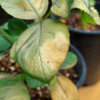
Basically Chile's answer to salal. Acid lovers. They will sucker like salal and invade other plantings if not routinely pulled. Also subject to some sort of blight that occasionally needs to be pruned out. They do survive abuse and are deer resistant however. Crimson stems, small white flowers, and pink berries provide interest as well. Dense and prickly, especially if pruned, I think this would make an excellent low hedge or secondary barrier under an existing hedge that has become bare at the base, which is where I will soon be moving my original plants and all their babies! I have spotted specimens in the wild here on the west coast of Vancouver, so they probably shouldn't be planted at all where well adapted. On second thought, maybe I will compost the lot.
- 19 years ago
Branch dying here and there could be root rot or stem rot, very common on heath family plants. Berry color ranges from white through pink to reddish.
schizac
Original Author19 years agoI have only seen the white fruited form so far. henryt, interesting but not surprising that you have seen them naturalizing.
 19 years ago
I've never been one to select an ornamental plant for inclusion in my garden (or a client's) based on solely on its potential to berry. Most of the time, the berries are the only redeeming feature and the plant presents a straggly or lumpishly undistinguished appearance the rest of the year - i.e., Symphoricarpus, Callicarpa. I have the same feelings regarding Pernettya :-) Plantings that I have seen seem to be uniformly rangy or straggly and sucker madly.
But that's just my very personal opinion. LOL!
schizac
Original Author19 years agoThanks for the opinions, as I've only seen potted and newly planted specimens I have no feeling for what an established planting might look like and how it would behave...or not. I agree Pam, in most designs multi-season plants should occupy most of the real estate, unless of course the program calls for complete serenity.
The few Pernettya I've seen did have a striking appearance though, at least in the pot. It was the contrast of minute dark foliage, large pure white berries, open form and somewhat sinister appearance, unlike anything I've seen.
- 19 years ago
Pernettya is a broadleaf evergreen, thus provides yearround effect, unlike the deciduous shrubs mentioned.
- 19 years ago
Just not a particularly attractive broadleaved evergreen for a good portion of the year, IMO - straggly still applies, leaves or not. In my rather stringent list of requirements, just retaining foliage does not necessarily make for year round interest. I'd include most rhododendrons in the same category. I want/expect more than just green.
- 19 years ago
As with Abelia if you get alot of long, sparse extensions the cultural environment may need some adjustment. Also as with abelia and other trees and shrubs that throw long, sparse shoots if you wait these will fill in later. It's a matter of degree, while it IS an inherent characteristic of such plants to have sparsely furnished young shoots if the new ones really reach and flop etc. the soil may be too moist/rich or the exposure too shady.
Many garden plants have attributes that are useful or even unique but will be missed if all of a garden is to be made up only of those items that stand out as stunning individual specimens suitable for accents or focal points.
"A fine companion for such other lime-haters as dwarf rhododendrons and azaleas. Also pretty with low-growing daphnes such as D. blagayana or D. laureola, and with creeping Persicaria vacciniifolia. Plant a male to ensure berries"
Here is a link that might be useful: Timber Press - Plant Solutions for Every Garden by Nigel Colborn
- 19 years ago
Having more features than a uniform green appearance and the temporary presence of some flowers or berries hardly qualifies as a being a specimen plant or focal point. I just want plants that carry their weight and earn a place in the garden. May not be everyone's idea of what a plant should contribute but it is mine. And I just don't feel that pernettya measures up.
Just an aside, but I'd be a bit skeptical following the recommendations of someone who considers Daphne laureola a valuable garden addition - it's about to hit the Class B noxious weed list for 2007. It's even considered invasive in Colborn's native UK.
- 19 years ago
So maybe he hasn't noticed yet. Big deal. It wasn't prevalent as a garden pest here until recently, either. Many people still do not even know what it is.
By that reasoning if all your untrue statements made on this web site alone indicated you were a buffoon then surely all your garden designs must have been fiascoes as well. I don't think Colborn making some recommendations that could be criticized makes him a complete idiot anymore than yours do.
- 19 years ago
... there is the fact that Daphne laureola is part of the natural vegetation of the region Colborn is writing from, unlike here.
"Native; woods mostly on calcareous or clayey soils; locally frequent in En[gland], Wa[les] and C[hannel I[slands], sporadic alien elsewhere"
--Stace, NEW FLORA OF THE BRITISH ISLES (Cambridge, 1997)
- 19 years ago
Ron, if "untrue" statements mean those which express an opinion other than your own, I fully and readily admit to such. However, to feel the need the personalize this dialog (and others) to the extent that you do, to consistently contradict in any way and attack virtually every response I feel inclined to make is beginning to become tiresome in the extreme and indicates a petty personality and a very childish attitude.
For some reason, as a self proclaimed "plant expert" you consider every pearl of wisdom you drop in our laps as the gospel. If there is one thing I have learned after many years of messing about in this business (and yes, a few more in formal education), there are very few absolutes in horticulture and even less in simple gardening. What I express is my opinion based on my personal experience and knowledge - no more, no less. If that makes me a buffoon or an idiot and my designs fiascoes, that is your opinion and I will give that the weight it deserves.
Klark, you have my apologies for allowing your thread to deteriorate in this manner :-) I don't believe I'll have anything more to add but I seriously doubt this will be the last word.
- 19 years ago
The pot is calling the kettle black.
Speaking of pernettya:
"One of the best berry-bearing shrubs, Pernettya mucronata has large clusters of marble-sized berries throughout autumn and winter, and birds do not seem to like them ... The pernettya goes well with heathers such as Erica carnea 'Myretoun Ruby', which has flowers throughout winter and early spring. The purple-red flowers of E. erigena (syn E. mediterranea) 'Brightness' carry on until June, and blend with the pernettya's red stems"
--Reader's Digest, A GARDEN FOR ALL SEASONS
"This Chilean shrub, some 2-3 ft high and wide, is as beautiful as it is hardy, and this beauty shows itself in two separate parts of the year. First, in June, the wiry stems and small evergreen leaves are whitened with tiny heather-like flowers. Then, through autumn and winter, bright marble-sized berries glow in a range of color"
--Reader's Digest, GUIDE TO CREATIVE GARDENING
"The flowers are tiny but conspicuous in their quantity, followed by excellent long-lasting berries borne often in big bunches (avoided by birds), on female and hermaphrodite cultivars ... Good, white, showy berries are needed in the garden to contrast with the more numerous red-berried shrubs"
--Thomas, ORNAMENTAL SHRUBS, CLIMBERS AND BAMBOOS
- 19 years ago
Personal opinions about plants, pro or con, by knowledgeable plant folks are are always a welcome addition to discussions of this type. Thanks. I'm disappointed that this plant appears to have awkward tendencies. They sure look good in the pots. Mine have long-lasting berries of a wine color.
schizac
Original Author19 years agoNo worries Pam. I respect both of you and consider both to be "plant experts". I also derive great pleasure from reading your (often polar!) responses.
Both points of view have merit, a garden consisting of mostly plants that have one look for many months (Rhododendron the classic example here) will strike most folks as boring or uninteresting. On the other hand, a garden of all specimen grade plants(a brightly variegated, evergreen flowering shrub for example) will become chaotic, nothing will pop or even perform as a specimen because there is no foil to set them off. The best design will have some of both.
And I believe any plant no matter how spectacular or useful should be avoided if it has demonstrated invasive tendencies.
- 19 years ago
Salal and pernettya crossed spontaneously at Wisley, England in 1929 but although both parents are creeping the hybrid seems to have the lower horsepower of the pernettya. Of course, there could be a huge patch of one clone of the pernettya somewhere in the wild or in an old garden, I suppose. Theoretically it would just have to live long enough.
- 19 years ago
As a regular lurker and occasional poster to this valuable forum I must comment that the dialogue really suffers when things turn personal. I too value both of your opinions and experience; let's keep the egos out of it shall we? This forum would suffer if either one of you abandoned it due to a petty slight.
I have been gardening for much less time than either Ron or Pam, but I have learned that there are few certainties in this biz. In my opinion, the act of gardening involves too many variables to develop a clear list of "truths" and "untruths", unless of course someone is deliberately fabricating information.
My final word on pernettya is based on personal experience alone. I generally choose plants for interesting foliage and seasonal interest over flowers. Despite possessing some of these qualities, this sucker suckers and its suckers will sucker and... well you know the drill. I am in the business of removing salal from our property, not introducing more of it!
That said, I value salal as a privacy barrier and on the fringes where the garden merges with the forest. It too looks more attractive when pruned and you can eat the berries (if you have a lot of time on your hands it makes delicious jelly). So plant salal. At least its indigenous!
schizac
Original Author19 years agoMike Dirr often mentions quality foliage as a deciding factor above any seasonal aspect, especially flowers. In many cases (cherries) the flowers are present for only a few days each year. I feel quality foliage is particularly important in an herbaceous perennial, few of which bloom continuously and can look horrendous when out of bloom.
Perhaps we should start a thread discussing plants posessing high quality foliage, attractive form, some seasonal benefits, performance in the garden and no tendency to displace native plant communities.
I also find salal "berries" delicious, don't know why so many garden writers give them third or fourth rank.
- 19 years ago
Hey Klark - I'll play that game! Pretty high on my list is oakleaf hydrangea, something I consider to be a full 4 season shrub with few, if any, problems and no bad habits.
And I know what you mean about the perennials - too many just offer a short season of flowers, nothing more. That's why I continue to edit what used to be a heavily perennial garden into one that has far fewer (but more "evergreen") perennials and lots more shrubs and small trees. Great foliage and even great combinations of even rather ordinary foliage goes a long way in my book.
- 19 years ago
There are lots of Rhodies that have interesting foliage many of them smaller.....
I've never planted Pernyettas because you have to have male and female plants to get berries and I don't have much space. I agree the berried ones are quite pretty....
I've got a small yard, I want plants that look good more than once a year. The Callicarpa probably needs to go, if the berries weren't purple, it would have already....
- 19 years ago
Interplant a male and a female. Two for the price of one.
I like the double oakleaf hydrangea. Leaves are definitely the most important aspect of many plants, especially evergreen ones. In the mild climate here most of the planting can consist of broadleaf evergreen shrubs, resulting in a much more substantial and sparkling appearance to borders than where the climate is too cold for most of them.
Conifers are not as light-reflective as broadleaf evergreens, making them not a complete substitute.
- 19 years ago
I went and looked at my 2 pernettyas. One had white berries, both were a little sparse, the leaves looked nice, not much if any suckering, and they received no care or watering at all last summer. Now salal, also in my yard, suckers to an aggravating extent, overrunning nearby Trilliums, invading paths, etc. Since I like diversity I like the Pernettyas fine for a mixed border in an area of native, tougher plants.
- 19 years ago
I once "swam" up a whole hillside of salal on Maury Island (near Seattle). I was definitely glad to be out of it.
- 19 years ago
Like just about all the heath family things wintergreen can be a pain if soil, irrigation and exposure not exactly right. We had a patch of it here for a long time but eventually conditions changed and it disappeared. Since it is so low the berries are almost on the ground, peep out from among the leaves. Unless you have it above a path or in an elevated container these are not displayed very well. They can be profuse, some forms have large ones packed together so in a gallon pot at the nursery they can be impressive, with berries seeming to spill over the rim.
schizac
Original Author19 years agobuyorsell888, lets hear some of your favorite smaller rhodies (easily kept under 3') I'm burnt out on pink, prefer violet (purple), white or other more unique hues. Have used 'Purpe Gem' and 'Ramapo' extensively in the past, looking for something better.
- 19 years ago
I think I have about twenty different dwarf Rhodies.
I am digging out tags and pictures and putting up a Dwarf Rhodie gallery on my new Photobucket page. I'll start a new thread when I'm done. :)
- 18 years ago
Before you eat anymore Pernettya, be aware it is listed as highly toxic, as in fatal. All parts of the plant, berries, leaves, stems are considered poisonous!
- 18 years ago
There's considerable dispute on the toxicity of Gaultheria/Pernettya fruit. Ethnobotanists have determined that various aboriginal peoples used gaultheria as a food source and there are countless anecdotal reports of more modern gardeners munching on the not altogether tasty berries without problems. Apparently the phenols that account for toxicity are far more concentrated in the essential oils obtained primarily from the foliage and there is little evidence of any poisonings from eating the berries. And since by all accounts they are pretty tasteless, I doubt there's much concern.
FWIW, there are far more common garden plants (including many edibles) that are toxic to some degree or another than those that are not. Just depends on what parts you ingest, when and in what quantities. Few will kill ya, not that I recommend you necessarily test the hypothesis :-))
Here is a link that might be useful: edible??

hemnancy