Software
Houzz Logo Print
woohooman

help! my garden is dying!

I posted the following comment in another forum but don't seem to be getting much feedback.

Hopefully somebody may be able to help in some of the "other" forums----

1st time posting, long time reader. Hopefully somebody can help. everything seemed to be

going fine this year for my small plot of summer vegetables. 4 better boy tomatoes, 6

cucumber plants, a couple of yellow squash and a couple zucchini. Been able to harvest

plenty out of each plant for the last couple months, and all plants looked relatively

healthy. maybe a bit of powdery mildew on the squash, but I just prune the affected leaves

and control it.

Then! within the last 3 weeks the cucumbers have needed massive pruning and my tomato plants

have just started yellowing and almost dying from the bottom up. Now I know it's normal for

"some" yellowing, but I'm losing good foliage at just too fast a rate to hope to sustain my

tomatoes into November(it stays warm here til then). The cucumbers have developed foliage

loss also due to me having to try to control the powdery mildew also. While the squash

varieties tend to be hanging on(although they seem to be the 1st plants to suffer each year.

I've tried, lady bugs,70% neem oil, baking soda and canola oil, and compost tea to try to

control(minimize) the damage, but I'm about to give up. Everything was going so well, and

then Bam! The only pests I see fly away when I shake the tomato plants are whitefly,

although I believe aphids may be present also. I've read that these pests are vectors for

fungi and virii. The neem oil is supposed to take care of them though. Says right on the

bottle ---fungicide, miticide, controls whiteflies and aphids.

My question is? What works??? They say that prevention is the best method. I agree... But,

THE PLANTS WERE DOING RELATIVELY BEAUTIFULLY WITHOUT ANY PESTICIDES UP UNTIL A COUPLE WEEKS

AGO!!!

Sorry to yell---this is just driving me nuts though. :(

Any suggestions on brands of better fungicides, pesticides, etc would be appreciated. By the

way, we can only water at night here because we are in a drought.

Also, I'm only guessing about the powdery mildew affecting the tomatoes. it's just seems

logical since they're right next to everything else. it could very well be TSWV. I wish I

was better at diagnoses but I'm just a novice gardener.

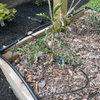
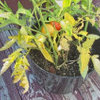
Here are some pics for possible diagnosis. Thanks in advance for any possible solutions.

Affected yellow squash 1

{{gwi:108521}}

affected yellow squash 2

{{gwi:108522}}

affected tomato 1

{{gwi:108523}}

affected tomato 2

{{gwi:108524}}

affected tomato 3

{{gwi:108525}}

affected green bean 1

{{gwi:108526}}

affected green bean 2

{{gwi:108527}}

affected cucumber 1

{{gwi:108528}}

affected cucumber 2

{{gwi:108529}}

affected cucumber 3

{{gwi:108530}}

Comments (9)

  • 17 years ago
    last modified: 11 years ago

    I sympathize. I am reading a book, The Cook and the Gardener and I noticed while the Cook seldom has failures in the kitchen the Gardener is always grousing about something going wrong in the garden.... We have the weather, bacteria, viruses, insects, rodents & birds, mineral & pH imbalances, droughts, etc. to contend with. Select resistant varieties, do succession planting, companion planting and ask for mercy from your deity of choice.

    I planted 7 heirloom tomatoes in soil that hadn't had anything grown in it for the last 13 years at least. Two plants died within weeks of transplanting out, another two have followed, plus two others are in the process (rolled leaves, yellowing leaves from the base up) the eggplants all got spider mites. However, I got a very good yield of fantastic flavored tomatoes (yellow) from Lenny & Gracie's Kentucky plus an abundance of squash from Trombetta d'Albenga. Melons, Bush Sugar Baby and Minnesota Midget look OK and have melons coming along. Kwintus beans are still producing but Rattlesnake crapped out awhile ago.

    When I researched minerals and adding greensand, etc. a landscape architect confirmed that So Cal has plenty of minerals but they can be locked up by the alkalinity of our soil and water - so use humic acid.

    Don't give up, rip it out, re-amend and replant for fall.

  • 17 years ago
    last modified: 11 years ago

    The cukes, in case you're not aware, have leaf miners. They don't seem to be doing much damage, but if you want to get rid of them, you either have to find and squash them in the leaf, or you have to remove, bag, and discard the leaf (in the trash, not the compost), or you can deal with them after they've left the leaf. Leaf miners have a very short life cycle; a new generation will be born in a few weeks.

    Here's the Cal Davis page; not much help, maybe.

    http://www.ipm.ucdavis.edu/PMG/r116300911.html

  • 17 years ago
    last modified: 11 years ago

    Greenwitch: Humic acid huh? Never heard of it. But, that's the thing, it's in a raised bed with an easy 2 feet of decent topsoil in it. I agree, what's below that is garbage. Maybe I need to have a soil analysis performed.

    missingtheobvious: Yeah, I figured that out after a little research but I read that leafminers aren't a major concern. But I think between the leafminer damage and powdery mildew, it's caused quite a bit of damage. The cukes are in a lot worse shape now. And yes, that's a good link to the UCDavis site. I've done quite a bit of reading there.

    Has anybody had any luck with preying mantids?

  • 17 years ago
    last modified: 11 years ago

    I'm not clear what you've been doing for the mildewed cucurbits. You mentioned baking powder. I've had good results spraying with this:

    1 Tablespoon baking soda
    1 Tablespoon horticulture oil or vegetable oil
    1 Tablespoon horticultural soap or regular dishwashing liquid (not "detergent," and no anti-bacterials)
    1 gallon water

    You'll need to keep spraying every week or two or whenever it starts to look bad again. It won't eliminate the mildew, but the plants seem much happier.

  • 17 years ago
    last modified: 11 years ago

    Yeah, I've tried the baking soda now 2 times. Not sure on the "happiness" yet, LOL.

    1st time was 1 tbsp baking soda, 1 tbsp canola oil, and 1 gallon water. 2nd time(2 days ago) I replaced the oil with about a teaspoon of Dawn dishwashing liquid. We'll see.

    I've read online though that household soaps may have harmful phosphates in them. I've also read that potassium bicarbonate is better for the soil than sodium bicarbonate (baking soda) for pH reasons. I've also read that milk gas been used. /shrug

  • 17 years ago
    last modified: 11 years ago

    WEll, except for the mildew, my plants looked the same.
    I seem to have made some improvement with heavy applications of neem oil--the leaf loss has stopped and new growth appears even low on the plants.

    It may be that mine lived through a cycle of insect infestation and the brutal neem oil baths killed the next generation.

    I'm near the beach but the sun is still hot and the plants exposed to sea breeze. My leaves look like yours--curled, edges brown, but few of the spots or other characteristics of known diseases. I was concerned about watering too much, since they are in deep mulch which is consistently damp below the surface.

    Now I am watering much more heavily--soaking them, really-- and they seem to respond with more robust appearance and growth.

    It was a case of nothing to lose, so if you have nothing to lose, try it. I have come to believe most on-line diagnoses, even by experts, are often wrong, or after the fact, and that endangered plants live in a world of multiple and ever-changing factors.

    That goes for my diagnosis too; but there has been improvement these past two weeks, and I was about rip everything out. So give it one more shot--who knows?

  • 17 years ago
    last modified: 11 years ago

    are you referring to the tomato pics? The squash is actually doing "ok" now. Not nearly as afraid of losing them as I was before. It's the tomatoes that are looking almost dead now and the cukes that are looking poor. My bellpeppers(no pics) seem to be doing ok too. They just seem to take FOREVER to finally reach the final color.

    Have you tried anything other than neem and where do you get it? Mine is that 70% neem that armstrong's has.

  • 17 years ago
    last modified: 11 years ago

    woohooman Dawn is not recommended. I've read to use anything but Dawn.

  • 17 years ago
    last modified: 11 years ago

    Well, it is a superior dish washing liquid, so I can see the reasoning there. Maybe just plain old Ivory, huh?

    Note to my above reply to missingtheobvious: I meant "milk has" NOT milk gas...LMAO