Software
Houzz Logo Print
drjoann

Floor Outlet Tripping Hazard?

15 years ago

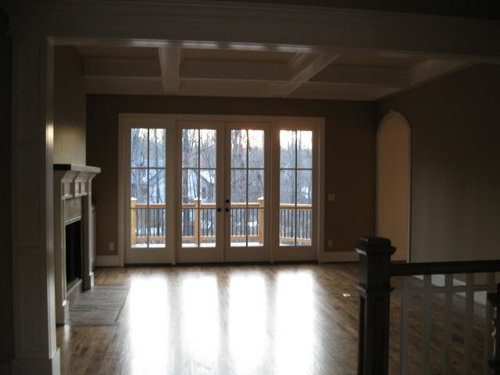
The floor outlet in our great room is not flush with the floor. Also, it is not placed where I intended to have furniture to cover it up.

Here are pictures:

The picture, below, shows the placement in the room. Look on the right hand side of the picture just to the left of the top of the newel post.)


In my work world, this would, literally, have to be covered with bright yellow & black striped tape because it represents a tripping hazard. I surely don't want to do that in my home, so I want a reality check if you think this is something that a person could trip on & should we have something done about it?

Thanks - Jo Ann

Comments (17)

  • 15 years ago

    That looks strange to me and I would fix it. The only floor outlets I have ever seen are flush with the floor, not raised as that one is . . . I would replace it with a flush outlet, for sure!

  • 15 years ago

    It appears to be a standard bx with a standard cover plate, not an actual floor outlet.

  • 15 years ago

    OK, I just wanted to make sure that I wasn't being a PITB and had a legitimate concern. That certainly doesn't look anything like any floor outlet I've ever seen. When I saw it, I told the builder that it is a tripping hazard & he claimed that it isn't. I guess we can get a flush receptacle, but I'm not sure there is anything I can do about the placement.

    Again, I told the builder that it is in the wrong place & I hadn't intended to put the couch facing the fireplace that far back. He said, "You're putting a TV over the fireplace, right?" And I explained that we weren't because we intend to use the great room for conversation and the keeping room for TV watching. He found that to be a quaint idea. In any event, the electrical sub knew that we weren't putting a TV up there since I paid extra to have an outlet for a light to illuminate a piece of art above the fireplace.

    When we were there in November, we noticed that the floor outlet we payed for wasn't there & told the builder. He said that it had been installed but accidentally covered over when they laid the floor. Now, I have my doubts. We saw a rectangle taken out of the ceiling in the basement directly under where the outlet is.

    So, I definitely intend to get a proper, flush outlet installed. I don't think there is much to do about the placement, so I guess I better get shopping for a library table or console to put behind the couch. I kinda wanted that, anyway, but I didn't want to be forced into that configuration by a floor outlet.

    Thanks - Jo Ann

  • 15 years ago

    I have to say first what a gorgeous home you have. It's simply beautiful and I really look forward to your photos here on the forum.

    I don't think it's a big deal, but am no expert. I think they should be able to have the electrician fish the electrical to the correct spot and then replace the boards that are affected and put in a flush outlet.

    We had to have a few boards replaced in our last home and if done properly it should be fine.

    All the best and I hope you and yours have an wonderful life in your new home.

  • 15 years ago

    You know - that outlet looks like my floor outlet. I don't see an issue but maybe I am missing something. There is always a cover that sits on the wood (at least that is all I've ever seen in residential setting). The commercial ones are flush but they look commercial.

    Obviously commercial codes are different and what is a tripping hazard in a store is not really one in a home.

    Brickeye - really? You see brass outlets on the wall with a brass cover? That is a floor outlet for sure.

  • 15 years ago

    Isn't any outlet with a wire a tripping hazard? location obviously is the real issue.

  • 15 years ago

    It's exactly like the one in my office. I know b/c I'm touching it right now with my toes! :) It is under my desk though, so I'm definitely not concerned about people tripping over it.
    The one in my great room, however, is round and flush with the floor. It's obnoxiously large, but is completely hidden from view by furniture.
    Have them change it if it bothers you, but I really don't think it's a big deal. Living life to the safety standards of a commercial build is (IMO) a bit over-the-top. We'd have no furniture in designated walkways, we couldn't have throw rugs, etc etc etc. We'd have some pretty boring homes...

  • 15 years ago

    It's a standard floor outlet with a brass cover plate and is usually less dangerous than an area rug but the elderly or infirm (or flip flops) might have trouble with it if it is placed where it is difficult to see.

    It would be expensive but you could replace it with a round one that is truly "flush" with the surface of the wood flooring instead of "builder flush". They are uncommon because they need to be installed by a flooring sub who has the necessary skill. The problems you mention are normally the responsibility of the GC and the designer/specifier rather than the electrician. If the choice was left up to the electrician you got what should have been expected: the easy way.

    As for placement, I have carefully located floor outlets to fall under furniture and no one has ever put anything over one. I hate the silly things. It's best to install them after you have lived in the house for a year.

  • 15 years ago

    "You see brass outlets on the wall with a brass cover? That is a floor outlet for sure."

    If that is someones version of a floor outlet is is very poor.

    It it a tripping hazard for sure.

    Flush is how it should be, or pocket style.

  • 15 years ago

    You will find that "flush" in the recessed floor outlet world is exactly what is shown in the photo although there are ones with a wider more tapered cover plate for use under a carpet. To find one that is truly flush you need to go to an electrical supply store and explain what you want.

    A pocketed floor outlet is just a receptacle that is recessed deeper in the housing so the plug doesn't stick up above the floor level and they will usually have a raised cover plate like the so-called "flush" ones.

    But the real issue is where the outlet is placed. If it is where someone might trip on it then connecting a cord to it would create an even greater hazard. If you think you will never put furniture over it have it moved to where it is useful and safe and the cover is not an issue.

  • 15 years ago

    Joann, I am anxiously awaiting pictures of your entire house! :) Our floor outlets look like yours, but they are round and bigger. We had the electrican place them after our furniture was in so that there is one just under the edge of each side of the couch. They are hooked to a light switch so that the lamps that are plugged into them can be switched from a wall switch when we walk into the room. I really like them. If those outlets, however, were placed so that they weren't obscured in some kind of way, that would really bother me! Good luck!

  • 15 years ago

    Here is a picture of my floor outlet. You can use that to show them if it helps.

    {{gwi:1403525}}

  • 15 years ago

    "You will find that "flush" in the recessed floor outlet world is exactly what is shown in the photo "

    No, there are plenty of floor outlets that really are completely flush (let alone if you switch to 'pocket' style floor outlets).

    That one is just a piece of junk (and I am being polite).

    The one lyfia posted is far more common and acceptable.

    It is FLUSH. Nothing sticks up above the floor surface unless it is open and in use.

  • 15 years ago

    I wouldn't use a beveled cover plate but they are an industry standard and not necessarily junk. If you want something else all you have to do is specify it.

    The one shown below is $93 just for the cover plate.

  • 15 years ago

    Right - $93 vs $25 for the basic one. Everyone has different standards for "junk". I don't even see the clearance advantage myself between junk and Macv's. In my area, I've only seen junk..... It is certainly common and acceptable around here.

    Since they sure as heck better be under furniture, my only concern was code. If something is plugged in, why spend the extra money (although that is pretty)?

    I can't for the life of me think why you would have floor outlets in a residential setting that don't have something plugged into them all them time. Vacuum? That would be a pretty big room that couldn't just be plugged in at the wall.

    We had the advantage of unfinished space underneath so prewired a switch to a box. Furnished. Then put outlets in. Turns out our new endtables have no clearance for an outlet since they are flat to the floor. So we actually put the outlets under the adjacent couch. Something to think about.

  • 15 years ago

    My photo was intended to show that it is impossible to tell a solid brass cover plate from a plated one (if they exist) in a photograph and beveled solid brass plates are not junk.

    The usual reason for wanting a truly flush outlet cover plate is if you think you will move your furniture and it will be in a walking path and not covered by a carpet. In my opinion that is a reasonable precaution and should be included in the design documents.

    The bottom line is: you should show what you want in the design documents and not blame an electrician for choosing an industry standard. A sub-contractor does not have the same obligation to anticipate or inquire about the owner's wishes as a designer would have.

    If the desired device and placement had been described in the design documents, the GC would have to correct the work at no cost to the owner.

    If only the placement is incorrect, you could probably get the outlet you want for the material cost when the location is corrected.

  • 15 years ago

    The quality flush mounts come with their own box and are not just a cover plate.

    They do require careful installation (cutting the floor).