

Hurricane Sandy- Don't Know Where To Start!
13 years ago
last modified: 13 years ago
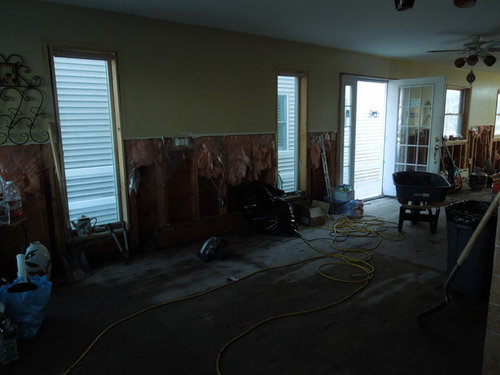
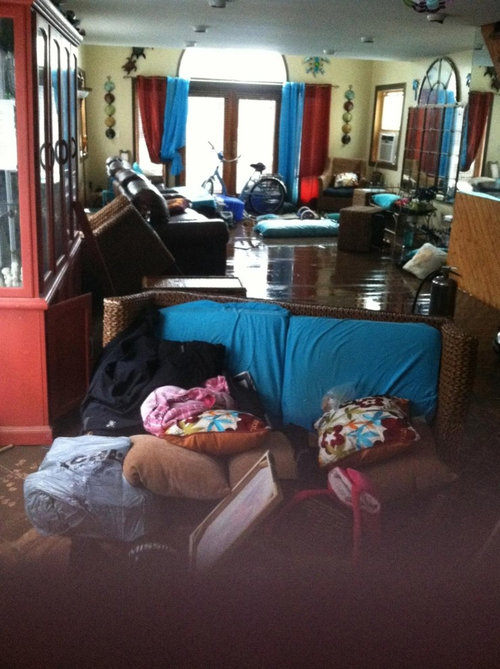
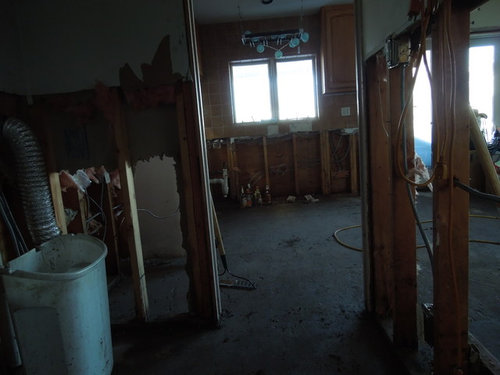
3 feet of salt water and sewage throughout the house. Have to gut down to the studs and replace everything! First have to powerwash and spray a disinfectant. Is bleach adequate or is there something else we should use to kill the bacteria and prevent mold?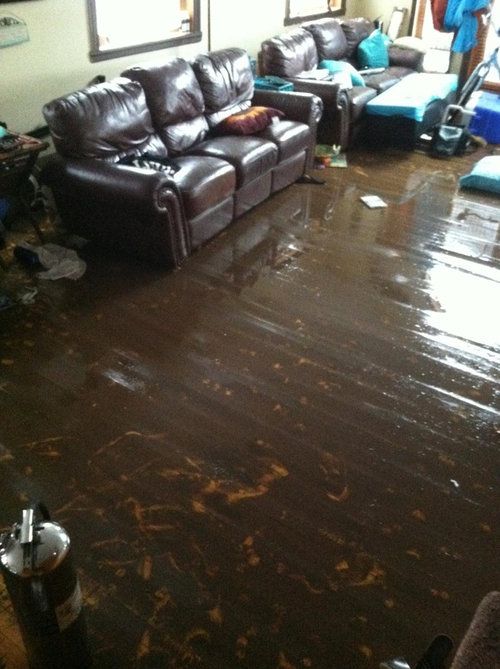
Featured Answer
Sort by:Oldest
Comments (56)
 13 years agoI am in construction and you should contact a remediation company that cleans out flooded and damaged homes. Also, contact your home owners insurance to see if that can be covered under your policy. They will get rid of anything that is damaged, molded and will check for soaked areas and see if it's salvageable. I'm in California and don't know of any companies in the east coast. I own a landscape design company and want to donate some of my expertise to re-do landcapes in the affected areas. I have family and friends there and there homes were not damaged, thank goodness. If when you are ready to do something to your yard, I'd be happy to send you low maintenance landscaping ideas and DIY advice to keep the budget lower than hiring a professional. Good Luck and my heart goes out to you, your neighborhood and those who have suffered loss in east coast.
 13 years agoEither bleach or ammonia but not both together. I prefer ammonia for disinfecting. It does not harm the body like bleach does.
Related Professionals
Evansville Interior Designers & Decorators · Madison Interior Designers & Decorators · Hagerstown Interior Designers & Decorators · Fort Wayne Interior Designers & Decorators · Newport Interior Designers & Decorators · Guymon Interior Designers & Decorators · Pullman Interior Designers & Decorators · Spokane Interior Designers & Decorators · Cambridge Architects & Building Designers · Elizabeth City Architects & Building Designers · Plattsburgh Architects & Building Designers · Pocatello Architects & Building Designers · Bloomington Kitchen & Bathroom Designers · New Bedford Kitchen & Bathroom Designers · Orange County Kitchen & Bathroom Designers 13 years agoBleach is what you need . I helped with clean up in Pa after Lee came through last fall. It wasn't salt water but every thing else was the same. They used a garden sprayer to apply but I don't remember what the bleach to water ratio was. When you do this remember to wear safety gear. Also don't forget the ceiling.
- 13 years agoMy son had good experience with pro serve in Hoboken and I see them all around here in Manahawkin. Also PuroClean is the one my neighbor used and he is in construction.
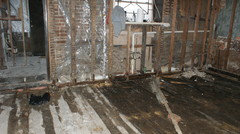
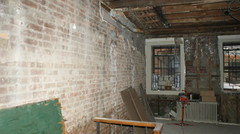
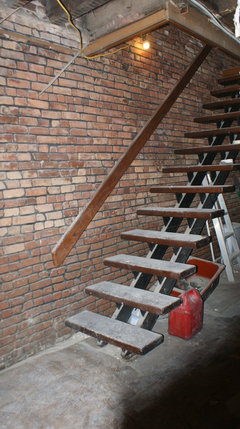
- 13 years agoI took everything out to the floor joists now they are using a special solution. I took all the studs, framing and all insulation out too instead of going to the 6 ft line. I uncovered a brick wall in my mother house which was damaged in hurrican sandy. A good product to use in your basement to prevent moisture is Aquafin. It is a premier waterproofing solution Good Luck.
- 13 years agoYou need a professional service to remediate. ServPro is who we are using. Flood insurance helps pay for remediation. Need much better solution than bleach. Call in a claim if you have flood insurance, and whether or not you have it, apply for help to, www.disasterassistance.gov
We had less water than you but it is not just salt water, it is Category 3, black water. If not remediated the house will grow mold and later need to be torn down. Good luck.  13 years agoPLEASE get a haz waste place to help. They will help with the clean up and disinfect so you don't have to. I'm so sorry you've had to go through this. I work for an insurance company, so any of the remediation companies will come help you with that!
 PRO13 years agoHi, I am so sorry for what you are going through. do you happen to live in New Jersey? My inalws and several of my friends are going through the same thing,I live at the Jersey Shore. Yes, definitely work through your insurance company. Chances are the floor is going to be a loss and some of the sheet rock will have to come off of the wall, depending on how high the water was. You also have to have the electrical inspected and the foundation checked if there were waves involved or just standing water. After that is taken care of then you can start the renovation/remodeling process. If you need any. design guidance, and live in New Jersey, I am a designer and would love to come help you, sometimes making choices, with everything else that is going on can be overwhelming. I am sincere and would love to help. You can email me at maryellenperone@yahoo.com . Best of luck with everything, you are no alone, so many are going through this right now. My thoughts and prayers are with everyone.
 PRO13 years agoIf you have to do this yourself and we pray that you don't. Look into Boric acid and Hydrogen Peroxide.
The Boric acid stays on the wallls and kills the residual mold, whereas the bleach evaporates. I used it many times with great success. Good luck to you.
. 13 years agoGrace Refuerzo is right, as are the others that suggest a remediation company. There are many world-wide and country-wide. Your insurance company should have told you this and recommended one. You've been paying all these premiums all these years, right? Time to make them work for you!
 13 years agoMy prayers are with you. My husband has done several weatherization projects where he used (as K.O.H. mentioned) hydrogen peroxide to remove mold. None of the caustic smell you have with bleach and ammonia. However, he never worked on a project of your scale. Please keep us posted as you move along.
 13 years agoI think the advice you've gotten is excellent. Please post photos and updates when you feel like it. It helps the rest of us who are not affected by Hurricane Sandy appreciate the extent of the cleanup and rebuilding on real people. Thanks for posting and best wishes for regrouping and recovery.
- 13 years agoI strongly suggest you contact a professional for cleaning and disinfecting, and preventing mold. This is not something that any of us have experienced before, it is well worth the money to hire a remediation company. Flood insurance will help pay, homeowners will not. If no insurance Disaster Assistance might help pay. For now, get it done and put it on a credit card, it's that important. Don't wait, mold grows fast.
- 13 years agoFrom the Gulf Coast where we are no strangers to the effects of hurricanes and tropical storms: Please listen to those who recommend professional remediation. You had a toxic stew inundating your home. Mitigation is not a DIY project. And the longer you wait, the more difficult remediation becomes.
Whether your "stew" came from seepage or surge, you also want to have a professional check the building's integrity. Surge water has incredible force and can damage the structure in ways that aren't immediately obvious. Even seepage can do a number on the building's fabric given the amount you experienced.
Your insurance agent has to be involved - s/he has to schedule the insurance adjustor, help find a reputable remediation company or structural engineer, explain what is covered by your existing insurance and hopefully go to bat for you when the adjustor's "estimate" automatically comes in low. It's possible that insurance agents in your area aren't as familiar with hurricane claims as ours are. If so, ask the agent to contact a colleague on the Gulf Coast for assistance.
Because it's cold in your area now, you might not immediately notice mold, but the spores are there just waiting for a bit of warmth - in ductwork, insulation, tiny crevices in sheetrock, wood studs, flooring and underlayment, appliances, furniture and textiles. After Hurricane Ike hit us in the hot season, people saw molds in colors never seen before - some were impervious to bleach, some were toxic, some not. Please don't take a chance that your repair will cover up those spores and allow them to proliferate in warmth and darkness.
You have suffered a calamity that can't be resolved quickly or easily even with the best insurance coverage - get all the help you can from whatever local, government, and private resources are available as quickly as possible.  13 years agokrancmm, I'm sorry you have had to deal with these issues in the past. Would you mind telling us somewhat of a timeline of how things went for you and others in your area? How long did it take between the damage and when you were able to safely move back into your homes? Everyone keeps saying "this will take a long time", but that's so vague. I know each house and situation is different, but knowing some guidelines might help people get a better feeling for what lies ahead for them.
 13 years agoI'm so sorry, kcdoyle. We gathered some guides to recovering from mold damage, cleaning up, and finding the right kind of help. I hope it helps some:
http://www.houzz.com/ideabooks/Disaster-Recovery- PRO13 years agoPersonally, I would gut the area down to the framing. Take out all dry wall and insulation especially. Also, because it was salt water, your electrical will need to be checked out as salt water is highly corrosive.
As mentioned above talk to a remediation company. They will at least be able to point you in the right direction and recommend products if they can't do the work (or they should offer the advice if they are a reputable company).
Don't do a thing though before contacting your insurance.
Good Luck. - PRO13 years agoAlso, why would you power wash? You don't want to be splashing that stuff around.
- 13 years agolast modified: 13 years agoOur house at the jersey shore got 5 feet water (but i do not think any sewage - too close to the ocean) and with the help of volunteers we removed all sheetrock, insulation, soaked contents etc. I think I might be able to salvage one floor. Since we just got electricity back we are installing a dehumidifier. To keep costs low, I got a company to redo the sheetrock and insulation and will ask them to spray beforehand or I will do it myself. We were not insured for flood but got the name of 4 companies who do mitigation from our insurance co. They did not quote estimates and wanted a $5000 retainer. I felt fortunate to have the volunteers. It took three days and many people. WE did hire someone to remove the 3 feet of sand that use to be lawn. The majority of homes on our block were condemned so, once again, I feel fortunate. Its almost thursday so we will give thanks for what we do have. There are so many people that are displaced.
 13 years agoI am so sorry to hear what you're going through! Like others have said, mold is toxic and the spores are insidious. That is good enough reason to call in a company that specializes in post-flood restoration. The sewage is another issue entirely. In my state, any house that has had open sewage is declared uninhabitable (for good reason); typically insurance companies here will force residents to evacuate a home with raw sewage in it. As someone else pointed out, you need a hazardous materials crew to mitigate the possible after-effects of the sewage.
Also, when you talk to your insurance company, it would be good to know a) whether you're covered for flooding (most people aren't), and b) whether you're covered for sewer back-ups (most people are). If the sewage came out of the pipes it may make a difference as to whether they'll cover the mitigation and reconstruction.- 13 years agoironically our policy with CHUBB covers mildew/mold but not flood and they claim they aren't responsible for our mi;dew because its flood related... i hope these companies are well monitored
- 13 years agoI'm so glad you survived this horrific event. Godspeed and good luck with your efforts to make your home safe.
- 13 years agoYou must have it done professinally. I am a bacteriologist and I know you cannot possibly do this yourselves. It will be expensive. Yu will have a gtax deduction.
- 13 years ago@Sheila, excellent series of articles. They apply not only to Sandy, but any storm that leaves water in the home - tornadoes, straight line winds, hurricanes, tropical storms, river flooding, freak excessive rainfalls.
@orangecamera, the problem with recovery timelines, and why they're so vague, depends so much on the scale of the disaster. Where 10s or 100s of thousands of people are affected, there are simply not enough inspectors, mitigators, contractors, estimators and professionals to quickly get to those in need. And that doesn't include possible delays caused by litigation when estimates seem too low or the contractor and homeowner have a falling out..
Six months after Ike, an overwhelmed local adjustor was still desperately looking for people to train in estimation. My town was on the "good" (left) side of Ike and protected by levees, so the effects were mostly wind and tornadoes spawned by Ike. Even so, I saw the FEMA blue tarp "roofs" for at least 2 years after. There weren't enough local roofing contractors for timely repair. For some, litigation about "low ball" estimates held up repairs.
For surge damaged homes on Galveston, up the Galveston and Trinity Bays, and points east, scheduling all the necessary personnel was time consuming and psychologically traumatic (but with some gallows humor and mutual support to help).
As for any extensive remodel, each stage has to be approved. During a disaster it's by stressed to the max local government inspectors: structural soundness, electrical inspection before walls could be closed in; gas company to ensure service wasn't compromised; signing off on each stage of work that everything was being done to code. Contractors, when one could finally schedule one, scrambled for supplies where transportation to affected areas was limited.
The worst of the salvageable houses took about a year to complete, even though these areas, like most Gulf Coast communities, have extensive disaster plans already in effect.
@tdwart or anyone who had landscaping under salt water, to save money and aggravation, don't try to replace any lawn or plantings until you're sure the salt has leached out - unless you're using salt-resistant plants. My local garden club collected plants for a community that suffered severe salt storm surge - we were way too early as it took over 2 years before plants didn't "burn" to death from the salt remaining in the soil. There should be local private or university labs that charge a modest fee for soil sampling that will show whether the saline content has dropped below tolerable levels.
Sorry to run on so, but hope this is somewhat helpful. - 13 years agoMy son "lucked out" because his was sewer backup and not flood.
Hopefully you can get some FEMA aid since that is for uninsured or underinsured. I am assuming that means someone without flood insurance.  13 years agoYou might try the Red Cross for information. My daughter is in New Jersey volunteering and is working on a computer program to help people find needed services.
Since I'm allergic to just about everything, I use vinegar to kill mold. This website offers a recipe: http://www.diylife.com/2007/08/15/remove-mold-with-vinegar/
Good luck! 13 years agoSorry for what you're going through, right now. Believe it or not you will get through it and it will be a thing in the past. Whatever you decide to do to decorate your house will become "home" in time. There's a powdered bleach that a construction company will come spray. They have to wear Hazmat suits, because they're very harsh chemicals to breathe in. Do it the right way, you don't want black mold to grow, that will kill you. I was born and raised in Louisiana and my friend's husband worked with that t powdered bleach stuff.
- 13 years agoSorry for what you're going through, right now. Believe it or not you will get through it and it will be a thing in the past. Whatever you decide to do to decorate your house will become "home" in time. There's a powdered bleach that a construction company will come spray. They have to wear Hazmat suits, because they're very harsh chemicals to breathe in. Do it the right way, you don't want black mold to grow, that will kill you. I was born and raised in Louisiana and my friend's husband worked with that t powdered bleach stuff.
- 13 years agoGod bless you - we have lived through this awful experience - also went down to studs and concrete - just remember that "this too shall pass" and next year you will be in a better spot
 PRO13 years agoI am so sorry you have to go through this. I know Houzz put together some suggestions in general for flood victims. I believe ammonia should not be used where there is mold. I hope you have been able to find professional help. Believe lots of fans and perhaps heaters ... those big industrial space heaters perhaps would help. Thinking of you and the others who have been through this terrible storm.
 13 years agoBe mindful of eliminating problems with mold in the future. I suggest consulting an expert. My thoughts are with you.
- 13 years agoI'm so sorry for what you are going through. The first thing we said before Grace on Thanksgiving was a prayer for the hurricane victims as it is close to home. We have dealt with flooding in the past with Floyd and all the suggestions to get help from a remediation group are correct. Mold can cause serious health and breathing issues. Best of luck to you and those affected by Sandy.
- 13 years agoI can't imagine what challenges you are facing right now. And I'm sure getting help is difficult since so many have been impacted. Raw sewage swept through our home last spring. Having worked in the emergency response system for years , I understood my feelings were normal but I still felt overwhelmed. Getting back some control in an out- of -control situation took time. Here are a few strategies that may be of some help:
First, look for your strengths...what got you through other difficult problems in the past. You will use these coping skills now.
Find someone who hasn't been affected by this disaster who will listen to you. Not give you advice or try to solve your problems but will just listen to anything you have to say. This is a great stress reliever and will actually help you sort things out for yourself.
Your life has been turned up side down but try to establish some routine in your days. Sounds silly but it will help.
And above all, take care of your physical needs. For example, getting enough sleep may be one of your biggest challenges so do whatever it takes to get the rest you need. Take care. - PRO13 years agoOh my heart goes out to you and your family. I am a designer and have bought and sold many properties. Several years ago, I bought a property and two weeks later it was flooded by a hurrican e Gustav, with several feet of water in the house. We took the sheetrock down to the studs from the floor up to 4 feet. We used a garden sprayer, mixed with about 50 percent bleach and water and sprayed the floor and the studs. After it was completely dry, we replaced the sheetrock. Be sure to wear a mask when you remove the sheetrock and when you spray the bleach. I would rent or buy large box fans to circulated the air. It is very important to make sure the wood is completely dry before you reseal it. Please contact me directly if I can give you anymore advice. There are lots of expensive products out there, that I do not think are necessary and there will be LOTS of con artists who will try to do and to sell you anything. Be careful. On your project I am a little concern about the salt water and your plumbing. I am not sure if you need to spray the pipes and or electrical with something in addition to bleach to avoid andy corrosion. I am thinking that the water in the bleach should be sufficient.
- 13 years agoI think that the local systems should make a better effort to triage the response by providing more detailed information about what is truly the minimum one must do if 1) there is sewage in the flood water or 2) there was only salt water and debris. This information so far has not been available and without it there is perhaps greater anxiety and waste of resources than is necessary. If there is no sewage, I believe one who is well-informed and protected could do a good clean up job without the expense of experts or at least make an informed decision to call in the experts.
 PRO13 years agolast modified: 13 years agoThere is an excellent source of information on Mold and Mold Remediation available on the EPA website (epa.gov/mold). There are discussions going on in some agencies about the effects and use of bleach. Commercial grade disinfectants such as "TB Quat", "Vyrex", or Hospital grade "Vital Oxide" are available, and should be considered in lieu of bleach. Always read, and use these products in accordance with, the manufacturer's label.
Natural disasters, like Hurricane Sandy, will continue to affect the lives and livelihoods of their survivors; not to mention the thousands of volunteers that will join in the recovery. Please take the time to understand how this horrific event could affect your property and health in the future. Take seriously the old adage, "To be forewarned is to be forearmed". I'm no expert, but allow me to provide you with a short primer.
The fact is that mold is an integral and essential part of our daily lives. It is present in food items, fermentation, fertilization, waste management, and even in the air we breathe. But a few Molds are dangerous to your health if exposed to them. All Mold require three (3) things to grow: 1) a minimal level of moisture, 2) organic matter, and 3) heat [in a limited range]. Take away any one item and Mold will not grow. That does NOT mean, however, that it is dead. And cleaning by wiping surfaces with Bleach, or other disinfectant, is not effective at removing the threat of its return. A microscopic look at the structure of Mold on the surface of organic matter reveals the presence of roots. A certain amount of vigorous scrubbing and drying is required for a thorough cleaning. Mold roots can sleep dormant for a very long time; awakening to start growing again when the three ingredients for growth are again present.
Forty-eight hours of incubation is usually enough time for Mold to start growing. And if the affected area is larger than Ten (10) square feet, it is strongly recommended that you seek professional help in removing the affected material and personal property; especially if effluent (sewage) is present. A good Rule of Thumb is to remove all finish material (carpet, drywall, wall finishes, cabinets, etc.) at least 18" above the observed high water line, and to get rid of furnishings with stuffing and padding (bedding, rugs, drapery, sofas, chairs, etc. - anything that can not be thoroughly cleaned and guaranteed). If it continues to have a moldy smell, I would suspect that it's not clean enough.
The homes and lives of those survivors most affected will be those without homeowner's or flood insurance. I have witnessed the clean-up process continue for years after the impact of the initial disaster. Several non-profit disaster recovery agencies will be involved. After the Early Responders have gone home, the Long-Term-Recovery personnel will be providing their skills and resources. The vast number will be trained volunteers. I would counsel patience and hope and cooperation of the efforts of those less fortunate; with their desire to clean, make repairs, and stay in their homes; and the efforts of the volunteers to help them accomplish their goal.- PRO13 years agoCONTACT A PROFESSIONAL MOLD REMEDIATION COMPANY AND IGNORE ANY OTHER SUGGESTIONS...There is no other option for you in this severe case..and your insurance should cover completely..perhaps with no deductible.
- 13 years agoSorry for all that's happened. Our finished basement was flooded from Hurricane Irene and mold grew quickly because of the warm temperatures. We had a remediation company come and treat the entire basement. We were told that bleach will only eradicate mold growing on the surface and not what has already entered the drywall etc. We were very happy with the cleanup. Since you also have sewerage in there a professional company should be called in. Contact your insurance company if you haven't already. Also FEMA? We were helped by both. (We had flood insurance.) Good luck!
- 13 years agoI just wanted to tell you we are praying for you out here in Portland, OR. Sorry I can't add anything more to the conversation, but just know we have you in our thoughts and prayers.
 PRO13 years agoLiving in an area of ancient houses & high humidity we have done a good bit of mold control. The best product you can use for cleaning is called 'JoMaxx', you can purchase it at Lowes. Use the product with bleach mixed directly into the product with water (directions are on the bottle), use your power washer, make sure you have one that delivers the highest amount of pressure. It will take some time for this to dry but the mold will have been eradicated.
- 13 years agoI KNOW FIRSTHAND ABOUT HURRICANES, ...and flooding basements. I also know how the water destroys the wood in floors, ceilings, and walls. I am so sorry for what you are all going thru. However...I am very disturbed hearing the advice being given about BLEACH, even some professionals...and decorators...and contractors.... Mold LOVES BLEACH... AND IT DOES not GET THE JOB DONE. THE SPORES are like Dust...and the least movement to them has them traveling thru out the area, and settling in the insides of anything they can CALL HOME...and that means your insides TOO . Test for yourself... Have someone cut a piece of wood from a joist or wall stud...and see the destruction the mold has already made. You MUST get a professional remuneration company. Go on Angie's List and find one with unsolicited homeowners recommendations in this State...you must be careful...the 'scammers' are out there waiting. Be Alert...and GOD BLESS YOU with your search.
- 13 years agoGet a professional. When you later try and sell the property you must disclose the fact that it was flooded and then describe what was done to repair the damage. A DIY mold removal may not pass inspection and require the work to be done again (sheetrock, insulation etc.) or at best a big markdown in price. A Louisiana resident
 13 years agoI am praying for all of the affected homeowners in my beautiful city. Money may be tough to stretch out but I would suggest taking everything out. Just toss it because you don't want any mold to fester and create a health hazzard. Then take everything down to the studs and buy an industrial strength garden sprayer and hit those bad boys with bleach and a mildew preventer and turn fans on to dry it out. It may also help for you to see if there is an abatement company who can come it and assess what needs doing. Just be safe. So happy to hear you have a home to repair and hopefully everyone is hale and hearty.
- 13 years agoI used swimming pool chemicals outside the house after all the hurricanes I went thru in N.Car. Inside I used bleach but since have learned the Borax kills all the bad fungus that can grow as well and it is available in most groceries, in the laundry aisle. All upholstered furniture has to go. But, you can salvage bedding and towels by washing them with bleach and Borax. PS...photo albums can be saved by rinsing the photo in fresh water and letting dry someplace not touched by the sunlight. Good luck and God Speed/
 PRO10 years ago
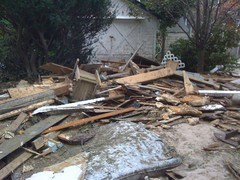
Water damage can cause mold growth in crawl
spaces. There are a number of factors that may contribute to mold growth
including low-quality building designs, inferior construction materials, and
warm climates. If you discover mold growth in your crawl space, it’s critical
to identify and address the problem in a timely fashion. The sooner you
can get rid of mold, the
less time that it has to spread and create even more problems. There are amazing tactics for removing mold growth. The first tactic is to isolate the
damaged regions and get rid of the moisture source. The second tactic is to
identify the source of the growth and get rid of the affected region.
Related Stories

COASTAL STYLEBungalow Kitchen Finds a New Life After Hurricane Sandy
By Kim Ratcliff
A storm surge destroyed a couple’s previous home, but that didn’t stop them from embracing the sea with a new nautical-style kitchen
Full Story
DISASTER PREP & RECOVERYHouzz Tour: Family Rebuilds Home and Community After Hurricane Sandy
By Becky Harris
This restored coastal New Jersey house — now raised 9 feet off the ground — offers inspiration for neighbors considering a return
Full Story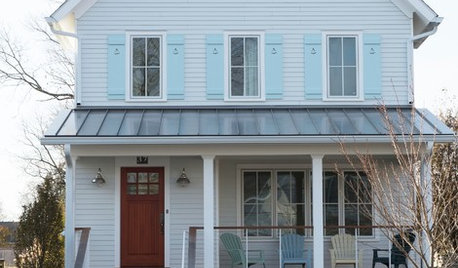
DISASTER PREP & RECOVERYHouzz Tour: Modern Farmhouse Emerges From Hurricane Sandy Devastation
By Becky Harris
A homeowner loses her cottage but gains a new energy-efficient, low-maintenance home
Full Story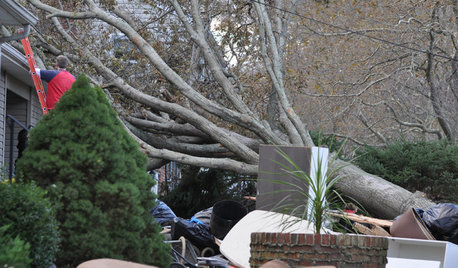
DISASTER PREP & RECOVERY7 Ways to Help Someone Hit by a Hurricane
The best things you can do in the wake of devastation are sometimes the most surprising
Full Story
ARCHITECTURE4 Things a Hurricane Teaches You About Good Design
By John Hill
When the power goes out, a home's design can be as important as packaged food and a hand-crank radio. See how from a firsthand account
Full Story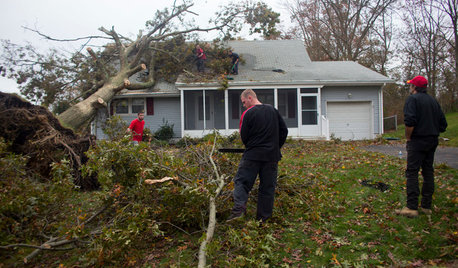
MOST POPULARWhat to Do After a Hurricane or Flood
How you treat your home after a natural disaster can make all the difference in its future livability — and your own personal safety
Full Story
FARM YOUR YARD6 Things to Know Before You Start Growing Your Own Food
It takes time and practice, but growing edibles in the suburbs or city is possible with smart prep and patience
Full Story
HOUZZ TOURSMy Houzz: From Destruction to Renewal After Hurricane Katrina
By Adam Breaux
After losing almost everything home related, a couple rebounds with a new, contemporary build on the same site
Full Story
REMODELING GUIDES11 Ways to Hurricane-Proof Your House
From smaller tasks you can do right now to bigger renovation projects, these strategies can help keep you high and dry at home
Full Story
HOUZZ TOURSHouzz Tour: Ready for Hurricane Season on the Jersey Shore
By Becky Harris
This family home was designed to stand up to storms. See how the architects built resilience into the design
Full Story



User