Software
Houzz Logo Print
jclepine

Complete Beginner, Two Questions

17 years ago

Hello.

The other day I suddenly decided to make a quilt. I don't know how though! I've never quilted before.

I've been cutting out rectangles in graduating sizes: 2 1/8" x 3", 3" x 4 1/4", 4 1/4" x 6" and 6" x 8 3/4".

I messed around with them on the table and they make one nice large rectangle, kind of like Fibonacci's Golden Rectangle but with rectangles rather than squares. (Not the quilters Fibonacci, the mathematician's often seen compared to a nautilus shell.)

I wasn't sure if I should keep cutting but since the shapes fit nicely together, I've cut a bunch.

Does this seem possible? I hope so!

Also, What is a good book to start with? I'd need to see only the most basic stuff, especially the part I can't get my imagination around, how to sew the part where four corners meet.

Thank you!!

Jennifer

Comments (15)

  • 17 years ago

    speaking as a total math geek.....I would love to see a picture of this layout!

  • 17 years ago

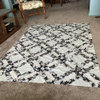
    Well, seeing as how I just threw some of it together so I could show it to my math geek brethren...

    I could keep going smaller but I'm afraid to scare myself off of my first quilt project. Although, it would look cool if I went a couple sizes smaller.

  • 17 years ago

    I just love this idea, being math challenged I would never attempt this, but will be looking forward to your quilt when finished.

  • 17 years ago

    This seems quite logical for piecing. First step, sew the stripe to the plaid and press. Then sew that to the solid red and press. Next sew that to the white daisy fabric and press. Add the red & white print last.

    If you can do this to a bunch of groups, then you can sew each 'block' to another...

    Hope this helps you get started.

  • 17 years ago

    and remember there is a seam allowance. Each piece will be 1/2" smaller (1/4" on each edge) so you need to factor that in. You'll get used to it in awhile. It's easy to cut bigger and trim off the extra.

  • 17 years ago

    Looks like the beginning of a nice scrappy quilt. It sounds a little math challenging, but really the Golden Rectangle is a formuls we often work with. A rectangle whose long sides are 1.6 times the short sides is supposed to be the most pleasing ratio to the eye. At least I think that's it. Sometimes called the Golden Mean. In any case, Jennifer, you're off to a fine start.

  • 17 years ago

    Hi there, jc,

    This looks like a great start - from another math geek LOL. Math and quilting just seem to go hand in hand.

    You were asking about a good book - well lots of info on the web. Try googling "How to Make a Quilt" and check out YouTube, quilting tutorial. There is a great one there at http://www.youtube.com/watch?v=olqn4Jau-IA

    Another thing I do is google quilt images and then check out the ones I like.

    Good Luck

    goldie

    Here is a link that might be useful: How to Make a Quilt Step by Step

  • 17 years ago

    Thank you all so much! I assumed it was as easy as putting each set (block?) of pieces together then just putting those together, but, wow, I should know better than to say "as easy as"!!

    Thanks for the steps based on the fabric prints and for the info links. I'll need it!

    1/4" all around...I can remember that. All my brain has been doing is 5/8" for the last year! Maybe I'll put a piece of tape on my machine to mark the right spot.

    Another question:

    When I sew garments, I add overstitching (zig zag) to every cut edge. Does that need to happen here, too?

    Oh, and another one:

    Can I mix fabrics like this? Mostly my scraps are from cotton but there is a linen in there and some (who knows what) polyester plaid, too. Will that matter? I assume I should not mix knits with wovens, but I don't have any knits yet ;)

    Thanks a million for the input!

    Jennifer

  • 17 years ago

    Welcome to the world of quilting. I began quilting in March of this year and will not, can not give it up. I am a fabricaholic and I am at the sewing machine 2-4 hours a day.

    I have converted my "accounting" office into a sewing room.

    The best piece of advise I can offer you is don't get discouraged, come here and ask questions, there is always a friendly quilter online it seems to help you.

    Your layout looks great and I like your fabric choices. You will love quilting, I am sure of it.

    Greetings,
    Sidnee

  • 17 years ago

    Jennifer--no need to overstitch the edges. Do use a fairly short stitch length for your seams, though. I run about 15 sts/inch and have no problems with seams failing.

    Mixing fibers is no big deal, but be careful when pressing. Cotton and linen press best with quite a hot iron, but the poly will shrink and melt at those temps.

  • 17 years ago

    That looks great. Any bunch of shapes that you can put together and end up with a square will work as a quilt block. Although you can mix different fabrics, you will eventually want to work with only 100% cotton.

  • 17 years ago

    Thank you!!

    I was wondering how much time would be spent over stitching the edges...phew, glad I won't have to!!

    Hmmm, I might take that plaid out then. Not that I've ever been known to iron a blanket, but while I'm working with the fabrics, I'm sure I'll have to stop and press often.

    I'm thrilled to have found this site! Thanks to the poster on the sewing forum who suggested I post here!

    J.

  • 17 years ago

    Well welcome to both the forum and to quilting. I love your fabric choices for this one and using the ratios from Fibanocci's sequence always gives good results. I'd recommend keeping this first project small. That way you'll get a feel for all the stages of the process, but also get a fairly quick reward.

  • 17 years ago

    Welcome here, J! I like the combination of fabrics you have chosen, even the plaid, though you say you may remove it. One problem with different types of fabrics is that any that are thicker (heavier) may press or iron out in such a way that they become smaller than their thinner counterparts that were cut to the same size. (Sometimes they refuse to be ironed as flat as plain cottons would.) Just be aware of this. Sometimes you can get around it by cutting the heavy fabric pieces a trifle bigger, and matching their size against that of the corresponding parts that you have made of thinner fabrics for other blocks. (I'm talking about,say, 2, 3, or 4 squares or rectangles sewn together.)

    It is always smart to trim the whole block to whatever size you wish--just so long as all the blocks end up the same size--before sewing the blocks together for the final product.

  • 17 years ago

    Welcome Jennifer!

    You asked good questions. I really would recommend that you start out using all cotton and omit the poly, at least on your first quilt. There are enough challenges when you are starting out (mostly delightful challenges!) without dealing with fabrics that may stretch differently, may shrink differently or may distort when you iron them. There's plenty of time to experiment with fabrics once you get comfortable with the basics!

    Just like you have set up your pieces and your blocks, you'll always (or almost always) be able to put a quilt together using straight seams and won't have to fit 4 points together. I have almost as much fun with my graph paper and colored pencils as I do with the fabric and as a math person I think you'll enjoy looking at a quilt pattern and figuring out how to sew it together in a series of straight seams. Even complex patterns can be broken down into easy steps. If you want to explore the mechanics of piecing blocks, go to quilterscache.com and use the pull down menu in the middle of the page to find their library of quilt blocks. Pick a complex pattern whose construction isn't immediately obvious and click on it to see how it goes together. You'll love it!

    I have a couple book recommendations. Both of these should be available in local quilt shops or on-line at Amazon.com or even pre-owned on eBay. I like both of these and have used them to solve problems and get me started countless times. Either would be a good choice for you to start with.
    "Complete Guide to Quilting" from Better Homes and Gardens.
    "The Quilting Bible", it's subtitled 'The Complete photo guide to machine quilting'. I like this one because it has a series of photos to describe almost every step from cutting to piecing to borders to quilting to putting on the binding!

    Have fun!

    Kate

    Here is a link that might be useful: Quilt Block Library