Software
Houzz Logo Print
masdav_gw

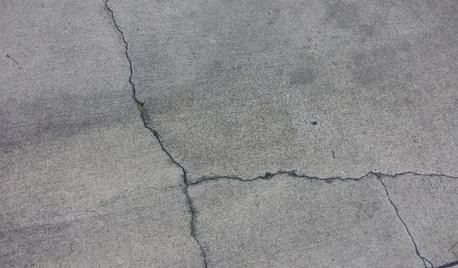
Need help, crack in foundation

19 years ago

My wife and I have looked at many houses. We found one that we really like. It is about 50 yrs old and was rehabbed. Everything is new, and it is just what we want. The only problem is there are 2 cracks in the foundation. 1 on the floor and 1 on the wall. The builder offered to patch it up. There is no water in the basement. He said the house is structurally sound. I have decided to get another opinion from a Structural Engineer along with the home inspector. Should I even be getting myself into this? Is this something to really worry about?

Comments (14)

  • 19 years ago

    What type of foundation? Poured concrete or masonry block? though i guess being 50 years old, it is masonry block..Does the crack follow the "joints" of the masonry block? Does each side of the crack on wall still appear flush? If yes to these, then my guess it is no big deal...If the crack splits several blocks in half, or if the either side of the crack bulges, this isn't so good..In nay event having a structural engineer look at it is a good idea..I personally have quite a few floor to ceilin cracks in my poured concrete foundation, and it poses no issues

  • 19 years ago

    It's a poured concrete foundation. He did jack up the house and install a new main beam with extra columns for support.

  • 19 years ago

    All foundations have cracks. How big are the cracks? How wide is the opening? Where are the cracks located? Is there any evidence the floors are not level?

    The builder says the house is structurally sound. I can't imagine a builder saying a house isn't structurally sound! I would have an engineer look at it to be safe.

  • 19 years ago

    Your safest bet is the structural engineer. We can guess all we want, but you won't know until his/her report. As Sue36 said, all poured concrete foundations have cracks. We had a lot of work on the foundation of our home; the cracks were caused by trees planted too close to the house. The total cost was nothing close to what we thought it would be (much less), but it was a surprise.

  • 19 years ago

    All foundations have cracks. How big are the cracks? How wide is the opening? Where are the cracks located? Is there any evidence the floors are not level?


    The crack on the wall is about .25" thick. You can actually see sunlight. It is located next to the oil tank. The floors are very level because he jacked up the house and replaced the main beam. I guess I cannot know for sure until I have an engineer take a look at it.

  • 19 years ago

    You could make your offer contingent upon a satisfactory report from a structural engineer. In our area, it's about $200-250 to get them to come assess the situation and give a report.

    You'll want that report if you do buy the house, as you'd need it if you ever sold. The seller will want that report, as he'll have to disclose/explain the cracks to any buyer.

    It's wise for both of you to want to have that report on file.

  • 19 years ago

    I agreed to pay the fee, only because he refused. He will not get a copy though. He can get his own guy out there.

  • 19 years ago

    Oh, I'd totally send him a copy, through registered mail, if there's anything in the report that causes you to walk.

    That way he'll have to disclose it to the next guy that comes along and wants to buy the house ;)

  • 19 years ago

    Is the house in drought affected area? Are there any big trees in close vicinity of the house?

    Builder's first priority is to get it sold, I would not put much into what he has to say about the structural soundness of the house. To me it seems there definitely are some issues if there are 1/4" see through cracks and if he had to replace the beams and provide addition support. Thats just my opinion and I could be way off. So do your due diligence and get structural engineer and other professionals involved to protect your interests.

  • 19 years ago

    We had a cracked foundation in our last house. Lessons learned. Whatever you do, make sure you get your own independent professional that has no ties to the builder. Bring someone in from out of town if you have to.

  • 19 years ago

    Also, get a licensed P.E. structural engineer who will tell you his assessment of suspected cause as well as method and cost of repair...as many Structural Engineers will tell you little more than the HI will be able to tell you...in other words...you have a crack...monitor it...unless you specifically ask the P.E. up front if he will provide the additional info....and at what cost.

  • 19 years ago

    ALL concrete will get cracks, some might be hairline some might be bigger. Some will not be any concern others will, definately have it checked out. If the p.e. says its nothing to worry about thats good, but I would have the owner pay to have it sealed the correct way, or at least knock off some money so you can have it repaired. It should be sealed from the outside, which means excavating down to the footing, sealing the crack and than putting a rubber membrane over the area at least 18-24 inches on each side of the crack and sealing it.
    good luck

  • 19 years ago

    I'm amazed that the builder is still alive. What is he, 80? How did you find him or he is the seller too? Our old house had cracks in the basement walls. You could see daylight through one. My husband sealed it with a rubber putty. All older houses have foundation cracks, but if you're really skeptical, do get a professional to look at them.

  • 19 years ago

    Are the sides of the crack still in plane (flat)?
    Is the crack even or tapered from footer to the top of the wall?
    Do the floor and wall cracks line up? Even a few inches apart at the wall floor junction means they may be from the same cause.
    Without a long term resident (and they are not always that reliable if they are the owner) the repair work may have covered over other shifting.
    Why was the main beam replaced?
    It is very hard to predict how a crack will behave if it is relatively new.
    If it has been there for many years and NOT altered much it is not likely to be a problem.
    Sometimes you can tell the age of the crack by looking for debris that worked its way in.