Software
Houzz Logo Print
scarlettfourseasonsrv

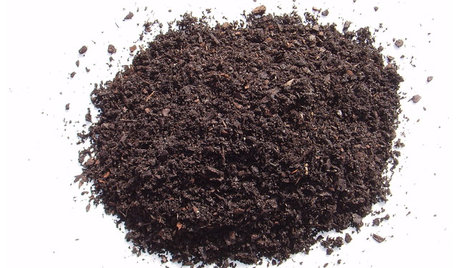
Dubious EarthGro Potting Soil sold at Walmart


I made a real nice raised bed garden to plant some veggies in and then
bought a bunch of potting soil at Walmart, finishing it off with many
bags of EarthGro Potting Soil and EarthGro Steer Manure and "compost".

My epiphany came too late after I'd spent a lot of time, and money when
I checked with SourceWatch:http://www.sourcew
atch.org/index.php/SourceWatch

and googled in EarthGro. The following is what I found:

"Paul
Sellew is s a CEO of Harvest Power. Paul also founded Earthgro, which
is the second largest producer of biosolids-based lawn and garden
products. Paul was a senior executive with Synagro. He also founded
International Process Systems, AllGro, Environmental Credit Corp, and
Backyard Farms.[1]"

Just in case you didn't know, biosolids is
another name for sewage sludge. I don't know about you, but I am not
going to eat vegetables grown in sewer sludge which contains God only
knows what besides human crap. Now, I'm going to have to use my nice
raised bed for Remedial plants such as sunflowers to decontaminate this
soil if it's ever to be used again: http://en.wikipedia.org/wiki/Phytoremediation

In
view of this information, I'm wondering just how many of the
non-organic fruits and vegetables are being grown in soil contaminated
by biosolids, aks toxic sewage sludge and sold to Americans without our
knowing it?

" http://www.sourcewatch.org/index.php/Biosolid... ;
Biosolids
is the Orwellian PR euphemism for toxic sewage sludge. The name was
created and chosen in a PR contest by the lobby association for sewage
industry, the Water Environment Federation (WEF). For more background
see also The EPA's plan to bypass opposition to sewage sludge disposal
and You say biosolids, I say sewage sludge. There is now a SourceWatch
Portal on "Biosolids" Beyond biosolids, the sewage sludge industry now
puts its waste product into bags labeled "compost" and promotes them
through US Composting Council, BioCycle and other front groups and
partners.

Beginning in the 1990's the WEF, with the active
encouragement and approval of the Environmental Protection Agency,
pushed for the disposal of sewage sludge on farm land after bans were
imposed on dumping it in the ocean or incinerating it. The name change
of sewage sludge to "biosolids" was crucial the image makeover for
sewage sludge, a classic industry-government campaign of greenwashing to
change the public perception of toxic sewage sludge from an accurate
one of "hazardous waste" to the misleading image of biosolids
representing safe "beneficial reuse," responsible "recycling" and
healthy "organic fertilizer," lately including the ruse of sewage sludge
as "organic compost."

A list of just some of the hazardous
chemicals and pathogens found in sludge can be found in the article
Sludge contaminants. Sludge contaminants include Dioxins and Furans,
Flame Retardants, Metals, Organochlorine Pesticides,
1,2-Dibromo-3-Chloropropane (DBCP), Naphthalene, Triclosan,
Nonylphenols, Phthalates, Nanosilver, and thousands more substances.
"Sewage is the mix of water and whatever wastes from domestic and
industrial life are flushed into the sewer.... We must note that, though
the aim of sewage treatment is to produce clean water, it is never to
produce 'clean' sludge. Indeed, the 'dirtier' the sludge - the more
complete its concentration of the noxious wastes - the more the
treatment has done its job.... very waste produced in our society that
can be got rid of down toilets and drains and that can also be got out
of the sewage by a given treatment process will be in the sludge. Sludge
is thus inevitably a noxious brew of vastly various and incompatible
materials unpredictable in themselves and in the toxicity of their
amalgamation, incalculably but certainly wildly dangerous to life." [1]


Comments (20)

  • 11 years ago

    Yuck. One of the many reasons I try to stay away from bagged products as much as possible. Then again, you've gotta watch bulk compost too, as some of it may also contain biosolids. I bought a couple yards few years back without realizing it contained biosolids. Fortunately, I never intended to put it in the edible garden anyway - it went on the lawn and around the perennials. It smelled like poop, but I must admit that the plants liked it. I guess it does bring up a legitimate conversation about where/when biosolids amendments are (or are not) OK.

  • 11 years ago

    I responded instead to one of the OPs other copies of this same post.

    Dave

    http://forums2.gardenweb.com/discussions/2984454/city-dweller-needs-raised-bed-soil-help#14728298

  • 11 years ago

    Agreed. I haven't looked into it in some time, but as I recall, most states require that they test for heavy metals. But not necessarily for any of the other plethora of contaminants which "may" be present. That said, the vast majority of what gets flushed is in fact human waste and toilet paper. Occasionally someone may flush Heaven-knows-what, and some medications too survive the digestive tract... but for the most part it's just poop. It gets digested aerobically at the treatment plant. Then anaerobically. Then mixed with sawdust or other brown material and composted. So it is digested 3 times before it is marketed... or at least that is what is supposed to happen, as far as I know. Certainly, heavy metals could survive the trip, which is why it is usually required that they be tested for. But other organic compounds, including medications, sanitation byproducts, and miscellaneous whatevers that people sometimes flush... who knows?

  • 11 years ago

    Good points. But as I said, who knows what medications and sanitation byproducts are in steer manure, and how poorly is it composted? I mean, if we're going to worry about toxicity, we'd better cast our nets wide. I'll bet the testing that is done on steer manure is less than the routine testing that is done on biosolids.

    Now let me be clear. I'm not trying to argue that biosolids are necessarily benign. I'm just saying that purchased soil amendments of all kinds have histories that might not be in the best interest of human health. If you're going to open your garden up to the world, some care is advisable.


  • 11 years ago

    Yup, agree completely. Frankly, the biosolids products put me off because of the smell anyway. Despite all that digesting and composting, the smell still lingers, at least faintly. I can tell myself the product is benign, but my nose begs to differ. I guess I wouldn't hesitate to use it on the lawn and flower beds again - it actually has a nice consistent texture which made it very easy to rake uniformly into the lawn. But not on the edible garden.

  • 11 years ago

    Do you know for a fact that the Earthgro potting soil and the steer manure/compost blend actually has biosolids in it, or is it just an assumption?

    Rodney

  • 11 years ago

    The original poster claims that EarthGro is biosolids based, and appears to know it for a fact. That's what the post was all about. I never said that steer manure has biosolids from sewage systems in it. Why would it?

    Yes, biosolids can stink, but often don't. When they do, it's especially after a rain. That stink is mainly ammonium and sulfur, and in my experience the stink goes away pretty quickly after it is exposed. If the stink is offensive, the best way to use it might be to dump it into a pile, and rake it a few times over the course of a week or two before application.


  • 11 years ago

    dan- My previous comment was meant for the OP. The OP mentioned using both Earthgro potting soil and Earthgro steer manure and compost, then later read about Earthgro (the brand) and biosolids. I was just wondering which of the two products the OP used, if any, has biosolids in it and how do they know for sure?

    Rodney

  • 11 years ago

    Rodney - It is just a claim made by the OP based on an highly questionable and even inaccurate info source - Source Watch (with its anti-corporate, anit-government, anti-organic agriculture and anti-Paul Sellew agenda). Many of the claims made by them have repeatedly been proven to be inaccurate and misleading as it is open to any public contributor seeking to publish their own views on a subject and is not subject to any peer review or verifiable source rules.

    Per the EarthGro label and website the biota used in making their potting soil product consists of food wastes and yard and landscaping materials. Does the potting soil contain biosolids? Not according to the manufacturer. Does the composted manure contain them? Yes, per the label - composted cattle biosolids.

    In my other post (linked above) I also question the OP's personal agenda as they have copied and pasted this same post here and on other websites too. Is the goal merely to spread highly controversial information, to discredit Walmart despite the fact the products are sold at many other stores too, or perhaps to discredit the organic ag industry and a recognized leader in that industry?

    What one chooses to use in their own garden is their choice. But the decision should be made based on accurate information and at least a brief examination of the source's legitimacy.

    Dave

  • 11 years ago

    My apologies, Rodney. Yes, you were asking about the OPs steer manure. I was talking about the steer manure I was referring to.

    I think Dave has it right. This smells like someone is extrapolating some findings, perhaps with some personal agenda. It's a fair question to ask what contaminants might be in biosolids, but it depends a lot where the biosolids came from, and how they were treated. If the EarthGro biosolids are derived from sewage treatment plant residue, that question is an especially fair one. But it's still a question. The sewage biosolids I have experience with are monitored pretty carefully for contaminants, and have been declared safe for gardening consumables. If the biosolids don't come from sewage, as now seems to be revealed for EarthGro, then the question is pretty random, and carries misleading implications. I usually associate the word "biosolids" with processed sewage including human waste but evidently it's also used, quite sensibly, for solids that come out of cattle.


  • 11 years ago

    Arizona is a big source of steer manure. This is collected in feed lots where the animals are fed a high grain finishing diet that tends to cause the formation of urinary calculi, which can clog urethras (urethrae?), especially in steers which get a huge physical insult to their urination system when they are gelded. Google "waterbelly".

    To reduce this really nasty potential problem, the animals have large amounts of salt added to their feed, simply to encourage drinking and the resultant necessary frequent urination. Huge amounts. The steers also get free access to salt blocks because if they didn't they'd lap up urine (for the salt content) as they're salt-lovin' fools!

    The result is that bags of steer manure, "composted" or not, with added non-steer compost or not, has a LOT of sodium chloride salt. This is not too much of a problem unless you put a lot on your garden. Then it could screw things up.

    Just to be fair, steer/cow/goat/chicken/rabbit/alpaca manures are indeed "biosolids". They just don't carry the same level of "EWWW Factor" that growing your carrots in a city's highly processed syphilitic diarrhea has. You gotta draw the line somewhere on what you're willing to take literally shoved down your throats by those corporate ^$$holes who don't give one single damn about you or yours. That may sound bitter.

  • 11 years ago

    didn't know syphilis caused diarrhea-what's your source and is it every city or just one in particular.

  • 11 years ago

    Dave- Thanks for the clarification.

    "My apologies, Rodney. Yes, you were asking about the OPs steer manure. I was talking about the steer manure I was referring to."

    Not a problem. :)

    "If the biosolids don't come from sewage, as now seems to be revealed for
    EarthGro, then the question is pretty random, and carries misleading
    implications. I usually associate the word "biosolids" with processed sewage including
    human waste but evidently it's also used, quite sensibly, for solids
    that come out of cattle."

    Agreed. I wasn't completely sure if animal manures were being included by using the term "biosolids" and so I just assumed that it was meant to be only sewage/sludge type products.

    Rodney

  • 11 years ago

    Where did the OP go??? Some one has an agenda to discredit walmart or whoever. And we are reading and commenting on it. Not saying it is not interesting, but lets not be mislead by the terminology used. Is BIOSOLIDS the new GMO?? We are against it but don't really know what it is.

  • 8 years ago

    "Organic compost" and "biosolids" are a prime example of deceptive advertising. The "agenda" seems to be to discredit those guilty of using this ploy. Do I have to go poach some cowshtt out of a field just to get some real manure?

  • 8 years ago

    I do not kno your peoples backgrounds or whatever. But the MOST NATURAL fertilizer is farm animal manure!!! Plain and simple. My family is from poland and grew there own food my grandma lived till she was 96 with no medical problems until she turned 85 she hasn't seen dr in 40 years. Nowadays ppl saying its "bad" "gross" has toxic chemicals but yet ppl in europe have used this method for thousands of years! I do no use fertilizer. That's "scienticily oroven" I trust 1000s of years and my grandma growing there own vegetables and fruits and everybody was healthy. No pesticides no bs. You go out there and get the pests, unless ur a lottaland farmer.

  • 8 years ago

    The manures used by previous generations did not contain antibiotics. These can have a deleterious effect on soils and their overuse has resulted in resistant bacteria. I don't live in the States but if I did I would definitely not use manures from commercial feedlots in my garden.

    And in the past many people carried parasites transmitted via manures. It wasn't all rosy.

  • 8 years ago
    last modified: 8 years ago

    I noticed that the original post was from 2015 and the quote cited is from 2011. Some companies have changed their mixes and no longer contain biosolids. Read the list of ingredients before you buy.

  • 8 years ago

    I have to add that, to the extent cattle eat grass, one would have to assume that their manure is largely partially intestinally composted grass, with some urea and gut bacteria thrown in for good measure. The urea is a potent source of nitrogen but, to the extent the manure is allowed to compost further, most of that nitrogen departs. Now, to the extent the cattle are supplemented with grain, which is protein rich, the latent nitrogen can be higher. I think that's largely why chicken manure is more potent. Because chickens eat better stuff than grass.

    But is there some reason that composted manure is better than herbaceous compost?