Software
Houzz Logo Print
lalala_gw

Small tree recommendation

11 years ago

I need a recommendation for a small tree to anchor the corner of my house. My wish list (though I realize this may be difficult):

-at least 6-8 feet tall; no more than 15-20 feet when mature
-roots not so extensive/invasive that it would cause problems with foundation (though I would plant it at least 10-15 feet away)
-happy in part shade
-spring flowers, fall foliage, or nice bark color.

Any suggestions? Thanks!

Comments (13)

  • 11 years ago

    Not a tree but Diablo Ninebark? Lower end of your height range, has flowers (although not spectacular ones), red leaves, interesting bark.

    Washington Hawthorne is a bit taller then you want.

    Holly? Inconspicuous flowers, but you get the berries.

    Sassafras is significantly taller but has nice foliage and I think the bark is interesting.


    Lalala (zone 6b) thanked edlincoln
  • 11 years ago

    High bush blueberry... white or pink flowers depending on the variety, fruit in the summer OR if you don't protect them, plenty of birds in the summer, gorgeous fall colors on both leaves and stems, and the winter stems remain bright pink/red until bud break next spring. If you train the high bush varieties right, they can reach over 6 feet tall. I've seen some wild high bush that are even taller. It will take you time to train and properly establish a high bush of that size, but it's worth it i.m.o.

    Lalala (zone 6b) thanked Persimmons
  • 11 years ago

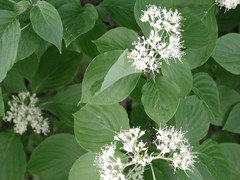
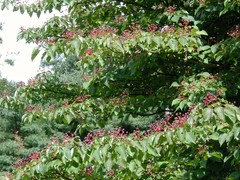
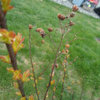
    Pagoda dogwood (Cornus alternifolia) is a sometimes multistemmed native tree with lacy spring flower clusters,


    berries that ripen through red to deep purple (and in August the tree is hopping with birds eating berries)


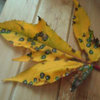
    and nice (not spectacular) peachy-toned autumn color, though I don't have a photo of that.


    Lalala (zone 6b) thanked NHBabs z4b-5a NH
  • 11 years ago

    http://www.missouribotanicalgarden.org/PlantFinder/PlantFinderDetails.aspx?kempercode=u360Burgundy leaves, distinctive flower color, fragrant, least disease prone among crab apples is the Prairiefire. It's a show stopper that smells great.

    Finger not doing well on iPad, but you get the point.

    Lalala (zone 6b) thanked corunum z6 CT
  • 11 years ago

    There are some Japanese maples that would fit the requirements.

    Magnolia stellata is slow enough growing that while it may eventually reach 30 feet, it would take a long time to get there. Magnolia 'Jane' stays small enough for you and there may be other Magnolias that fit your needs as well. I have 'Leonard Messel' which has pink flowers late enough so that they haven't been frost damaged here in a river valley with its late frosts. Light pink flowers and should stay small enough, though mine are perhaps 8' at 10 years or so old.

    Amelanchier (serviceberry) has several named varieties (such as Princess Diana) that would stay in your size requirements. Some folks in MA have mentioned disease or insect issues but it's a gorgeous small tree here.

    Some of the Cercis canadensis selections are supposed to stay small, though I have no experience with any but the straight species which I love for its early spring flowers, healthy summer foliage, and bright yellow fall color. 'Covey' (AKA Lavender Twist) and 'Tennessee Pink' should stay smaller than the species and perhaps some of the others as well.

    Chionanthus viriginicus, fringe tree, is a lovely little tree that blooms in spring. I really like it, but I figure mine has little time left since it's supposed to be susceptible to emerald ash borer which is in my town. So I would recommend it if they find a preditory insect that can control EAB, but otherwise not.

    Cornus florida 'Appalachian Spring' is both small enough for you and disease resistant. White flowers.

    There are probably also some Cornus kousa selections that are small enough for your use (including most of the variegated ones) but you would need to research them. My C. kousa (unnamed) has stunning fall foliage along with the white flowers and nice winter branch structure and seems completely healthy.

    I would love to be able to grow Prunus mume (and you can!) and at least some of those stay under your size requirements. I only know it from reading, but the flowers are breathtaking.

    There are always weeping cherries if you like those. Many are grafted so the height is limited to slightly higher than the graft.

    I don't know how large Stewartia gets in your area or if there are smaller selections, but here they grow so slowly that the oldest one I know (not sure how much older than 15 years it is) has only grown 3 feet or so in the time I've been watching it, and it's about 12 feet now. So though it is listed as growing to 40 feet, at least around here it would take more than my lifetime to reach that.

    Lalala (zone 6b) thanked NHBabs z4b-5a NH
  • 11 years ago

    Several on this forum grow hardy crape myrtles, so that is also a possibility.

    Lalala (zone 6b) thanked NHBabs z4b-5a NH
  • 11 years ago

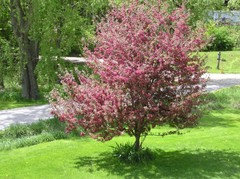
    I second the flowering crabapple suggestion. I have several of different varieties. They bloom in spring, then the green foliage develops a pretty bronze tinge, and tiny red fruits appear in the fall and often stay through the winter unless the birds eat them. These trees are in the size range you are looking for, as are many fruit trees. This one in my front yard is a *profusion* variety.


    Lalala (zone 6b) thanked spedigrees z4VT
  • 11 years ago

    You had a great beginning with your criteria. I hope you hold out for "four seasons of interest." Personally, I don't think crabapples fit the bill, and I have one front and center in my front garden. Sorry crabapple lovers but they are as common as mud except for Harvest Gold which has beautiful yellow berries; the winter moths love them; you have to prune the water sprouts and suckers when they get older; bark is not particularly interesting. Are there some varieties with good fall color? If you decide to pursue crabapples go to a website like Mobot or Chicago Botanical Gardens which have done extensive field trials. There you will find varieties that are exceptionally gardenworthy.


    Buy Michael Dirr's Hardy Trees and Shrubs. It is an excellent investment. Field tested horticultural advice and evaluations; outstanding photos and lists of plants for different criteria.


    So many trees bloom in spring. Might you consider a summer bloomer? Stewartia and sourwood are gorgeous. (Sourwood is difficult to transplant)


    Some of the trees mentioned that deserve a strong second look:

    the yellow magnolias, especially Yellow Bird; Stewartia; laburnum; pagoda dogwood.


    I have Magnolias yellow bird and Elizabeth. Form, bark, buds and flowers are outstanding. I also have a stewartia and can't think of a single drawback.


    Don't be in a hurry. Even if you take a long time to decide, fall planting is optimal. and you can find great trees on sale.


    Marie


    Lalala (zone 6b) thanked Marie Tulin Boston burbs z 6a
  • 11 years ago

    Great list going so far. I agree with Marie on crabapple. I had a number of them but between tent caterpillars and webworms I gave up on all but one that doesn't seem to be affected. However the woodpeckers love it and have all but killed the top as they pecked all the bark off.

    I'll add styrax japonicus to the list. I really enjoy this little tree. Not a four season tree, but it has a beautiful shape and is gorgeous when in bloom.

    Some viburnum can be pruned into a tree-form and that's a worthy group to check options on.


    Lalala (zone 6b) thanked Thyme2dig NH Zone 5
  • 11 years ago

    Yes! I've been trying to remember styrax for three days. Lovely tree. The pink form is lovely and whether pink or white you'll have something really unusual and lovely to enjoy for years. Pest free.

    I don't know about viburnums, Susan. I have a half dozen and love them but I don't think of them as particularly low maintenance any longer. They can sucker like crazy, require regular pruning to look good and in some areas the viburnum beetle has its nasty way with them. Now if you were willing to go with a shrubby variety Mariesii and its cultivars are beyond beautiful: strong horizontal branching pattern, berries, fall leaves. It will require sucker pruning as it matures, however. But it is not a tree.

    I really think you need a great tree book.....

    Lalala (zone 6b) thanked Marie Tulin Boston burbs z 6a
  • 11 years ago

    Thank you for all the great suggestions! I have some research to do. I'll follow up when I make a decision (or with questions before that)!


  • 11 years ago

    Marie, I must have well-behaved viburnums! Aside from a light pruning each year (usually to limb up), I have about six or more that I'm keeping more as tree form. I'm not finding major suckering issues with them.