Software
Houzz Logo Print
bradybbb

UW Pawpaw and Other Plants

11 years ago

I've been visiting a place at the University of Washington,main campus in
Seattle,the last few years,where some Pawpaw are growing.They were
planted there by the present head of the horticulture department,about
ten years ago.
My last trip there was Sunday and a botany professor
was working in that area.He told me the land was going to be cleared and
a building was going to be put there.A lot of small plants and
trees will have to be moved or cut down.He was talking like they
don't have a plan for them yet.Along with the Pawpaw,there is a large
Black Beauty Mulberry about 15-20 feet tall and also a few bee
hives.It'd be kind of a shame to destroy these things.
I was thinking of maybe notifying the people at the Beacon Hill Food Forest.Possibly they might have room for some of the plants. Brady


Comments (7)

  • 11 years ago
    last modified: 11 years ago

    You are talking about Section G of the Medicinal Herb Garden, which is a Botany Department feature (there is no "horticulture department", unless you meant the Center for Urban Horticulture over on Union Bay). A greenhouse is to be built over it.

    'Black Beauty' is supposed to be a dwarf Morus nigra cultivar*, I have been to this location many times but memory of this particular specimen is not occurring. Arthur Lee Jacobson, Trees of Seattle - Second Edition (2006) doesn't mention any 'Black Beauty' in Seattle - but maybe the U.W. one got planted since this edition of the book was worked on. Or he thought it too new and small to list - if it is even actually an M. nigra: how do we know it is an example of 'Black Beauty'? (Photos supposing to show this cultivar on the web site of a California wholesale nursery that sells to independent garden centers in this market may be showing an M. alba form under the name; black-fruited forms of this species are often called black mulberries, confused thereby with M. nigra).

    Jacobson does give locations for a handful of true M. nigra elsewhere in town, listed without cultivar names. M. nigra produces dull green (not shiny), hairy leaves on thickish, crooked branches that make it resemble a fig tree (Ficus carica).

    *Patent description may indicate otherwise

    http://patft.uspto.gov/netacgi/nph-Parser?Sect1=PTO1&Sect2=HITOFF&d=PALL&p=1&u=%2Fnetahtml%2FPTO%2Fsrchnum.htm&r=1&f=G&l=50&s1=PP04913.PN.&OS=PN/PP04913&RS=PN/PP04913

  • 11 years ago

    The area I'm referring to is near the greenhouses,just east of them.There are a couple of paths/trails that branch off from the main road going through the campus in that area.I think the Herb Garden is on the other side of that road,to the north.
    There are a few bee hives back there and passing by them on the path,there stands the Mulberry to the right.I'm almost certain the tag was Black Beauty,but I'll check again,because I'm going to try to hand pollinate the Pawpaw,which are in the back edge of that area,before more undeveloped brush and trees begin. Brady


  • 11 years ago
    last modified: 11 years ago

    If you look at the patent description I linked to you will be able to see that the cultivar was described as a form of M. nigra "or a related species" and that the leaves were partly shiny and partly hairy. So the convention of listing this selection as a pure M. nigra is apparently erroneous. If the Section G tree is a 'Black Beauty' it might be interesting to compare it with the patent description of the original introduction to try and see if stocks have been kept true to type, or if something else is on the market under the name now. Also if the tree there looks like it is just another example of M. alba it won't matter so much if it is destroyed.

    If you are interested in Seattle locations of pawpaws, mulberries and other novelty fruit trees you should check out Jacobson's book.

  • 11 years ago

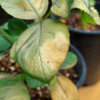
    I was at the UW again today and took a couple of pictures of the Mulberry tree.I had a Mulberry sold as Black Beauty from Holly Park Nursery and the leaves were like this one's,rough,like light sandpaper.The rootstock unfortunately died on mine last Winter after being in the ground for a couple years.

    I also have Illinois Everbearing,Pakistan,Silk Hope,Wellington and Girardi Dwarf.All of these are Alba/Rubra hybrids I think,except for Pakistan,which may be Alba.Their leaves are similar to each other in the distance of node spacing and somewhat smooth texture,but different than the "Black Beauty",as the leaves tend to be closer together,to the point of hiding a lot of the fruit.Also,there are hairlike filaments growing out of the fruit,which matched the one I had and none of the others mentioned have these.The 'berries' are also plumper,but with less individual segments than the hybrids.

    What plant is that patent article referring to besides Seedless fruiting mulberry?

    I have an earlier copy of Jacobson's book,which I like. Brady


  • 11 years ago
    last modified: 11 years ago

    Looks like a white mulberry in the picture. Those produce many slender branches and shiny leaves with a rough surface.

  • 11 years ago
    last modified: 11 years ago

    I was at Jacobson's yesterday. His true M. nigra generally resembles the one in your picture at this time of the year, had leaves about as raspy as his weeping white mulberry. The obvious differences at this stage were the white mulberry had narrower, less kite-like leaves that looked polished - and didn't have such toothy looking margins. He also said that true M. nigra had been getting planted in the herb garden.

    More than one apparently, as he said "mulberries".

    He reiterated that he can see no solid differences between the supposedly distinct different M. nigra cultivars, including 'Black Beauty'.

  • 11 years ago

    Thanks,I'll have to take a wider look around the area,next time there. Brady