Software
Houzz Logo Print
speer_dk

Dying Oak???

11 years ago

Hey guys,

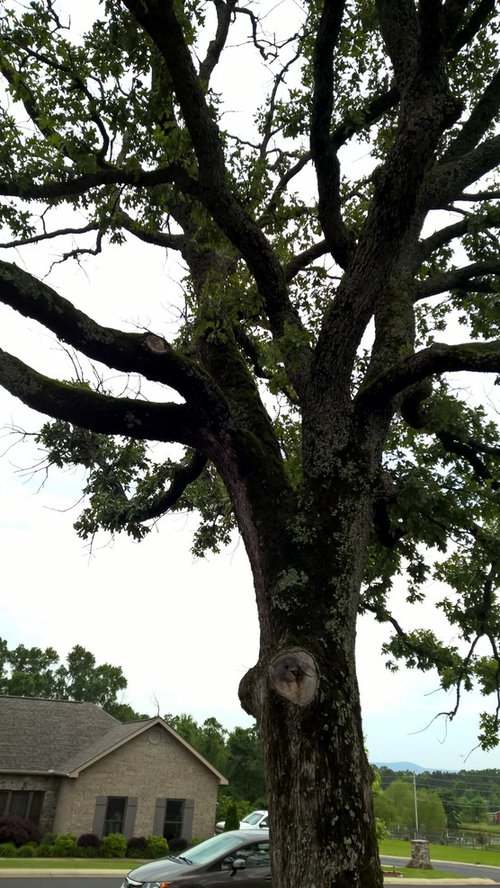
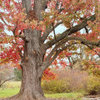
Anyone here know much about oaks? We've got a large oak in our front lawn that's starting to show some signs of stress. We've got a few large branches that haven't leafed yet this year, and the rest of the tree just seems a little too sparsely leafed.

Anyone see anything in particular? Any direction on what to do? There are tree services here, but they specialize in cutting down as opposed to getting them healthy.

Thanks!


Comments (13)

  • 11 years ago

    It's a goner. Too far gone regardless what the issue is, unfortunately.

    As far as the "what", could be a number of things. Where are you located?


    Could be:


    Drought

    Soil compaction or root severing from construction, road crews

    Oak wilt

    Bacterial leaf scorch

    Repeated attacks from major defoliators like gypsy moths (not as big a problem as it was ten years ago)

  • 11 years ago

    i see a dying tree overhanging your house..

    get rid of it.. ASAP ... it doesnt really matter whats going on ... those large cuts.. never started to heal.. and there is rotting holes showing.. that mean its in the main trunk ...

    many things attack stressed plants.. and this tree has been stressed for a long time... but curing those things.. is not going to solve the interior rot ....

    if you want to spend a few hundred bucks on a certified arborist.. find one ... they are everywhere .. since i dont know where you are.. i cant google it for you ...

    you are very correct.. that every monkey with a chainsaw.. is not a certified arborist ...

    ken


  • 11 years ago

    Dustin, I might be sticking my neck out here, but I'm going to guess there has been construction in that area sometime in the last five to eight years, something involving root disturbance, soil cuts or fills, that sort of thing. Why? Because that's how trees respond, by portions of their crowns beginning to die off. And the timeframe I mention is accurate, these disturbances typically not showing up as damage for some time after the actual event(s). The responders above are correct, unfortunately. That tree is on its way out.


    +oM

  • 11 years ago

    I was afraid of that...

    I'm in Arkansa,s by the way. And yes, this neighborhood is relatively new and slowly building out. The footings for the house were dug approximately 4 years ago, and the main road in front of the house a year or two before that.

    Also, in the summer of 2012, it was definitely under a lot of stress. We had a drought that summer, and the tree didn't really leaf at all that year. It came back the following years and seemed to be fine.

  • 11 years ago

    Precisely. No trees, and especially not oaks, can withstand that degree of site disturbance. Tree was there long before construction. This is classic case of what to my mind is one of our bigger scams-the selling of "wooded lots" for home building. Only people making good on that deal are the original land developers, who have cashed their checks long before tree problems are becoming noticed, and of course, guys with saws and bucket trucks or rope and saddles, who come along and make money later on the same piece of property.

    Not exactly your case, but pretty close.

    +oM

  • 11 years ago

    Grrrrr. Developers brag about their 'wooded lots' with 'mature trees', and hope that the trees stay alive long enough to sell out. I see a tree stump on another lot in one of the pictures.

    There's absolutely nothing that can be done to save your tree. Think of it as an opportunity to select an exceptional tree as a replacement.

    That short, fuzzy growth is called epicormic growth. It's very superficial; a last ditch effort by the tree to create temporary photosynthetic surfaces. Trees that look like that are doomed.

    The longer you wait to have it removed, the more expensive it will be.

  • 11 years ago

    Bummer. That is a cool-looking tree.

    Have noticed the same phenomenon around us. The builders were careful to leave a few tree groves in each half acre lot when they put in the houses. 17 years later, the vast majority of the groves (lots of red maple & ash) either have kicked the bucket or are at best struggling... Ash of course due to the beetles, but even the maples and others are far from thriving.

    It has been a lot of work for me to take out my fading tree groves, fix the grading, and start over with saplings. Would have been a much better strategy for the original owner/builder to clear the lot and start fresh with new shade trees when they built the house.

  • 11 years ago

    Another aspect of what you just recounted is that the developers typically leave just the big trees behind, having all advance recruitment (young trees of same species as old ones) removed. This is exactly the opposite of what might have worked, those younger saplings being much more able to handle the stress and strain of all that goes on around them in a building site. The big old trees have no chance of surviving this level of disturbance while those younger ones just might have been able to, depending, of course, on severity of cut/fill action, soil compaction, and other insults hurled at them. Wooded lots are a scam, on a huge scale.

    +oM

  • 11 years ago
    last modified: 11 years ago

    We, too, live in a new development and have an oak that's roughly the same size/age as yours and that appears to be similarly distressed. To the credit of our development, it is a redevelopment on the former site of a church rather than a greenfield development. But still, an unnecessary number of trees were sacrificed in the process, and much was paved over, so I won't excuse the decisions that were made.

    As our suburbs continue to sprawl, and as our greed for big houses, big lots, and long, gas-guzzling commutes continues to grow, our natural environment will continue to suffer. Your oak tree is unfortunately only the one small part of a much bigger problem.

    Judging from people's photos in this forum, I am struck by how many people here live in such gargantuan lots with huge ornamental lawns. It's not a little ironic that those of who have the most land on which to plant trees (an very "green" and socially beneficial activity) are also the ones whose properties and commutes most scarify the environment. We may have the freedom to choose where we live and what sorts of developments we live in, but there are also consequences to our actions that go beyond ourselves.


    I'm sorry about your oak, and I'm also sorry about ours.

  • 11 years ago

    Grizz, at least, you and I, and any others so inclined, can take some solace in the rise of the "new urbanism", that force sweeping the nation which seems to have it that many of the millennial (and other) generation would prefer to live closer in to city centers, would prefer to not live the automobile commute lifestyle, and actually appear to be seeking out urban centers with decent mass transit. Not sure if this is a flash in the pan, or a true, sustaining movement, but it does offer at least some hope for a partial reversal of all the madness which has overtaken the country since the advent of good roads, cheap gas, etc...

    +oM

  • 11 years ago

    Hair, for sure, there's a difference between guys like you, what I would consider serious hobbyists and gardeners/horticulturists, and the unconscious population buying up their McMansions out in suburbia. I sure did not intend to impune folks like you who are actually doing interesting and helpful things with their yards and lots. (I'm also not entirely sure "impune" is a real word, but it's staying).


    +oM

  • 11 years ago
    last modified: 11 years ago

    It's more profitable for trees to be poorly planted and not thrive, only to replace them 5 years later for an inflated price...and continue the cycle. Plant a tree, and never return to that spot on earth to do work again? Where would the money in that?!? :(