Software
Houzz Logo Print
chasingannie

What's causing this in my tomatoes?

11 years ago
last modified: 11 years ago
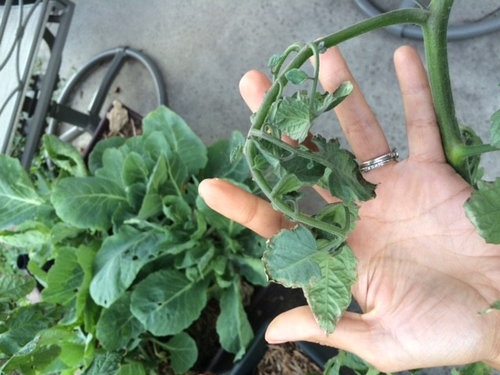
My Sugar Snack tomato leaves are curling (picture). Some of the leaves have a little browning on the edges. Any idea what could be causing this? It's my first year gardening and don't know if this is normal.


Comments (13)

  • 11 years ago

    Black curling leaf edges is often nitrogen burn. What and how often have you been feeding them?

    Dave


  • 11 years ago

    Digdirt2~ Thanks for your response. I'm new to this site and gardening in general and have found such helpful people here. :)

    So far this season I have given them Neptune's Harvest Organic Fish-Seaweed Blend (2-3-1) a couple of times and E.B. Stone Organic Bat Guano (9-2-1) tea once. I didn't think either one was potent enough to cause harm. You think the guano tea could have done it? It was the last fertilizer I used. I seeped 1 cup of guano in 5 gallons a water and gave the plant about 2 cups. The instructions say to use 1 cup of guano per gallon of water and dilute it (2 cups of water per cup of tea). None of my other plants that got fertilized with these things have had issues (so far).


  • 11 years ago

    It's in a self-watering container. That is probably a very important detail I left out.

  • 11 years ago

    I'm quite new to gardening myself and have been doing it for a couple of years, but I have learned so much from all the experienced gardeners here. I myself do not like self watering pots, last year my vegetables did absolutely terrible in them and I feel it just a harboring unit for insect infestation, but I could be wrong about that. This year I took off the bottom part of the self watering system and my plants are doing fairly well. I started Alaska fish emulsion every 2 weeks and then I will switch out to the Neptune fish and kelp fertilizer once I see some developing fruits on my plants.

    Annie thanked Cynthia R.
  • 11 years ago

    Yeah that makes a difference. As Cynthis said, container gardening, esp. SWC containers are a very different type of gardening with their own set of rules regardless of the type of plant.

    What type/brand and size of container? The different brands provide very different growing conditions. What is the size of the container and how many plants does it contain? Plus what is the growing mix in the container? Also important.

    And the one with the black cover on it could easily be over-heating and cooking the roots - depending on where you live. We need that info or at least your garden zone. Note how it is automatically included with our names above. Just fill out your profile page and it will come up automatically.

    Then are you aware of the problems when trying to use organic fertilizers in containers where there is no active soil food web as there is in the ground? If not you need to be.

    Lastly most fertilizer's directions are given based on in ground plants unless otherwise specified. Container plant, because they are 'contained' in much less potting mix will only tolerate much more diluted supplements than in ground plants will.

    So much more info please. :)

    Dave

    Annie thanked digdirt2
  • 11 years ago

    I think I added my zone. In case it doesn't show, I'm in Zone 9-10B in Chino, CA. The container is an EarthBox (29x14x11 inches) with one plant, but I use about 3" of mulch (various dried plant matter) instead of the black plastic. I am using Kellogg Premium Potting Soil with it (an approved EarthBox brand). I use a moisture meter just about every day, and that seems to check out-- soil is usually moist but not soggy. I'm thinking of testing the soil this afternoon, but have heard NPK home tests are not reliable. Should I even bother?

    I have heard of the issues with using organic fertilizers in containers, but I was under the impression that liquids are more easily absorbed/work for containers. That's why I used the liquid fert. and the tea. Let me know if I'm making a mistake though. It's my first year, and I would really like to learn.

    I think it's really odd that I have tomatillos next to the tomato plant that are looking great. They are in the same type of container (2 in the same container), use the same type of soil, and have been fertilized with the same stuff. Maybe tomatoes are more sensitive?

    I sure hope I find out what's going on so this doesn't happen to my other plants.

  • 11 years ago

    Just to clarify, you did not add the strip of granular fert to the Earthbox as instructions say? And have only been using liquid supplements?

    I like my EarthBoxes (just ordered more to move tomatoes with us to a new house thus summer), but they're not designed for liquid ferts, and I've not had a problem with the granulars not working in them. But, I also have the best luck with using the plastic bonnets--just haven't had the same results when I've left the tops open, even mulched. When I don't have "official" bonnets, then I just use black plastic cut to fit and duct taped onto the boxes, cutting slits to put on around larger plants. Not nearly as pretty, but functional. I also did that with my new ones this year since my maters were in gallon pots and I didn't want to cut that big of holes in the bonnets to make sure I got the plants deep enough.

    I do use fish/sea liquids on the rest of my potted plants--mostly herbs with good luck. Mine is a 3-3-2. Your research is correct that for most containers, liquid is better, as it's faster acting and doesn't rely on soil-web and microbes to release the nutrients. However, the EBs and other SWCs don't always conform, and can trap excess unused nutrients that would normally leech into soil in-ground or drain out of normal pots.

    If you want to try and leech your EBs, you can fill them until the overflow appears, then tip to drain the reservoir. Repeat a few times.


    Annie thanked balloonflower
  • 11 years ago
    last modified: 11 years ago
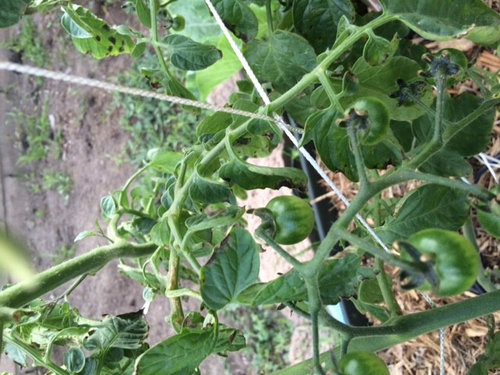
    BalloonFlower- That's correct, I did not do the strip. I noticed the soil had fertilizer, so I thought it might be too much. I might try the flushing thing. I take it you also think it's too much nitrogen? I'll try granular with my EB next time. Do you do the strip or mix it in the soil?

  • 11 years ago

    Annie,

    I've never personally dealt with issues from too much Nitrogen, so I honestly couldn't say on that, but Dave gives very reliable info that I trust. My gardening is EBs, containers (mostly herbs which don't need much fert) and community garden, where our soil is quite nitrogen deficient so I do supplement strongly. I mentioned the flushing because it's an easy and harmless thing to do, even if that's not the problem it's not a huge effort in time/money. And if it works--Yay!

    Your soil blend additives only come to 0.3-0.1-0.1, so they wouldn't have been enough to not use the fert strip--i think it's more of a marketing thing at that level. Personally, I look for mixes without fert or "water retention beads" but if the numbers are that low, I ignore them. I do use the strip method for adding granulars and prob use a little less than the 3cups organic recommended. When I go to clean/turn the boxes for the next year I occasionally find a little that didn't get absorbed/used, but not much at all, so I haven't felt a need to try anything different. Lately, I've mostly used Espoma TomatoTone or Happy Frog Tomato/Veg granulars. I tend to lean organic, but mostly use Fertilome Ultimate Potting mix in my EBs due to cost/ease of getting. (And since I just had to get enough to fill 8 new, cost was a factor). Pretty lucky to have a large selection on various organic ferts available here due to another growing industry.

    As a new gardener, have you started learning a little about what the fert numbers do? I found it to be very helpful when I started, as I love to research everything. There's another recent thread you might find interesting too.

    fish emulsion

    Dave--could this be inconsistent moisture levels due to using mulch instead of plastic on the EBs? I've had very good luck with mine (except for trying garlic in one) so I'm quite curious as to the problem.

    Annie thanked balloonflower
  • 11 years ago

    BalloonFlower- that is a very interesting thread. Thank you for sharing that with me. I liked your comment...made a lot of sense to me.

    I am am learning about NPK numbers. That's why I thought the stuff I was using was too mild (low numbers) to cause damage, but if the stuff sits at the bottom and not wash out, it seems like it could mess things up.

  • 11 years ago

    Great all that info helps a lot. I too use some Earthboxes - have 9 of them I think - and while I have worked out a method of fertigation with them for later in the season that allows me to use liquid organics I still include the strip of granular fert (10-10-10). They really do need that to begin with but I just don't find it enough for the whole season. Mine are filled with ProMix BX which has Mycorrhiza in it and I top them with plastic like balloonflower does.

    Large-Metal-Binder-Clips-Black

    work well for holding the plastic in place.

    So first, 3" of mulch is too much. Not only can it lead to incosistent soil moisture levels but it means there isn't enough potting mix in the box. They need to be filled right to the brim with the mix. Second, what is recommended is Kelloggs Potting Mixes, not their potting soils. The company makes and sells both. The mixes are soil-less, the soils contain dirt and they compact and drain poorly. So make sure which you have.

    <I'm thinking of testing the soil this afternoon, but have heard NPK home tests are not reliable. Should I even bother?> No. When using a bagged potting mix it is already pH balanced. But over the season it can turn alkaline as household water is alkaline.

    < have heard of the issues with using organic fertilizers in containers, but I was under the impression that liquids are more easily absorbed/work for containers. > Correct but there are numerous well balanced, low-dose liquid organics available (like fish and seaweed emulsions) without going for the big guns like bat guano.

    <I think it's really odd that I have tomatillos next to the tomato plant that are looking great. > Yep they are much more tolerant but will develop excess leaf growth and may have limited fruit set as a result of the guano so I would flush them as well. Just keep in mind that tomato plants aren't big nitrogen hounds, the need low-dose N only.

    The leaves that are damaged will probably die and fall off but with a good flush the new growth should appear normal.

    Hope this helps.

    Dave

  • 11 years ago

    That is great information. Thank you so much Dave. I didn't know guano was bringing out the big guns. I have always heard of tomatoes being heavy feeders and didn't think twice about it. I didn't know it would be too much N. I will use something more balanced next time.

    I have flushed my plants. I will let you know how it goes. :)

Sponsored
The Creative Kitchen Company
Average rating: 5 out of 5 stars52 Reviews
Columbus Area Kitchen Remodeling and Refacing Professional