Software
Houzz Logo Print

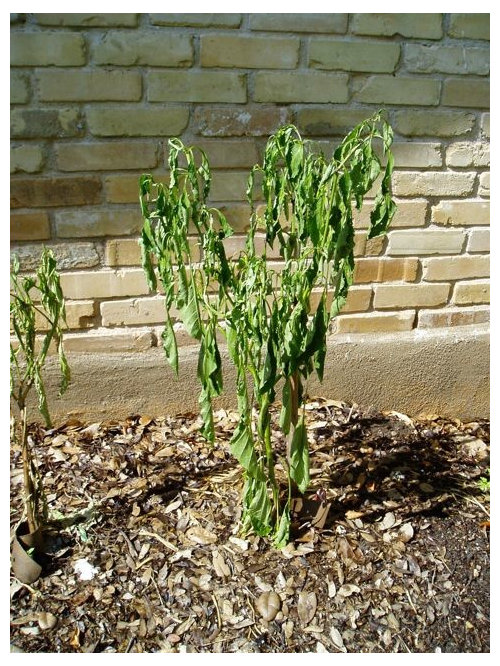
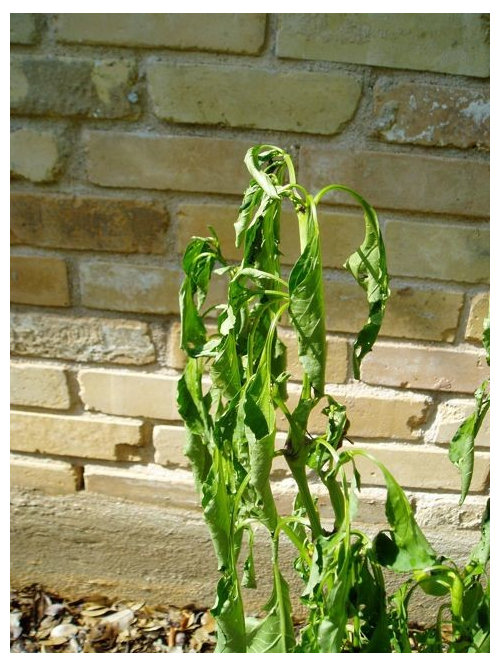
Planted three sweet hungarian banana peppers a month or two ago. Plants were growing well, and reached about 18" in height. Starting to get nice fruit. Then quite suddenly, they are all droopy and dying. See pix below. They've had plenty of water. In fact, we had five inches a week ago. This happened last year with my gypsy peppers in a bed a few yards away. In years before that, such peppers grew extremely well.


Now what is a bit odd is that I have TAM jalapenos growing immediately adjacent (same bed!) to where the gypsys were. They did fine last year as the gypsys cratered. I overwintered them, and they are now lush and profuse. In fact, the same bed these hungarians are dying in now had awesome oriental eggplants all last year.

So what is this? Roots and stems look fine. No obvious clues. Is this verticillium? fusarium? I need to know so I can assess what resistance I need next year. What should I be looking at?


Comments (13)

  • 11 years ago
    last modified: 11 years ago

    it looks like something called pseudomonas.

    there is no cure.

    it remains in the soil, so a long period with no peppers in that spot is called for.

    you should get rid of the plants as soon as possible.

    you can quarantine it by surrounding the area with plants that aren't affected.

    it is a bacterial wilt, so in all likelihood the heavy rain precipitated the outbreak.

  • 11 years ago

    Do you think it may be bacterial wilt? If so, cut open sections of the lower stems will probably have some browning of the vascular tissue. If your plants just suddenly collapsed that what I would suspect. I don;t know of any varieties that are resistant to bact wilt.


  • 11 years ago

    Thanks. That makes sense. At least lower stems are all brown on the outside, which is the vascular tissue. Not clear about the inside of the stems, though the color inside is certainly not completely white. It does seem like wet soil is associated with the outbreak and man, my soil was wet! Still is, a few inches under. We also had three weeks with no sunshine, so that didn't help. In fact, last year with the Gypsy peppers, I decided that I was overwatering, so it might have been the same thing going on in an overly moist environment.

    In principle, this wilt affects lots of crops, so it's not as simple as just planting something else in that bed. The same bed in which my gypsy peppers died last year is now hosting a fabulous crop of Genovese tomatoes with the TAM Jalapenos doing great right next to them. Those appear entirely unaffected, though they got the same rain. This bed and these peppers are the only things in my garden that seem to be affected this year.

    I am suspecting that this stuff is pretty much endemic everywhere in my beds, and the workaround is just not to overwater, and to have decent drainage. So I'm debating whether to just replant the bed with peppers once it dries out, and be careful about watering.


  • 11 years ago

    Can you send to your local cooperative extension for testing?

    Sorry about the peppers :(


  • 11 years ago

    No reason to send it off since it's easy to confirm yourself. You can put a small cut section of the infected lower stem in a glass of water and you'll see the white milky ooze running out of the cut within a few mins. Or you can put 2 cut ends together and when you pull them apart (slowly) you'll see threads of that sticky bacterial ooze.


  • 11 years ago


    I tried the ooze test, and the results (on both a brown lower stem and a green upper stem of the dying plant) were not completely clear. I'll watch it some more and see if I can see the ooze more clearly. But I think the diagnosis sounds reasonable. Thank you!

    Yes, that's right about the frustration. Peppers either do great, or BOOM, major crop failure. In fact, this year, I had layered several inches of leaf mold on top of the bed, so especially with the lack of sun, the soil underneath simply didn't even come close to drying out. The bed gets a lot of sun, so I think my next step will be to turn it a few times of the course of a few weeks, and get the soil dry and aerated and exposed to a lot of sun. I had some curious serious wilting in squash a few yards away, resulting in the death of some vines, and I'm now wondering if this is what was going on there was well. Those squash are also heavily layered with leaf mold.

    The intolerance of peppers to overwatering is well known, but I never realized that this is one serious threat from doing that.

  • 11 years ago

    I would really send it out for testing. I don't think there is any way to be sure with an amateur diagnosis. It could be any number of fungi or bacteria.

  • 11 years ago

    I'm an "amateur" gardener, though I consider myself reasonably well informed. I trust the guidance of other "amateur" gardeners who seem to be reasonably well informed. That's what most of this forum is about. When I research online the diagnosis suggested, I see symptoms that are pretty much exactly like what I'm seeing. My local ag extension charges $35 for a "routine" test in their plant disease diagnostic lab (which is quite likely not much more than the amateur diagnosis suggested here). Can add to that charges for required overnight delivery. Not worth it to me.


  • 11 years ago

    Wow sorry I just meant that I believe a lab test would be beneficial. Best of luck with future plantings.

  • 11 years ago

    Can you take it to a reputable nursery who may have someone to ID the problem? We have a wonderful organic nursery with experts on hand most of the time. Just a suggestion. Nancy

  • 11 years ago

    I "cured" a wilt disease by placing black plastic over a garden bed for approx three months, heat will kill germs, then took it off and planted new stuff all OK for now.


  • 11 years ago

    I did describe it to a smart fellow who runs a reputable nursery, and got the same advice I got here. He thanked me for NOT bringing it onto his property.

    Interesting idea of heat treating with black plastic.