Software
Houzz Logo Print
yanksfan7

What's Wrong With My Tomatoes?

11 years ago
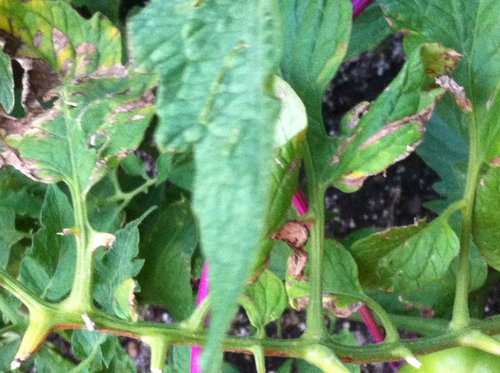
So after my first good tomato growing season last year, I was excited to jump back into it come spring. I loaded up on plants, some seed, some transplants, and put them in my raised bed and in pots. At first things looked good, the plants grew fast and put on lots of fruit. But then I began noticing some weird things on the plants. Are these normal, or should I do something? (By the way, I live in Zone 8, high temps have been consistently in low 90s the past couple weeks).


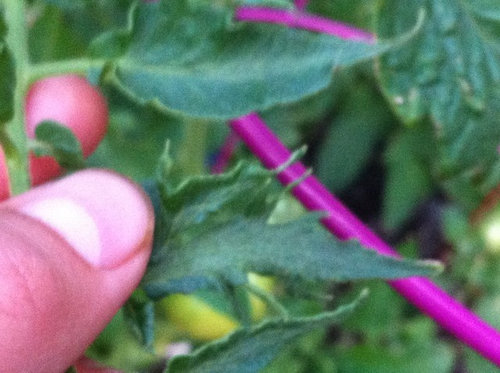
At least some of the leaves on nearly all of my Big Beef Tomatoes and Goliaths look like this, like they're rotting (in a raised bed). Could this have to do with pruning?


This particular photo comes from a Goliath Tomato, but I've seen these weird leaves on my Roma's and Big Beefs too ( all raised bed ).


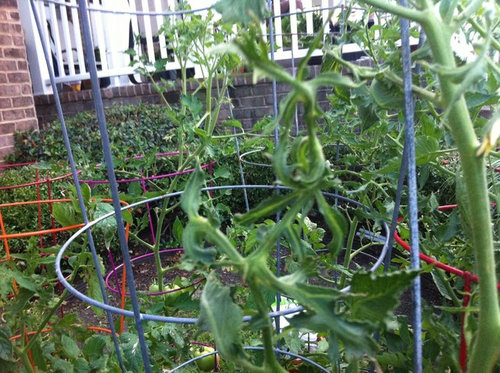
This is semi-new growth towards the top of a Goliath, but can also be seen on the Big beefs,weird shaped leaves and really twisty branches. Some of the leaves lower on the plants are rolling up too. Could this be stress from temps and/or pruning?

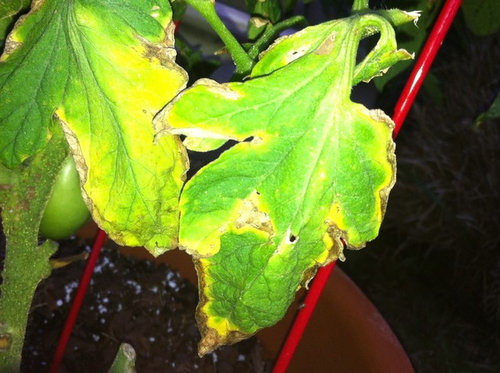
Leaves yellowing with a brown outline. This is ravaging my potted Juliet tomato and to some extent on the one in the bed. I keep plucking these off only to have healthy leaves turn like this.


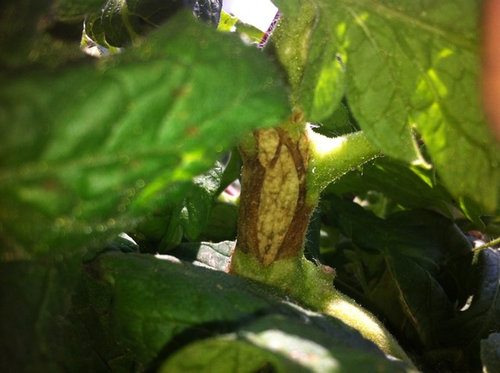
Stems from my Juliet's (top is from raised bed, bottom from pot). Could this be causing the yellow leaves?


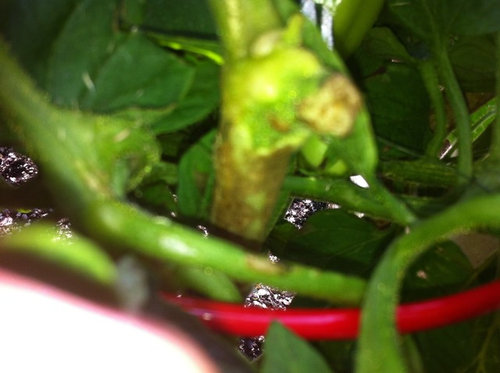
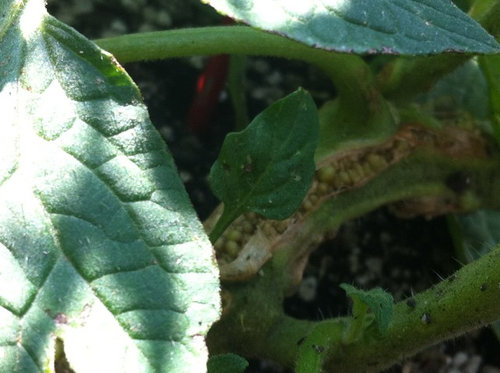
When I saw this at the base of my Roma tomato ( which I started from seed) I was grossed out. No idea what to make of this. The actual plant seems healthy. With no idea of what this was I kind of just buried it.

Sorry for my tangent. I've just spent so much time on these plants that I don't want to lose them.


Thanks

Comments (5)

  • 11 years ago
    last modified: 11 years ago

    Hi Yank, I'm sorry to say that I'm not a professional here. I make sure to say that now, to keep the vultures away when I try to help someone and get the waving "teacher finger" from more seasoned growers here. We're all just here to help and learn.

    So I see you've not gotten an answer yet. I opened your post and my heart just sank. Even without any real knowledge of tomato diseases, it's clear that whatever is going on has dug its ugly nails in the very base of your plant. It's enough to make anyone cringe and shed a tear for you. I spend hours and hours in my garden... it keeps me busy in the summer because I'm a student and that's pretty much all I do, so my garden is my sanity.

    First thing I did was look for any features to the sickness that seemed unordinary. Certainly, that cracked tomato stem with all that cancerous looking growth is disheartening.

    The only tomato disease I could find with exactly that symptom matching your photos is bacterial canker of tomato. Again, I am not a professional. However, with the browning around the cracks, the symptoms of the leaves, it fits.

    Unfortunately, (you don't wanna hear that I know) it sounds like once they're as far gone as your plants are, there's no saving them. Also, it seems fairly contagious and seems from what I've read like it can spread and you'll need to quarantine and sanitize the area of the infected plants. Before you follow my advice and swallow that lump in your throat and go out pulling up tomatoes, do some research on bacterial canker and see if it fits to you. Here are some links:

    http://www2.ca.uky.edu/agcollege/plantpathology/ext_files/PPFShtml/PPFS-VG-6.pdf

    notice the only disease with stem cracking on this next link is the bacterial canker:

    http://www.tomatodirt.com/problems-on-tomato-stems.html

    http://tomatodiseasehelp.com/bacterial-cankers

    Bacterial cankers can vary in appearance but generally have the same symptoms. Here's a screenshot from google images of just one of the many cases of bacterial canker of tomato:

    Good luck on your final diagnosis, and my condolences if I was right. :(

  • 11 years ago
    last modified: 11 years ago

    Edit: Looks like Miss Moose and I were typing at the same time, and she beat me to it. Looks like she's probably closer to the mark than I am. Good luck to you, if it is in fact bacterial canker.

    This may not be the most helpful comment you'll get, as I'm still pretty new at anything gardening related, but I can say that my tomato plants have done most of the things you've pictured, in just this year. They've all kind of grown out of it, and I haven't lost a plant. They've even given me fruit already in zone 6.

    That said, I haven't had the yellowing leaves (picture 4) or browning and split stems (pictures 5 & 6). Hopefully someone comes along and diagnoses those for you, and they don't end up being too detrimental. As for the other stuff, I wouldn't worry too much if I were you.

  • 11 years ago

    Herbicide damage, either in the soil (amidicloprid or clorpyralid) or as drift from someone using 2-4D on their lawns nearby on a still day. So sad. Lots of casualties this year. Where are you in Z 8, the Carolinas?

  • 11 years ago

    Oh my... herbicide drift has this kind of effect on tomatoes? That's incredible, very informative!

  • 11 years ago

    Agree with bcomplex that what you are seeing is severe exposure to herbicides. In this case, more than drift. The leaves in the first few pics are classic photos of that issue. The subsequent pics are both damage resulting from that expose and the plant's efforts to recover (the split stem with the adventitious roots growing out of it.

    So source needs to be ID'd if possible to prevent further exposure. If you used any herbicides then you will know the type/brand. If not check with neighbors and ask for advance notice so you can cover your plants. Any yard care companies working the neighborhood? Lastly, if all of those source don't pan out the source can be any mulches or other additives in your bed (community compost is an increasingly common source).

    The plants - remove any and all affected foliage that is showing yellow/brown - leaves and stems both - leaving only the good green stuff. They will look bare and naked. Then give the plants a well diluted mild feeding of a well balanced fertilizer and cross your fingers. In most cases, depending on the chemical used, indeterminate varieties will recover enough to produce some fruit. Imidacloprid or clopyralid has a fairly good chance of recovery, anything with 2-4D not much.

    Dave