Software
Houzz Logo Print
astralsled

Is this squash vine borers or something else?

11 years ago
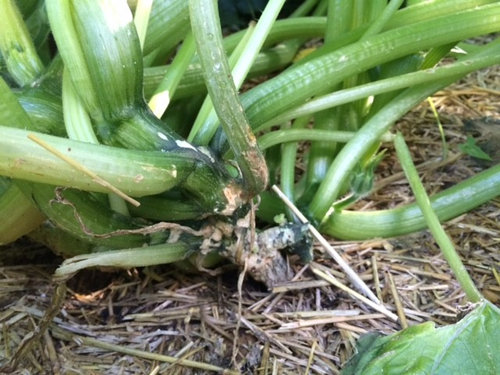
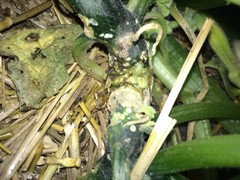
Something is going on with the stem of my zucchini plant, although it seems otherwise healthy. Does this look like squash vine borers, or maybe plectosporium blight? I know for SVBs you can cut them out of the vine but I don't want to do that unless I am pretty sure that's what it is. It's just the stem, and it's been like this for a week or two, but it doesn't seem to be progressing. A couple of the leaves at the very bottom have died but that might be because the plant keeps tipping over and sometimes a vine or two snaps in half when I set it upright. (The plant is slightly tipped over in this picture.)


Comments (16)

  • 11 years ago

    Would need a closer look at the holes in the main stem, and you should look for the 'sawdust'-like frass to say for sure, but I agree with drmbear, from here it does look like the same type of damage as the SVB makes.


  • 11 years ago

    Thanks drmbear. I guess I'll be performing an operation on it soon. I assume I should just cut into the worst-looking part, pull out the grub (hopefully there's only one?), wash out with water and then bury the stem and hope for the best?

    I have heard you can also pierce the grub with a toothpick, but I didn't have any luck with the "hold a flashlight to the vine in the dark to find where the grub is" method because that part of the stem is so dark and damaged.

  • 11 years ago

    I don't see any frass.... it may or may not be SVB. Can you post some more pictures?

  • 11 years ago

    I was not sure about it being SVBs because I didn't see anything that I thought looked like the orange SVB "sawdust", but I've never had them before so I wasn't sure if I was just overlooking it. The white diamond shapes on the one stem that you can see in the picture made me think maybe it was plectosporium blight.

  • 11 years ago

    Here's another picture. I found it hard to take good pictures because of the position of the vines (it's a very large bushy plant right now.) This one was taken at night while I was trying to use a flashlight to find the borers.


  • 11 years ago

    I like mixing up some bT and injecting it in the stems with a syringe. If the SVB feed, they die. No cutting stems.


  • 11 years ago
    last modified: 11 years ago

    I don't see any holes in the stem or any frass... SVB may not be the issue IMHO. I don't know anything about plectosporium blight. Hopefully you will get some more opinions.... best of luck with your plant. If the plant seems healthy otherwise, no wilting or other issues, I wouldn't be overly concerned about it myself. You can always plant some backup zucchini now too :)

  • 11 years ago

    I sure can't tell from the pic. It could be SVB but it isn't the classic appearance I usually see. Looks more like one of the many molds/fungus. This is the main plant stem, correct? And if so the plant is still alive? And if so I'd suspect something other than SVB and treat accordingly.

    Dave


  • 11 years ago

    Yes, that is the main stem and it's actually been like that for a while. We have had a TON of rain lately so I wasn't able to address it as quickly as I would like (and I'm sure the rain might have something to do with it if it's fungal.) But, despite the stem being like this, the rest of the plant seems fine. You can see one of the dead leaves/vines in the second picture, but it may have died due to accidental damage rather than any kind of disease... not sure. We've had strong winds and the plant keeps getting knocked over.

  • 11 years ago

    The base of the main stem is thicker and harder for the SVB to penetrate. There are much easier places to enter. So that, and especially because of the lack of frass, suggests it isn't SVBs. In fact, problems like that at the base or crown of the stem is more likely stem/foot rot. That's a fungus (fusarium?), and will remain in the soil for a few years.


  • 11 years ago

    So, a little update... I did find some areas on the stems that suggested SVBs, with entry holes and what might have been frit. But a few of the stems have been damaged (maybe by wind or the neighborhood cat walking over them?) and split, so I can't be sure they are actually SVB entry holes. I went out there with a flashlight last night and checked up and down every stem and saw no tell-tale shadows of SVBs. As I understand it, it is also a bit late in the season for them and they are usually gone back into the soil at this point. I also understand that it's very unusual for them to leave the plant alive. It's alive, but not doing great... I attempted SVB surgery earlier in the week and while I found nothing, I cleaned out the cut areas with clean water and buried them in soil. That seems to have worked as they are growing roots from the cut areas. It even started to produce fruit, but is now aborting it, and some more stems/leaves are dying. When it gets wet it kinda smells like rotting. I'm going to keep trying to save the plant, but it might be a goner... I want to do everything I can to make sure whatever this is doesn't spread to my other squash, though! I have butternut, spaghetti squash, and pumpkin growing in an adjacent patch. So far they seem healthy but I'm paranoid... any thoughts?

    I also noticed the start of powdery mildew but I've had good luck spraying that with milk before so I'll do that again.

  • 11 years ago

    If it is a disease, and not the borer, and well even if it is the borer, if at this point your main goal is to protect the other squashes, you might want to consider removing the troubled one altogether. If you decide it's best, then remove it carefully (maybe one piece at a time,) by placing it in a bag right there on the spot without dragging it through the garden and potentially spreading any diseases.


    It just depends on how much you want, or need that one to survive, vs. keeping the others healthy.

  • 11 years ago

    I'd definitely prefer to try to keep the zuchinni alive, but I am also weighing it against the loss of 8 other squash plants if the disease spreads. However, if it is plectosporium blight I believe that only affects summer squash? The rest of my squash is winter squash.

    I wonder if there is any kind of barrier I could erect to help separate the squash, or if that's just pointless. There is a strip of grass between the beds and they are not directly touching. I can also reposition the squash vines to some extent. The squash bed was a three sisters bed but the corn is done now and mostly root lodged, making a huge mess. Beans are trailing all over the corn, though, and I don't want to kill those. It makes it a bit hard to tend to the bed. I don't think I'll be doing a three sisters garden again.

    The sad thing is that most of the zucchini seems healthy still, it's just lower leaves that are dying off and the couple of fruit that it's set so far have aborted, but it has many more waiting to blossom and puts out new blossoms every day. My boyfriend is really excited about fresh zucchini and I want to try to make his wish come true ;)

  • 11 years ago
    last modified: 11 years ago

    Well, it sounds like you have incentive lol. If you do decide to keep it, and it sounds like you will, then probably the best thing you can do is avoid touching the sick one before the others. It could still spread through the air or through insects, but physical contact is something over which you have control.

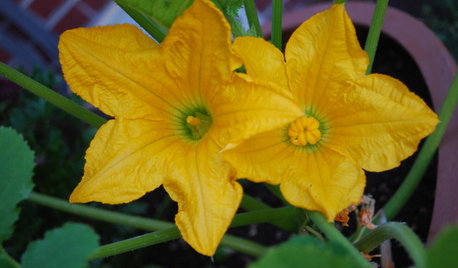
    Also, while zucchini aborts for a number of reasons, the easiest prevention is to hand-pollinate. If it hasn't yet been discussed above, and if you aren't sure how, just take a male blossom (it will be a flower atop a single stalk with a pollen covered stamen inside) and remove the flower petals, leaving behind the little nub (stamen) covered in pollen. The female flower will have a cluster of about 5 'nubs' (stigma) inside the flower and will sit a top a tiny zucchini fruit. Just take the de-petaled male flower and, pretending you're a bee, gently rub it around the stigma. That's it. Easy as can be. If there are just a few male flowers, you can use one male to pollinate a few flowers, just be sure to keep a little pollen on the stamen.

    Good luck.

  • 11 years ago
    last modified: 11 years ago

    I actually did hand-pollinate but it was somewhat wet on those mornings and I know that can affect how well it works. I figured they were aborting due to stress, but I suppose it could be a pollination issue. It's supposed to be drier for the next week or two so I'll keep trying on the new ones.