Software
Houzz Logo Print
latini

Tomatoes: Riddle me this!

11 years ago

Or rather, your thoughts.

I have planted, watered, fertilized and otherwise coddled my tomatoes in beds this summer and they look horrible! On the other hand, I have volunteer tomatoes from a bed I used last year but not this year, however the seeds apparently fell to the hard gravel dirt below and are thriving like crazy! No water or fertilizer or...any of that! One garden friend accounted for my lousy bed tomatoes saying that it's difficult growing tomatoes in the same spot for 4+ years even if you amend (which I have). But how to account for tomatoes thriving in dusty dirty hard gravel conditions? Maybe this is the way I'll grow tomatoes from now on!

Comments (11)

  • 11 years ago

    I've been growing cherry tomatoes in the same bed for ten years. No differences. In fact, I plant the plants in the same row, under stationary trellises. I amend with compost and dig it in deeply. The idea that you "use up" a bed is a myth. You don't say what is actually wrong with your tomatoes in your bed, but I think the sensible approach would be to investigate the problem, rather than subscribe to myths. It is certainly true that beds can be tainted with fungal and viral infections, which may take years to diminish, but those diseases can be largely circumvented with resistant varieties and fungicides.

    In what way do they look "horrible"? I know people who have overwatered, overfertilized, and perhaps overcoddled their tomatoes and yep, they look horrible.

  • 11 years ago

    Coincidence explains a great deal of what you are seeing. That and the fact that given the lousy weather many have experienced this year there are lots of "horrible" tomatoes growing. You are far from being alone with tomato problems this year if that is any comfort to you. But those problems are weather related, not soil location related for the most part. So what specifically is wrong with your plants.

    Like Dan, I too have grown tomatoes in the same fields for more than 40 years with no problems. Regular crop rotation is more of a commercial grower thing and something most home gardeners just can't do.

    Volunteers sometimes appear more robust simply because of their mutated genetics (assuming they were hybrids) and because they often develop later then those we transplant. But despite their appearance they often don't produce or don't produce edible fruit so it is a trade off.

    Dave

  • 11 years ago

    I also have grown tomatoes in the same bed since 2000. I too enjoy and look forward to the volunteer plants they are full of surprises as you never know what variety they are.

    My theory why the volunteers do so well is they have a better and undisturbed root structure. This certainly helps during dry spells.

    Were the plants you are having trouble with direct seeded or transplants?

    IF transplants were they in peat pots?

  • 11 years ago

    Any plant that I have that is a volunteer does beautifully. I call them "nature spirit planted" and figure those guys know more than I do about gardening.

  • 11 years ago

    I am pretty sure my vegetable garden has existed there for 200 years.

    "Look horrible" isn't really a sufficient description....

  • 11 years ago

    That's interesting. I guess what you're saying is that when seedlings are cultivated in small pots, before transplanting, a tap root can't develop. That would be a general advantage for direct seeding (though there are many disadvantages in direct seeding!)

  • 11 years ago
    last modified: 11 years ago

    Transplanted tomatoes are subject to growing indoors in less than ideal conditions and then subject to the stresses of hardening off and then transplanting... not really mysterious to me.

    Even here in my fairly Northern Z6, you could grow direct from seed and get pretty good results.

  • 11 years ago

    I think growing seedlings indoors can be pretty much ideal conditions, if you have good lights. How else would it be less than ideal? Nothing sacred about sunlight or outside air, though once mature, needed free pollinators aren't around. The trouble with growing indoors is available room. Hardening off is a stress that direct-seeded plants don't endure, because they've already endured the stresses from the varying and often suboptimal temperatures under which they've been trying to sprout at.

    Direct seeding puts tiny fragile seedlings at the mercy of driving rain, wind, temperatures, and even cutworms.

  • 11 years ago

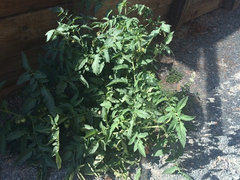
    Thanks all for your input. Lots of knowledge among you! Thanks for the info on rotating crops. I was a little take aback when my garden friend advised me my beds planting should be rotated that often! The info offered by you collectively makes sense. Thanks for the summary info of the tap root explaining my tomatoes' growth. For those asking for photos: This is the volunteer:

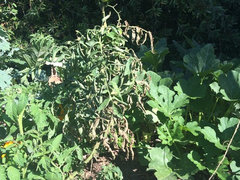
    This is the horrible example. Yes, there are tomatoes but the leaves look pretty bad and generally unhealthy. It is growing in a bed with zucchini and basil. Yes, I'm training it up a string to trellis above.

Sponsored
Landscape Management Group
Average rating: 4.9 out of 5 stars33 Reviews
High Quality Landscaping Services in Columbus