Software
Houzz Logo Print
johnspir

Emerald Arborvitae turning yellow

11 years ago

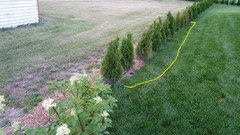
I have over 40 arborvitaes - about 50 along the back of my yard, and another 40 down the side. This weekend I planted some hydras and noticed they turned a bit yellow (post here: ) but it seems that we are chaulking that up to heat/transplant shock.


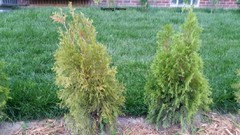
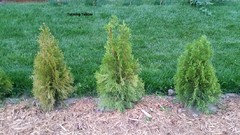
However I noticed today that the last 11 of the 40 arbs on the side yard are turning less and less green than the rest.


- Wondering if the 2 are related

- Wondering if this is just a heat or other issue (been in the 90s this weekend)

etc. I have a drip line that I use to water them once a week or so if it hasn't rained too much. They were planted about a year ago in sandy soil. I added the cedar mulch about 2 weeks ago, making sure that the mulch is not in the drip line of the arbs.


Why only these 11 are acting this way in strange. There is no difference in the grade or watering, and they get just as much sun as the rest.


Comments (20)

  • 11 years ago


  • 11 years ago


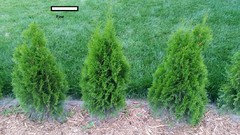
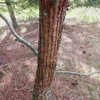
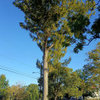
    These 3 are fine

  • 11 years ago


    These 3 are right next to the ones above

  • 11 years ago


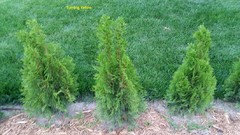
    The next 3 over

  • 11 years ago


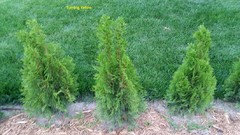
    Next 2 over

  • 11 years ago


  • 11 years ago

    Should point out that about 2 months ago I had to dig them out (the entire 40) to install a dirt berm along the property line. When I had planted them, I had dug a hoel about 1.5x the pot size, although the last few were in increasingly tough dirt. Wondering if maybe I should dig them out and tear up the ground a bit more?

  • 11 years ago

    - The pictures are taken facing north. The white wall is about 20 feet to the west.

    - They get a _ton_ of sun.

    - Irrigation is drip line connected to a station from my automatic sprinklers. They _are_ at the end of the run actually.

    - The ground there is dry.

    - Lawn is about 12 months old - was new sod, Kentucky Blue grass.

    - Lawn was sprayed with a fungicide about 2 weeks ago

    - The berm was put in in about 2 hours. We dug out an arb, put dirt in, put arb back in, moved on to the next one.


    Starting to seems like maybe they just don't have enough water? If that's the case, will they recover with enough TLC? I have arbs in pots that I can replace these with if they are goners but I don't want to remove them if I can save them.


  • 11 years ago

    yes.. i was thinking about end of run issues .. just not getting the pressure out there ...


    if you have engineered irrigation .. how much water is pumped per hour???


    dig holes is 3 or 4 places along the run ... and compare what you find .. that is really the only way to understand how the irrigation is working ... along the run ...


    hand trowel.. 3 to 6 inch holes ... and observe ..


    ken

    johnspir thanked ken_adrian Adrian MI cold Z5
  • 11 years ago

    Thanks!


    I don't know how much water is pumped per hour, but I can ask the sprinkler people. The drip line is about 130 feet long, so it may be that we just need to separate the arbs on the side vs the ones in the back.


    I'll get out the shovel today and check, but how much water do the arbs need? You think these will bounce back?

  • 11 years ago
    last modified: 11 years ago

    The off color ones are probably history. 'Smaragd' is more prone to root rot than usual, also in summer arborvitaes can be sucked dry by heavy mite infestations. But in general when all or most of the top of a woody plant goes bad over a short period of time it means there is a problem at the roots - too wet, too dry or too much root damage at the wrong time of the year. Including root damage by pathogens.

  • 11 years ago

    it doesnt matter what water arbs need ... these are transplants ... and they need what they need ...


    embo is probably right ... plan on fall replacement ...


    but lets keep working on defining the problem ...


    show me a pic of your irrigation line


    ken

  • 11 years ago

    Will post pic of irrigation line when I get home. Is there a way to tell if it's root rot? I mean, can I dig one up and visually inspect? Or should I just leave be?

  • 11 years ago

    I'd dig up the one that leans.

    Mike

  • 11 years ago

    So I got caught outside in a rainstorm this weekend and since I was already soaking wet, went down the line to look at what was happening. Turns out that tons of water was pooling up between the sod and the arbs in question. So I did a couple things:

    - cut out a couple of channels to let the water drain.

    - then I dug out the 5 in question and moved them down the line, and replaced them with 5 extra arbs I had in a test area (they were extras and I didn't know what to do with them). The arbs I dug out had a crappy root system compared to the ones in the test area. One thing is that the ground along the line where these were was really sandy below and rocky - tough ground for the first 8 inches. I dug it out and softened it up and will see:

    - If they new 5 will haven any problems.


    For the older 5, if they survive, that's great. If they don't, I'm OK with that too.

  • 11 years ago

    the sand was not an issue ... dont know about rocky ...


    i hope you didnt get too carried away amending the planting hole ...


    glad you finally put eyes on.. and found out what the irrigation issue was ...


    i probably would have left the transplanting until fall ... but as of now.. thats hindsight ...


    ken

  • 11 years ago

    'Smaragd' is killed by wet soil more easily that most other selections.

  • 11 years ago

    Johnspir, if you haven't grocked this already, healthy roots of arbs are reddish in coloration, almost white on the inside.

    These are pretty hard plants to kill with soil/water/drainage issues. That doesn't mean this isn't what's happening, just that this non-fussy plant usually takes such issues in stride. Emb's comments about this particular cultivar may be the most pertinent. Straight-species Thuja occidentalis are easily among the most tolerant of all tree types to high water table. Those wild ones growing in my swamp up north are perfectly happy in conditions that are all but impossible for the vast majority of tree species.

    +om

  • 11 years ago

    So I wanted to followup ... You guys were spot on. The ones I transplanted in are doing fine. I lost those 5, but................ a) I was able to build up the berm in the places where they were, and Lowes has a 1 year return policy so that solved that. I've taken benchmark photos for the rest to see what happens.

Sponsored
NME Builders LLC
Average rating: 5 out of 5 stars2 Reviews
Remodeling Company in New Albany, Ohio