Software
Houzz Logo Print
krissyafite1979

Adding milk to soil

11 years ago
last modified: 5 years ago

UPDATE; hey wise guys still responding to my.post after six years. I gave zucchini another go. It definitely wasn't under watering or lack of nutrients. Apparently somebody else loves my zuchinni plants even more then I do. They are called squash vine borers. I unearthed a dead plant (which had the same symptoms and like last time died found little worm like characters and googjed them and showed the pictures to my garden Facebook group. The verdict seems to be squash vine borers. Hey Mr Digindirt who made me feel like an idiot for finding a somewhat unconventional way of resolving an issue Iv never had to deal with planting when I lived at home with in ground plants, how smart do you feel now) added milk to my plants after reading that it wil help with calcium deficiency and its much easier then getting wood ash or waiting for eggs to decompose (and I only eat about six eggs a week which I dont think is immoderate. I could only get my husband to eat eggs when I make them for dinner which makes that 8. I did add cracked eggs which also seemed to help even without decomposing). Now Ive been adding two tbsps of milk to a quart of water. Im pretty generous with adding this mixtue and it seems to be working. It quickly perked up my rotting zulants.plants. I use this mixture once a day. Could this damage my plants? Oh and my plants are in pots.

Comments (56)

  • 11 years ago

    Well next year ill try gymsom. Digdirt all youve told me was whats wrong not what to do about it. Thats fine but its hard to rely on the validity of a response without advice.

  • 11 years ago

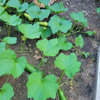
    Your photo shows half of a leaf. It's hard to rely on the validity of a problem without information about it. In fact, you never really told us what the problem was, except to say that your plants were rotting (which is something I really can't recognize in the half of a leaf).

    A photo that shows more, and at least some more description of the problem would help with a diagnosis and possible treatment.

  • 11 years ago
    last modified: 11 years ago

    I'm sorry but the "what to do about it" all depends on what the specific issue is. What is your question?

    There is tons of advice here already on how to grow zucchini and on the Container Gardening forum even more on how to grow zucchini in a pot so the how-to and what-to-do about it info shouldn't have to be re-typed all over again for the info to have validity.

    Is the question adding milk to soil? That is what I understood from the title and the info you posted and that is what I addressed. Why did you decide it had any calcium deficiency? Had you asked that question any number of us could have explained that first, calcium deficiency in any potting mix is very unusual because the mixes almost always contain lime. We could have explained the real causes of blossom end rot, if that is the problem you were seeing, and how it goes away all on its own as the plant matures IF you maintain consistent soil moisture levels. This is an issue that is discussed in great detail in literally hundreds of threads here.

    But for some reason you decided that the correct solution were things not even normally associated with gardening - milk, egg shells, or wood ash and now you asked for feedback on using milk to water zucchini?

    So exactly what is your question?

    Saving your plant? Based on the photo it very likely can't be done as it is already at least 6 weeks old and has been deprived of adequate nutrients, been inconsistently watered, has clear signs of root death and mal-nourishment, and heavy stress. But if you want to try to save it then, remove that poor zucchini and any others it may have that is on it to reduce plant stress, feed it weekly with a normal garden fertilizer, bury all that exposed stem in fresh potting mix, and water it regularly when the soil finger-length depth is dry.

    However you are far more likely to have success by pulling that plant, mix a bunch of fresh soil-less potting mix into the container and fill it up, then plant some new seeds in the pot. As it grows feed it plant fertilizer and keep it well watered.

    Dave

  • 11 years ago

    Well I guess next year Ill buy the lime anyway as every little bit can help. Ill also try some gymsom. For now Ill use the eggshells and milk seeing as st the very least it wont hurt and I diluted it so it wont be too much milk. For the weekend Ill give the plants a break and give it more Monday.

  • 11 years ago
    last modified: 11 years ago

    An unhealthy plant cannot produce healthy fruit. Can't put it more succinctly than that. You're focusing entirely on a symptom. The sorry zucchini fruit that is on the plant is a symptom of a much, much bigger problem. Your plant is under extreme stress due to inadequate watering and a major lack of nutrients. Fix this issue and your plant might, maybe, produce decent fruit eventually.

    Milk, lime, gypsum, and/or eggshells are not going to give the plants the nutrients it requires. It needs a well-balanced fertilizer, either organic or non it's your choice but if you go organic I suggest a liquid fertilizer as they are faster acting.

    And I'm going to write my answer to your other post here instead of there. Adding raw organic matter in the form of vegetable scraps and whatnot does nothing for plants growing in a container. It takes quite a while for worms, microbes, and other beneficials to break organic matter down into a form usable by plants, and all of which are not usually present in large amounts or at all in containers.

    Also, are you absolutely sure that you even have a calcium deficiency? The plant could simply be aborting the fruit because it's too stressed to keep it or the zucchinis could be rotting/dropping off due to them not being pollinated. Just something to think about.

    Rodney

  • 11 years ago

    Good points Rodney. So is that the problem, that you only want to grow it "organically"? That's why the milk and other stuff?

    If so then you need one of the many liquid organic fertilizers available that provide all the plants needed nutrients, both macro and micro. Milk, if it provided anything, would only supply water and maybe some calcium which is a minimally needed micro-nutrient. But where would the plant get the important stuff - the nitrogen it needs? The potassium and phosphorous, the magnesium, boron, zinc, etc. etc.? Your milky water doesn't contain those.

    And your potting mix in the container can't provide them first because they wash out of the container every time you water, and second because there are no soil residents, no active bacteria to eat and digest it so the plant can absorb it. The plant starves to death.

    As often discussed on both the Organic Gardening forum, the Container Gardening forum, and here trying to grow organically in a container is a whole different ballgame than gardening organically in the ground where all those needed nutrients and the needed soil food web already exist. In a container you have to provide them, provide them in an already usable form, and provide them weekly. You do that with liquid organic supplements the plants can use - fish emulsion fertilizers, seaweed and kelp supplements, compost teas, etc. the many natural nutrient sources that have already been processed into plant-useable nutrients.

    Dave


    Examples of Liquid Organic Plant Fertilizers

  • 11 years ago

    Wow, so much animosity being spewed up there......

    Just keep doing what youre doing if you feel that it is helping. Maybe it isnt the low volume of milk thats correcting your issue, but apparently SOMETHING youre doing has helped! Although i am inclined to think that it is probably your increased focus on waterring regimen as of late. Perhaps before you noticed the problem you were not as vigilant.

    Gardening should be a fun adventure and there is always a learning curve--- its the challenges that make us better. More often than not, it takes SEASONS to get things figured out, and once you think you got it figured out, youll get another, different curveball.


  • 11 years ago
    last modified: 11 years ago

    I suppose I could try adding vinegar to egg shells as long as it xant burn out the plant. Rodney, I think it us a calcium deficiency based on my research. Yes watering is important, but Ive been keeping them moist. Unfortunately where I live now I only can do potted plants and often potted plants seem to loose nutrient plants quicker, though everything else I plant seems fo do fine. This is my third year planting in containers, last year my zuchini died and everything else did fine. Next year I might not plant zuchini. But I will try to get supplements for my plants that could be provided weekly. I did add decomposed tea leaves actually but I will buy some stuff. As far as organic Ive never heard of an in organic home garden as most fertilizers in garden stores are natural except some weed killers but in pots weeds are easy to pull out. Even the insecticidal soap I bought said for the organic garden. The reason for the milk is it was easy to do as I alwsys have milk and its easy to get. The guy at the garden store didnt seem to hsve much for my problem. The only thing the guy at tge garden store told me to get was veggie boosting hormone, which as I said helped everything but the zuchini.

  • 11 years ago

    I'll ask once more, though it has already been asked several times -- why do you think your plants need calcium? The amount of calcium you're applying in your diluted milk is really infinitesimal, and as Dave has noted, calcium is really a minor nutrient. More likely, the plants are just responding to extra water. You could add a drop of perfume to a gallon of water, and it will do wonders for a thirsty plant.

    But that's exactly right that potted plants lose nutrients quicker. The soil is leached very effectively. You might apply, as per instructions, some cheap and easy (e.g. Miracle Grow All-Purpose) fertilizer regularly, and see if that makes a difference.

  • 11 years ago
    last modified: 11 years ago

    I guess I could try perfume. The readon I think its low calcium is because I researched zuchini rot and everything says low calcium.

  • 11 years ago

    I wonder if the OP is related in some way to the gal trying to grow tomatoes on top of her father's lawn? ;)

  • 11 years ago
    last modified: 11 years ago

    Sorry I dont know that girl who growing lawn tomatos.

  • 11 years ago

    I think you're talking about what's called "blossom end rot". That wasn't obvious from your picture, which shows what appears to be a somewhat healthy squash with a dead flower still attached on the end. Yes, calcium deficiency can lead to that rot, if that's what you're really seeing. So can a lot of other things. Over fertilization with nitrogen can do it, as well as water stress. Real calcium deficiency also should cause leaf necrosis, where the leaves start curling and drying up.

    Is this a soil mix that you've used successfully in the past?

  • 11 years ago
    last modified: 11 years ago

    All I see in that picture is some of one healthy looking leaf and a somewhat normal looking zucchini. I don't see a plant stem to comment on in the picture (nor a plant for that matter) all I see is what looks like a leaf branch.... though it is almost impossible to judge anything well from that picture... Is there something I am missing?

    Egg shells take forever to decompose... adding them to the soil in a pot isn't going to be helpful.

  • 11 years ago

    Iv used tgat method before yes and it worked lovely on my eggplants tomatos, herbs begonias and imoations as well as hostises which even this year are all growing beautifully. My peppers are starting to growI gyess zuchinis trying to tell my sonething, it doesnt like my p better, but I usually do well with peppers. Luckily my moms fruend sonetimes gives me his from his garden which are delicous and the farmers markets I visit sknetimes have great zuchini and the grocery stores are half way decent ones. I will use

  • 11 years ago

    Please use a spell checker. Thanks

  • 11 years ago

    Spelling doesnt matter. This isnt english class. I have a hard enough time using touch screen

  • 11 years ago

    I add some Mira-cal to my tomato and pepper soils at planting time. Helps with BER.

    krissy Canto thanked tommyr_gw Zone 6
  • 11 years ago

    If you really need to add calcium, Mir-cal would certainly work well, but be careful. It's pretty alkaline, and if you have already alkaline soil, you won't be doing yourself a big favor by applying it.

    krissy Canto thanked daninthedirt (USDA 9a, HZ9, CentTX, Sunset z30, Cfa)
  • 11 years ago
    last modified: 11 years ago


    Spelling does matter when it so far off it becomes difficult or impossible to interpret. When you add text to the "write a comment" box, don't you see the red underlines suggesting spelling problems?

  • 11 years ago

    My extension service told me that I should add calcium. I went to the local diner and they stocked egg shells for at a rate of a 5 gallon bucket or two a day. A little bit of washing, spread them out to dry then crush them up, toss 'em around.

    I wonder what too much egg shell night do...?


  • 11 years ago

    why even use egg shells when wood ash is available everywhere and acts almost instantly? and wood ash does have calcium, unlike milk. If wood ash is not available, any sort of lime will do, including concrete, carefully dusted.

  • 11 years ago

    Wood ash available every where?
    I guess that I am not all that seasoned....


  • 11 years ago

    Again, let's be careful here. If your soil is alkaline, you really don't want lime, and wood ash is essentially toxic waste. But as noted, there is a lot of skepticism about calcium being the magic sauce to fix BER. This is increasingly sounding more like working a solution without understanding the problem.

  • 11 years ago

    wood ash from actual firewood is far from being toxic waste.

  • 11 years ago

    <This is increasingly sounding more like working a solution without understanding the problem.>

    Exactly. Old wives tales like this persist despite all the decades of published research that repeatedly prove the true causes and solutions. And if an extension service recommends adding calcium to your soil they sure don't recommend or mean egg shells, much less milk.

    Wood ash could be a "toxic" in any garden soil that is already alkaline. Toxic for the plants at least.

    Dave

  • 11 years ago

    "they sure don't recommend or mean egg shells, much less milk...." and the reason for this is...?

  • 11 years ago
    last modified: 11 years ago

    <and the reason for this is...?>

    As discussed above and in hundreds of other discussions here - because neither is an effective source of calcium. Eggs shells because it is the wrong form for the plants to use and it takes them many months to decompose and be converted to Ca ions, the plant-usable form. And milk because it's calcium content is so low, especially when diluted even further, and is bound up with fatty molecules that the plants can't absorb.

    Dave

    Edited to add - and because calcium deficiency isn't the cause of blossom end rot to begin with. Tests done more than 20 years ago on BER fruit prove there is ample calcium already in the fruit it is poorly distributed because of poor root development, inconsistent soil moisture levels and, in some cases, because of the shape of the fruit making paste varieties more prone to it.

  • 11 years ago

    I'll say it again. If you have alkaline soil, wood ash is BAD STUFF. Wood ash makes soil much more alkaline. Toxic to plants.

  • 11 years ago

    Milk is a useful source of calcium to humans simply because it is a digestable substance. If you ate a few tablespoons full of lime or concrete you'd probably get a lot more calcium, but you'd probably get very sick as well.

  • 11 years ago
    last modified: 11 years ago

    Lol but I guess you would get plenty of fiber. I suppose zuchinis require more calcium then most plants. Now my plants producing better but they get half the size of what they are suppose to grow. (they grow three inches if im lucky and if I dont pick them st thst size they get soft) Next year I might just stick with what ive been doing well with. While I have improved at growing some things, there are some plants I have been doing consistently well but zuchini I seem to always fail, even when I grew the hard to find hybred container variety one year, I failed (actually thst was the worst). So I guess gardening is trial and error but sometimes a matter of sticking to planting what works.

  • 11 years ago

    Krissy

    Your problem sounds more like lack of pollination to me. You might try hand pollinating the female flowers with the pollen from a male flower. Works for me.

  • 11 years ago

    Okay, perhaps.

  • 11 years ago

    Tiny zucchini are the result of plant stress. The plant just pumps what it can into the fruit, and then it gives up. I've seen this with plants that are planted to close together or (maybe this pertains to you, if I'm not reading too much into the picture you posted), in pots that are just too small. Zucchini are big plants, and they have big root systems. Nothing to do with calcium.

    You might try to repot in a bigger pot, and I'm guessing you'll see a very root-bound plant when you remove it.

  • 11 years ago

    I only put one plant in the pot andvits pretty big but perhaps not enough dirt. Itsbkind of late in tge season. Next year I dont think i will do zuchini but if I do, I will consider a larger pot.

  • 5 years ago

    Hi, I know this comment is a very late comment but I‘ve been researching the best way to get eggshells more calcium available & that is is to crush them to a fine powder, or grind them if you have a grinder. I’ll be doing this soon with some collected eggshells. Cheers and I hope you’re veggies are healthy.

  • 5 years ago
    last modified: 5 years ago

    To the extent your soil really needs calcium (BER doesn't really indicate that), digging in eggshells is a very poor way to supply it. Eggshells are rocks. They release calcium ions, by dissolving, very slowly. If you dissolve the eggshells in acid (say, vinegar, takes a few days), dilute the solution to make it less dangerously acidic, and apply that to the soil, that ought to work. Just grinding and powdering eggshells won't do much. Crushed rock doesn't dissolve much better than whole rocks.

    If your soil is alkaline, it likely has plenty of calcium.

  • 5 years ago

    This entire thread reminds me of those 'Jaywalking' segments from the old Jay Leno show. Some folks just do not have a clue!! And often remain so clueless as to completely ignore the hints (as per the show) or actual direct practical advice given to them in favor of some wild hair supposition or an old wive's tale they hold dear.

    Has using a proper fertilizer to supply necessary nutrients never crossed one's mind?

  • 5 years ago

    Hi, Susan. The tone in which you and others were just treated above is unconscionable, which is unsurprising. It seems some people simply cannot maintain a decent level of rhetoric and must take out their issues on others. "Clueless" indeed.

    The soil mentioned certainly does not seem to require calcium, and it's certainly true that eggshells aren't really a good way to add them. But it won't do any harm, they may work into an acidic soil very slowly over time, and if it keeps your eggshells out of your waste stream...I say go for it.


    For soils of low pH, we'd generally use a calcitic lime to add calcium. For the most part, I recommend a humate-bound lime. They're a little more expensive, but work pretty fast and change pH quickly. Plus you only need to use around 9 pounds per thousand square feet every six months, so they work out economically!

    Higher pH soils would use calcium sulfate, AKA gypsum. It does take more because it doesn't bind so easily. We'd use this for a calcium shortage where pH is high--which can happen if there's an excess of magnesium or sodium in the soil. Potassium can also be high, but it usually won't boost pH very much. Gypsum will eject sodium from the soil pretty easily, generally lowering pH overall, but usually doesn't do so much about magnesium.


    I hope that information helped you and other posters here out, and I'm sorry you were made to feel poorly by a callous individual with no manners and no ability to explain or educate you further.

    I hope you have a great day, Susan!

  • 5 years ago
    last modified: 5 years ago

    Well, the question was how to get calcium out of eggshells into a plant-usable form. It can be done, but not by digging them into the soil, at least on a short time scale. In that respect, digging in eggshells to remedy calcium deficiency IS somewhat of an old wives tale. Or, more precisely, a tale from a very slow wife.

    There is a tendency for people to always want to add nutrients to soil because, hey, plants need nutrients! In most cases, there is plenty there already. What one should look for, before pumping nutrients into soil, is some evidence that that particular nutrient is deficient.

    Some simple soil testing is probably in order here.

  • 5 years ago

    "Some simple soil testing is probably in order here."

    Or a clarification of whether we are discussing container gardening - like the OP - in which case the need for fertilization is a given, or if we are discussing inground planting, where a soil test may be appropriate.

    btw, my prior response was in regards to the thread as a whole, not to Susan's specific question (although had she read the entire thread she likely would have figured out that eggshells are far from an efficient method of supplying calcium, as that was pointed out numerous times).

  • 5 years ago
    last modified: 5 years ago

    I'll just say that garden myths are extremely prevalent, and can be quite exasperating. We hear them repeated regularly here, and they are regularly corrected, but never seem to disappear. There is some psychological drive to believe that basic household substances can perform horticultural wonders. Epsom salt! Powdered sugar! Aspirin! Corn meal! Egg shells! Baking soda! Vinegar! Fireplace ash! We've heard them all. Hey, powders and liquids are, at some level, just mysterious chemicals, and plants LOVE mysterious chemicals. I think, in order to make them work, you need to recite special incantations, and wave a magic wand.

    That being said, occasionally there is some real biochemical justification for using these substances, but real myths don't rely on such justification.

  • 5 years ago
    last modified: 5 years ago

    Epsom salt is useful as a magnesium supplement, for soils that are magnesium deficient. Most soils are not. Epsom salt is often blathered about as a general plant-fixer. Just drop a teaspoonful in your planting hole and all will be glorious! That's nonsense.

    As I said, some household substances make sense to use UNDER CERTAIN CONDITIONS. Common mythology is that they are always wonderful.

    But my point was that the tone of voice and delivery in exasperation can be confused with insult. Not particularly constructive to dwell on it.

  • 5 years ago

    You keep saying you're not naming names. But everyone knows which post you responded to, and who you're upset about. What I'm hearing here is less insult and injury, and more just someone being exceptionally sensitive. You are entitled to that. But it's really not worth all the words being expended on it.

  • 5 years ago

    Let me add that posting a question about adding eggshells to soil in a thread labelled "Adding milk to soil" isn't constructive. Of course, these days, many posts are strangely tacked onto threads that are a decades or more old, for some reason, which over the years have digressed from the original question. This thread was mostly NOT about eggshells. I'd like to suggest to forum participants that if you have a question you want to ask, don't be afraid to make a new thread. In the interest of a useful reference archive, that makes the most sense.

  • 5 years ago
    last modified: 5 years ago

    And Donna in sask if you still exist I know this post is old but I saw some recent replies to post. Maybe Instead of making fun of that lady trying to plant tomatoes on her father's lawn or other misinformed gardeners, you could inform them of a better way. I would've said maybe her and her dad could try digging up a spot if possible and added a good quality soil and miracle gro or some other good fertilizer and compost. Or alternately, a raised bed with good soil and compost or containers but putting in a sunny spot. I would not deem her stupid and ridicule her.. Yes that was a long time ago but I should've said it then. I didn't stand up to people much back then.

  • 5 years ago
    last modified: 5 years ago

    This post is six years old but says five for some reason but no it is definitely 6. People are still responding and debating my using milk and egg shells. Jeez! It was six year ago and it was mid summer and it was a last resort. Some of u remind me of the kindergarten children I worked with.

    I found this post bc I was revisiting the idea of planting zucchini again. Maybe it's a a hard crop to grow in containers and small patio varieties are not always well thriving and are really more like curvey cucumbers good for pickling. I grew zuchinni in the ground for years when I lived at home with great results.

    If people read my question I was actually just asking if the milk could hurt my plants. And nobody seemed to notice that. In hindsight such a tiny amount would not. But a simple no but it won't help much would've sufficed.

    And I like how everyone was saying I was not watering enough even though I kept saying soil was moist. If I was taking the time to add stuff why would I slack off with watering? By the way a yellow or pale plant is over watering usually. I actually did water more after the post which probably did more harm then good.

    I see why i gave up posting on here, People were nasty and condescending, saying things like is this idiot related to the other idiot trying to plant tomatoes on her dad's lawn. Bc everyone who makes misinformed gardening choices must be related bc we are all stupid.

    And talk about misinformed, saying you can't use compost in containers is not true. What do you think a compost bin/ barrel is? I would recommend a good soil and fertilizer too though as containers leach out nutrients faster. Using already decomposed scraps is best. Iv been using compost and Miracle gro for years with good results.

    The amount of milk I used did nothing. But Iv read mixed views about using milk and the amount I used was miniscule, leftover milk from the breakfast table. I was afraid to add much.

    Typing on here is hard for some reason, hense the misspelling and typos and I constantly get repeat sentences when I text on here.

  • 5 years ago
    last modified: 5 years ago

    This is a thread in which posts keep appearing and disappearing.

    To the extent that we're back to talking about milk as a calcium source for plants, which was the question originally posed, let's talk some chemistry. Plant uptake, and human nutrition for that matter, requires ionic calcium -- as in Ca++. Most of the calcium in milk isn't in the ionic form. It's bonded to casein molecules in the form of calcium caseinate. Casein is a dairy protein. Calcium caseinate doesn't break down in water. It just sits there. It can be broken down effectively in a strong acidic or alkaline medium, which is why it gets quickly busted apart in our stomachs. Milk itself is acidic, but only very mildly so. So yes, there is calcium in milk, but not a lot that will help plants in soil. I can't imagine that milk would actually harm plants. Now, one might assume that eventually soil bacterial or fungal action will release it, but that's another matter. That being said, milk is an expensive source of calcium, whether for plants or for people. Calcium sulfate (gypsum), calcium carbonate (chalk) and, while highly alkaline, calcium hydroxide (lime) are vastly more economical sources of ionic calcium. The former two are recognized nutritional supplements.

    BTW, calcium additives are usually white, and milk is white. But milk is white because of casein, and not because of calcium.

    But as well stated in earlier posts, don't waste a lot of time on this unless you're really sure you have a calcium deficiency.

  • 5 years ago
    last modified: 5 years ago

    Makes sense but as I said, this was an old post I made six years ago which for some reason says five. I know its six bc it says its my third year planting them. I found this post researching. growing zucchini. Yes it was just a last resort at the time, not the best method for the said problem. I Used what I had handy and it was just keep leftovers. I wouldn't say spending three dollars on a gallon if the least expensive milk is the most expensive move but I would say it's not effective. I have never actually purchased a gallon of milk and dumped it into my plants. Like I said, I just used some leftovers diluted.

  • 5 years ago
    last modified: 5 years ago

    I have actually composted little leftover pieces from my child sidewalk chalk that would otherwise be thrown away of course that are too tiny to draw with or sweaped up chalk dust.