Software
Houzz Logo Print
gorbelly

What did this damage?

11 years ago
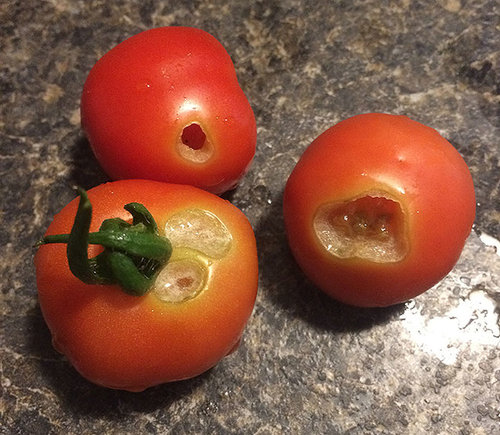
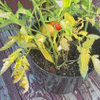
Hello. This is my first year gardening, and some of my tomatoes are showing what I think is some kind of rodent damage. I'm sure there are many here with lots of experience who I hope can tell me what this is. Strangely, it's only happening with the large cherry tomato plant--my sun gold and black cherry tomatoes are being left alone (so far!). There are no worms or anything inside the tomatoes.

Comments (17)

  • 11 years ago

    Oh, dear. I'm not sure why this feels worse than rodents, even though it's probably easier to control. Thanks, though. I'll look for them. It didn't occur to me because I hadn't noticed anything chomping on the leaves.

  • 11 years ago

    Not birds pattern, not rats patter, Not squirrel eating pattern

    That leaves crawlers, caterpillar, slugs.


    Sey

    gorbelly thanked Seysonn_ 8a-NC/HZ-7
  • 11 years ago
    last modified: 11 years ago

    Looks near identical to my tomato hornworm damage, except for the top tomato. I don't think my critter made any holes, just concave ditches. I would also guess your guy is a bit smaller than my guy for the moment...but not for long LOL

    http://forums.gardenweb.com/discussions/3192675/just-when-i-said-i-have-never-gotten-a-tomato-hornworm

  • 11 years ago
    last modified: 11 years ago

    gorbelly, Definitely an insect and I agree with everyone else that it is probably a caterpillar. Armyworms are nasty here, and there's tomato fruitworms, but usually these guys leave a more festering place. Did you clean their poop out or is this how you found it? Odd, so I'm gonna go with Grace's suggestion and say they might be early tomato hornworms since those guys don't sh...frass where they eat.

    Cheers

    PC

  • 11 years ago

    The tomatoes look very clean when I find them. Today I saw some leaves that had holes or were eaten down to membrane/veins in patches. But not as clean-looking as hornworm damage pictures that I've seen, and frass-like material wasn't as geometric as hornworm frass. So I went back out at dusk and looked very carefully and saw a big old striped armyworm about an inch long chomping a hole in one of my ripening tomatoes. Stinker! I found about a half dozen others that were much smaller than that one.

    I think I'll have to get some Bt.

  • 11 years ago

    "a big old striped armyworm about an inch long chomping a hole in one
    of my ripening tomatoes. Stinker! I found about a half dozen others that
    were much smaller than that one.

    I think I'll have to get some Bt."

    LOL, join the armyworm club; those and the fruitworms together look like Keebler elves in my Rio Grandes or what's left of them. If it is a big fall armyworm, don't expect great relief from Bt because it is fairly impotent against them, unless you catch them in really early stages after hatching and even then I'm not convinced, but hopefully it at least helps.

    Cheers

    PC

  • 11 years ago

    Except for the one big one, the others were about 1/3" long. Maybe from 2 different generations?

    What about Spinosad? Does anyone have experience with it against armyworms? And is it safe? I'm concerned with safety for other critters as well, since it seems like I've been getting some help from beneficials, birds, etc. considering the relatively small amount of damage I've seen. Not to mention that things are still flowering, so I don't want to harm pollinators.

  • 11 years ago

    Dunno what an army worm is but I guarantee you that I ain't looking it up either. Each time I look up some pest y'all mention and start getting grossed out, I end up seeing it in my own yard.

    I will be over here in my "ignorance is bliss" corner. Good luck with the holes LOL!

  • 11 years ago
    last modified: 11 years ago

    "Except for the one big one, the others were about 1/3" long. Maybe from 2 different generations?"

    They are not generations in that sense. The caterpillar goes through several stages of size called instars as it grows. If I remember correctly Bt supposedly works only 1st instar and mostly 2nd. By 3rd, the effectiveness is mostly lost, but that would depend on the eating patterns. If it eats a tomato fruit instead if leaf, it's a good bet it will live since it will be ingesting less Bt toxin. The caterpillar would be under 1/4". By 1/2" Bt is officially of not much use. Yours is in the middle. The caterpillars eat the vast majority of the plant tissue when they are in the 5th-6th instar, like the holes in your pic.

    I haven't tried Spinosad because I read it had similar issues with the caterpillar sizes, and someone with a connection to the county Ag office here actually told me that they tested Spinosad in our climate was generally poor for all caterpillars, though it was just a casual conversation (hearsay), it was one of those things that discourages and I didn't check further.

    Generally with armyworms, the strategy is to go out and pick them off the plants the old fashioned way - with your fingers, unless things get to plague proportions (armies). You can bet anything you do will affect the more good guys than them. Unfortunately they are more nocturnal and twilight feeders, but if it is drizzling I find them too.

    "I will be over here in my "ignorance is bliss" corner."

    LOL, I really wish I could relax in that Golden Gate corner, just once!

    Cheers

    PC

  • 11 years ago

    My understanding is that the larval stage is only 3 weeks, after which they pupate and then re-emerge and breed. There is enough time for 2 or 3 generations during a typical growing season in my part of the country. Since I have only seen small amounts of damage (<10% of my tomatoes, only a few leaves eaten here or there) but one worm I found was large and the others very small, I'm thinking they've been there for a while but I've been helped out unawares by beneficials, birds, etc. so far, but subsequent generations are breeding in larger numbers now.

    Normally, I'm happy to pick critters off by hand, but I can't go out during dark or damp conditions. The mosquitoes around here are extremely aggressive (tiger mosquitoes), I am extremely attractive to mosquitoes and I react very strongly to bites, and I end up bitten even if cover everything up except my eyes and use DEET. Even during the day, I have problems with them, although it's less severe. I think I may need to purchase one of those getups with netting that covers my entire head and face.

  • 11 years ago

    "My understanding is that the larval stage is only 3 weeks, after which
    they pupate and then re-emerge and breed. There is enough time for 2 or 3
    generations during a typical growing season in my part of the country.
    "

    That may be so that the average length is 3 weeks so you have a short season and thus get them in distinct broods...meaning you can apply Bt at key times.

    If the little caterpillars and the big one of the same species of armyworm were present at the same time like you found, it's hard to call them different generations=broods if they were here. Here we get both the Fall and Southern Armyworms, two different ones. These bugs reproduce in so many places, on so many host plants, basically year-round, including just in the lawn here, and are so highly mobile unlike other caterpillars, that there are no distinct broods at all here like you probably have. Be sure to keep the grass nearby really low near the tomatoes since they probably come from the tall grass in the yard here and I don't think are usually laid directly on the plants.

    I can't grow peas well because of them. When growing peas, they feed at night and sleep in the day under leaves or pieces of mulch inches from the base of the affected plant of their choice, and crawl out when the light is weak or at night, and crawl up the plant and destroy. It was so frustrating and I lost my entire peas crop. The next time it happened, I took the war to them and observed which plants were freshly being eaten and then lifted likely mulch chips and leaves near the base of the plant in broad daylight. I got pretty good at discovering them that way like hunting for Easter eggs or something, but it was a PITA to deal with.

    With tomatoes, I don't know if they would crawl up and down the vine to the ground to do the same thing, and because they usually aren't as much a plague as much as a nuisance I hadn't thought about hunting them down by day but will check the base of the plant that was hit by a few now. That would be a good thing to figure out since by day there are fewer of the mosquito problems you are allergic to (you sound like you live in FL :-( ), or other biting noseeums here too. Do they have a preferred place to hide on the plant (besides inside the tomato fruits sometimes instead of returning to the plant from the ground? good question, no answer or not even a guess. Because if you can figure that out you can get them when they sleep instead of letting them have free reign of the place which is really frustrating.

    Cheers

    PC

    PS, if they did crawl up and down the vine and yours aren't sprawled, I'm thinking it might be worth putting some of that sticky stuff I use in DIY leaf miner fly traps, it's called "Tree Tanglefoot", and that might even work around the truss/pedicel of tomatoes on the vine in some situations. Just a thought, since I never heard of anyone doing it but it sounds like it might work.


    gorbelly thanked PupillaCharites
  • 11 years ago

    Sounds like snails to me. They leave torn leaves with holes in them, and gouges across the fruit. If is caterpillars then using some BT will help with some time.

  • 11 years ago
    last modified: 11 years ago

    Just for your comparisons, this pic is bird damage and you can see the difference. I watched the little beasties do it. Mockingbirds in particular will take chunks away to eat from a high perch elsewhere. The wrinkling is from really really dry hot air.

    gorbelly thanked grubby_AZ Tucson Z9
  • 11 years ago

    It's yellow-striped armyworms. They're dark with green-yellow lengthwise stripes and red heads when young. They apparently usually leave that kind of dry, clean damage on fruit (the tomatoes I photographed got wet, so the damage looks moister than on the vine). They seem to prefer fruit that's just breaking. In my garden, those fruit have been ripening with the holes in them and not rotting, but I'm growing all cherry tomatoes. I found and picked off another half dozen small caterpillars today, about 1/3-1/2 inch long, but this is over a dozen plants. It seems like they can't do that much damage to the fruit until they get larger, and when they're smaller, they chomp the leaves a bit but not enough to kill them.

    They've apparently been moving up from the south slowly lately and are relatively new to my area, at least as a tomato pest. Supposedly, they lay eggs by the hundreds, so there's obviously something(s) in my garden that's making a nice meal of them, considering the few numbers I've been finding and the relatively small amount of damage they're causing. I'll keep on the lookout for them, but they don't appear to be any kind of dire threat right now.

  • 11 years ago

    I sprayed Spinosad after that last post, and it seems to have eliminated the problem overnight. I haven't seen a single bug-eaten tomato since. So, FWIW, Spinosad seems to have worked for me for this problem.

  • 11 years ago

    Right slugs population here has diminished due to heat and drought. But just a week ago one tomato was eaten like OP's picture. So I sprinkled more slug bait around the base of plants. NO MORE DAMAGE. but they will be back when the rain season start in September.


    BTW: slugs don't care if it is green or ripe.

    Sey