Software
Houzz Logo Print
kgeezy20

Live Oak?

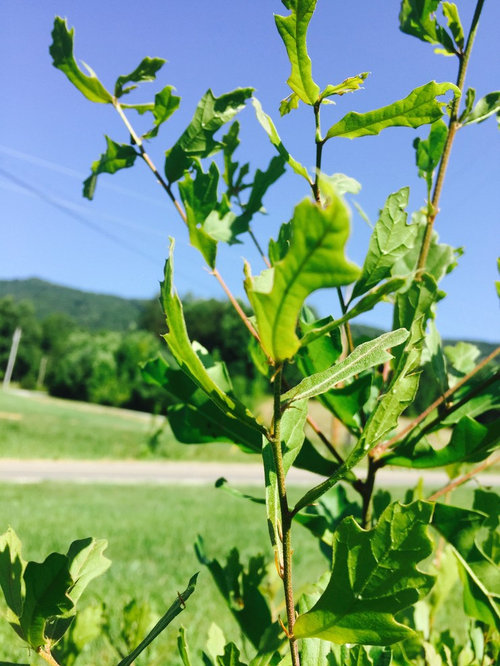
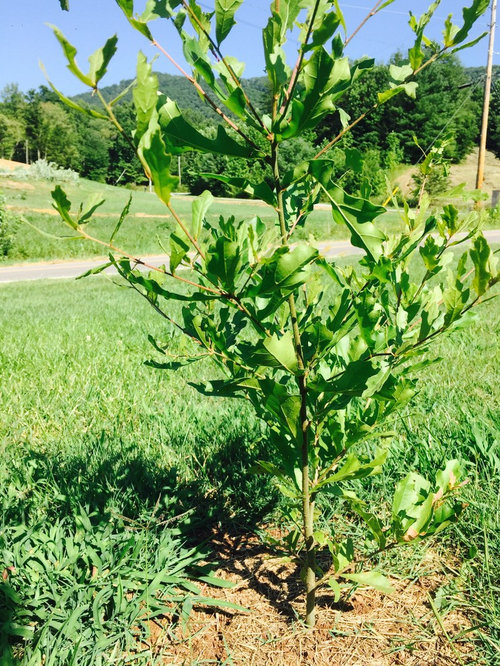
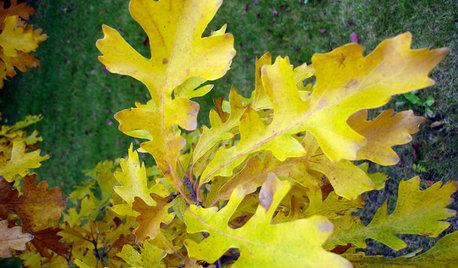
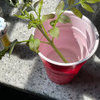
Hey guys, below I have posted some photos of what was supposed to have been a Live Oak that I purchased from Arbor Day two years ago. However, I have my doubts. If you think you know, feel free to tell me. Thanks.

Kyle

Comments (50)

  • 11 years ago

    not live oak

  • 11 years ago

    Not a live oak

  • 11 years ago

    Nope. Not even sure that it's a member of the white oak group. A better closeup of some leaves would help. Leaves on young seedlings often are significantly different from those of mature specimens... but this one's kind of reminding me of Q.nigra, water oak.

  • 11 years ago

    Water oak was what I thought as well. Although I don't see many of those around here at all. But they are tardily deciduous, so whoever is supplying Arbor Day with these might think that since they hold leaves well into winter, it's gotta be a 'live oak'.

  • 11 years ago

    Hey guys, I recently took some more pictures of the other tree I have that is supposed to be the same as the one in the previous post, also supposed to be a live oak. Tell me what you think.

  • 11 years ago

    Not a live oak or water oak, I have many of both

  • 11 years ago

    What's your best guess?

  • 11 years ago
    last modified: 11 years ago

    Maybe canbyi oak all leaves can have a certain variation from tree to tree

  • 11 years ago

    Also maybe a sand post oak

  • 11 years ago

    It says the canbyi oak leaves turn red in the fall. This one just went straight from green to brown. It is also semi-evergreen. I am very stumped on what this little guy is.

  • 11 years ago

    Overcup oak? It is usually planted where there is alot of water.

  • 11 years ago

    So everyone feels pretty confident that it is for sure NOT a Live Oak?

  • 11 years ago

    I could only suggest that you look up the "Compton oak". It is a hybrid between the "Quercus Virginiana X Quercus Lyrata" Live oak and Overcup oak. I am likely wrong but, I have several of these "Compton's oak" trees in my yard, and they have leaves that look like the Overcup oak, but they are slightly different. So it is likely hard to determine between the Overcup oak, and the Compton's oaks. But, sorry Kyle, those pics are not an 100% Live oak tree.

  • 11 years ago

    Thanks poaky. I just looked up the comptons oak, and I feel like there's a decent chance that's it. Which, after reading a lot, wouldn't be terrible. The Compton oaks seem to be really neat trees. Maybe it will be easier to tell in a few years once it starts producing acorns.

    Also, what are the tell tale signs that it is not a live oak, I'm not doubting what you're saying at all, I just want to know for future reference. Thanks.

    Kyle

  • 11 years ago

    I would hope that Joe would speak up, or someone with Live oaks. But, I have 3 seedlings of live oak, and a sizeable one in my yard. The only answer I can give is that it's leaves are thicker than many deciduous oaks that are small leaved. My Compton's oaks leaves are thin, as well as my Durand oak, and my other oaks with thick leaves are large and deciduous. They are similar to evergreen hollies, but hollies usually have sharper leaf ends, (needly). The Live oak leaves are called "leathery" in most descriptions. The coastal Q. Virginiana usually have smooth edges on it's leaves. But, the Fusi's sometimes have pointed leaf edges. The bark on most all the Live oaks I have tried is lightish grey on the babies, and I THINK darker on the older trees. But, Kyle, look up Williamsburg, Va Compton's oak. You should be able to see a very old Compton's oak in Williamsburg, Va. To me it looks like a Q. Virginiana that is old and never had spanish moss thin out it's crown. The tree is massive. I do like the Q.V. Better because the limbs are a bit more massive and horizontal, but the Compton's is great also. Poaky1

  • 11 years ago

    Good to hear from you Poaky. I have researched the Compton's oak a fair amount now. They are a very interesting tree. After reading your comment on the other post, I am holding out hope that it is a Live Oak. I will update you on how it does this winter. However, either way, I am really considering moving it. It is not in the greatest location due to poor judgement by an overly excited me upon first receiving it. I am scared to move it though, as it just recently seemed to really take hold.

  • 11 years ago

    Well Kyle, I am not sure whether to tell you to move it or not. I think that after you receive my 2 "late drops" you can plant one or both of them close enough to a plug outdoors, that you can protect both, or at least one of the "Late drops" with christmas lights, for the next 5-6 years on the worst of the winters bitter nights. But then again, you just may not need to employ those lights on the seedlings. I can't help but say that KYLE, you should keep some lights available for the "Late drops" IF the forecast is saying it will be below zero. If not, you are likely fine. When it goes below 0F you should worry.

  • 11 years ago

    Got it. It reached zero maybe two times last winter, and about the same the winter prior. They are predicting a relatively strong El Niño to be in place for this coming winter, although I'm still not sure the effect that will likely have on my neck of the woods.

  • 11 years ago

    I do think that as long as the Q.M.L.O. that I have, can keep it's moisture level correct, and will be at the right temperature, I should be okay with adding so me christmas lights on the Q.M.l.O trees. Well, Kyle just in case i need to explain the difference of the Live oaks. The Quartz mountain Live oaks, or Q.M.L.O. 's are the hardiest :Live oaks that those of us in the more Northern areas hope that we can grow are less hardy. The "late drops" are hardier than the plain ole southern Live oak. But, not by TOO much,. But, the normal Live oak tree is the most temperature delicate Live oak tree.

  • 11 years ago

    I think Poaky is right - it's a Compton

  • 11 years ago

    Kyle if you don't have below zero for more than a matter of hours, and it's slighly under 0F, your (will be) "late drop" L.O. trees should be fine, but, these trees will be practically "sticks" when you get them. So the lights if possible will be a help. I think that the 5-6 years is pushing it too far, maybe a couple years til the tree has a half ti 1 inch trunk thickness. But, then again I had one of these trees survive winter 2012-2013 with no protection for me here, and it was likely a winter like 6b or 7a. I have a 3rd "late drop", but it is too close to a Compton's that I have, and the roots are likely entertwined a good bit. Kyle, Joe in Mo has one of my former "late drop" L.O.'s in 6b-7a, he is keeping it protected in a pot in a warm spot until it gets bigger. But if you put lights on MAYBE if you tried one of em in the ground with lights on when it gets bitter cold, it will be okay. I really should say that you can also try a Quercus Fusiformis also. You will likely have no dieback, they are hardier. I have an extra one that is growing between 2 other oaks. I am keeping one of the Fusi's from Joe in Moe, but there is another Fusi near another Compton's and a "late drop" that I can spare. I already have the hardiest Live oak in existence, it's a Quartz mountain Live oak, it is a Fusi, but it has been adapted to more cold than a normal Fusi and the Plain Fusi is a bit more tender than it. This Live oak (Q. Fusiformis) is a live oak that is hardier, grows slower, but, takes on the same form of the Live oak of the atlantic coast. It does however get a bit smaller when mature. The best example is to look up the Alamo 's live oak. You should try the "late drop" and the Q. Fusi Kyle. I will still have a plain Fusi to try here but I am going to invest most of my energy into the Quartz mountain one from Joe in Mo. Kyle if the "late drops" don't do well for you I do have 3 Fusi's altogether, but, I think that the "late drop" Q. Virginiana's will do good for you. They also are from Mossy oak natives nursery, and you can read about them on the Mossy oak natives nursery website where the Compton's oak trees are from. They are just like your run of the mill Q. Virginiana live oak, only they drop their acorns late, and I had one overwinter fine in winter 2012-2013. Only with the next 2 winters being real *itches did they come up from the ground after horrible winter #1, and horrible winter #2 no signs of life. I must say that IF you have the room, the Compton's oak gets HUGE just like the Q.V. Coast oak, but, IF someone CAN grow the L.O. I would prefer it. I want to make a trip to see the Williamsburg, Va Compton's oak in person. It does have massive limbs on it, but the shape is a comprimise between the 2 parents and can vary some, so out of the 4 I have in my yard, being hybrids some will favor the Q. Lyrata and some will favor the Q. Virginiana. I have one near my dog fence that looks like it will branch out like a Live oak. I am happy that it has this great shade tree form. Well, anyways Kyle you are likely able to at the very least able to grow a Quercus Fusiformis ( Texas Live oak) like what is at the Alamo, and likely the "late drop" live oak a Quercus Virginiana that is a bit hardier than plain ole Q. Virginiana. And as far as my source that the "late drop" is a hardier Q. Virginiana is the fact that after trying 3 Q. Virginiana seedlings in my yard, the last one from Virginia, those didn't make it in the milder winters I had here in zone 6 Pa. But, the "late drop" did great in winter 2012-2013, And then we got these crazy B*tch winters the next 2 winters. Sorry this is so long kyle. let me know if you have any questions, I have had a couple drinks tonight, I am hoping I made sense . I do have 2 "late drops and 1 Q. Fusi I can send when they go dormant. I really think those Q. V "late drops" will be fine, and if it does get below zero protecting them with lights or even a plastic garbage can will help, I tried the garbage cans here but we got too cold here, I think you just may be okay in 6b-7a. Okay for now Kyle. Poaky1

  • 11 years ago

    Thank you for the info Poaky. I did a fair amount of research on the Q. Fusiformis a few years ago when I first fell in love with live oaks, but it was hard for me to tell the main differences between it and Q. virginiana. I knew that the Texas live oaks were supposed to be hardier, and you said they are a little smaller too? I do not mind that as I think they are still beautiful trees, I am just curious. Also, I was fortunate enough to visit the Angel Oak 3 years ago and WOW, what a specimen that is. I don't understand how anyone can see that and not want to learn about it and attempt to grow their own live oak.

    Kyle

  • 11 years ago

    To simplize it you should at least be able to grow a Quercus Fusiformis (Texas Live oak) Kyle. But, I think in most 6b-7a winters the "late drop" should be fine. Those christmas lights will help if the tree is stick thin and the weather is very cold (below zero) for a good while. But I do envy your warmer zone Kyle, I think you will be fine, especially if we go back to the less bitter winters that we had pre- 2012. You will have more success with a live oak without cold winter help than I ever will. But, I do urge you to use the lights until the Live oak tree gets some girth to it. And of course if you have room for a HUGE tree far from the house, the Compton's oak is a great tree. I think that there is the possibility that when I see the one in Williamsburg, va in person, I may like it more. The limbs are hard to see when the foliage is on it. And the one I have near my dogs yard, are all horizontal, and I know that I will just love that Compton's oak even more as it grows larger. I want to go and see the Williamsburg, va L.O. person, and pick some acorns ( the Williamsburg, va) Compton's. Kyle Just for the heck of it, look at some local nurseries, and you may find some Q. Fusi's. If not I have a couple extra here as I said. I will add that I have seen some pure Quercus Virginiana trees without the spanish moss on them, and they look just like the Compton's oaks that are mature in Virginia. If you want the Live oaks that have the spanish moss and some other plants that live on them, ferns and air plants, I am sure you know they are only in the south. I think that these trees look great with some of these plants on them, but not when it gets too much. I am a bit drunk so I just hope I haven't gone too far out of bounds to the subject. But, I figured I would mention the Live oaks with the air plants on them. When peeps think "Live oak" many imagine the grande tree with the spanish moss on em. But really the Live oaks are much better off without all that crap hanging on em.

  • 11 years ago

    Me again, Kyle you are pretty darn southern, you will likely eventually get some form of Live oak tree to grow for you. I will try and send you 2 "late drops" and 1 Q. Fusi. If that fusi (at least) doesn't do okay, I will be really shocked. Well, give me your opinion, do you have room for 3 new trees, Kyle? I hope so. These trees IF SUCCESSFUL will need at least 60-80ft spacing, but, when young I would keep them closer where they can be protected until they are showing that they will do fine in Tenn. I must say the best situation is to plant the trees where they will grow, and allow 60-80 ft total for there branch spread. So 30-40 ft from each other. Of course less will be fine, the other wider areas I mentioned is if you just leave them grow for decades, they will eventually get that huge. But, If you do grow a Live oak "late drop" it will get (Eventually) 80 ft circumference, in the shaded part. A Compton's oak will likely get just the same, with some branches not quite the same shape but close. The Q. Fusiformis will likely eventually get 60-70 ft circumferance, but, just slightly less tall as the Q. Virginiana, but very impressive in it's own right. Poaky1 AS I said I have been drinking Kyle. So feel free to do some independent searches. I must say that in Tennesse you are likely able to grow (at least) the hardiest Live oak Quercus Fusiformis. I do have the ULTIMATE HARDIEST LIVE OAK, the Quartz Mountain Live oak, but it is rated _20F hardy, so is much hardier than you should need. The Fusi is rated 6b-7a. So I wish you success, but if you DO REALLY NEED, I will se nd you those trees I promised. Later Poaky1

  • 11 years ago

    I just read your most recent message/ post Kyle. I do believe you will do fine with one of the Live oaks mentioned above , let me know if you do indeed want to try the trees I have. I can't hjelp- but think that tennesse should indeed have some Live oak trees. Later Kyle

  • 11 years ago

    Okay, Kyle let me know IF YOU want to try something I have mentioned. I don't just want to assume you do. later Kyle POAKY1

  • 11 years ago

    Me again, those christmas tree lights need to be the ones that give off light, so no LED lights, they don't give off any heat. poaky1

  • 11 years ago

    I do have plenty of room for the 3 new trees. Would you suggest I plant them straight into the the ground, or a container first?

  • 11 years ago

    Kyle, I would suggest you plant them in the spring rather than fall. Live Oaks Need to get some root growth to survive the winter in marginal areas. If you have little green house or put them in a room with some decent sunlight and keep them in pots until spring.

  • 11 years ago

    Yeah what Joe said, he is erring on the side of caution, a good idea. It's better to give them that extra time. Joe has actual living Live oaks in his yard that keep their tops, mine have just come up from the roots, he likely acclimated his well. Poaky1

  • 11 years ago

    Joe would they need a bit of cold to grow well next year? I mean like in the 20's or 30's some time, or are they fine if warm because they don't really go dormant? For Kyle to know of course, mine will be cold enough of course. Poaky1

  • 11 years ago

    I'm Not sure Poaky, but I do not that they should be planted in spring

  • 11 years ago

    Okay Joe Poaky1

  • 11 years ago
    last modified: 11 years ago

    After having seen a lot of local Sand laurel oaks here in NC, this could just be one of those... Q. hemisphaerica or laurifolia The newest, most vigorous foliage has lobes like that, perhaps young seedling foliage as well. Once the growth slows down, the leaves become 'entire' with few to no lobes. Almost like a willow oak. But they are nearly evergreen in the South.

    And I wonder if laurifolia and nigra can hybridize.

    Here is what the local so-called Laurel oaks look like down here.

  • 11 years ago

    Kyle, when the tree loses it's leaves, post a pic of the buds on the edge of the branch, and I can compare to one of my Compton's. Of course if it keeps the leaves all winter we'll have to wait til spring. The Compton's is deciduous, but, will hold them later in warmer zones/winters, but, that may help you know if it is one of those mentioned by Dave or any other out there. Poaky1

  • 11 years ago

    Last winter it held basically all of it leaves all winter, although they did get rather brown and dry.

  • 11 years ago

    Well, you being in Tennesse and me in Pa, your tree could be one of the (tardily) deciduous oaks mentioned, Laurel oak, Q. Hemisphera or Compton's oak ( Live oak and Overcup oak) and I will dare to THINK possibly another Live oak hybrid, meaning any of the Live oaks out there. But hopefully when the tree loses it's leaves, posting pics of the bare branches will help ID it. I can compare it to my Compton's. I will look at all my Compton's, because with the Compton's being a hybrid of Q. Virginiana and Overcup oak, the resulting babies can vary a good bit I would think. And likely there will be several other GW peeps on here to look at the pics and share their opinions. The real Live oak Q. Virginiana usually ( in good winters) shed their leaves in spring. Sorry to be a windbag here. I hope you can eventuaslly find the real ID of your tree Kyle. Poaky1

  • 10 years ago

    Hi Kyle, I think that this oak tree that you have is a red oak hybrid. It is definately not a live oak. It is not even in the white oak family as are live oaks. Red oaks have a bristle tip on the lobes of their leaves and white oaks have rounded lobes with no bristle tips. I can see a few bristle tips in your pictures. I have some hybrid oaks coming up in my yard that are a mix between water oak and southern red oak that look a lot like this .

  • 10 years ago

    It's an upland laurel oak. Quercus hemisphaerica. I have 1000s of them on my property.

  • 10 years ago

    Your leaves are mature adult foliage. Juveniles are totally different and also extremely variable. Basing an oak identification as a hybrid based on a juvenile is dubious. Look at juvenile Laurel oaks and then come back. I will go take pics of young ones here. We have millions of them and they are one of the most common of all trees.

  • 10 years ago

    Sometimes when you buy trees from companies, they have been grown from acorns that were collected from the wild and it's hard to tell that they have been cross pollinated with another oak. cross pollination between red oaks is a common thing.

  • 10 years ago

    Ok thanks salicaceae

  • 10 years ago

    Kyle, The tell tell signs to tell whether or not an oak is in the white oak group or the red oak group is the bristle tips on the ends of leaves and lobes. It looks like your tree has some bristle tips so it's more than likely in the red oak group. live oaks will never have bristle tips. The compton oak would fall into the white oak group because live oak and overcup oak are both white oaks. White oaks and red oaks never hybridize together so i would say it's a red oak hybrid, my best guess.

  • 10 years ago

    Some of the leaves on Kyle's tree look simular to young laurel oak leaves but his tree shows some signs of hybridization though so my best guess would be a red oak hybrid.

  • 10 years ago

    Do any of you guys know where i can photograph a Quercus austrina, bluff oak in North Carolina?

  • 10 years ago

    Hardister, the Compton's oak is a white oak family oak and does indeed have those bristles on it's leaves, and some Live oaks have Holly-like leaves, they may not have it on all their leaves, but, some, in tree-babyhood, will have many of them like that. You likely know that, but, I'm mentioning it anyways. Google the Compton's oak, and you will get a pic or 2, and you may have to search for a leaf in the background, or better yet, I'll upload a pic of one of mine. You'll see the way the leaves are with bristles on the tips Compton's oak

  • 10 years ago

    If you want to see the image of the Compton's oak leaves click on the green words. If you all know that, sorry. I know maybe there isn't anything to post about it anyways.

  • 10 years ago

    I can see part of your post Hardister, I know in general that is the rule, but, there are those few exceptions. I think that the Live oaks when they get older will likely not have any bristle tips, but, I don't know of any that can live here in SW Pa zone 6, for me to compare. And the Compton's is a rare one with the bristles, I wish they had the Live oak shaped leaves. And I believe that the Laurel oak is a red oak with no bristles. Shingle oak (red) has a peach tree looking leaf, and Willow oak, maybe has 1 bristle. You likely know this, but, I don't know what you know and don't so I am mentioning it. Later

  • 10 years ago

    I have some new pictures of my mystery oak. It's put on about a foot of new growth the past two weeks.

  • 10 years ago

    I'm seeing Q.nigra in some of those leaves. No telling what it's hybridized with, could be a little Q.falcata in there too.