Software
Houzz Logo Print
neiljcard

Sharing my Horror

11 years ago
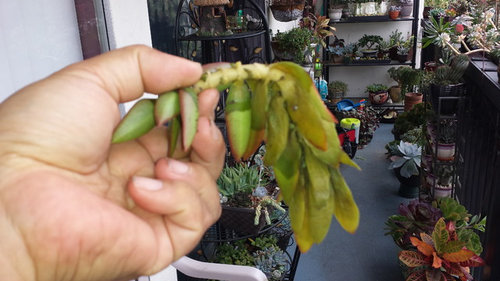
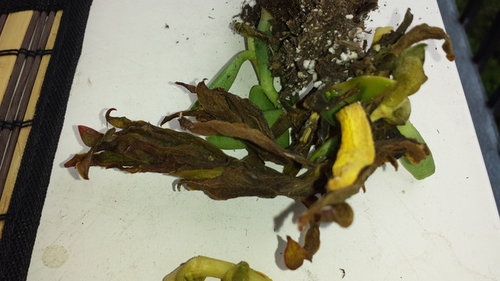
Checked my plants as I do every morning and I found this!


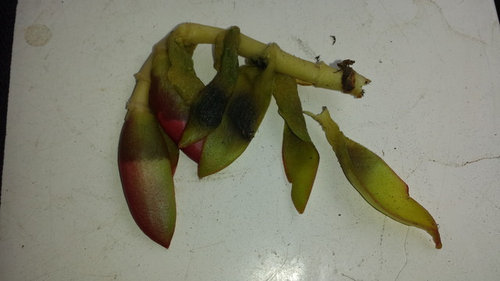
Plant labeled as "Crassula coccinea campfire" Limp as a cooked spaghetti noodle.


Some leaves completely dried up.


Leaves turning black in a seeping type of fashion. You know how if you put the corner of a paper towel in water, you can see the water travel upward? That's how this looked.


A pachyphytum oviferum was next to it and also infected with this black rot. I lost 2 leaves so far, not the entire plant.

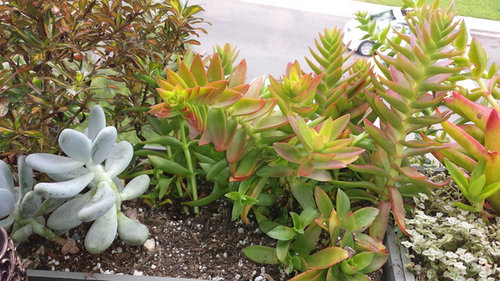
I pulled the affected crassula out immediately. The other plants around it seem fine for now but, I know that could change especially if it turns out this is a fungal infestation.


The bare spot is where I pulled the affected plant from. The soil may look "heavy" but it's not; mixed with perlite, granite and volcanic pumice.

Plants are watered twice monthly. This planter box is now in it's 4th season with no problems until now. The crassula was started with one plant in an adjoining planter box to the right.

The roots of the plant that I pulled seemed healthy and no sign of pests. I use a systemic.

What I fear is if it's a fungal issue it could spread to my other plants.

Comments (17)

  • 11 years ago

    Don't know what it is,or what is causing it,just hope it's not a fungas and doesn't spread to your other plants.Good luck,hope someone can be of more help than i.

    Kathi

  • 11 years ago

    Neil

    I don't have that plant, but was looking for some info. Here is what I found:

    "Watch for scale. Watch for aphids and spider mites in summer. Snails and slugs can be a problem. Overwatering and cold, damp conditions cause root rot. Succulents are very sensitive to pesticide burn. Always conduct a small-scale test application first. Leaf spots and bruising may occur after handling; plants will outgrow symptoms."

    It is info from Proven Winners: -Proven Winners info -

    Don't know if any of it applies at all to your plant.

  • 11 years ago

    Oh, I hope it doesn't spread any further! I just love this plant.

    FWIW - I am on my 4th Campfire plant. They have rotted away on me before I realized there was a problem. I'm in the wet and humid SW Florida area, so good growing medium like you have is imperative for me. But somehow - at least for me - these are more summer tender (if that is a thing).

    Good luck!!

  • 11 years ago

    Yikes! Even near perfect climate has it's drawbacks. Can you spray with fungus spray for roses or something? I'm not expert either, just throwing something out there.

    At least by catching it at one plant, you can hopefully prevent further damage. But it is heart breaking to even lose one.

  • 11 years ago

    Oh no!!! I'm so sorry Neil! I hope it doesn't spread.

  • 11 years ago

    Thank you everyone for your concern and understanding. And thank you for the Link Rina, that's a great website, very informative. It's now in my favorites : )

    Luckily I have a lot more of these plants and I was also able to take cuttings of some viable parts of the decaying one.

  • 11 years ago

    Neil, I'm sorry to hear about your infected plants.

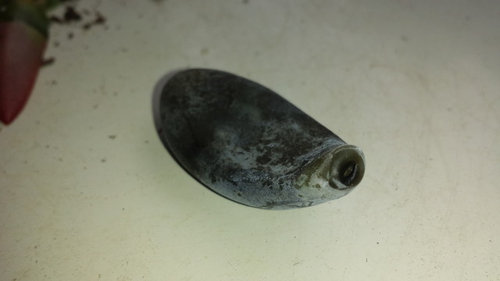
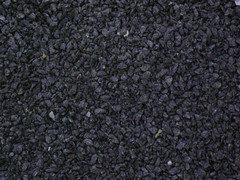
    You mentioned the soil had 3 inorganic ingredients, perlite - granite - volcanic pumice - but what are the black stuff? I'm pretty sure there is some sort of organic component in your soil - is it compost/loam? Bark Compost?

    I've been reading alot about on Fungal/Black Rot infections lately, because a couple of my plants caught the same disease.

    This thread might give you some enlightenment:

    http://www.xericworld.com/forums/showthread.php?t=2225


    My conclusion was:

    1) All organic components will harbor some forms of microscopic pathogens for fungi or bacteria. They can live in your soil for years with no trace or effects whatsoever, but when conditions are ideal, they can explode overnight and infiltrate your plants as a host and destroy, with no cure but only to quarantine the infection.

    2) The importance to not recycle soil - there are good and bad bacteria in all organic soils/components in soil. If you already know your soil is infected, do not reuse it. Certain fungi disease pathogens can survive up to 200 degrees of heat, so they aren't as easy to kill as you think.

    3) All is not lost, prevention is always the key. By maintaining a complete inorganic mix, you are creating an environment very difficult for these pathogens to leech on and thrive, or at least sufficiently conducive for them to reproduce to kill your plants overnight (at least healthy plants that could take down the controlled scale of attack).

    4) Controlling when infection is present - You either use chemical warfare (Hydrogen peroxide) at this point or treat both soil and plants with natural fungicide, cinnamon powder / strong brewed chamomile tea.

    I hope these information can help, and wart away rots - but definitely do not wait and see the fungi take over all your plants. Rots of luck, and I wish your plants safe.

    Bernard

  • 11 years ago
    last modified: 11 years ago

    This is the not kind of horror that I like to see. :-(

    Point number one in the post above is important. There are fungal spores everywhere. All it takes for infection is an opening somewhere in the outer surface of the plant. If over-watering is not the cause, mechanical injury (repotting, insects, snails, and birds come to mind) is the likely source if the infection.

    Once the stem has been infected, the Only cure is to transect the stem above the rot until the cross-section is free if any dark tissue. Then callous and re-root.

  • 11 years ago

    My local gardener recommendsthis product, it's called photosynthesis plus.

    It's actually a symbiosis organism that protects your plants and eats away fungi and pathogens. Never tried it before, but hope it helps.

    Here's an exceprt

    " a stabilized formula containing a blend of several strains of bacteria including two strains of photosynthetic bacteria. Adding these bacteria to your growing regimen will benefit your plants in several ways. Photosynthetic bacteria utilize a broader spectrum of light then a plant does."

  • 11 years ago

    Bernard- This is a close-up of the black stuff

  • 11 years ago

    Bernard, Brad, Ben! May I call you "The Triple B's?"

    Thank you thank you thank you... for all the info, advice, and good wishes. It sounds like a lot of extra work but, i'm willing to do it.

    PS- I cannot reveal anything else about my soil, it's a secret ingredient from Hawaii : )

  • 11 years ago
    last modified: 11 years ago

    Oh no! Such a difficult thing to deal with. If its not bugs its microbes. Hope the infection stays small and localized to the plants you found.

    Neil thanked aztcqn
  • 11 years ago

    Neil, this makes me sick with worry. I hope this all works out for you. Thankfully we all have access to such an amazing, knowledgeable support system. I've learned so much in just this single thread and hope it can save the remaining container.

    One thing I wanted to expand just a tiny bit on was something that Bernard had mentioned about some of the pathogens being able to survive in conditions up to 200 degrees (F). Some people bake their soil prior to planting in an oven set between 180(F) and 200(F) to sterilize the soil. The problem with this is that it's a risky dance that you're involved in. First, some bad pathogens can survive up to 200 degrees, as mentioned above. Second, and very important, is that you can actually produce plant toxins by allowing the soil to go above 200 degrees(F).

    So, if anyone is looking to try this just be sure you can accurately control the temperature for the 30 or so minutes required for it to work. Not to mention you'll also be killing any beneficial bacteria in the soil.

    That turned out to be a longer post than I intended, hope I didn't put anyone to sleep.

    Neil thanked Nicholas C.
  • 11 years ago

    Neil a suggestion would be to look into something like rootshield (NA) http://www.gardeners.com/buy/root-shield-beneficial-plant-fungus/31-949.html , it was recommended to me by an established cacti grower to protect roots against most fungal attacks.


    Another thing that comes to mind is an article I came across from http://xerophilia.ro/ the april edition page 89 I believe discussing mafic and felsic rocks and how they impact growth.

    Neil thanked Plantspace (5a)
  • 11 years ago

    Thank you I will check out both of the links!

  • 11 years ago

    Nicholas- I had such a bad infestation of scale and mealy bugs several years ago that someone advised me to start nuking my soil on high for approx. 2-3 mins. I've been doing that for a few years now without a problem. Well not counting this incident which may be unrelated and a solitary one I hope.