Software
Houzz Logo Print
keswick_sniders

Recipe for Ammonia

11 years ago

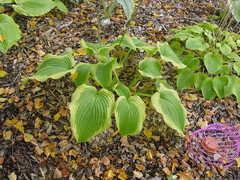
As I watch my beloved hostas slowly being turned again into swiss cheese by slugs, I have decided that next year, things will be different. I am going to use the ammonia concoction that so many of you have talked about. Can someone tell me clearly how to make the stuff and where to spray it (on the leaves, on the ground around the plants?) How much do I spray? Is there a danger I could burn the leaves or damage the plant by overdoing it? Do I have to re-spray after every rainstorm? Will I be damaging the environment? I know... a lot of questions, many of which have probably been answered somewhere on this forum before, but I am a relative newcomer and could use the information accumulated into one place.

Comments (25)

  • 11 years ago

    Hi keswick,

    I use the ammonia drench in spring just as the pips are coming up. I use 1 cup of ammonia to 9 cups of water. Some people add insecticidal soap. I pour it on the pips to drench the soil. This kills the slug eggs. I haven't had the time to repeat this after 2 weeks but will try to next year. I don't use ammonia once the hostas leaf out. Next year I plan on also using the drench on some of my companion plants (ferns, grasses, astilbe) just as they're coming up as I think they may be harbouring slugs. The hostas near my companion plants seem to be more prone to slug damage.

  • 11 years ago
    last modified: 11 years ago

    why are you waiting until next spring ...

    you need to kill the mommas that will overwinter ... so you have less to start with to begin with ...

    there is a FAQ page somewhere.. i think ... maybe someone can link ...

    its a contact kill ... if you dont hit them.. you arent doing anything ...

    get a pump tank .. learn how to use it with plain water ... i prefer larger drops.. rather than atomized like perfume ...

    insert wand into clump ... spray anywhere they may be hiding at night ... undersides of leaves ... petioles... and let it run down into the soil ...

    full fall clean up ... remove all leaves which will get rid of some ...

    some peeps drench the soil in fall.. to kill mommas and eggs ...

    9 cup of water.. to 1 cup of ammonia OR vinegar ... frankly.. whichever is cheaper ... thing pickling aisle for bulk vinegar ... hardware store for bulk A ...

    do not spray tops of leaves.. especially if in sun ...

    mulch should be pulled back to the edge of canopy.. to reduce hiding places for the dirty bat turds ...

    get this... a slug is both male and female .. it could marry itself... but the divorce would be devastating... splitting up and all ..

    ken

  • 11 years ago
    last modified: 11 years ago

    All you have to do is to remember to do it - and have time. I bought 2 lbs of Diatomaceous Earth powder in winter, but never got it spread on the ground just between snow finally all melted, cleanup and leaves not unfurling. That is guaranteed to work against slugs with one application. But in spring there is so much to do that I did not get around to do it.

  • 11 years ago

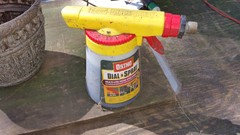
    BTW, there are NO hose-end sprayers (that I can find) that will give u the 10%. I tested this, and called manufacturers as well. Luckily, past few years the plethora of tree frogs did most all my work.

  • 11 years ago

    Thanks for the laugh and nudge, ken. I've been leaving the leaves on my hostas over winter for extra protection and the scapes as well, so that I don't step on the emerging pips in spring. Should really do an extra drench this fall. I've been thinking of getting a pump tank...are there any good makes?

  • 11 years ago

    BTW, there are NO hose-end sprayers (that I can find) that will give u the 10%.

    What does that mean, hastahillbilly?

    Lucky you to have tree frogs.


  • 11 years ago

    Ken - I think you may have reversed the quantities in the recipe above...

  • 11 years ago

    irawon, it means these cannot make it up to 10% ammonia. I tried on live subjects, they lived.


    I called manufacturers and they confirmed more in 6 % range.

  • 11 years ago
    last modified: 11 years ago

    Go to true value.com and search for Green thump back reliever Garden sprayer, 2 gal. This works very well. I use it all the time. I use a 25 % solution which is 1/2 gal of ammonia and fil tank up to the 2 gal mark.

  • 11 years ago

    Ken - I think you may have reversed the quantities in the recipe above...


    ==>>> are you sure.. lol ... you might want to double check ...


    i went thru this dilution nightmare.. when i bought a fert injector for the irrigation lines ...


    if you spend a hundred or two ... there is no real science in the gizmo ...


    if you want real precision ... start at 500 dollars.. go up form there...


    you guys have a lot of faith in a 15 dollar hose end sprayer ...


    in other words.. you can find anything you might want on the level of professional equipment ... but not by shopping at bigboxstore ....


    you can leave the stalks to know where they are ... but get rid of the leaves ... its rather easy.. if you let them frost down to a gelatinous pile of goo... then you can just grab the pile .... and all the slugs in it .... in one fell swoop .. or at least i could in MI ... dont know if it can be done the further south you go ...


    ken

  • 11 years ago

    Get a three gallon pressure pump sprayer and fill it to anywhere from 10% to 25% ammonia and spray a couple of times a week and more if it rains. Ammonia also breaks down Nitrates in the soil and releases nitrogen to fertilize as well as kill slugs and probably a lot of other pests. Be sure to spray under the hosta leaves (easy with bent stem on most sprayers) and flood the crown area where the little buggers hide.

    Jon

  • 11 years ago

    i have a tall 3 gal.. and really couldnt hoik the 21 pounds around ... so i only fill it 2 gals ...


    the best thing about it is... if i set it down.. being tall ... i dont have to bend over to pick it back up ... its tall


    ken

  • 11 years ago

    It would weigh 25 pounds or so full, but, only about 13 pounds or so halfway through.

    The quicker you spray, the more quickly the load lightens.

    Jon

  • 11 years ago

    Ken, Jon, Sunnywood, appreciate the info re sprayers.

  • 11 years ago

    Anyone have experience with this sprayer from Lee Valley?

    http://www.leevalley.com/en/Garden/page.aspx?p=59413&cat=2,33134&ap=1

  • 11 years ago

    Irawon, No experience, but It looks like a solution to the weight situation for some. It wouldn't work well for me though as I have a lot of rough terrain to traverse.

  • 11 years ago

    Ken, you are always entertaining. I don't thing anyone answered my question about environmental damage

  • 11 years ago

    Ammonia will break down into natural ingredients and I don't see any danger to wildlife, bees or anything else. Household ammonia is a 5% solution and diluting it to 10% or 25% creates a 0.5% or 1.25% solution which is no hazard to the environment except slugs and maybe some other bugs sprayed direcly...worms???

    keswick_sniders thanked Jon 6a SE MA
  • 11 years ago

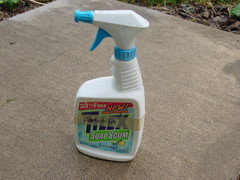
    I use a headlight and a spray bottle of ammonia/water mix to hunt slugs at night. I use a much stronger than 9 part water/1 part ammonia mix. When I see a slug, I spray it and the slug kind of slime's up as it dies. There is no leaf damage from the stronger ammonia mix.

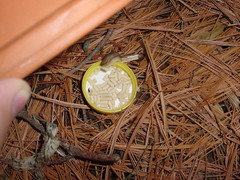
    Another thing I do is put Sluggo into a small bottle-cap, place a clay saucer over the bottle-cap, place a wire basket over the saucer and then stake the wire basket down with plant marker stakes. The clay saucer helps keep the Sluggo drier and the wire basket helps keep critters, such as chipmunks, from eating the Sluggo. These are placed throughout the gardens.


    Link to my slug control methods


    Link to SlugBell.com which are similar in concept to my Slug Cafes (From the UK)


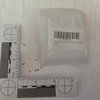
    My spray bottle.


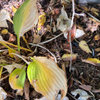
    I lifted the clay saucer from over the bottle cap containing Sluggo. A slug was dining at the time, undeterred by the pine needles.


    On the lower right is my "slug Cafe". The bottle-cap containing Sluggo is protected by the clay saucer and wire basket. The Sluggo still gets damp but lasts longer than if it was just on the ground.


    keswick_sniders thanked tsbccowboy
  • 11 years ago

    if you are pulling it on a manicured lawn... i suppose it would be fine ...


    i could never pull it thru my garden with sticks and debris ... on lose sand.. etc ...


    i suppose its a function of how anal you are about the beds themselves ...


    i also doubt it would pull thru heavy lose mulch based on wheel size, especially with weight, full of water


    there is no environmental impact with salad dressing... vinegar ...


    what he said about ammonia


    ken

    keswick_sniders thanked ken_adrian Adrian MI cold Z5
  • 11 years ago

    I've been using a pressure pump sprayer from Home Hardware for a number of years. It dissembles and assembles easily, so all parts can be washed. It works well and easily and was inexpensive.

  • 11 years ago

    Ammonia is the most common fertilizer used in the US. Vinegar out of the bottle (5% acetic acid) is a weed killer. I wouldn't use vinegar for slug control based on these facts. I know many people do, but it just seems that a fertilizer is a better choice than a herbicide to kill slugs. I do enjoy it on fries and salads though.

  • 11 years ago

    at 10% .. both are neither ...


    figure that one out.. lol


    ken

  • 11 years ago
    last modified: 11 years ago

    Just because it is not a lethal dose does not stop it from being a herbicide. Likewise dilute fertilizer is still a fertilizer.

    If you dilute milk with 90% water it is still nutritious. If you dilute a lethal dose of cyanide by 90% it may not kill you, but it is certainly not good for you.

    I guess the logic of using a fertilizer versus a herbicide escapes you...lol.

    Jon