Software
Houzz Logo Print
zenimsaj

Pruning Woody Herbs (Thyme, oregano, lavender, etc)

11 years ago
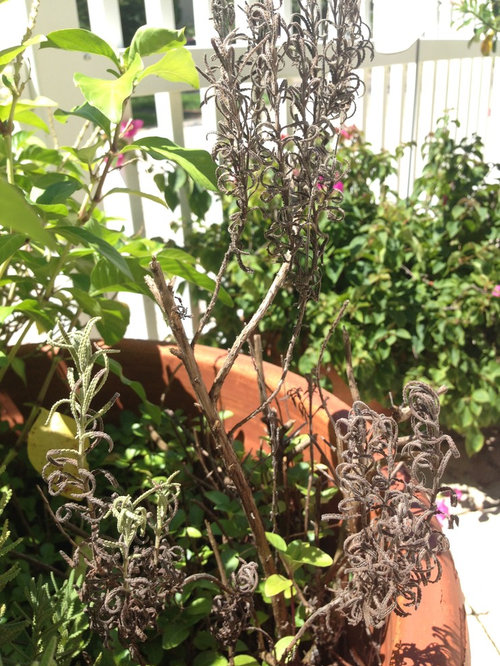
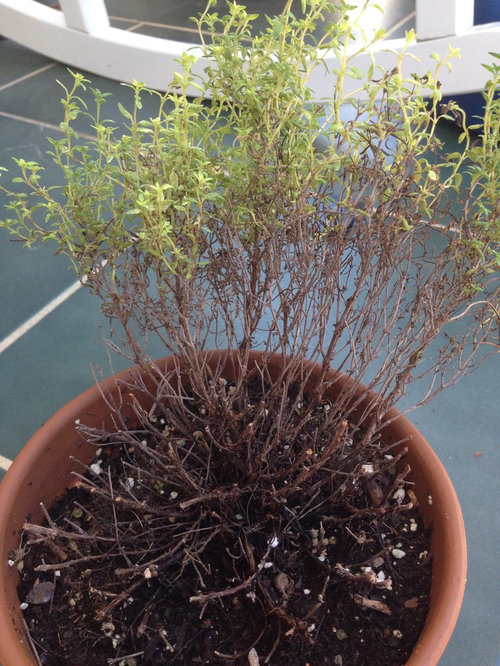
Ok, so I'm new to herb gardening and have started to get the hang of when to harvest/prune, but I'm completely lost as to what to do when some herbs (lavender, thyme, oregano) get woody stems. I've read articles and books and still remain pretty clueless. The stems on my thyme and lavender have almost all gone woody. What I'm unsure about is what this means exactly. Does it mean those stems have died and there won't be new growth? Should I prune the woody stems? What causes them to get woody? Should I just pull up the whole plant and start new?

Lavender


Thyme

Comments (16)

  • 11 years ago
    last modified: 11 years ago

    Sad to say I think your Lavender is a goner, although there is a healthy looking bit bottom left. Is it in a container with something else? It looks badly overwatered and sharing with another plant that needs more water would not do it any good. Your thyme also looks pretty rough - it seems to be etiolated which is a sign of insufficient light. It too looks as if it is possibly too wet.

    Thyme and lavender are shrubs so woodiness in itself is not unnatural but generally people clip them over to keep fresh new growth coming.

  • 11 years ago
    last modified: 11 years ago

    Agree with Floral. That lavender is dentata, because it has teeth.. It likes it even hotter than your typical variety, and it requires warmer winters. Sometimes called french or spanish lavender. I call it Moroccan lavender (why not?). It could probably grow in sand. It will definitely root in moist sand. You could probably clip 5 inch pieces and stick them in a small pot of moist sand to give it a backup plan.

  • 11 years ago

    Thanks! We've had close to 20" of rain in a month so everything has definitely had it's fair share of water. Any way to save them once they've become woody?

  • 11 years ago
    last modified: 11 years ago

    Depends what you are saving them from... (being woody?)

  • 11 years ago

    I mean, once they've become woody, they're done/no new growth?

  • 11 years ago

    They are by no means done. In their natural habitat there's no one to trim them and that is what they do. They'll still produce new growth but aesthetically they may not look how you want. It's not the woodiness which is the problem. The lavender is basically dead or dying - at least the part on the right is. The thyme is alive but etiolated.

  • 11 years ago

    Also, they are both woody plants--it's completely normal and unavoidable. Lav, thyme, basil, oreg, savory, sage, rosemary--they are woody stem plants and that will happen as they mature.

    I agree that the lavender is unfortunately a lost cause. The thyme is also showing signs of root rot--the brown dead leaves, but it bounces back easier, so it's wait and see. Drainage is very important. There are several old threads on growing potted herbs that you might find useful in a search. Treat lavender as you would rosemary. Healthy potted herbs are difficult, but not impossible-you need to learn their needs. That said, though I grow most of mine in pots, I have given up on keeping lavender in a pot due to it's finicky nature. Your French lav may not be winter hardy depending on your location too, FYI.

    As far as pruning woody herbs--a good rule is to trim back by no more than a third at a time. The only real reasons to prune thyme, oreg, or lav is either for use, or for visual appearance--unlike an herb such as basil, they don't need the trim to force further growth, as they are bushy perennials. Thyme and oreg are pretty fast growers and you can be pretty rough on healthy plants--if your goal is culinary use, then definitely prune flowers.. Lav is a little different, and you need to research times to prune to avoid losing a bloom period.

  • 11 years ago
    last modified: 11 years ago

    I have about 30 lavenders in pots, they are the most trouble free plant I have in a pot besides succulents. You just have to give them what they need, which isn't much.... enough water enough sun and a good trim. I have lavenders in the ground, even easier. Woody lavender is avoidable. A well trimmed lavender will outlive a woody lavender... it's not just aesthetics.

    You don't need to trim thyme like with lavender, because it spr e ads on its own withoughts need of help. Yours doesn't look healthy.. it should be growing all season long sideways.

  • 11 years ago

    I should have specified--I don't try to overwinter it indoors in pots due to the difficulty at that point, even though I've learned to keep my rosemary happy. In pots and properly cared for outside I'm sure would be different. It may survive winter if it was properly protected in it's pot, but last year I lost all of my plants that didn't come inside. But now, I have a new house that I can actually plant around. Lavender and iceplants are the first to go in!

  • 11 years ago

    "Woody lavender is avoidable. A well trimmed lavender will outlive a woody lavender... it's not just aesthetics."

    I'm not sure I would agree with this :-) Lavender is a sub-shrub and will develop a permanent woody framework, pruned or not. What routine or annual pruning will do is prevent the development of an excessively knotted or gnarly woody interior and the resultant splaying or fanning out of the branches, rather than the maintenance of a densely rounded, mounded form. Unpruned lavenders, while they display this somewhat unattractive appearance, can live just as long as a heavily pruned lavender can.

    And this is coming from someone who lives in the commercial lavender growing capital of the US :-)

  • 11 years ago
    last modified: 11 years ago

    gardengal, I think that's a fair statement. I am not sure if a more productive and vigorous plant means longer life myself. It would seem intuitively so, but I don't think anyone has left an unruly lavender to its own devices long enough to compare with a nearby trimmed plant.

    There are other variables though, like overwintering in colder climates--extended branches means more exposure to the elements. Since only the green tips of the woody material can grow, the point of failure is far from the safety of the plant's roots.

    You probably already know since you live in the lavender growing capital of the US that commercial growers are going to trim their lavender to promote bushy foliage and spike productivity, and longer life "in the field".

  • 11 years ago

    Thanks, guys. Here's a photo of the herb garden from this morning.

    Back row: Basil, Lemongrass, Cilantro (died), Sage

    Front row: Mint, Oregano, Thyme, Parsley (died)


    Oregano and Thyme

  • 11 years ago

    In my first response I mentioned that the plants were showing etiolation (sign of lack of light). Having seen the bed now it looks to be in quite a lot of shade. Not optimal for herbs.

  • 11 years ago

    bardamu - yes, the commercial fields are sheared twice a season. Once, somewhat lightly when the bloom season is over in early fall and again, a bit harder/tighter, in spring as the new growth commences. However, as a general rule, lavender is not generally considered very long term plants as far as maintaining a dense, mounded appearance is concerned. Plants in commercial fields are usually on a 3-5 year rotation for replacement.

    OTOH, I know of several unpruned, more or less neglected plants in home gardens that are approaching 20 years and while displaying a very unkempt, floppy appearance with a lot of very woody interiors, are perfectly healthy and bloom heavily, if not in a very attractive or appealing manner :-)

  • 11 years ago
    last modified: 11 years ago

    gardengal,

    I've read that lavender typically lives to 15 years more or less, and you have a 20 year old woody lavender that is perfectly healthy with heavy blooms. Which is pretty amazing, correct? but I'm confused about your point. Would you say that this 20 year old lavender is an exceptional example and proof that trimming lavender makes no difference to longevity?

    I get the impression that your insistence that unpruned lavender is not 'very attractive' tries to explain an underlying confusion about the difference between health and aesthetics.

    Lavender farmers trim their plants to maximize health and vigour. The reason they only grow them for 3-5 years is because of disease and lack of crop rotation. You wrote that a dense, mounded appearance is not generally considered long term. But lavender crop rotation is not long term, only 3-5 years. In other words, trimming a farm lavender is unrelated to the monoculture 'weak soil' issue. So how does your statement about trimming apply about long term health?

    This is an interesting article: http://catherinegarro.com/2014/08/28/the-true-story-of-lavender-and-einkorn/

  • 11 years ago

    While I am truly loving the lavender side discussions, we have strayed a bit from the OP's issues, so hopefully we can do both.

    JZ--first, where are you located? It will help us a little in knowing what conditions you have. If you're going to stick with Houzz past these issues, adding it into your profile so it auto appears can be helpful. How big is the bed pictured, and what kind of sun does it receive?

    Second, in addition to the light issues, your little garden has some others to address, but please don't take this as discouraging. It's pretty small for the number of plants you have in it. Many think that herbs can always be grown small (and you see pics of these adorable little windowsill or mini gardens), but reality is that most can get quite large and need their space. There are also those that need lots of water, and those that NEED drainage and can be more drought tolerant when mature. You have a mix of both in your bed. Basil, lemongrass, parsley, cilantro, and mint like water and more moist conditions (though still need drainage, not bog). They also tend to be faster growers. Oregano, thyme, sage, and lavender need really good drainage, and grow slower. When mixed in a bed this close, they tend to get overwatered and subject to issues like root rot.

    Cilantro doesn't like heat, or transplanting. Best to grow from seed. Parsley is similar, though it tolerates heat better. Mint spreads by underground runner roots and will eventually choke out all the other plants nearby. It can be tough to contain in-ground.