Software
Houzz Logo Print
llamita1980

Perennials Front yard

11 years ago
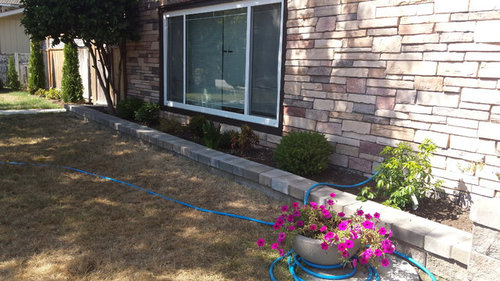
Front yard gets a lot of sun.
So far I have a Yew and two Hebe that r doing really well. Thought is to include Mock Orange..? Oh and there is a large tree in front of house that provides some shade.

Comments (49)

  • 11 years ago
    mock orange is not a shrub I would recommend for your front foundation plantings.
  • 11 years ago
    how deep is your planting bed?
  • 11 years ago

    Caroline is right, I have a mock orange that is at least 12' tall by 10' wide, they get too big for a foundation. What zone are you in?

  • 11 years ago
    any suggestions
  • 11 years ago
    planting bed is about a foot
  • 11 years ago
    zone 8
  • 11 years ago

    I had a 15 ft long side garden in shade once, I grew hostas, and then tucked impatients in every year, yours might even last longer depending on the cold. I know if FL they are perennials, up here in DE they are annuals. you can also grow ferns, astilbe, columbine is pretty. if you can get the true dwarf variety, azaleas are of course lovely, I had a azaleas, but my bed was about 3 feet wide. so you must make sure they are dwarf cause larger ones could reek havoc with foundation. Spring bulbs for before the tree is leafed out. if you do not mind just green you can have some of the flat spreading evergreens.

  • 11 years ago
    I'm in Vancouver, BC - and don't mind just having Green perennials there have plenty of area for annuals elsewhere
  • 11 years ago
    last modified: 11 years ago

    Harbour Dwarf Nandina changes from green to red in the fall/winter. It has white flowers followed by red berries in the spring. It's suitable for full sun/part shade zones 7-10. It grows about 18" high by 18" wide. I tried to post a picture but I can't seem to get it to post. http://www.missouribotanicalgarden.org/PlantFinder/PlantFinderDetails.aspx?taxonid=251010&isprofile=0

  • 11 years ago
    for a shrub try winter berry red sprite, but you will need to find a spot to plant the larger male pollinater. 1 foot is very tiny for a planting bed.
  • 11 years ago
    What about a creeping flox? I was looking to plant in my area (Zone 7)... I just can't remember if it could made it there. Easy covering... Pretty bright purples. I think it needs sun (at least 6 hours)...
  • 11 years ago
    Have you ever used Sunset's Western Garden Book? It breaks areas into much smaller, and more accurate zones than the USDA one. Looks like Vancouver is mostly Sunset zone 4 with some zone 5 right along the coast. Use those numbers to find the right plants in their listings of plants. I find their lists and suggestions very helpful.
    http://www.sunset.com/garden
  • 11 years ago

    if creeping phlox makes it there,i will mail it to you, it is prolific in my zone 7 shady back yard.

  • 11 years ago

    Phlox takes over here in Texas. It's like obedient plant, mexican petunia, and a lot of other bully plants. You're bed is very narrow, can you extend it outward a few feet? I doubt Nandina will survive there at all. How about some of the various and intreresting ferns?

  • 11 years ago

    By 'there' I ment Canada. Too cold.

  • 11 years ago

    your choices are really great, iris, scabiosa, mint, hardy geranium, lavender, lillies. All of these will keep right on ticking. Thyme, tarragon, chives, marjoram are among a few of the herbs available. I am going to assume at this point that you do not know much about it, so here is the secret, Try not to spend a lot, do not get picture perfect plants, give them all a fish vitamin when you plant them along with some potting soil, also root tone-if you can find it. I have learned over the years, that sometimes 2 inches can make a difference between life and death. Sometimes a plant will look like it is dying, give it a little longer. But it is not an exact thing, so do not be upset if someone does not make it. look at your garden and say oh, they are doing fine, and put one of those in.

  • 11 years ago
    Thanks for the head's up @havingfun ! I wasn't aware it was so rampant and I don't like yard work that is ever so much work.
  • 11 years ago

    thats why i recommended the above to paola. They normally just keep going every year, and the herbs are really nice to harvest and use, and when you pass by, you get those great smells. then if you want you can get a flat or less, depending on space, of annuals every year, put them in and of course they die in the fall. you want the ones that just bloom the whole summer, petunias, if shady impatients are great. you do not even have to pull them shove them back in the bed and they become mulch by spring. Simple but great looking gardens.

  • 11 years ago
    some nice low maitenance flowers are cat mint, daylillies,salvia,Siberia iris. if you go for daylilies..I suggest you get rebloomers or extended bloom selections.
  • PRO
    11 years ago

    I would get rid of that bed or make it deeper. It is so long and shallow. I personally do not recommend continous foundation plantings since they attract pests, burglars, fire and foundation issues.

  • 11 years ago

    Putting some curves into you flowerbeds would be appealing. Use a garden hose to lay out your working area.

  • 11 years ago
    last modified: 11 years ago

    I agree with Droplet Land Design. The bed is much too narrow and you should not have shrubs so close to your foundation. I had a very narrow bed in front of my house and it never got enough rain nor did it add to the look of the house. I made it much larger (with a curve to it) and put in coneflower, bee balm, daylilies. asters, catmint, salvia, white daisies, black-eyed Susan, coreopsis and sedum "autumn joy." I add a few annuals too once things start to grow in the spring. I live in Quebec where the winters are cold and all my plants survive. A larger garden does not really mean a lot of work once you have plants established.

  • PRO
    11 years ago

    what you have is a bed for annuals/seasonal color. It's way too narrow for anything else. Was this a recent addition? I see that it's a segmental wall, not part of the house.

  • 11 years ago

    What grows rampant in a hotter climate like Texas will not do the same in Vancouver. Creeping phlox is not much of a problem but it only blooms for a few weeks in May or June.

    Look around your neighbourhood. BC has a huge gardening community and you will find your best suggestions from the locals. You are lucky that you have a long growing season (longer than Ontario, where I live) and lots of rain. Do not plant shrubs near the foundation, as the roots can crack it, or invade your water/plumbing lines. I have a very shady lot, and hostas, cranesbill, and spurge do very well. Also daylilies in the sunnier spots. And I have a flowering dogwood that I absolutely love that does very well even in shade.

    I would also check out pinterest, which will have lots of boards you can draw information from. Have fun.

  • 11 years ago

    Have you seen gold mound spirea? It doesn't get taller than about 36" tall. It makes a pretty yellow round mound and gets pink flowers in the summer. Very attractive between green bushes and they really pop!

  • 11 years ago

    One other idea would be to make the bed more irregular--not just a straight line across the front of your house. Add some graceful curves to give bed some interest.

  • 11 years ago

    Put crushed stone in that long bed along the house as a drip edge. Then create a new, curvy planting bed in the grassy area in front of it. Much more welcoming and easier on the eye. Rather than fill it with annual and perennial flowers, go with low evergreens, like box or juniper, santolina, and interesting foliage plants, like host and brunnera. They will elegant against the stones.

  • 11 years ago

    The bed, as designed, is for flowers and large foliage plants, not shrubs. Yews do NOT like sun, btw, and are usually best on the north side a house. If you want something to cover the brickwork, I would consider a vine with adequate support. A foot wide is not enough to support a shrub, and you will have the miserable job of digging it up in 10 years time and wondering why you planted it there.

  • 11 years ago

    Because I love hostas and they don't grow in southern Mississippi where I am, I would put in several different varieties. Tuck in some annuals for color - petunias or pansies maybe.

  • 11 years ago

    What about beauty bush? It has a brilliant purple berry that is gorgeous, as well as it's deep green foliage. Any shrub will get too big or overtake if you do not prune it. That is key to maintaining any planting.

  • 11 years ago

    I have many beauty berry bushes but I'm in the south and this bedis in Canada. I don't remember beauty berry being in Seattle even. Regardless, the bed is only a foot wide. I don't think any shrubs wouldn't be happy. Small plants like Hostas or widen the bed by 3 or so feet.

  • 11 years ago

    Consider putting a single row of something small and, preferably, evergreen in the narrow planter fixed next to your home and the other stuff in either in planters in the yard or with a row of brick or flat paving stones around them to frame them.

  • 11 years ago

    I also like the idea of using different textured hostas, but I would bring the garden out of the walled up box to create a more inviting look to the house and not so restricted.

  • 11 years ago
    suezbell any ideas?
  • 10 years ago

    we live in zone 8

    in Texas. We have luck with evergreens Italian cypress. yews. olive trees almond verbena and for color r

    roses, Chinese fringe trees rosemary Mexican sage Edward Goucher abelia

  • 10 years ago

    Not sure where you are located; but my suggestion is to research local native plants for your yard. These will require less watering and care over the long term and you can create lovely habitat for native birds and insects. Planting native plants has become crucial to reestablishing healthy environments. Good luck with your plans.

  • 10 years ago
    I'm in B.C. Canada
  • 10 years ago

    Given the size of your bed, you could try a variety of small boxwoods in different heights. A few daylillies or ornamental grasses would add height and texture without jeopardizing the foundation. (Also investigate some local perennial options - they will be reliable bloomers with less maintenance.) If you get afternoon sun in that spot, there are a number of more sun tolerant hostas that are on the petite side (Hosta Allan P McConnel gets to about 12 x 18). If your tree gives mid-day/afternoon shade you could probably go with any hosta. As someone mentioned above, your bed size is really just for flowers. Pretty much every shrub, even dwarf and midget boxwood, will be bumped right up against your house and spill over the bed. Larger shrubs should not be planted that close to the house. I would rethink your yews (they develop pretty crazy root systems over time and can be a bear to remove.)

  • 10 years ago

    dwarf gardenias, lenten rose, day lilies like stella d'oro, candy tuft, dianthus.....

  • 10 years ago
    last modified: 10 years ago

    I love nandinas, they change colors with the season and thet a compact with lovely falling leaves.

  • 10 years ago

    Paola, I love the stone siding on your home. It's warm and inviting. A perfect backdrop for plants. I would start planning my garden at a local nursery. Ask for help choosing plants that will grow well in BC. Some nurseries will even draw up plans for you as long as you buy plants from them. Or go to the local farmer's market, most booths have perennial plants for sale at a small fee. Talk to other gardeners about their plant choices. I had a tree pull up my plumbing in my front yard, I'd dig out that bush/yew growing near your house. No one needs a cracked foundation. Send us pictures on your fall garden. Enjoy the process.

  • 10 years ago

    What everyone is ignoring is the tree. I've got this same problem. Only plants that do well in shade will work. Not phlox! If you look at the photo, the only place anything is growing is where there's sunlight creeping through. I've come to rely on hostas and lariarope or varigated grass. For color, my go to plant is the begonia. It comes in several colors and gets quite big. Geranium big. Because I'm not an avid gardener, I make use of planters and pots. Decide your color scheme and stick to it so that it looks coordinated. Or arrange the pots inside your flower bed and cover with mulch for a neat presentation. Pots also give me the ability to take them inside in the winter and keep them on the sun porch until spring. They're affordable and hardy. Planters also give you the flexibility to move the plants to the light if necessary.

  • 10 years ago

    I don't think anybody has mentioned one of my favorites--coral bells. Many different varieties, mine do well in sun or shade (zone 7,7b ish), and this article says they will take the heat of zone 8. The blooms last a really long time. http://thedailysouth.southernliving.com/2012/02/10/hooray-for-heuchera-beauty-made-in-the-shade/

  • 10 years ago

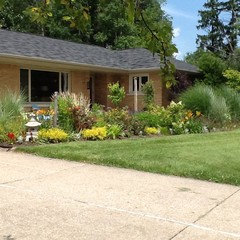
    This is my front garden. The house originally had some very old shrubs right up against the house. We removed them and the cracked & broken sidewalk, expanded the area into a wide concrete patio with the garden in front. I have trees and shrubs planted in the garden to provide shade for the patio as everything matures. It's also a 4 season garden starting with daffodils and tulips in the spring, a riot color all summer, an explosion of seed heads from the grasses in the fall and wild structure all winter. So much fun, mulch and it is easy care.

  • 10 years ago

    I just took another look at your photo of the garden area... Get rid of the planting area so close to the house. Fill it in with decorative stone, but DON"T pant so close to your foundation. It WILL cause problems. Bring the garden out from the house. Your local garden center may be able to provide you some ideas. We have one here that will plan your garden if you bring in measurements and photos. They can provide appropriate plants for your zone. Have fun with it, try out stuff you like.

  • 10 years ago
    last modified: 10 years ago

    Paola, you need to provide more information about your garden space if you hope to get any reasonable or useful answers from the Houzz responses. From what I've read Droplet & Daphne have given you the best advise so far. Before you do anything, however, you have to cut the bed, get the size and shape right for the shape of your house then think about the fun part, the plantings. Use a garden hose or spray paint to give yourself some noncommital ideas.

    Your lovely home seems very angular so you may want to draw a more organic or ameboid bed to soften the lines of the house. Then consider the following when choosing plantings.

    You know your growing zone

    Soil type acid or alkaline

    dry, damp, soil

    shade what time of day

    wind tolerance

    Are you removing the small stone retaining wall or removing it? My suggestion enlarge the area.

    From there you can't go wrong with native plants.

    If you're fortunate enough to have a small landscape business (not a big box store) near by many of them offer consultation services, for a price, without your having to commit to buying their plants, or a full service contract or instillation etc. Asking for local help is your best bet and it helps the local economy. Good luck, makes me want to tare up my front beds and start from scratch. A local landscaper will know your soil best, know what plant stock has thrived in the area, what has taken a hit because of disease or weather trends. If you have access to a horticultural hotline sometimes offered by colleges with horticultural programs, botanical gardens or arboretums, they can be very useful as well. What you'll spend on a consultation you'll save on back breaking work that doesn't pay off, failed plantings due to poor siting choices, bad soil conditions for the plant etc.

  • 10 years ago

    Ever heard of scale and proportion? Get rid of that concrete border and make the planting bed proportional to the length of the bed. Can't quite agree with person above who recommends not putting in a continuous fountain planting. CORRECT fountain planting can give a good base to the house as well it can soften or hide a not so interesting house.

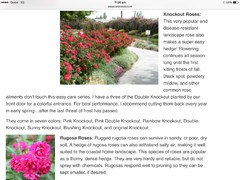
    The choices are endless - how about a continuous shrub rose hedge if there is enough sunlight? Just don't plant that 1 ft planting bed!!!!

  • 10 years ago

    One of Houzz's best kept secrets is its Regional Garden Guides section. U.S. gardeners can find suggested plants and natives and a monthly garden checklist for each region. Here's the Northwest Native Plant section: http://www.houzz.com/ideabooks/northwest-native-plants

    Among the suggestions is Oregon grape, a pretty native that your local birds will love as much as you do: https://www.houzz.com/magazine/great-design-plant-mahonia-aquifolium-for-birds-stsetivw-vs~49639764

    Find more under Stories > Outdoor Living > Gardening > Native Plants or >Regional Gardening Guides