Software
Houzz Logo Print
mswshrink1

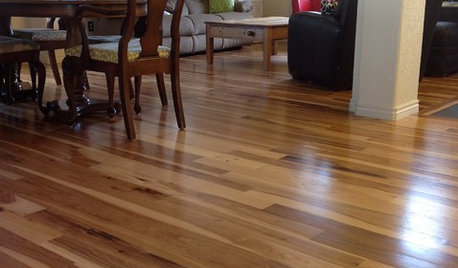
solid wood floor

10 years ago

my kitchen is on a concrete slab
is it wise to use a solid woid floor?
4 - Kitchen Remodel - California Central Coast · More Info

Comments (3)

  • PRO
    10 years ago

    Any wood floor installed over a concrete slab has it's risks.

    90% of the solid wood floors that I have installed are done so on a raised floor foundation - meaning installed on a wood floor, not concrete. The other 10% installed on concrete are done so with careful considerations and precautions.

    Solid wood floors installed over concrete slabs should be done cautiously after considering many factors. If installing any wood floor on a concrete slab, these are some of the precautions and factors that should be considered; A review of the soils report to determine subterranean moisture content and soil type, some research attempted to determine if an adequate moisture barrier was properly installed underneath the slab, was a free draining material such as gravel installed underneath the slab, does the exterior soil properly slope and drain away from the structure, is the roof water captured into rain gutters and directed to a location away from the structure through a drainage system, concrete should be tested for moisture content, a proper moisture barrier applied to the surface of the slab with treated plywood secured over the pressure treated plywood, the underside of the wood flooring should be sealed or primed prior to placement. This process is labor intense and likely not cost effective over large areas, but might be suited for smaller areas like an entry or one room.

    The safest course for wood flooring over concrete is to use pre-manufactured "engineered" wood floor system offered by most major wood flooring manufacturers - be sure to strictly follow their instructions and to use the adhesives that they specify.

    John K


  • 10 years ago
    can an old concrete patio that has many crevices and is not level be repaired so that pavers or bricks can cover?
  • PRO
    10 years ago


    As a rule of thumb, applying tile or brick surface over a crack in concrete - over time- tends to transfer the crack through to the new surface. This is a frequent occurrence as the concrete expands and contracts in conjunction with outside climate. The hairline cracks are the stress points where the expansion is occurring. There are products that can be applied over hairline cracks to often successfully mitigate the transfer of the cracks, however I would say - no guarantees. There are also companies who specialize in resurfacing existing concrete surfaces - some with good results and others with poor results.

    You should not be disappointed if the cracks reappear in the new surface. If it is an exterior patio, you would want to maintain the slope away from the building for drainage.


    If the patio has prominent cracking and or upheaval - meaning that there is a height difference between the pieces adjacent to one another - there is likely a structural problem such as expansive soil, inadequate base (sand and gravel) material underneath the concrete, no reinforcement steel, weak concrete PSI mix, etc. This may be a case where the patio might need to be removed.

    If so, pavers/bricks & other similar products can be applied directly onto a compacted base (sand and gravel) subsurface - often 4" to 6 " in thickness. If the soils conditions are highly expansive, the base thickness may need to be increased by removing additional expansive soil first.

    Conclusion - a cosmetic fix over an unstable subsurface will likely result in ruin.

    John K