Software
Houzz Logo Print
tye22tye

New lawn advice.

11 years ago
last modified: 11 years ago

Hello....i asked a couple of questions already on this forum and figured it would be best to start a new thread to pinpoint my new question.

I live in long island and on 9/3/15 put down 2inches of topsoil across a .5 acre. I seeded, rolled, and put stater fertilizer. Today the grass looks great but there are some brown areas that I am not sure if its fungus or maybe not enough water.

Watering schedule when i started was 20min/3x a dat. At about 2.5 weeks i set it for you 10min/2x a day because grass was growing.

On 10/1/15 my plan was to mow for the first time, seed again, and fertilize. But now since i see some brown areas im wondering what I should do.

1) If i put fungicide or something down, can i still continue my plan for 10/1/15? I dont even know if its fungus. Please help.

2) If i reseed on 10/1/15, should i leave watering on 10min/2x a day?

3) is it bad to water mid day?

Comments (22)

  • 11 years ago

    Water longer duration, should have been 10x3 when starting (approx) then after it starts going increase interval but reduce numbers of times per day gradually. Have pictures?

  • 11 years ago
    last modified: 11 years ago

    Here are my photos. I was trying to post with my questions but it would not work. These were all taken at about 11:00am. In about another hour the front yard is mostly sunny all day and backyard mostly shady.

  • 11 years ago

  • 11 years ago

    Ah , looks really good. I'd keep doing what you are doing. Spots near pavement and blacktop are always trouble for me. Looks like that is the case here? I haven't figured that out myself unfortunately.

  • 11 years ago

    Really nice! You did well.

  • 11 years ago

    Oh, I thought this was going to be one of those nasty lawns. Yours actually looks great, and for just seeded, it's closer to incredible. It's a gorgeous, 24 day old lawn with minimal issues.

    >>1) If i put fungicide or something down, can i still continue my plan for 10/1/15? I dont even know if its fungus. Please help.

    Yes, seeding post a fungicide is generally fine. Check the bag to see if they have a recommended waiting period for seeding, but many don't say aything because you can seed right atop the fungicide if you want.

    Those brown spots could be a touch of damp-off fungus, which is an easy kill. If your fungicide listed pythium, it almost certainly took care of any of the species that cause damp-off.

    >>2) If i reseed on 10/1/15, should i leave watering on 10min/2x a day?

    Yes, for at least 2 weeks using a fescue seed. I might try to sneak the reseeding a little early (like today if possible) just to pick up these last few days of really nice late-summer weather.

    >>3) is it bad to water mid day?

    For seeding, it's practically required!

    For mature lawns, mid day watering is fine, but you'll lose more water to evaporation than you would watering in the morning. So for maximum water savings and efficiency, water as close to dawn as possible.

    But if that's not possible, a mid-day watering is perfectly OK and I do it regularly. It's just best if the lawn goes into the overnight hours dry, as damp grasses all night will encourage fungal growth.

  • 11 years ago
    last modified: 11 years ago

    Thanks a lot for the compliments. Morpheuspa, was that a typo on the fungicide having pythium. Were you referring to my starter fertilizer that i put down in the beginning having pythium? I did not put down fungicide yet.

  • 11 years ago

    Listed pythium, or lists it as something that it kills. Pythium fungus is one of the causes of damp-off.

    Pythium fungi are generally pretty common in the soil, and run rampant under some conditions. Some infections can damage or kill adult grasses, but the ones that cause damp-off or impact younger grasses are usually a much easier kill.


  • 11 years ago

    So i need fungicide that lists pythium? I will find some tomorrow and throw it down.

    I have another question. I wanted to throw gypsum down at some point in hopes to loosen the soil. When is the best time to do so because i dont know if adding that while fungiciding and fertilizing and seeding will be too much?

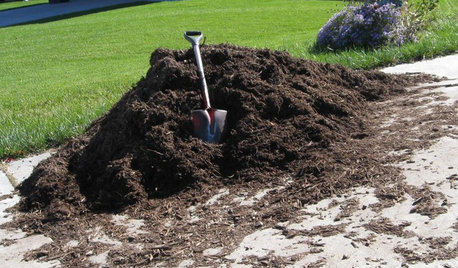
    When i had the 160 yards of topsoil dumped, there was 20 yard piles all over lawn. Now it seems like where ever those piles were, the topsoil is a bit hard like clay.


  • 11 years ago

    >>So i need fungicide that lists pythium? I will find some tomorrow and throw it down.

    Yep, although damp off fungus is so weak that even powdered cinnamon (a minor fungicide) can take care of it.

    >>I have another question. I wanted to throw gypsum down at some point in hopes to loosen the soil. When is the best time to do so because i dont know if adding that while fungiciding and fertilizing and seeding will be too much?

    Never Without A Soil Test. Gypsum--calcium sulfate--will alter both your calcium and sulfur levels. Which may or may not be the correct thing to do to rebalance your soil.

    Soils become harder, chemically, because of sodium or magnesium. Gypsum is likely the correct response for sodic soils, but those are very rare in areas that aren't arid. Magnesium hardened soils, it depends. Gypsum is correct if your pH is normal. Calcium carbonate is correct if the pH is low. Monoammonium phosphate followed by calcium sulfate or calcium carbonate is correct in low phosphorus high pH, high calcium, high magnesium conditions. And so on.

    I'd strongly recommend Logan Labs if you want us to read it. We only do Logan and UMass tests.

    >>When i had the 160 yards of topsoil dumped, there was 20 yard piles all over lawn. Now it seems like where ever those piles were, the topsoil is a bit hard like clay.

    Biological problems are also possible, as when soil is piled--but it has to be piled for a while. Again, without a soil test, we don't know. Bollixed chemistry is fixable. If the chemistry is OK, we turn to biological solutions.

  • 11 years ago

    Thank you so much for taking the time out to answer my question and to everyone as well.

    Can I please have the contact information to send a soil test? And how much soil do i need to send? How long does the process take and cost? Do they give you the details on what to use to treat it or only tell what the soil lacks?

    And like i said, the hard topsoil is only in certain areas. That being said, im assuming I should take a sample from those areas and depending on the test results, only treat those areas as well?

  • 11 years ago

    Looks great! :)

  • 11 years ago

    http://www.loganlabs.com/get-started.html

    There's the whole lowdown on Logan. This year, the standard test is $25, which will tell you everything you never wanted to know about your soil. The amount to send is around 2 cups.

    They don't make recommendations, but if you post it here, I do. You can check some of the (many) Logan Labs threads around here for examples of my reading of these things. Most are very straightforward. Some are not.

    In this instance, I'd probably send two samples this first time. One gathered from the hard areas, one gathered from the rest of the lawn. If the numbers come back the same, future tests would just be from across the entire lawn.

    Looking at the date, you can certainly take the test now. I'll give you a plan that runs the full calendar year. But if you'd rather wait until March or early April, that would be fine as well.

  • 11 years ago

    A second thought occurs, which took a bit to perk because it's a rare case where this is appropriate.

    If those soil piles were there for a while, and/or moved with heavy machinery, you may actually be one of the rare people with mechanical compaction. In that case, this is one of the rare times where mechanical core soil aeration in those hard areas will be useful.

    Not that you can't do it in other ways, of course, and let nature do the job for you.

    Here's one thing to try, and it's fine on new seed or young grasses. Using a hose end sprayer (like an Ortho or whatever; I like my Chapin), spray 2 to 4 ounces per thousand square feet of baby shampoo or any clear shampoo on those areas. More won't hurt, but there's no need.

    Why it works is rather complex (there's a thread about that here), but it'll encourage fungi and also chemically alter the soil and make it more likely to open up. Repeat up to monthly any time the soil isn't frozen or likely to freeze before the next major rainfall or irrigation.

    At the one month point (almost) you should be able to gently walk on your new lawn a bit, so this can be done now.

  • 11 years ago
    The piles of topsoil had been sitting for a week before being moved with a full size skidsteer bobcat.

    The shampoo treatment seems pretty interesting and something I am willing to try, it seems a little scarey though lol.

    It wont kill the new grass or seed?

    One of the things you mentioned was that it encourages fungi which I am assuming is bad. Is this the same fungi im possibly battling now?
  • 11 years ago

    Fungi are mostly good. We talk about beneficial microbes. Microbes include bacteria (aka germs), fungi (aka lawn diseases and athlete's foot), microarthropods (aka tiny insects like invisible cockroaches), and protozoa (aka lots of vomit inducing diseases). But the beneficial microbes don't cause any of that. In fact the beneficial microbes prevent all that from happening. There is a natural balance of beneficial and pathogenic microbes in the soil. When everything is balanced then everything is normal. In fact that is probably the definition of normal.

    Don't be scared by shampoo. Over my many years reading this and other garden forums, surfactants are used all the time for various reasons. Shampoo is just another surfactant with the expected benefits of washing the plants and "wetting" the soil. It allows moisture to penetrate deeper and that kicks off all kinds of benefits.

    If the soil was not soggy when the piles went down, and was not soggy when the skidsteer drove over it, I would expect the shampoo to work fine for you. Cutting off the air to the soil would be the issue that I see. The normal microbes that live at the surface would have been deprived of air for a long time.

    Since you added so much soil you should watch carefully to see if your drainage has changed. What you don't want to happen is for rainwater to back up into your house.

  • 11 years ago

    Ok, i think I will use johnson and johnson baby shampoo if thats ok?

    So what should I expect after wetting the problem areas with the shampoo? Does it physically loosen up the soil? How long would it take if this were to work?(just so i know if it is working or not)

    Just some more information on the compacted topsoil that I had forgotten to mention: When I had the sprinkler guys installing the sprinklers, whenever they pulled the sprinkler lines through problem areas, the first 1" of the topsoil just lifted and broke up as if it were silt or clay....very weird. Right now in those same areas, the topsoil is very smooth, flat and compacted. I can tell in these areas the grass is very thin either because the seed washed away easily or its so tough for the roots to dig in. That being said, i am am hoping this the baby shampoo would do the trick. I will take some photos of the soil tomorro if the rain lets up.


  • 11 years ago

    J&J is fine if that's what you can get, but it's a bit on the expensive side. The generic or store brand will be cheaper and equally effective. I personally prefer green apple scented Suave because I like the way it smells.

    From the description of your top soil? Soil Test Now. That can be a mechanical problem, but the proportion of ions in the soil actually has a major impact on the friability of the soil.

    Amazing but true. Ions in the picometer range influence soil structure up in the ranges where you can see it.

    If the shampoo will work, it'll work in about 2 weeks of decent weather. It should physically loosen the soil, with a medium-term (by soil definitions, which is years) effect that lasts.

  • 11 years ago

    You can test the soil with a screwdriver. Just stick it in and note how hard it is to push into the soil. Sometimes you can't even break the surface by jumping on it. Others can sink the screwdriver in to the hilt easily. Do it before and after the shampoo.

    What I noticed is that after I water the lawn the soil is extremely soft to walk on. It's almost too soft. Then when the soil dries out it becomes firm (hard) again. But next time it gets wet it will soften. I shampooed my lawn back in 2012 and it's still soft when wet. Before that it was hard even when wet.

  • 11 years ago

    I just came across this post and saw those pictures. My seeding is 24 days old at this point and I think I'm going to go cry in the corner about how good that looks compared to mine.

  • 11 years ago
    Thanks for the compliment and I'm sorry you are having trouble. This is my first time doing a lawn so maybe its beginners luck? From what you guys are saying, I am wondering what I did differently. Maybe starting from scratch like I did or maybe because I got the seed locally instead of home depot or lowes. Either case, I am not 100% satisfied with it, but I am kind of impatient.
  • 11 years ago

    Looks amazing & 160 yards of soil?! Impressive project!

Sponsored
Columbus' Home Design Experts Specializing in Custom Cabinets