

Geothermal or natural gas for new build in Ohio
I posted this once before, but have more detailed information on pricing and timing this time around! We're building a ~2,900 sqft, two-story home in Central Ohio with an unfinished basement we plan to finish later on. We originally had it all figured out (geothermal) until we found out that natural gas had recently been made available by us.
Here's what we're looking at price-wise:
For natural gas: High-efficiency natural gas system: $15,000; instant hot water heater: $7,000; tap and trenching back to our house: $4,000. Total: $26,000
For geothermal: 5-ton system: $31,000; instant hot water heater: $7,000; dual fuel with natural gas: $11,000; gas tap and trenching: $4,000; -$10,000 tax credit from builder; -$1,000 credit from electric company; -$9,000 tax credit from the government (we will be installing in the next 4 months so we will make the Dec. 31, 2016 deadline). Total: $33,000. We considered having different zones, which would add another $5,000.
So, a $7,000 difference after tax credits ($12,000 if we incorporate multiple zones with geo). Right now electric in our area is 11.2 cents/kwh.
Advice would be much appreciated! I'll be happy to include additional info if it's helpful. Thanks!
Comments (26)
 10 years ago
I'm far from an expert...we have 3500 on the first floor with 3000 finished on the lower level and have 10 tons geothermal with five zones. So, is 5 tons sufficient for 2900 sq ft plus a finished basement? (Someday)
did you have your house assessed by more than one company independent of the other as far as your geothermal needs?
congratulations, btw.
Related Professionals
Sugar Land Architects & Building Designers · Olean Architects & Building Designers · Potsdam Architects & Building Designers · Rochester Architects & Building Designers · Altoona Architects & Building Designers · Spokane Architects & Building Designers · Gaithersburg Design-Build Firms · Abilene Design-Build Firms · Green Bay Design-Build Firms · Kissimmee Home Builders · Aurora Home Builders · Gary Home Builders · Omaha Home Builders · Show Low Home Builders · Victoria Home Builders 10 years ago
My neighbors have geothermal and love how it helps keep the house cool in the summer. What are you doing for AC if you go with gas?
 10 years ago
We just moved into our 3300 square foot ranch + 1300 finished basement in southern Ohio. We installed the geothermal system and love it. The temperature is consistent and never wavers like our old gas heat and air conditioner in our previous house. I was constantly adjusting the temp in that house. (It would get too hot, too cold....) This one is so easy and we don't get extreme temperature changes in the house. Also, our bill has been averaging $200 per month which is great for the space we are working with. Go for the geothermal--you won't regret it.
 10 years ago
I would go with the geothermal. I have a house in southern Ohio with geothermal built 4 years ago. The difference in cost between my old house about 2700 sq ft built in 2003 on natural gas and new house about 4500 sq ft on geothermal has averaged $100 less per month. I figure about a 3 to 4 year payback.
Bri
Original Author10 years ago@crazy_in_mason great to hear, thanks! I believe we are going with geothermal. We hope to be in this home for many years, so we should definitely see payback.
- 10 years ago
"Geothermal" is only 1/2 the answer to your heating and cooling question and needs!
One still needs to supplement 'geothermal' with either natural gas, propane, oil, solar or electric.
"Geothermal" is not a 'stand alone' heating or cooling source or system.
"Geothermal" simply takes the naturally occurring heating or cooling energy in the ground, water table, air, lake, pond, or other source to pre-heat or pre-cool one's HVAC system BEFORE adding supplemental energy.
"Geothermal" therefore not only requires you to install the primary geothermal loop for the tune of $30,000 in normal cases just to get the system going....
It STILL requires you to install an oil, gas, electric, propane or other form of supplemental energy system to make it WORK!
"Geothermal" will therefore be the absolutely most expensive type of heating and cooling system to initially install BAR NONE!
It 'might' pay for itself over 20-30 years of home ownership....if you stay in your house that long...but not before....
My take: stick with the conventional forms of heating and cooling and see your dollars saved sooner!
- 10 years ago
I have no need for backup even with the last two winters. I do have electric heat as a backup to my geothermal. It did not get used last winter. My system went stage 2 heating a lot but did not go to the electric heat coil. It is a matter of sizing. The heat coils are part of the geothermal system. It is the most expensive form of hvac to install but the cheapest to run. Over the long run it is cheaper. Do not be shortsighted.
 10 years ago
Oh boy. NE Iowa here. -45 windchill days last winter and my inlaws have geothermal in their 150 year old 2 story farmhouse on a hill. Their geothermal paid for itself in a year and a half. Their system was 22k installed. We may also do geo but will pay for the electricity to run it with solar panels.
I do know if your geo is installed incorrectly you will have to supplement with another heat source as temps drop. I have seen this happen in a milder climate than mine. So it sounds like somone did not do their homework when choosing a reputable installer.
- 10 years ago
we got two bids from two companies. we went with the more expensive bid that we felt had our house sized better. It is a large house and our emergency heat rarely kicks on. Very pleased with geothermal.
 10 years ago
Not true Manhattan42. We live in MN and have never required a backup source to heat our home or my husband's 12,000sq ft business. We are extremely happy with geothermal and recommend it highly. Not only does it pay for itself in a few years but you aren't subject to the price volatility of oil, natural gas or propane markets which was a huge issue for people in our area a couple of winters ago when there was a shortage of propane.
- 10 years agolast modified: 10 years ago
Manhattan42, you have your information wrong. Geothermal is a stand alone installation for both heating and cooling. For heating conditions, the liquid that runs in the ground source loop is warmed to the steady ground temperature (~50 degrees F), enters the house, and runs through a double coil that heats refrigerant. This refrigerant, with a low boiling point, is converted from a liquid state to a gaseous state by the ground source loop liquid temperature. The gas is then compressed (remember the combined gas law pV=nRT) to increase the temperature, which is then passed through a radiator in the system (forced air or water for radiant heat).
For cooling, the ground source liquid can be directly used in the distribution system.
It is important to note that geothermal systems do have a back up heat source, but it's only used in a situation where the ground loops aren't providing the required temperature for the process stated above. A well designed system shouldn't encounter this issue.
These systems can also be used to pre-heat hot water via desuperheater, utilizing the waste heat created by the system. This means that during the summer, your potable hot water is heated using energy you're trying to remove from the ambient air (cooling the house).
Besides these facts, we're installing a 6 well, 6 ton geothermal (ground source heat pump) for our 5000 sq ft ICF new construction in SE Michigan. Due to our tight building envelope, our ROV will be much longer than a conventional stick built house, but it will still be realized during the life of our build since it's our final house. Also remember that geothermal systems run off electricity so the future operating costs are decoupled from fossil fuel technology. Whatever technologies become more cost effective in the future for providing electrical energy, the cost to run geothermal systems will stay fairly stable. Gas furnaces are stuck with one energy source.
- 10 years ago
Our home is a ranch, 5200' finished, built in 2011 in zone 3.
I'm not very knowledgeable about the technical aspect of our geothermal system, but will tell you what I do know. It's a 5 ton dual fuel heat pump with in-floor heat, 100,000 btu backup furnace (propane), closed loop five 5-ton vertical shafts. Price of $42,450 (less $12,735 Federal Tax Credit), also included 105 gal Marathon water heater, humidifier, air filter, 30 gal buffer tank, touchscreen thermostats, etc, etc, etc, completely installed. Right in our bid it says 75% of the total energy is free and renewable with an estimated life of 250 years. We also received a $1000 rebate from our local energy cooperative, and a $250 rebate from the electrical company. Our utility bills are so much lower than our previous home, I think we've almost made up the $$ difference over a conventional system. Actually, after rebates, there wasn't much difference in initial cost. The A/C is especially efficient. Couldn't be happier, would definitely do it again.
- 10 years ago
I forgot to mention, we have never used out backup furnace. DH checks is periodically to make sure it's functioning, but it's never come on because the geothermal can't keep up. Even when it's -30.
 PRO10 years ago
Here is Bri's other post with more on Natural Gas VS Geothermal (Ground Source Heat Pump).
- 10 years ago
Here's the kind of 'myths' propagated by the geothermal 'enthusiasts':
iowacommute said:
" Oh boy. NE Iowa here. -45 windchill days last winter and my inlaws have geothermal in their 150 year old 2 story farmhouse on a hill. Their geothermal paid for itself in a year and a half. Their system was 22k installed."
------------------------------------
Ok, so you are REALLY trying to tell us, that your in-laws were paying $14,000 per year in energy costs? That's what $22,000 over 18 months ("a year and a half") works out to be!
I heat, cool, cook, and launder with natural gas and electric and my total energy output a year for a 2400sf house is (even on the high side) under $1900 annually.
Zone 5A Middle Atlantic region. About the same climate Zone as NE Iowa.
The initial cost to install BOTH my furnace and AC unit was about $5000.
At my rates, it would take your in-laws 12 years just to pay for the geothermal system installation before they even saw a single penny in 'savings'...and only then if they never ever had to supplement the heat or cooling with electric gas, oil, wood or anything else.
Factor in life expectancy of any system at 20 years, and you then start the cycle all over again...with conventional either being much cheaper than or at the worst, equal to, geothermal in overall installation and operating costs.
That means that it still remains cheaper, by far, to use a conventional systems than to install geothermal except in perhaps the most extreme cases.
------------------
Looked at long term and quite closely, unless you are tapping into free underground steam heated by lava like they do in Iceland or can take advantage of a super-cooled water source for cooling (glacial lake), for most, geothermal remains the pie-in-the-sky energy illusion as is solar, wind, and other forms of 'alternative' energy.
- 10 years agolast modified: 10 years ago
More 'myths':
-----------------------------
dazureus claimed:
" Geothermal is a stand alone installation for both heating and cooling. "
Really? You go on to say that it requires continual electricity consumption to run the system. How is that 'stand alone'?
------------------------------------------------------
"It is important to note that geothermal systems do have a back up heat source, but it's only used in a situation where the ground loops aren't providing the required temperature for the process stated above. A well designed system shouldn't encounter this issue."
Few, if any, geothermal systems can operate without supplemental oil or gas or electrical energy sources despite what the salesmen tell you.
If they could, we would have a 'perpetual motion device' that could operate indefinitely without ANY energy consumption to keep the system going.
But, alas, there are no such things except for those whom of PT Barnum said: "There is a sucker born every minute!"
-----------------------------------------------------------
" Besides these facts, we're installing a 6 well, 6 ton geothermal (ground source heat pump) for our 5000 sq ft ICF new construction in SE Michigan. Due to our tight building envelope, our ROV will be much longer than a conventional stick built house, but it will still be realized during the life of our build since it's our final house. Also remember that geothermal systems run off electricity so the future operating costs are decoupled from fossil fuel technology. Whatever technologies become more cost effective in the future for providing electrical energy, the cost to run geothermal systems will stay fairly stable."
Ultimately you only tell us less than half the story.
You do not tell us how much it is costing you to install your geothermal system and you have absolutely NO experience in operating your system to tell any of us IF it really will work as the salesmen told you it should!
The fact that you are building with extremely expensive materials ( ICF construction) and extremely expensive heating and cooling technology (geothermal) only serves to tell us that you "think" you "might" one day see your house pay for itself over the rest of your lifetime, and only then, perhaps, see some energy savings!
I can tell you with my broad experience that a conventionally built stick home, well insulated for your region, sealed against air infiltration, and heated and cooled with conventional methods will pay for itself much sooner at a lower initial investment... and save you more on energy costs over the long term than your ICF house will with geothermal!
Too many simply fall for the gimmicks, the ploys, and the technological mumbo-jumbo they do not understand, without understanding how that technology works or whether or not it truly economical or can deliver as promised.
------------------------------------------------------
A friend of mine installed 6 240kva solar panels on her roof in her all electric home with the promise of the salesman she would reduce her electric bills immensely.
Unfortunately, she never asked my advice.
She paid $13,000 for the system.
A system that does not provide enough electricity on good days to even run her toaster...and on most days does not produce enough electricity to light 2 light bulbs.
Not to mention a system that doesn't work at night.
The only one who is happy with her system is the salesman who duped her out of her $13,000 (plus interest)
Oh yeah. Are you rolling your geothermal system and ICF technologies into your mortgage?
If so, then rest assured, you will likely NEVER pay them off during your lifetime, or will have paid 2-3 times MORE for them had you paid cash, and immensely more for these 'systems' than if you built using conventional framing, insulation, heating and cooling technologies!
So where are the 'energy' savings?
There are ABSOLUTELY NONE!
ZIP! NADA!
You simply are paying the geothermal manufacturer and installer and mortgage lender rather than the energy company...and paying each of them considerably MORE!
--------------------------------------------------------
Bottom line: CAVEAT EMPTOR! (BUYER BEWARE!)
Newer does not necessarily mean 'better'.
If geothermal systems REALLY worked and were the best bang for the buck, EVERYONE would have one!
BUYER BEWARE!
- 10 years agolast modified: 10 years ago
More myths:
"
Our home is a ranch, 5200' finished, built in 2011 in zone 3.
I'm not very knowledgeable about the technical aspect of our geothermal system, but will tell you what I do know. It's a 5 ton dual fuel heat pump with in-floor heat, 100,000 btu backup furnace (propane), closed loop five 5-ton vertical shafts. Price of $42,450 (less $12,735 Federal Tax Credit), also included 105 gal Marathon water heater, humidifier, air filter, 30 gal buffer tank, touchscreen thermostats, etc, etc, etc, completely installed. Right in our bid it says 75% of the total energy is free and renewable with an estimated life of 250 years. We also received a $1000 rebate from our local energy cooperative, and a $250 rebate from the electrical company. Our utility bills are so much lower than our previous home, I think we've almost made up the $$ difference over a conventional system. Actually, after rebates, there wasn't much difference in initial cost. The A/C is especially efficient. Couldn't be happier, would definitely do it again."
-----------------------------
Ok $42,000 less $12000 tax credit. So let's say an initial installation price of $30,000.
Joyce is in Zone 3 (Deep South) so little heating costs but substantial AC costs...
The Bid says: "75% of the energy of free"(Really? I have some swamp land for sale in Florida!)
And the rebates are $1500 bucks....
So Joyce paid about $28,000 for a geothermal system, probably rolled it her mortgage.
Could have had the same thing with conventional heat and AC and saved about $20,000 plus about $40,000 interest over 30 years.
You do the math!
Joyce may be 'happy', but YOU should not be with such an extremely BAD DEAL!
- 10 years ago
More myths:
-----------------
We just moved into our 3300 square foot ranch + 1300 finished basement in southern Ohio. We installed the geothermal system and love it. The temperature is consistent and never wavers like our old gas heat and air conditioner in our previous house. I was constantly adjusting the temp in that house. (It would get too hot, too cold....) This one is so easy and we don't get extreme temperature changes in the house. Also, our bill has been averaging $200 per month which is great for the space we are working with. Go for the geothermal--you won't regret it."
-------------------------------------------
Huh?
Just about EVERYONE here with geothermal 'claimed' you should NEVER NEED SUPPLEMENTAL ENERGY!
But mom2sulu tells the TRUTH by stating she is still paying $200 per month in utility costs WITH GEOTHERMAL!
So which is it?
Miracle heating and cooling system that needs no supplement?
Or high priced fancy alternative that saves no money at all?
Again, I heat and cool my house, cook, launder, light, power and everything else at about $158 per month with conventional natural gas and electrical systems.
HOW can geothermal benefit ANYONE if they still have to pay $200 per month is utilities even after investing $20,000, $30,000, $40,000 or more for a geothermal system than a conventional one ....STILL pay interest on the mortgage to pay for these exorbitant geothermal systems, and STILL pay an electric, gas, oil or other energy bill on top of it to supplement the geothermal system?
Simple answer: YOU CANNOT BENEFIT!
Geothermal is a SCAM best avoided!
-----------------------------
Caveat Emptor!
Buyer Beware!
-------------------------------------
Think I'll dress up as a 'Geothermal System' for Halloween and scare the bejeebus out of my neighbors! :)
- 10 years agolast modified: 10 years ago
Manhattan42 go ahead and continue to argue your point, but you really haven't a leg to stand on. Do you sell furnaces or something and afraid of the competition? You have read several examples from people who have actual experience with geothermal and yet you choose to think you are an expert? Yes, you need electricity to run the system but that isn't a substantial cost. We live in MN-zone 4. My husband has a 12,000 sq ft commercial building heated and air conditioned with geothermal. His monthly utility costs (electricity) to run the geothermal, in floor heat and A/C in the summer, which includes all of his T8 lighting, and many electric sucking machines costs less than $200/month year round. In his former building with conventional heating and cooling, heating costs could be as much as $2,500/month NOT including electricity. Not to mention the volatility of the market as far as cost and supply which is difficult to budget for! Our former home was a 2,400 sq ft home heated with oil. Our electric costs each month were $250 on average and cost of fuel oil about $600/month. Electricity during the summer as much as $350 for air. Last I heard, you still need electricity to run your natural gas, propane, oil furnace and other appliances. What is so unusual about a geothermal heat pump needing electricity? Geothermal is a stable, dependable heat/cooling source. Don't knock something until you really know what it's all about. By the way, zone 3 is definitely not in the south.
- 10 years ago
khinmn59, I ditto everything you said. Zone 3 is COLD!!! I know, I live in zone 3. It can get down to -40, although that is the extreme, and even then our backup furnace has never kicked in. Geo has no trouble at all keeping the house at 72 when it's that cold outside. In our previous home, we had utility bills similar to yours. Our current electric bills avg about $200 which includes nearly $75 in fixed fees: service fees, public assistance fees, and state and county taxes. We keep it at 72 pretty much all year round. (We are seniors). As far as monthly cost, using the average of $800 for previous home's monthly utility bill, and using $200 as our current utility bill, the difference is $600 per month. Multiply that times the 54 months we've been in the new home, that shows us a savings of ($600X54) = $32,400. Yes, I am very happy!!! As for initial cost, it was almost exactly the same after the rebates. Manhattan42, I find your tone and bad assumptions very offensive. This is a place to share experiences and ideas.
- 10 years agolast modified: 10 years ago
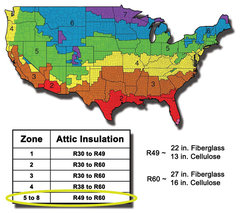
You don't know what you don't know. First of all, Insulation zones aren't gardening zones.
 Signs · More Info
Second, there is no such thing as a free lunch is correct. Better insulation is a better universal payback. If you insulate a home to better than current code requirement, the payback timeline for geothermal becomes longer than you can live. Air sealing and insulation WILL give you payback within your lifetime.
Anyone who has an $800a month heating bill doesn't have a properly insulated home, and is using some outmoded heating furnace like oil or propane. Just insulating and switching to an energy efficient unit will save the same amount of money, with much less expenditure.
- 10 years ago
I agree, Sophie. You don't know what you don't know. And I did learn something from your post. Thank you!
Sharing is great on Houzz. The part I hate are those who make fun of others, and criticize for decisions already made. You can disagree, or state opposing facts, without berating the individual.
- 10 years ago
Sophie, I'm a master gardener so gardening zones are usually foremost on my mind :). Yes, my older home was inefficient. I'm not in disagreement that a super-insulated home and energy efficient conventional HVAC system will save money, but when bidding out our new build, geothermal was very comparable in price to conventional. Geothermal has many advantages and I would recommend it any time.
- 10 years agolast modified: 10 years ago
Just some food for thought. When we designed our hvac system for our new home build in WI.. When looking at the manual J calculations between natural gas and ground source heat pumps, i found it to be about a 25 year payback that is factoring in the tax rebate. However, I will also add I was only looking at well ground loops.
A thing to be aware of that most geothermal sellers wont tell you, if you live in a northern climate ground temperature can cause issues with your heating system. I have two friends with the geothermal units that had to live off their secondary heat supplies for a couple of different winters now. This is because they went with the horizontal ground loops do to price. What happens is that winters that have little to no snow the ground freezes really deep. So, instead of the ground loops being in 50 degree soil, they may be in 30-40 degree soil. Causing your heat pump to become inefficient to the point sometimes that it will not supply enough heat. This is not the case with well drilled units. But they come with a large price tag, As in several thousand extra compared to the horizontal loop.
Is it a great source of heating and cooling? Yes. When designed properly
Would I do it if I had an unlimited budget? Yes, I would in a heart beat.
Would I do it to save money? NO, especially if I am rolling the upgrade cost into mortgage.










BriOriginal Author