Software
Houzz Logo Print
miketann

Choisya ternata

10 years ago

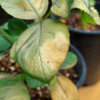
I have never grown it, believing it to be not quite hardy where I live, yet I spotted one the other day not too far from me. It wasn't near as lush as the ones I've seen on the north end of Lake Union in the lower part of the Wallingford District. I think they were the variety called 'Sundance'.

Any thoughts on growing them? Good and bad.

Why aren't they more popular? The ones I've seen look pretty nice.

Mike


Comments (13)

  • 10 years ago

    I guess it might depend where you are afa popularity is concerned. Probably not as much in character of the locale if a very woodsy, naturalistic garden (like yours!) but totally appropriate in a more groomed, suburban setting. The largest example of this shrub I have seen was located at the base of Queen Anne hill close to the Seattle Center and was espaliered against the south side of a house - easily 15' tall and as wide, if not wider.

    I have had no issues with hardiness with this plant, including a large well-established one in my old Shoreline garden that made it through any number of serious winters without any sign of damage. Same over here in Kitsap - no foliage cold damage or burn under situations that have caused nearly total dieback on escallonia, among others. I am a bit impressed that this shrub seems to be as impervious to common winter damage to broadleaved evergreens as it is.

    As regular Mexican orange can get to be a pretty impressively sized shrub and doesn't look very good sheared or hedged, I lean more towards the smaller and daintier, narrow leafed hybrid, 'Aztec Pearl'. I use it a lot in my design work and it is uniformly well-received. Also seems to produce a heavier flower display than the species. 'Sundance' is a yellow leafed form of the species that has a bit of a sickly appearance IMO unless in some shade - foliage bleaches out in full sun.

    I have never encountered any insect or disease issues with this shrub plus the oils that produce that citrus aroma when the leaves are crushed also make it unappealing to deer, which is a major plus out here in deer heaven!

  • 10 years ago
    last modified: 10 years ago

    I would say Mexican orange was one of the most frequently encountered shrubs in local plantings, with local independent retailers making a consistent habit of stocking it. It likes it warm but will grow in shade. Many local examples have poor leaf color and a percentage of dead or declining branches; I saw quite a bit of top damage after the 1990 winter.

    Grant & Grant, Garden Design Illustrated (1954, University of Washington Press, Seattle) put Mexican orange in a naturalistic character group which

    requires hot, dry conditions in full sun -- a group which has glossy yellow-green foliage and in many cases is noticeably aromatic

    along with Ceanothus thyrsiflorus, Escallonia, Euonymus japonicus, Myrtus communis and Hebe odora ("Veronica buxifolia") in their chapter on naturalistic character.

    [Sundance] = 'Lich' doesn't bloom much, which could be seen as taking away much of the point of planting a Choisya.

  • 10 years ago

    Thanks! I was hoping to hear from you two.

    I have to get out more and visit some nurseries. Another local one was closed for good when I drove by the other day . Alpine in Renton Highlands.

    New UPS guy was here for three hours today. He ran off my driveway looking at the garden and had to call a tow truck. :-)

    Mike

  • 10 years ago

    I grew both the Mexican Orange and the hybrid, 'Aztec Pearl' in Issaquah. The standard was damaged by cold events but the 'Aztec Pearl' never was. LIke gardengal commented about the plant, it was covered solid with blooms in the spring. Both plants are now in compost heaven thanks to the crew at the Issaquah Salmon Hatchery. I'm growing both in Aberdeen, have been for five years, but so far the temperatures haven't hurt either plant. The deer have hurt the 'Aztec Pearl' though, so far they have left the standard alone. Give them a try Mike, you might have good luck with them.

  • 10 years ago
    last modified: 10 years ago

    Both plants are now in compost heaven thanks to the crew at the Issaquah Salmon Hatchery

    How dreary of them.

    I'm growing both in Aberdeen, have been for five years, but so far the temperatures haven't hurt either plant

    The hyper-maritime climate belt is apparently narrow there, hopefully you are far enough west (and low enough down) to avoid the effects of the inland climate during cold events.

    I looked in this mostly terrific book I spotted at Barn of Nobles maybe last year (McIndoe, Creative Shrub Garden, 2014, Timber Press, Portland/London). Things he says about Choisya in general include

    one of the most popular shrubs

    easy to grow on any well-drained soil, in sun or shade

    it is generally free of pests and diseases

    generally unpalatable to deer and rabbits

    although choisyas are hardy, cold winter weather often damages the tips of the shoots, as the upward-facing leaves hold on to moisture that freezes and damages them

    About C. ternata specifically he says

    grows well in shade, but more freely produces fragrant white flowers in a sunny position

    Kind of off the subject but before I came across this book I hadn't heard of the author. The bio on the back cover says

    Andy McIndoe is managing director of Hillier Nurseries and Garden Centries in Hampshire, England. As designer of the Hillier exhibit at the Chelsea Flower Show for more than two decades, he has upheld the company's unprecedented record of consecutive gold medals at the show. Andy is a seasoned author, lectures widely, blogs to an enthusiastic following, and is a tutor at my-garden-school.com

    Although one or two of his general cultural recommendations are old hat (as often seems to be the case with British sources) you can tell there is a lot of solid experience behind what he says in the book - and it has lots of exciting sounding planting combinations.

  • 10 years ago

    I'll give the crew Hell next time I'm in Issaquah, John. In a diplomatic way, of course. :-) I'm south of Issaquah right above the Maple ValIey Highway. I can see the parasailers on Poo Poo point and Mt. Baker on a clear day. I can also see Cedar Hills dump. It looks like a dry pasture from here.

    Yes, I'm going to try those Choisyas and see what happens. Should be fun.

    Mike

  • 10 years ago

    Maybe the C. arizonica involvement in C. x dewitteana makes it hardier.

  • 10 years ago
    last modified: 10 years ago

    Elsewhere I see a need for a fertile soil and a susceptibility to Fusarium and snails being mentioned, with the snails girdling stems and causing die-back - in addition to the repeatedly brought up winter injury. It seems the scattered branch failure many specimens present here could be either the wilt or the snails, in the latter case especially since holes in the leaves may also be present. The lack of a good green many have could be a soil mineral deficiency, same as with various other shrub and tree plantings here.

    Especially where you are I would try it on a light soil in a hot, sheltered spot and do something to keep soil fertility up.

  • 10 years ago

    That sounds reasonable, Ron. The places I have seen it growing have been facing south with a lot of sun and possibly fairly dry. I would assume good drainage also.

  • 10 years ago

    I have one that's been growing well for about 8 years. It's next to my hot tub in partial sun. A neighbor up the street from me has had one in mostly sun for at least this long that does well also. Mine isn't as fragrant as I'd hoped it would be but it sure is easy to grow.

  • 10 years ago

    I have regular Choisya and Aztec Pearl that are more than 10 years old, planted on the east side of my house next to a concrete porch. It's pretty shady. I've lost all my Hydrangeas to low temperatures but the Choisyas were unaffected, maybe because of the concrete porch. They both bloom well in spring, but the regular plant is much bigger and sprawling, I never prune them, and it even bloomed well this fall, even though I couldn't drag a hose up there and didn't water much this summer in the drought.

  • 10 years ago
    last modified: 10 years ago

    The last time I noticed a lot of cold damage to these was after the 1990 winter. There are plants that are effectively never seen with winter injury and there are ones that are occasionally hurt, such as these - it doesn't matter if it has been a particular number of years without a planting being burnt - an item is still not "fully hardy" if it sometimes gets nailed. The problem for people planting incompletely hardy plants who don't want to see damage is that they could have it anytime, as killer winters are not on a uniform schedule. If someone is instead willing to put up with possible complete or partial failures at some point in order to enjoy a plant that interests them then it is a different situation.

  • 10 years ago

    I might grow one for myself, but I wouldn't put it in a garden for someone else.

    Mike