Software
Houzz Logo Print
johnaberdeen

Sinopanax formosanus

10 years ago
last modified: 10 years ago
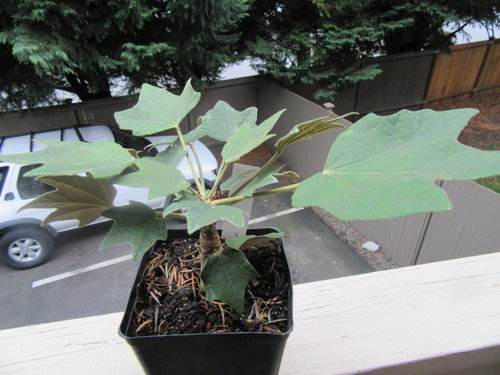
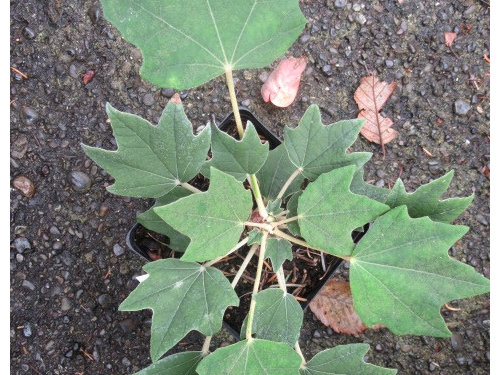
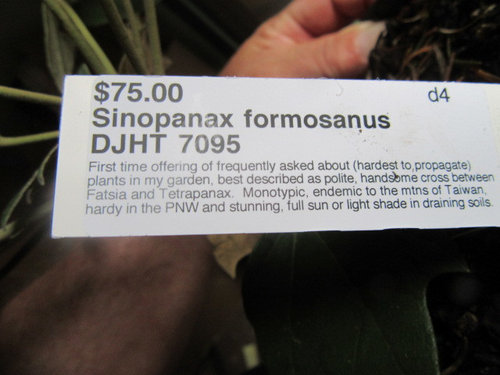
Saturday the 17th, Rhododendron Species Foundation had a plant sale at their garden in Federal Way. The Dan Hinkley Plant Collection was going to be there, so I was first in line when RSF opened the gates at 10 AM since in the past Dan Hinkley Collection had Schefflera alpina for sale at other plant sales, a plant I really wanted since reports from England and Europe plant boards say it is very hardy. Not only did they have S. alpina but they also had two Sinopanax formosanus. A plant very rare in both North Amerca and Europe. I only know of Dan Hinkley and Crug Farms in England having it. Of course I bought one. It is the holly grail of plants that plant collectors want. The pictures below are of the plant I bought, also a picture of what Dan Hinkley has to say about the plant.

Here is also a link from Linda Cochran's blog from 2012 showing a picture of Dan's mature plant. It is quite an attractive plant.

I also bought two Scheffera alpina from them, a mother lode of plants in the Aralia family.

http://lindacochran.blogspot.com/2012/07/sinopanax-formosana.html


Comments (10)

  • 10 years ago

    "Hardy in the PNW". The last 30 year, widely destructive winter was in 1990. Was he growing it then?

  • 10 years ago

    My Dad told me about driving cars on the ice at Green Lake when he was a kid. Late 30s possibly early 40s. I remember 6 inches of snow on the sand at Richmond Beach (Shoreline) in the winter of 1949-50. The Fall of 55 was brutal too. Our clothes freeze dried on the line then.

    I may have to go to Swanson's or Sky nursery to get those Choisyas

    Mike...older than I wanna be.

  • 10 years ago
    last modified: 10 years ago
    If a person worried about past winters there wouldn't be very many
    plants available for their garden except for some plants from the
    Arctic

    An overstatement that ignores the recurring problem of possibly or definitely questionable plants being presented as reliably hardy. When a body is not a committed enthusiast 75 bucks is quite a chunk of change to drop on a small specimen that might freeze later. Especially at this time of the year, when the coldest month is around the corner.

    I have to wonder how many novices or other casually involved/dabbling, or otherwise unwary plant purchasers have bought something like this that caught their interest, only to be angered, surprised or dismayed enough to be put off any such additional activity later because the thing failed on them once it got cold enough. Plant vendors here have a continuing habit of peppering their presentations with Zone 9+ stuff that is not segregated from the genuinely hardy plants or otherwise displayed in such a way that makes it clear these items are strictly experimental.

  • 10 years ago

    Yes, the plant was expensive. There were two of them, I would have bought both of them, except they were that expensive, and my wife was with me, putting the brakes on my spending habit for plants. I also knew what I was doing, having studied the plant for many years reading about it in its native habitat high in the mountains of Taiwan. From what Dan Hinkley has said about the plant and from people in Europe who have grown it in winters as cold as 1990. I believe it is probably as hardy as 8a, maybe 7b. That would get it though most of my winters. Where I live is 300 feet above sea level, rated zone 8b, average low is 19° F. Issaquah, where I lived, was also a zone 8b, average temperature 17° F. Down town Aberdeen is zone 9a. I have seen jade plants make it through several winters growing outside in down town Aberdeen below fifty feet sea level until a cold winter takes them out.

    Ron, I do agree that many nurseries and online plant catalogs rate plants too low. I have seen some say rated for zone 8 but in their description they say damaged at 19° F. That is not a zone 8 plant, barely a zone 9a plant. At least those warn you if you take the time to read the description, but other just say a zone without giving any information. That leaves it up to person buying the plant to either find out the hard way or do the research before buying. But who does that, not many.


  • 10 years ago
    last modified: 10 years ago
    Down town Aberdeen is zone 9a. I have seen jade plants make it through
    several winters growing outside in down town Aberdeen below fifty feet
    sea level until a cold winter takes them out.

    Thereby demonstrating it isn't Zone 9!

  • 10 years ago

    USDA zones are determined by average minimum lows over a period of time, not absolute minimums. That means that an unusual winter or a colder than normal period does NOT cancel out that zonal designation. Huntington Beach CA is designated as a zone 10b however it has recorded temps below freezing (28F) on occasion. Does that mean it is not a zone 10b but rather a 9B?? No, only that it - like anywhere else on the planet - can be subject to temperature "extremes" from time to time.

  • 10 years ago
    last modified: 10 years ago

    Thanks gardengal for schooling Ron clearly and concisely on what USDA zones are. I have been posting and lurking on this board for a long time. He does sound like he is knowledgeable about plants from time to time, but like the last comment he posted here, he also comes across as ignorant from time to time. And if he truely knew his plants he would have known that the jade plant is probably a zone 10b plant, that is grown in 10a and even 9b but damaged or killed when their winters are in the low side of the bell curve. So growing a jade plant in Aberdeen, zone 9a, is only possible when its temperatures are on the high end of the bell curve. I know that so wouldn't waste my time trying to grow it outside, but I do like testing the limits of plants, like these members of the Aralia family. I have been gardening as a small child in the 1950's through now, growing vegatable gardens and testing limits of plants. And lucky for me there are a lot of other people in the PNW that like testing the limits, plant nursery owners, public garden managers, and hobbyist. If Ron doesn't like it, then that is his problem, not mine. BTW, he should change his user name from Embothrium to something less tender. That tree, even the hardy one grown at the Washington Arboretum wouldn't survive a historical PNW winter. I grow both the hardy form and the tender form of it because I like to test the limit of plants. Of the years I have been doing this I have been both dissappointed and pleasantly surprised by what I can or can not grow.

  • 10 years ago
    last modified: 10 years ago

    USDA zones are determined by average minimum lows over a
    period of time, not absolute minimums. That means that an unusual winter
    or a colder than normal period does NOT cancel out that zonal designation

    Same thing I posted over and over here for years.

  • 10 years ago

    Exactly Ron, that's what I was trying to say in my long winded essay. As you well know, absolute minimums aren't the only limiting factor when growing and challenging plants. Lack of summer heat, too much rain, or not enough, when the cold events come, either early fall or into the spring. Maybe why the Sunset zones is better than the USDA zones for the West coast, but even the Sunset Zone's are lacking to a degree.

0
Sponsored
Industry Leading Landscape Contractors in Franklin County, Ohio