Software
Houzz Logo Print
davelayoj

Getting rid is spider mites?

10 years ago

Has anyone successfully gotten rid of them inside during the winter months? I spray weekly or bi weekly with 50/50 water / isopropyl alcohol. That seems to kill most of them, but they always return no matter what. I've also sprayed a couple times with a mixture of neem oil, peppermint soap and water, but that didn't seem to do much.

the infestation is minimal due to my weekly spraying and I'm not seeing any damage, but I'd love to get rid of them if possible.

Comments (28)

  • 10 years ago

    Don't use the Bayer 2 in 1 rose care. If you are going to use a Bayer product you need to use the 3 in 1 with miticide. And when you spray, you need to make sure the treatment gets everywhere in the plant. I have used the 3 in 1 before and it works great. You can also control mites with powdered DE.


    The systemics in residential sprays tends to be imidicloprid which causes spider mite outbreaks to become worse unless coupled with a miticide.

    Dave thanked Nil13 usda:10a sunset:21 LA,CA (Mount Wash.)
  • 10 years ago

    Thank you both. I will look into that. The trees I'm speaking of specifically are f. Benjamina.

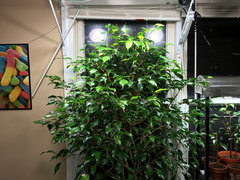
    one is rather large, 6-7 feet. It's much to big to fit in the shower.

    it spent the summer outside. I'm guessing that's were the mites came from. They just had natural predators at the time. I sprayed the tree with the hose very thoroughly many times before bringing it inside.

    Im guessing the tree has 500+ leaves. When searching, at any given time, I can only find maybe 5 or so spider mites. There are no bite marks on the leaves, no webbing anywhere (besides one actual spider that I encourage to stay), and the mites are only on the top of the leaves. There are none on the underside or the stems.

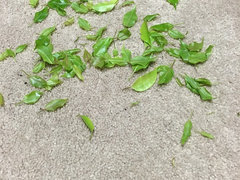
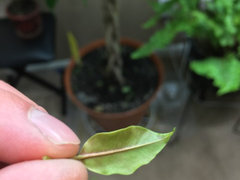
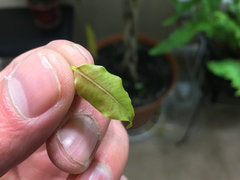
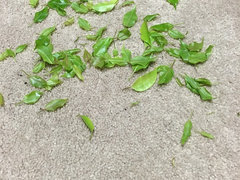
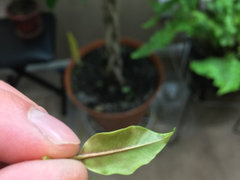
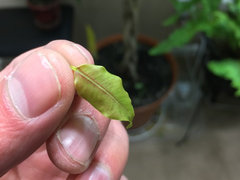
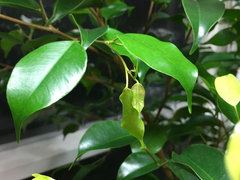
    The only thing I notice sometimes are young leaves looking slightly deformed or young leaves looking dehydrated and dropping before they've finished growing. This only happens to maybe 5-10 out of 100 new leaves that grow. I'm currently getting about 75-100 new leaves about every 3 weeks.

    The mites are brown, about the size of a grain of salt and you can see them moving.

    After a thorough spray with diluted isopropyl alcohol, any that I can find are all dead. They no longer move even if you slightly touch them or move them.

    Maybe I should first try spray the water /alcohol mixture every other day for a couple weeks straight? As I said, I've been spraying every 1-2 weeks currently.

  • 10 years ago

    3 in 1... I probably hit the wrong key. Sorry... my bad.

    Dave thanked jodik_gw
  • 10 years ago

    I think the problem most people run into when trying to rid pests is that they neglect to consider the following hatches that will take place, so it's best to do a follow-up or two or three at intervals to catch the upcoming generations.

    Then, keep an eye on that plant - and any others - for future pests trying to settle in.

    Dave thanked jodik_gw
  • 10 years ago

    As far as this systemic 3 in 1 miticide, will I see any negative effects, specifically on a ficus benjamina?

  • 10 years ago

    As mentioned in another thread, that particular plant seems extra sensitive to a variety of changes, including dry air, vents that blow cool or warm air, etc... so I would suspect that a systemic would help the most with the least amount of disruption, if used in a manner according to directions... and I might even go a little lighter on dosage, myself.

    Since they seem not to like dry air, and dry conditions are the very thing spider mites love, a gentle shower with tepid water might very well be the ticket.

    Were it mine, I'd remove the saucer from underneath, place it in my shower, and give it a gentle bath to remove any webbing and adult mites, paying attention to the undersides of leaves as well as tops. I'd allow it to drain and add a bit of systemic to the soil surface, watering it in lightly.

    I'd then place it in a room where it got the light it needed without any vents or doors allowed to blow chill or warm air at it.

    As always, it's a good precautionary measure to read the label on any pesticide thoroughly to ensure the plant you have can tolerate it.

    I would expect the loss of a few leaves... after all, your plant is stressed if it's trying to fight off mites as well as deal with general household conditions which aren't ideal.

    Dave thanked jodik_gw
  • 10 years ago

    Thanks,

    the tree is a little too big for the shower. I've taken it outside a few times and thoroughly hosed it down. The mites still return. ive sprayed many times with alcohol / water mix, the mites return. I've sprayed with neem / peppermint soap / alcohol / water mix, mites return.

    there is no webbing in the tree I just notice a few tiny brown spots (the size of a grain of salt) that move. With the constant spraying, I'm able to rid enough so they don't do much damage, but that's going to be annoying doing that until May. So I'm hoping the systemic will be ok for ficus benjamina.

    Al, I know you know a lot about these trees. Have you used the 3 in 1 on them? Any ill effects?

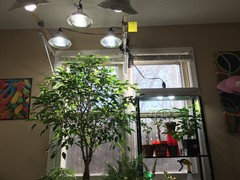
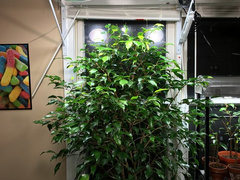
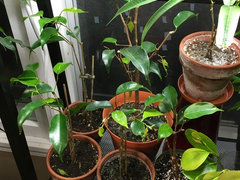
    Below is what I'm working with. Everything in the room gets treated with the same sprays at the same time. I have no way to segragted anything either. One large benjamina, 6 small ones, a small alii, and a couple various others.

  • 10 years ago

    I don't think segregation is necessary... unless you have a particularly sensitive plant that can't tolerate chemicals of any kind.

    Most houseplant insecticides do not cover spider mites, I've noticed... unless it specifically states on the label that it does.

    This is why I prefer a systemic that works from the inside, out. First, I don't have to get any on me, or take the chance of breathing it in... and neither does my dog. I have Lupus, and asthma, so I'm a bit more sensitive than most to chemicals. If I accidentally touch certain chemicals with my bare skin, I immediately feel sick, or I end up with rashes.

    We try to do everything as organic as we possibly can, but there are just some pests and some localities that you can't go that way in.

    Outdoors, I rely heavily on my population of praying mantises, snakes, spiders, tree frogs and toads, and any other garden guests that like to eat the bad bugs.

    Indoors is completely different.

    Container growing is also completely different than growing in the ground. In a garden situation, Mother Nature has her own army of living things that crawl about, from large to microscopic, that aerate the soil, help with drainage, and help break down organic matter into usable nutrition. There is no feasible way to maintain such a balanced environment within the confines of a pot. It simply doesn't work, which is why we - the growers - are in the driver's seat. We're in control of what happens within pots, from the medium used to the amount of moisture received, from the nutrition given to the amount of light, and so on... and that's how we want it... if, of course, we want to realize optimal success in growth and/or blooming.

    A 3 in 1 systemic will be taken up by the roots and into the plant, and the pests will no longer find the plant a desirable place to make their home. Give it a little time, and you'll see the difference.

    Once your plant gets past the stress, when the insects are no longer a problem, you should see new growth begin. You will have removed that particular limiting factor.

    There may be other limiting factors involved... I have no idea... but removing them one by one should help you immensely.

    Happy Growing!

    Dave thanked jodik_gw
  • 10 years ago

    Thank you!

    on a side note, I'm currently seeing plenty of new growth. It hasn't slowed down at all. All of my ficus' are putting out lots of fresh foliage.

    I'll plan on the 3 in 1 for the next watering, unless I see any differing opinions (not that I don't trust yours, because I do!), I just like to hear it from a few people before trying myself.

  • 10 years ago

    Since the plant was brought indoors the systemic might not work as it takes time for the roots to bring the chemical up to the leaves.

    The plant might be going through an adjustment period coming inside from outdoors.

    I have used alcohol sprays (1 part alcohol, a drop of oil, 1 cinnamon or garlic, 1 dawn soap, water), with success over winter. Spider mites love dry air. I had problems with hibiscus shrubs coming indoors and ficus. What I found was both eventually adjusted to the indoor environment and grew well through the winter.

    If you don't have cinnamon use garlic. Mix a little oil in the spray bottle so it sticks. Nothing scientific but any combination works as long as you keep it up. The alcohol kills the mites.

    Jane

  • 10 years ago

    Jane,

    ive tried the spray method too many times as I started. It does nothing.

    the tree isn't going through any adjustment. It's been inside over 2 months now. Mature leaves haven't been shedding for a while.

  • 10 years ago

    Anyone know where to find Bayer systemic 3 in 1 with miticide? It seems impossible to find. I've found the 3 in 1 miticide but it's not systemic. And all of the systemic ones aren't miticide. I've looked at lowes and Home Depot and even searching online, there doesn't seem to be a systemic with a miticide.

    Anyone have any links?

  • 10 years ago

    I don't think Bayer has multiple formulations sold as "3 in 1" but I guess it's totally possible.

    It's sold in many forms (dilutions/bottles). If the ingredient "imidacloprid" is listed, it's a systemic even if the label doesn't say "systemic".

    here is an example of what you are looking for: amazon link

    If you zoom in on the pic, you can read the 3 active ingredients. If your stuff at home depot etc has the same three on it's label, you're set.

    Dave thanked rooftopbklyn (zone 7a)
  • 10 years ago

    That's the exact bottle I had in my hand. I didn't buy it because it didn't say systemic.

    Even though is doesn't say systemic, I can still use it as a systemic? It doesn't offer directions for that, so I'm not sure about proper dilution.

    I spoke with someone at a local garden center and was told of a brand call 7 or seven that would be sold at agway.

    Thanks!

  • 10 years ago

    I'm no pesticide expert but my understanding is that the systemic effect works by spraying on foliage or drenching. When I used 3-in-1 I only ever sprayed it, while apparently harmless I don't feel good about pouring it on roots.

    That said, if you intend to drench, probably you want something more like this: http://www.amazon.com/Bayer-Advanced-Disease-Concentrate-32-Ounce/dp/B000VZQ3FU

    You could read the instructions for the concentrate (i am sure you can find via google), look at the ratios of ingredients on both products, and decide if the contents of the spray bottle is an appropriate dilution level to use as a drench.


    Dave thanked rooftopbklyn (zone 7a)
  • 10 years ago

    Dave - perhaps Sevin?

    Dave thanked rina_Ontario,Canada 5a
  • 10 years ago

    Ah! Yes, I spelled it wrong. "Sevin" was recommended to me.

  • 10 years ago

    You can read about it on line...here is what wiki says: (I just copied an pasted, so you get all the highlights and notes...)

    They interfere with the cholinergic nervous system and cause death because the effects of the neurotransmitter acetylcholine cannot be terminated by carbamoylated acetylcholinesterase.

    The development of the carbamate insecticides has been called a major breakthrough in pesticides. The carbamates do not have the persistence of chlorinated pesticides. Although toxic to insects, carbaryl is detoxified and eliminated rapidly in vertebrates. It is neither concentrated in fat nor secreted in milk, so is favored for food crops, at least in the US.[3] It is the active ingredient in Carylderm shampoo used to combat head lice until infestation is eliminated.

    Carbaryl kills both targeted (e.g. malaria-carrying mosquitos) and beneficial insects (e.g. honeybees), as well as crustaceans.[5]

    Although approved for more than 100 crops in the US, carbaryl is illegal in several countries, including the United Kingdom, Austria, Denmark, Sweden, Iran, Germany, and Angola.[6]

    Carbaryl is often produced using methyl isocyanate (MIC) as an intermediary.[4] A leak of MIC used in the production of carbaryl caused the Bhopal disaster, the largest industrial accident in history.

    Carbaryl is a cholinesterase inhibitor and is toxic to humans. It is classified as a likely human carcinogen by the United States Environmental Protection Agency (EPA.)[7] The oral LD50 is 250 to 850 mg/kg for rats and 100 to 650 mg/kg for mice.[citation

    Dave thanked rina_Ontario,Canada 5a
  • 10 years ago
    last modified: 10 years ago
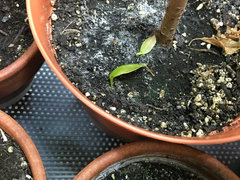
    Thank you! I'm going to try out Sevin. After lots of research, it seems it may be one of the only things. There aren't many true systemic miticides and I feel that is my best choice to combat these things.

    It's such a shame seeing the tree putting out new growth, but the the new growth drops and looks wilted and deformed. I know it has to be from the mites.

    The tree isn't under or over watered, I feed while growing with foliage pro 9-3-6 and it gets more light than a lot of indoor ficus I have seen. It has five 55w (250 w equivalent) 5500k CFL's over head and sits in front of a southern facing window too.

  • 10 years ago

    This is killing me to see this happening. Only young immature leaves falling. Mature leaves are fine. Not a single one has dropped recently.

    if anyone sees this and thinks of any other ideas or reasons behind the young leaf loss, I am all ears and would love to hear from you. Thanks to everyone so far.

  • 10 years ago
    last modified: 10 years ago
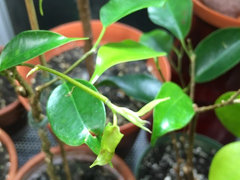
    This is killing me to see this happening. Only young immature leaves falling. Mature leaves are fine. Not a single one has dropped recently.

    if anyone sees this and thinks of any other ideas or reasons behind the young leaf loss, I am all ears and would love to hear from you. Thanks to everyone so far. I have scoured the Internet and cannot find any rhyme or reason behind the young leaves falling. Everything just comes up about trees shedding mature growth, which usually comes back to watering habits, being moved or lack of light. That's what leaves me to believe it's related to spider mites. Still, my infestation is very very small. Maybe the young leaves are also more sensitive to being sprayed with neem, diluted isopropyl alcohol and peppermint soap?

    im at a loss, and so is my tree when it comes to fresh growth.

    young leaves looking shriveled. Mature leaves look normal and healthy.


  • 10 years ago
    last modified: 10 years ago

    Dave

    (I really don't know the reason, but it doesn't look to me a 'bug' problem. Is there any sign of them? All I see is fallen leaves.) Edited: Sorry, just went back to your op and realized that you do see some mites.

    One thing wasn't mentioned: is there any draft where the plant is? Just trying to find some reason, since you eliminated most common ones.

    You are fertilizing it, right? Maybe too much? I would cut down on fert, maybe 1/2 of what you giving it now. Feeding it while battling mites maybe is too much? - like forcing sick child to eat, they just don't have appetite. Still, just a wild guess.

    Dave thanked rina_Ontario,Canada 5a
  • 10 years ago
    last modified: 10 years ago

    Rina,

    i also see no bugs of any sort on the fallen leaves. No drafts at all, the room is about 70° at night and about 80° during the day.

    I fertailze when it's putting out new growth (it hasn't slowed down since last March) with foliage pro 9-3-6. I dilute it to about 1/2 the recommended dose.

    These is no webbing in the tree which is common with spider mites. I just see a few little tiny brown specks here and there that move. The population is very small and doesn't seem possible it could do that much damage.

    Only other thing I can think is the young leaves don't like being sprayed with neem or diluted isopropyl alcohol?

    i really have no clue and can't seem to find anyone on the internet that has the same issue.

    side note, other ficus seem to be doing the same thing. Dropping young leaves.

    I got back from Florida less than a week ago and was going for 14 days. I had someone checking on all the plans while I was gone. I know for a fact they didn't over water.

    Had they turned the heat down, would I be seeing the results a week later? I don't know if they did, and the coldest it could have gotten inside would be 50°.

    as I said, my only other thought could be what in spraying them with is too strong for the young leaves?

    prior to vacation, all new growth was flourishing. I don't know what changed.

  • 10 years ago
    last modified: 10 years ago

    Dave

    I had some leaf drop on my Benji, but it was mostly old leaves and mostly at the times when it was moved - and yours is past being moved.

    My plant has dropped very few leaves past couple of years (less than usually) when brought from outside indoors. But it was kept in little cooler temps (well, quite a bit cooler, close to 50*F) and I didn't feed it at all. I figured that being cooler, it was more of hibernation and I didn't want to encourage the growth. There were lights on for about 14hrs/day, but not as strong as yours. Maybe your plant need rest? Obviously where they grow naturally, they get warmer temps, longer days and so on. I am just speculating here and maybe totally wrong.

    I think you may be onto something with spraying young leaves. They are more delicate, and if there isn't any bugs, I wouldn't want to spray excessively.

    My plant gets scale at times, which I take care of just with rubbing alcohol. It did have mites on couple of occasions (quite a few yrs ago) and once quite a bit before I noticed. I sprayed with water+alcohol, and kept it showered in basement shower (it wasn't used at that time! so was handy - Benji spent probably couple of months there if not longer).

    Not sure if my 'musings' give you any ideas or if they are even on the right track. I have never used strong chemicals on any of my plants (even when looking, they are not available to buy...)

    Rina

    edit to add: it 'froze' once,when I was mowing in Jan. of 1996...all the leaves fell of and branches were just dry sticks. I kept it - don't know why since it looked totally dead. Eventually I pruned off any branch that was so dry it broke by me just touching it. I was ready to toss it (after perhaps 3 mo?), but noticed one tiny green tip - and tree recovered. So I thing they are quite resilient trees - after all, they take lots of abuse in shopping malls!

    Dave thanked rina_Ontario,Canada 5a
  • 10 years ago
    last modified: 10 years ago

    I appreciate your time and input!

    From speaking with Al, I got the idea that these trees don't really need a rest period if they are given the right light, temperature, watering and food. To be fair, the tree doesn't know it's inside under lights and if it was outdoors near the equator, it too would continue to grow given that it received enough water.

    I can tell you, when the tree was outdoors during the summer in full direct sun, it never once shed a single young leaf or any leaves for that matter.

    whether it's from the spraying or not, the abscission has definitely been more prominent in the two days since I heavily sprayed all the trees in a mixture of neem, peppermint soap, isopropyl alcohol and water. To be fair, when I returned home from vacation, I did notice a lot of the young leaves looking deformed and that was prior to spraying. This is why I'm at such a loss.

    I'm just not sure which direction to go in at the moment and do not want to do anything to further exacerbate the problem.

  • 10 years ago
    last modified: 10 years ago

    I have been following your posts about this tree, so remember how well it was growing outdoors. And I do remember Al's recommendations too. I have given my ficus fertilizer at higher doses (starting probably in Jan?) when getting ready for (my first ever) root trim & re-pot.

    So considering all of that and eliminating, what remains is spraying...maybe the spray is too potent? There are some that don't recommend soap (only drop or two); and perhaps combo of what you have put together wasn't to it's liking? Again, speculations here. That also leaves prior deformity of new leaves...

    I have recently put a drop of tee tree oil (!) into about 1/2 c of water thinking of cleaning the leaves on some succulents (just tested on 2 plants). Jade didn't mind, echeveria lost all leaves that were touched...

    Rina

    Dave thanked rina_Ontario,Canada 5a
  • 10 years ago
    last modified: 10 years ago

    Thanks for your response. There's a whole lot of new buds that are going to be opening within the next few days. I'll wait it out and see what happens.

    One thing to note, this tree did the same thing last spring with new leaves. When it was inside (prior to its summer vacation), some would drop. However, it was nothing like the abscission I've seen in the past two days. To be fair, at the time, the tree was also about 1/4 of its current size.

    Im completely stumped at the moment. However, I too am starting to think this has more to do with what was sprayed on the tree. I might have added too much neem, peppermint soap or isopropyl alcohol to the mix. Also, because I'm seeing young leaf abscission on 5 out of my 6 benjaminas now and I'd never had an issue with any of the others prior. All were sprayed with the same mixture. The one that hasn't dropped a leaf simply didn't have any new growth at the time.

Sponsored
The Steele Group
Average rating: 5 out of 5 stars1 Review
Industry Leading General Contractors in Franklin County, Ohio