

RRD?
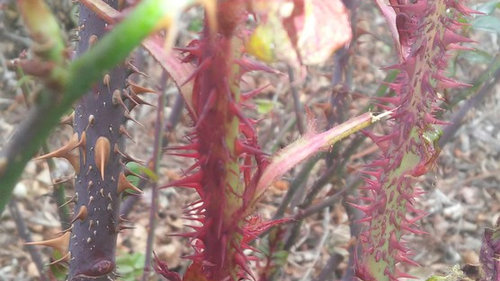
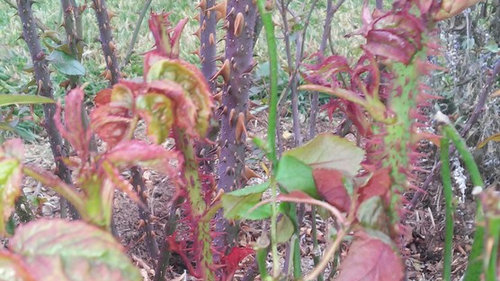
I cleaned out the Salvia around Hot Cocoa and found new red growth with those sickly hyper thorny stems. I have grown Hot Cocoa for years, so I'm aware how thorny she is. Most of the leaves are gone. Does this look like RRD? Should I dig
it out, cut it out, or wait?
Comments (31)
 10 years agolast modified: 10 years ago
This looks worrisome. I'll let others who know much more about RRD than I do comment further.
 10 years ago
I would say yes, but I'm not familiar with Hot Coccoa. I recently had the pleasure of meeting Anne Peck in person and showed her a branch from one of my roses that I thought had RRD. One characteristic that Anne pointed out was the elongated stipules my rose had. It seems yours also has that.
Related Professionals
Dover Landscape Architects & Landscape Designers · Springfield Landscape Architects & Landscape Designers · Vincennes Landscape Architects & Landscape Designers · Owensboro Landscape Architects & Landscape Designers · Fredericksburg Landscape Architects & Landscape Designers · Cedar Rapids Landscape Architects & Landscape Designers · Sebring Landscape Contractors · Westminster Landscape Contractors · Erie Landscape Contractors · Shreveport Home Builders · Clarksdale Home Builders · Hilton Head Island Home Builders · Plainfield Home Builders · Newark Home Builders · Salem Home Builders 10 years agolast modified: 10 years ago
Damn... yes, Hot Cocoa is very thorny as you stated based on years of growing it, but this one sure looks like it has RRD because those new strong canes coming up from the base have more thorns than the old canes and also you have deformed leaves and buds. General consensus around here is to find 3 symptoms and I think you have two already. If you add elongated stipules as Buford stated above, a symptom I wasn't even aware of as being a sign of RRD, then you would have 3.
It could be that I am over-reading the thorns on the new growth though because thorns tend to stretch out as canes mature.
 10 years ago
You have more than three symtoms. With that many canes infected the rrd is systemic in the rose. Remove the entire plant as soon as possible. It is too late to cut it back.
- 10 years ago
Also check all of your other rose now and often. Most likely at least one other will become infected as this rose has been infected for a while. If you catch another infected rose in its early stage then cutting off cane is possible. If in doubt show photo here as many times as you need to.
 10 years ago
100% yes, I'm afraid. You should at LEAST cut out the affected canes ASAP, but do be careful, as Patty said. You can't SEE the mites, but trust me, they are ready to fall off, blow around or hitch a ride. It's possible that you can save the plant, but it's iffy, and a judgement call, too. Cut the canes back all the way. If it's own root, dig down and make sure to cut it where it arises from the crown. Then watch it like a hawk next Spring. Remove the whole plant at the first sign of RRV.
One thing I do to help "glue" the mites in place, before I cover the plant (which is impossible with bigger shrubs or climbers, anyway) I spray the whole plant, top to bottom with a dilute solution of Wilt Pruf, about 1:10 WP to water. Let it dry, and those mites aren't going anywhere but to the trash/burn pile. Some people use hairspray, but I'm afraid of the alcohol content. And Wilt Pruf is good for preventing winter wind burn, anyway.
John
- 10 years ago
Boy, you folks sure go the extra miles to prevent the mites from spreading further. I don't go that far, just seems like too much work. How about cutting the canes off in small pieces and dunking each one in a bucket of something that will kill the mites, I don't know, do they drown in water?
- 10 years ago
A new way would certainly be helpful. There are bans on burning here. Can't send plant material to landfill. That leaves me chopping a rose too bits in the garage. Then wrapping them in material that you can't see thru in order to sneak them into the garbage. Makes me feel uncomfortable as it's dishonest.
- 10 years agolast modified: 10 years ago
Here is something I find interesting. Back when I had my largest rrd outbreak I read all I could find on the issue. Still read up as more research is done.
When you research most publications on rrd the eriophyid mite is said to live largely on the outer parts of rose. Yet this is not typical of eriophyid mites. Eriophyid mites feed deep in plant tissues in the meristematic region. It is there that they reside while sucking plant juices and transferring toxins. So do you believe the rose publications or the scientific studies done on eriophyrid mites. I prefer to think that you can't just drown them as they also take up temporary residence inside plant tissues.
lainey2 VA
Original Author10 years agoThank you everyone. It's going to be in the low thirties tonight. Won't their little butts freeze?
 10 years ago
I believe Anne told me the mites overwinter? Dig that rose out now. Blast it with cheap hairspray first then get it into a strong black garbage bag or two or three!!!!
Hot Cocoa is readily available. Get a replacement. Also weed and clean around all your roses. Others may have it too. This rose is very sick.
So sorry
Susan
lainey2 VA
Original Author10 years agoI've lost so many to RRD on that side of the house that i'm not replacing that bed. My DH thinksb I should give uo on roses. So sad.
- 10 years ago
I understand and empathize. I now realize that constant vigilance is the only real defense. Likely that bed is just in a bad wind spot. All of my RRD cases have happened in corners of my fenced garden "catcher spots". I will be putting hydrangeas there. Don't give up just yet!
Susan
 10 years ago
You may want to explore a bit beyond your property to see if there's an infected rose upwind of that area.
:-)
~Christopher- 10 years ago
I've read some truly horrific stories here, like one person that lost 80+ roses. I wouldn't be replacing, just too expensive. Even as I type this I've stopped buying own roots because I'm like, well, they take 3 years to even do much (most anyway, you still have the very vigorous ones like Dick Clark that hit 6 feet tall in the first year...) and while I am patiently waiting for 3 years the bush might get RRD and then I'd have to start all over again. In fact I was going to completely stop adding new roses my garden. That was a rule I couldn't keep, just too many interesting roses out there to grow, I've instead decided to stick to getting the biggest plant I can get in the first year in case bad luck with RRD hits me - which means buying two year old, field grown grafted plants.
- 10 years agolast modified: 10 years ago
One thing to keep in mind. In order too loose 80 rose or even 20 in one year. Means educating your self as to what rrd looks like in it's early stage.To really look at your roses. What do do they look like when they are heathy? How does this or that one grow normally? Something that a casual rose grow would likely not think about. When pruning look at the pruned material as you go. What do you see?
To grow roses successfully in some areas vigilance mean success. You must see the rrd early to give your roses the best chance. I don't wish to jinks myself here (superstition). I'm having a 100% cure rate if I catch it very early and remove the cane that is looking like rrd. I've most likely cut off a few healthy canes. Either way I still have my rose. :-)
Some roses sad to say I no longer grow because it's to hard to see all of the bush. One type are climbers that I'd love to grow again. So much so that I picked one up this past spring. Still mulling over weather or not to just get rid of it before it blooms in spring. Why Because rrd is still here.
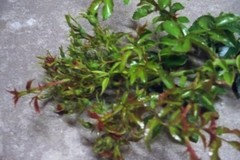
This grew earlier in the year
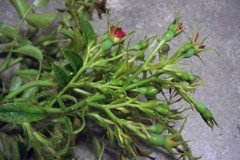
This cane was removed as soon as I good grab a bag and cutters. Has been fine since. Will keep an eye on new growth in spring.
Yes I still miss some. This rose was most likely infected in the fall of last year as this growth came up in spring. I dug this bush out as it was too late to save it. Notice that not all looks the same. No hyper-thorniness in either rose bush many don't even show as red.
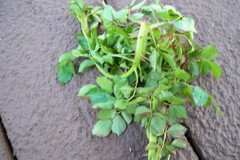
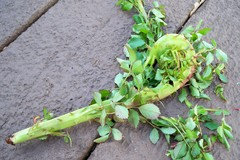
Good luck with your roses everyone. It's sad and frustrating to loose them.
lainey2 VA
Original Author10 years agoI've been fighting RRD in two gardens miles apart for 15 years. I'm familiar with the early stages which I have always caught from July through the early fall, never in December. I was hoping it would be dorment in the winter. This was hiding in a bed of Victoria Blue Sage. We haven't had a killing freeze yet,which has never happened in my 40 years of rose growing in Virginia, We live on a mountainside above farm land. I'm not replacing roses on on this side of the house,
- 10 years ago
Those pics are nasty! I saved two roses (I think) buy cutting canes early. Yes, like you said, I've probably cut off healthy canes but who cares, the bush gets saved. I lost a Pink Double Knock Out this year, figured I caught it early enough but each new growth (basals) was showing symptoms, primarily too many thorns, I chopped the entire bush to the ground and it sent up two new basals that were still too thorny. At that point I had to dig it out. I hope I get to keep saving, I've planted about 15 climbing roses and being so big I now fear they will be catching lots of those mites and be getting the virus a lot. Will have to keep a sharp eye on them.
 10 years ago
Thorniness is not the main symptom of RRD, so I wouldn't make a big deal of it unless it is accompanied by excessive UGLY growths of various kinds.
Anyone who lost 80 roses in one season to RRD is a gardener who ignores his/her garden most the time. No way the RRD spreads that wide and that fast. It was there for a long time and no one did anything about it. That is how come it spread eventually to 80 roses.
Kate
- 10 years ago
What are you talking about, excessive thorns is a main symptom of RRD. Then you add the witches broom and deformed leaves/blooms.
- 10 years ago
I'm sorry lainey, Should have said that this was for newer rose growers who might not know what to look for.
- 10 years ago
Braverichard, I think if you check with the experts, they will not list excessive thorns--by itself--as "the" sign of RRD. It is entirely possible for your rose to have RRD but have NO excessive thorniness. I've also had roses sometimes put out thornier canes than usual periodically (like after I feed them with alfalfa cubes, for instance) but have NO RRD.
So while it is true that excessive thorniness often accompanies other really UGLY RRD symptoms, it is not invariably a sign of RRD and thus not "the" main symptom of RRD. It can be "a" symptom of possible RRD, but needs to be confirmed by some of those other UGLY symptoms that always mean RRD. And no one should ever make the mistake--in the absence of excessive thorniness-- of thinking that the UGLY growths therefore could not possibly be RRD. They can be.
Kate
- 10 years ago
Not sure I buy that Kate, do you have any references on this? I get the ugly growth argument - but that can also be caused by herbicide damage, this is well documented. I don't know of anything else that would cause a rose to put out way more thorns than it normally would have on its canes. Educate me, I'm all ears/eyes/whatever. :P
I don't think any one symptom is "the" main sign of RRD, it is always a combination. That said, I haven't seen any rose with witches brooms and excessive thorns lack other signs though. - 10 years ago
I'm late to this due to a trip with a computer that lost its wifi.
There's something I see in the second photo, upper right hand corner of that cane. Look at the thorns!. I don't think I've ever seen thorns/prickles with three individual teeth before. Not just once, but multiple times. And the teeth are longitudinal, not tripling on the girth. That might tell us something about where and how the virus affects prickle over development.
Also, the internodal distances are really short on these canes; it's almost hard to see that because the thorns have such an overwhelming presence.
3rd symptom: condition of the green leaves in the second photo. They are not the smooth elegant look of Hot Cocoa, but are crinkly. And they won't flatten out with time, that time is long gone.
IMO, it's RRD and needs to come out. IF it's an own root plant, you might try digging it out and using a wood chisel to separate the roots that support these hideous canes from the others that appear unaffected.
One more thing about eriophyid mites on roses. So far Dr. Amrine has found two different species. One lives out on the leaves and probably isn't a vector. The proven vector P. fructiphilus is most found on the stems, close to the bud axils where they are somewhat protected by the bud axil as well as the leaf as it grows next to the cane.
RRD can for reasons we don't understand push growth at the oddest times of the year: in my garden, I've seen it happen in the middle of a drought when no other part of any R. multiflora in that field had any new growth. In Knoxville, in the middle of winter, long new canes in late January when no roses were pushing any new growth (on a KnockOut and also on multiflora climber (uncertain which one, its blooms were hideously deformed the previous spring).Ann
- 10 years ago
Can they then be killed off in say a large bucket of say something like bleach water or soapy water. Reaching for better way here. If they remain on the outside of roses something else should work besides sneaking material into the garbage.
- 10 years agolast modified: 10 years ago
braverichard, granted, UGLY growth can also be caused by herbicides. That granted, I still maintain that the RRD rose may exhibit just UGLY GROWTH and not necessarily excessive thorniness--and thorniness, by itself, is not necessarily a sign of RRD--which is why I said I would not place undue emphasis on thorniness as "the" symptom of RRD.
But I certainly agree that it can be "a" symptom but not necessarily a defining one in the absence of other symptoms.
That said, those thorns in the top picture surely are an UGLY bunch of critters!
Kate
- 10 years ago
Back fifteen years ago, I proposed three adjectives to describe RRD growth:
Excessive, Aberrant and Unexpected. Note there weren't specific symptoms because in the first sick garden we saw, immediately downwind from fields filled with RRD-sick multiflora, there were enough different kinds of roses in different stages of infection, that we could see clearly that one set of symptoms didn't fit all.
At that time, all the state ag extension agents were still parroting the mantra that "Rose Rosette seldom affects cultivated roses". It's only because we raised our voices and had pictures and rose names that the extension agents started to open their minds.Some of what you may have read nowadays is based on observation of only a part of the rose genome.
About Eriophyids: they breath ONLY through their 'skin'. Cut off their oxygen and they die. Drowning should work as long as you make the water very wet (detergent) and knock all air bubbles loose. Keep the sick canes submerged for 'a while'. The mites' activity is greatly (even totally) reduced in winter....killing them or their overwintering selves is a good idea.
lainey2 VA
Original Author10 years agolast modified: 10 years agoNo need to apologize, Patty W. I appreciate any help I can get.
- 10 years ago
So happy with the update Ann, if needed I'll be drowning next year.



Patty W. zone 5a Illinois