Software
Houzz Logo Print
gibsonsteve1

Cedrus deodara 'Aurea' question

10 years ago
last modified: 10 years ago
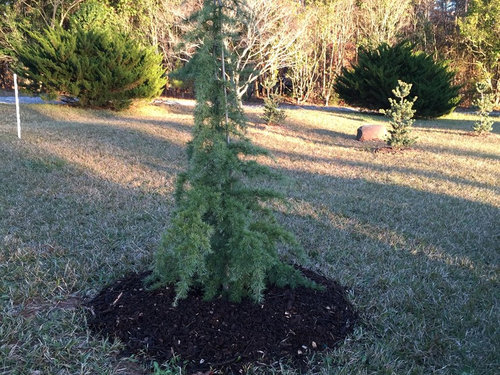
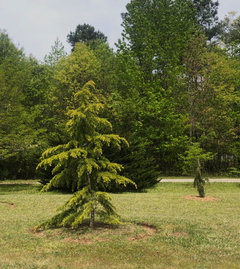
This 6 foot guy has been in the ground for three weeks.

Background info: My location falls on the line of 7a/7b here in NC. Soil is a clay loam compliments of being in the NC foothills. I planted it high in a hole that was around 3 1/2 times the size of the container grown rootball. This was topped with 3 inches of homemade compost. The location receives full sun. We have had two three day rainstorms a week and a half apart.

My concern...

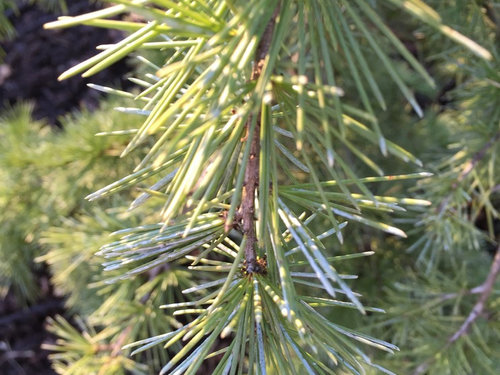
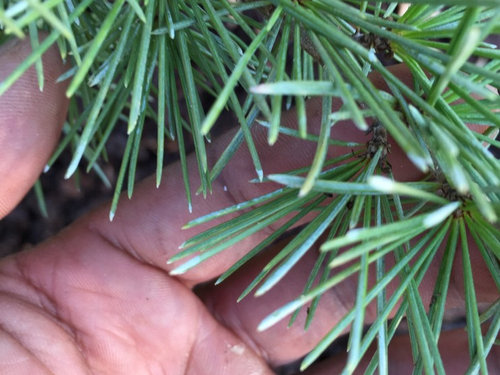
There seems to be a dusty film on some of the needle tips. Running my hand across the needles, the dust wipes off easily, and literally falls to the ground like a powder or dandruff (for lack of a better description).

Is this needless worry, or is this something to remedy ASAP? Other than this issue, the tree looks extremely healthy.

Comments (31)

  • 10 years ago

    i cant really see it in the pix ...


    i have gotten dirty plants .. can you rule out dirt... mud ... etc ... how did you get it to your house??? .. dirty pickup bed?/


    what does your seller say .... its more his problem than yours .. if he is selling diseased stock ...


    whatever it is... it isnt an ASAP situation ... lets see what others have to say ... chill for a bit ...


    even if it is something... a week isnt going to make a difference ...


    also .. many conifers have a waxy coating on the needles... can we rule that out here ...???


    finally.. could it have been sprayed by the wholesaler or retailer ....


    i cant do deodora in MI ... so i have a lot of issues [about your plant...lol] ... but no answers for you ...


    ken

  • 10 years ago

    Ken

    Thanks for the reply.

    i brought the tree home in a truck, and this picture is taken post 3 day rainstorm. During the lighter periods of rain I looked at the needles and they didn't have this dusty look/feel.

    Almost immediately after the storm, it is back to pre storm dustiness/powdery state. I won't stress it for the time being, but I will visit my nursery to look at their other Cedrus specimens.

  • 10 years ago

    its the weekend.. give the peeps here some time...


    i am not liking the speckling on the second pic.. at 9 oclock ...


    but i am not up on my diseases ... like they might be


    if its diseased... as far as i am concerned.. it goes back ... as it didnt happen in the few days you have had it ...


    ken

  • 10 years ago
    last modified: 10 years ago
    Hi Steve, You might want to read up on powdery mildew as a potential...Nice looking tree btw...

    Al

  • 10 years ago

    Thanks for the reply Al. Powdery mildew is at the top of the list as a potential culprit, though it appears needled evergreens in full sun aren't very susceptible to it.

    I'm going out of town for business for a month and want to get a handle on this ASAP.

  • 10 years ago

    when you water it... are you spraying down the needles???


    ken


  • 10 years ago

    I am not Ken. I use a 5 gallon bucket at the perimeter of the root zone, with small holes drilled in the bottom. Right now we are averaging two, heavy rain days a week though. So I haven't been doing a whole lot of supplemental watering.

  • 10 years ago

    I'm just taking a shot in the dark but perhaps its dust or calcite from being sprayed with hard water where it came from. I've seen plants that look like that after they came off the truck at big box stores. I would notify who you bought it from about your concerns and not worry too much.

    That's going to be a beautiful tree. =)

    Stephen Gibson (NC 7B) thanked Garen Rees
  • 10 years ago

    OK this is a long shot, but the tree wasn't perchance previously treated with Wilt-Pruf or some such antidessicant, which is now drying and flaking off? Not at all sure how prevalent the use of such items is in your neck of the woods-just trying to think of something. I'm doubtful of powdery mildew on such a plant. And FWIW, I don't support the use of Wilt-Pruf, though I do see competent folks who believe in the stuff.

    +oM

    Stephen Gibson (NC 7B) thanked wisconsitom
  • 10 years ago
    last modified: 10 years ago
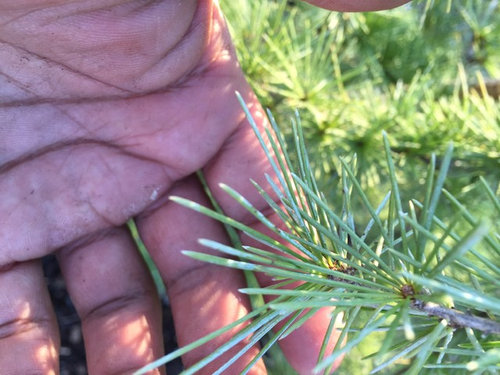
    Antidessicants were shown to not be beneficial years ago. Yes this is some kind of deposit, in addition to mineral deposits from irrigation water looking like this plants grown or stored in plastic covered shelters may develop a similar appearance. Also true cedars that aren't forest green forms have a natural bloom on the leaves.

    'Aurea' is a full sized (or nearly so) type, if this specimen is successful there most of lawn area around tree in picture will be consumed by it over time.

  • 10 years ago

    I notified the landscape supply company I purchased the tree from, and they said their stock was fine. I went to look at their stock today. The other Cedrus deodara 'Aurea', Cedrus deodara, Cedrus Atlantica, and Cedrus atlantica 'Fastigata' all had this powdery film. Either they are using an antidessicant, or itnis some sort of deposit.

    I am not going to stress it too much. I'm just going to keep it watered, and keep a close eye on it.

    Embothrium, I am planting a small pinetum in this field that for the past 20 years has been 2 acres of crabgrass. This tree has at least 25 feet in any direction. A trio of Pinus parviflora 'Glauca' (seen in the background), a Cedrus Atlantica 'Glauca', Cupressus arizonica 'Blue Ice', and soon a Pinus virginiana 'Wates Golden' flank this tree's possible mature spread (with room for each of their mature spreads). There will be a not so subtle blue and yellow theme in this section of the field.

  • 10 years ago
    last modified: 10 years ago
    A 50' space for a tree of this character is not ample. Himalayan cedar in western cultivation are known over 120' tall with trunks sometimes yards in diameter, the same is true of blue Atlas cedar. A golden Himalayan cedar I found in a cemetery in Vancouver, WA (USDA 8) during 1993 I figured to be 87' tall (I am pretty good at visual assessments of tree heights, having done it hundreds of times).

    Trees read as accent points in the landscape, when over-planted appear crowded long before they actually touch one another.

    The area of the garden which is dominated by any given tree might be called the tree's "sphere of influence". Each tree or group of trees of one kind should dominate its own sphere of influence....To apply this in your own case, find out from some reliable source the ultimate height of the tree you want to use. Then calculate that that tree's sphere of influence is a circle with a radius equal to the ultimate height of the tree. Thus a thirty-five-foot tree, such as one of the flowering crabapples or cherries, has a sphere of influence of thirty-five feet in any direction from the trunk of the tree. Say the next tree you might want to use has an ultimate height of twenty feet. Then the minimum distance from the trunk of the thirty-five-foot tree to the trunk of the twenty-foot tree would be fifty-five feet. It might be preferable to have them even farther apart.

    --John and Carol Grant, Garden Design Illustrated, 1983, Timber Press, 1954, University of Washington Press

    http://www.plantamnesty.org/assets/docs/4d1%20overplantingrant.pdf

    Stephen Gibson (NC 7B) thanked Embothrium
  • 10 years ago

    So is it safe to assume all the sources I see online listing max spreads aren't ultimate spreads? Looks like the field will have far less trees than I hoped for. I guess seeing so many deodars and atlas cedars on postage stamp lawns in pictures and in person gave me a false impression. Thank you for the link Embothrium.

  • 10 years ago

    I think discussions about maximum height and spread are all double-edged swords. If we live and keep our gardens long enough, every single plant will probably "outgrow" its original space. It's not a problem with plants that are easily pruned, but many conifers don't take well to pruning. Depending on how quickly the conifer grows, the process of outgrowing a space could take a few years or decades.

    I think it's critical to maintain a healthy sense of the growth rates of various trees in your garden, but I wouldn't necessarily deprive yourself of a beautiful tree because it might be 30 feet wide in 100 years and you only have 20 feet. First of all, you're unlikely to be alive in 100 years, you're much more likely to sell your property in far less than 100 years, the specimen tree very well may die, the trees that are around your specimen may die (i.e. the "space" could change), the trees around your specimen might be easily moved, etc., etc.

    I would be reasonable in how you plant, but keep in mind that a garden is normally an organic, evolving thing. You may have a perfect mental image of how things will look in 10 years, but I can almost guarantee you that reality will be different. And that's not a bad thing.

    Stephen Gibson (NC 7B) thanked DeanW45
  • 10 years ago

    DeanW45, respecting the undeniable changes of nature is certainly the approach I'm taking with this space. I have alotted for a 50 foot spread on all of the trees listed as having 30 foot spreads, and would love to see those in my lifetime (hopefully another 50 years).

    This is a 60 acre family ranch that I received 10 acres of a year ago, and has been in the family a few generations, and I'm trying to contribute a green influence like the men before me.

    My grandfather planted several Norway spruce trees throughout the property... And I've had to watch the oldest's crown fall victim to the power company.

    My dad's contribution was lining portions with dogwoods and junipers which were planted a little too close, and now I'm having to learn about pruning.

    One uncle planted peach, apple, persimmon and plum trees. The headaches these fruit trees have provided are too numerous to list. Another unclr planted hickory, walnut, and pecan trees.

    I seem to be learning valuable lessons from their mistakes and lack of foresight. But I've also gained a real love of trees thanks to all of their contributions, and the property is gorgeous (a little crowded in spots) thanks to all of them.

    My contribution will be planting different conifers in this field. i definitely want to give these trees ample room, but I also won't deny my love for conifer screen plantings. Maybe my grandkids will curse my lack of foresight as well... but I hope for a winding path dipping in and out of colorful, mature evergreen screens. Beyond that grand vision, I'm really just feeling my way through, and appreciate all input from this awesome forum.

  • 10 years ago

    Perfect! Sounds like you've got a great plan. Good luck.

  • 10 years ago
    last modified: 10 years ago

    Due to the sphere of influence effect mixed plantings of specimen trees appear cluttered if each different tree does not have a quite large space around it - with this appearance of them encroaching upon one another beginning to occur well before they are actually touching - or even getting anywhere close to touching. If you are planning on the cedars becoming a mere 30' wide that is way too small, and as described above the visual space needed by each is driven by the height of the tree rather than the spread. Non-dwarf cedars may enter and maintain for some time a phase where they grow fairly rapidly, so that if you have the conditions for it it seems your 'Aurea' could possibly become, say, 45' tall in 30 years. And it appears you are spacing these trees out for the long term, so that when the golden cedar and the other large trees are eventually 60' tall and more the planting is still supposed to be attractive.

    Because of the very many true cedars I have seen in person the portion of lawn visible in your picture looks like it is perhaps enough room just for the cedar by itself, with the other conifers behind already appearing superfluous. And should the cedar grow to fill that entire space there might not then be anywhere to stand back and comfortably view the whole tree from, if all the currently accessible turf has become overtaken by the cedar (and the other conifers in the vicinity of it).

    If you scroll down this page has a color photo of an 'Aurea' with some time behind it. Notice that even though the cedar is on a lawn, with nothing else visible directly on the same patch of grass it would be much better if the other tree, to the left were not as close as it is. Psychologically it is like when a news reporter is talking into a camera at a scene of interest and somebody walks up and stands behind and to the side of the reporter, within the field of vision. If the cedar is supposed to be the dominant feature in that part of the property then only the other trees forming a green backdrop in the distance are helping to give it that importance.

    http://www.devongardenstrust.org.uk/?q=node/381

  • 10 years ago

    And if a frog had wings he wouldnt bump his ass......Run with it Steve and enjoy your trees...

    Al

  • 10 years ago

    Someone always says that the cedrus in question will get too big. And sure eventually they are massive and only suitable in large park type locations. But you can say the same thing about blue spruce, leyland cypress, white pines like pinus strobus can get very big, lots of conifers.

  • 10 years ago

    Very few people have enough room to plant conifers that get large to have enough room so that visually they all stand alone. I have ten acres also and gave up on that idea a long time ago.

    Here's a picture of a golden tinged Cedrus deodara I have. Nothing pictured is planted within 30 feet. Heavy, wet snow and ice has taken it's toll and given the tree a bit of character. Much more interesting than a perfect 'specimen'. The tree is about 35 years old. The top has been broken off several times and will continue to do so in the future.

    Steve, I think you have a good plan. Trails are the key, both for access and enjoyment.

    Mike

  • 10 years ago

    I actually had this discussion with the guys at Conifer Kingdom. I sent them pics as this came up on several of mine. They basically said unless the tree is browning out don't worry about it. They were right in my case because this was in April.It is gone now and the trees are fine.I hope that is the case with yours because it is a beautiful tree.

  • 10 years ago
    last modified: 10 years ago

    you can say the same thing about blue spruce, leyland cypress, white pines like pinus strobus can get very big, lots of conifers

    With the result that badly overgrown plantings are very common. In my area many structures have tall, out of scale forest conifers looming over them - every year winter wind storms are followed by news reports showing cleft rooms and smashed vehicles, with long, tall branches or trunks lying through or over them.

    Would you take a picture with 5 or 10 different subjects in view? It is the same with a garden scene, if there is too much going on the impression produced is of a riot or jumble rather than restfulness.

    Notice that in Japanese gardens - which are generally thought supposed to be serene yet may often employ multiple different visual elements in one area - that the evergreen woody plants are frequently pruned or sheared, with the same treatment being given to all the pines or all the azaleas etc. in each area. This produces a homogenizing effect.

  • 10 years ago

    This is an aesthetic decision.

    Personally, I *LIKE* the look of forest trees towering over a residence...and it has energy efficiency advantages.

    I find many folks have gotten historical about trees planted too close together, and you end up with a "golf course" lawn and a single lonely dogwood.

    My personal tastes run more towards the"faux forest" look. Although that works better with trees that lose their lower branches so you can walk beneath them.

  • 6 years ago

    how old is this tree?

  • 6 years ago

    well it's 4 years older than when it was planted

    Stephen Gibson (NC 7B) thanked plantkiller_il_5
  • 6 years ago

    Yep, it’s four years older, older than what, I don’t really know.


    I wouldn‘t recommend it for someone with a small space. it puts on a religious 1.5-2‘ of growth by the end of its second push in summer. But for a field, or a colorful tall back ground in a full sun spot, absolutely!


  • 6 years ago
    last modified: 6 years ago

    'Hopefully I can get the future youngins to shimmy up orchard ladders and learn some directional and aesthetic pruning.'

    haha! Start 'em young Stephen, they catch on to learning faster I hear. :-))

    Nice tree! Thanks for the update. If I could grow cedrus, that's all I'd have. ;-o

  • 6 years ago

    Gorgeous property!

  • 6 years ago

    Thanks Alley_cat_gw


    True Bill, definitely the plan. Cedrus has yet to have any problems for me down here, but oh the number of Spruces and Firs I long for.


  • 6 years ago

    These things do grow very fast. I planted a one gallon in the fall of 2018 and it grew 3’ In 2019. I can’t wait to see how fast it’s gonna grow this year.


    I mostly have dwarves since I just don’t have the space like you do, but this was the one fast grower I’ve planted and I’m enjoying it. Can’t wait for it to look like yours- it’s very nice!