Software
Houzz Logo Print
mattp321

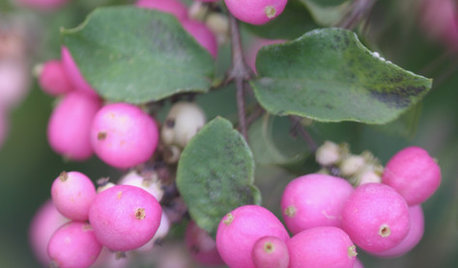
American Beautyberry

10 years ago

Two callicarpa americana questions for the gurus:

1. Anyone growing this in dry shade? I'm kind of thinking this could be a potential solution shrub for my dry "under the leeland" fence-blocking solution, recently posted here in the shrubs forum. Thoughts on this?

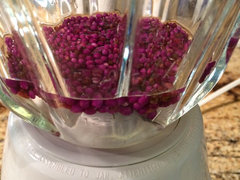
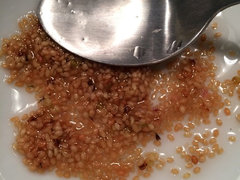
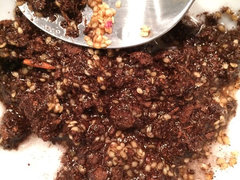
2. Anyone ever grown this from seed? I've collected some berries and separated out some seeds using the blender method, then air dried them. Trying to figure out germination requirements but searching around the internet I'm finding 3 different lines of thought:

a. plant them directly, no stratification or scarification required.

b. 60-days of cold moist stratification needed.

c. Sulfuric acid bath treatment to scarify, followed by 60 days cold moist stratification.


Looking to hear from anyone with real-world experience growing beautyberry?


Thanks!

Comments (20)

  • 10 years ago

    RIchard Bir, in Growing and Propagating Showy Native Woody Plants, says that no stratification or scarification is needed but that fresh seeds don't germinate for about 3 months. "A period of warm after-ripening is apparently needed. This can be accomplished by storing seeds at room temperature and then sowing them the following spring."

    In my own garden I get many volunteers, so it must not be too particular.

  • 10 years ago

    Junco can you translate this into plain English for me: "warm after-ripening"?

    I'd read that one somewhere too but it's even more confusing to me. "after-ripening" implies we are talking about the ripe berries... did I make a mistake in taking the seeds out from the berries and drying them out? Does this mean that I should just keep the fruit sitting around in my house all winter, then plant the whole fruit? Or perhaps get the seeds out then?

    In my limited experience, once the fruits are removed from the bush, they shrivel up and turn dark brown/black after a few weeks... and I'd assume they might rot or something....

  • 10 years ago

    I'm not really sure either, what exactly he meant. That's why I put in the quote! But I think that he is saying the seeds that have ripened and fallen out of the fruit won't sprout until the next warm spell, which would be spring--so why not just plant some of them? Keep the others in the house in case you can't find the new plants. The volunteers I get in my garden are coming from seeds that have been laying on the ground all winter so I don't think you need to do anything to them.

  • 10 years ago

    Now, as for collection of seeds after "processing"...

    tj

  • PRO
    10 years ago

    I worked with the species back in college...... 60 days cold stratification and then planted directly into a planting mix- they came up like weeds! No scarification necessary. I could also see where they might not need any cold so if you have an ample supply you might try it out.

  • 10 years ago

    Given the difficulty of getting birds to cooperate.....oh never mind!

    Hi again Matt. I'm no Callicarpa expert but I sure do love that plant! So, the only place I've ever seen it growing wild is in S. Florida, more a testament to my limited travels than anything else. And down there, it is indeed found across a range of sunlight exposures. I wouldn't say deep shade, but just any go-to-hell mixed shrubby area, often alongside a road or path, so again, not deep shade per se. But I see no harm in your trying it out. The only caveat being that flower and subsequent fruit production-clearly the main feature of this plant-will be diminished if the site is too dark, methinks.

    +oM

  • 10 years ago

    Iowa, when you say 60 days cold strat, I'm going to assume you mean cold moist strat right? Since you had good luck with that I'll just do that too.


    tom: I'm not super worried about the sun/shade exposure, as much as the soil moisture. But if I can get a bunch of them going for free from seeds, I don't mind trying...

  • PRO
    10 years ago

    Yep cold moist- I do not think they will do well in a lot of shade but it doesn't hurt anything to try.

  • 10 years ago

    Area gets full sun from 7 am - 2 pm, then it's in shadow from 2 pm (east of a north/south line of leeland cypress)

  • 10 years ago

    Don't want to appear pedantic, but that would be Leyland cypress, named after C. J. Leyland, who is unofficially credited with the first cross of this intergeneric hybrid. And since the common name - Leyland cypress - refers to a proper noun (someone's name), it should also be capitalized.

    mattp321 thanked gardengal48 (PNW Z8/9)
  • 10 years ago

    I sowed Callicarpa dichotoma this year in early February in a pot outside and the seeds germinated in late April.


    The Woody Plant Seed Manual from the USA Forest Service says about pre-treatments for Callicarpa americana:


    "The seeds have a hard seedcoat, and germination is relatively slow. One sample stratified for 30 days yielded only 22% germination in 90 days when tested at an alternating temperature of 20 °C at night and 30 °C in the light. Untreated seeds sown in the fall, however, were reported to give excellent germination in the spring"

    Source: Woody Plant Seed Manual / Callicarpa americana


  • 10 years ago

    Light exposure sounds adequate. I'd say go ahead and plant this plant. A great shrub.

    +oM

  • 10 years ago


    Okay seeds in moist peat in the fridge... Will plant under lights in 2 months.

    I'll try to get them up to one gallon size by next fall... Then plant...

  • 10 years ago

    I would sow a part of the seeds in a pot outside. The hard seedcoat softens better when exposed to the weather as compared to artificial stratification in the fridge.

  • 10 years ago

    UPDATE:

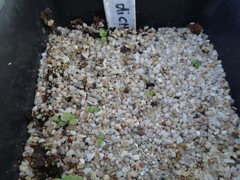
    i did 60 days cold moist strat as Select Landscapes Iowa suggested in peat moss in the fridge then planted them under light in my basement in March in 2x2 cells.

    got nearly full germination probably between 30-60 days from planting.

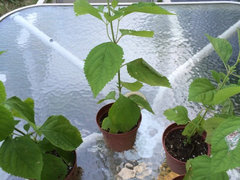
    Thined them out leaving one per cell, grew them to 2-3 inches height then potted up into 4' pots and placed them outside in morning sun with no care except very occasional watering.

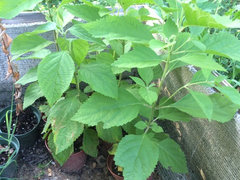
    heres how they looked mid July before I potted up to gallon pots:


    One seemed more highly branched than the others so I marked it with a stick, another one is already flowering.

    very happy with the results so far, I'll update again maybe next year if I can overwinter them successfully.

  • 10 years ago

    Incidentally, saw numerous references in this thread to "moist stratification", "cold, moist stratification" and so on. All is redundancy-the only type of stratification is just that-cold and moist. There isn't "dry stratification" nor is there "warm stratification". We can save some bandwidth!

  • 10 years ago

    The reason why I wrote 'moist' in combination with stratification is that many people think that putting dry seeds in the fridge for a few months equals stratification. The term ' warm stratification' is sometimes used in connection with seeds that require a warm period prior to a cold period (for example Lindera obtusiloba, Stewartia pseudocamellia and Chionanthus virginicus).


  • 10 years ago

    congrats on your success ..


    my only thought.. with any learning process ... would have been to do each of the methods... and see if there would have been a difference ...


    i also dont know.. if i would have used a blender .... lol


    ken

  • 10 years ago

    The blender dominated those seeds, would have taken forever otherwise.

    im still not convinced any stratification was needed... I mean if this plant thrives in Florida, how could it require cold weather to reproduce? That's my thought anyway