Software
Houzz Logo Print
jscaldwell

Prune this fork or no??

10 years ago
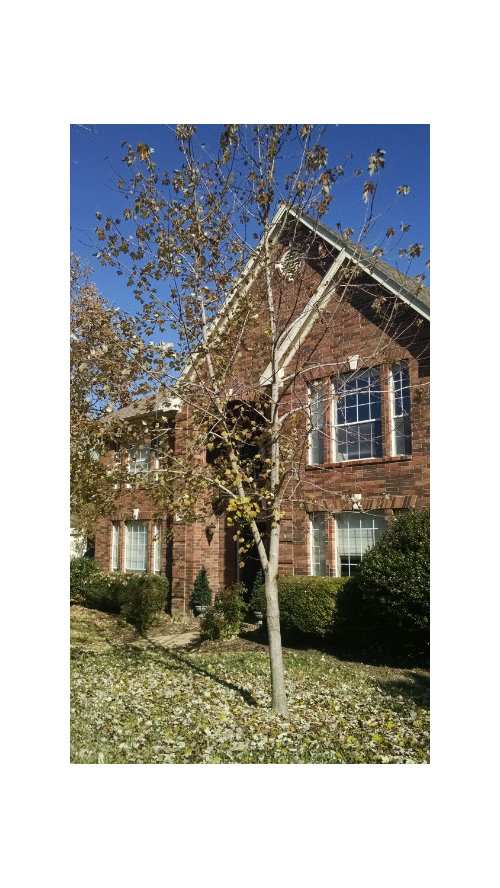
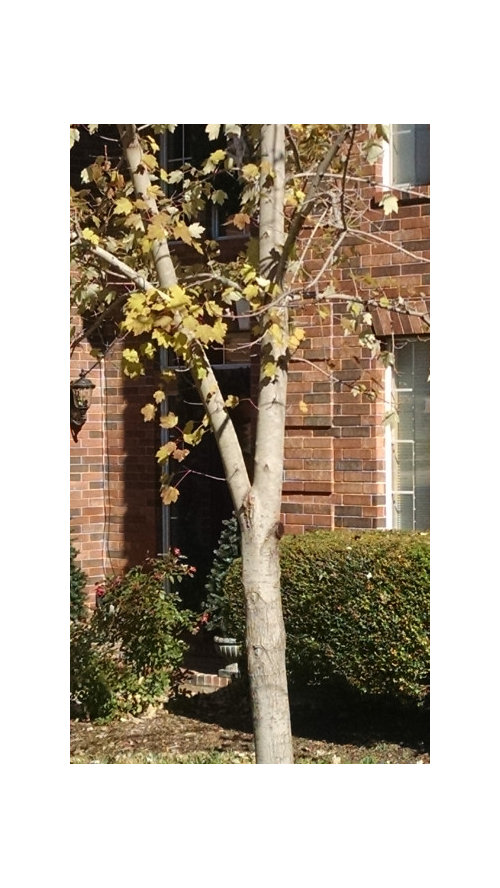
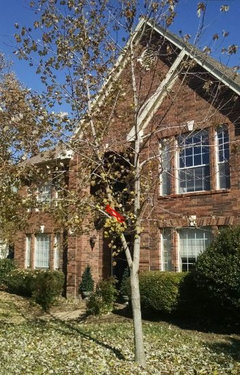
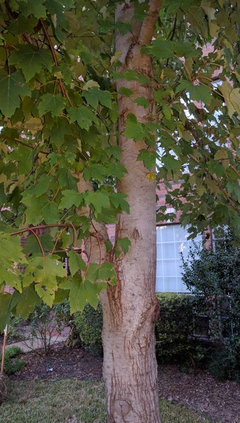
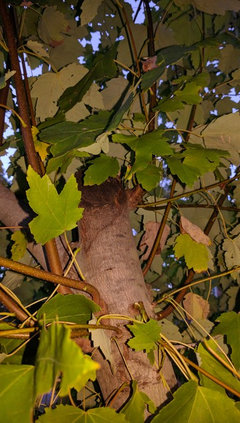
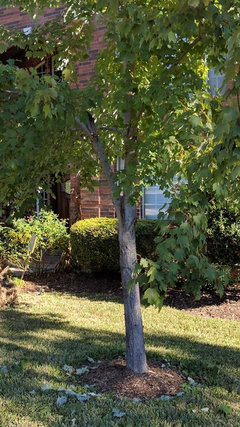
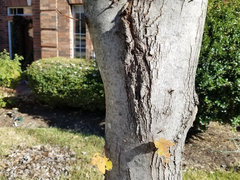
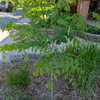
Hello all, posting this here since it's more of a tree question than a maple tree issue (I think). I believe the tree pictured here is a Sugar Maple, about 6-7 years old. You can see a fork resulting in two major 'leaders'. My question is, should the lesser of these two, probably the one on the left side, be cut off? Why or why not? Is the tree too old at this point?

Thanks in advance for any thoughts.


Comments (55)

  • 10 years ago

    So, what I'm gathering here is that it would be best to first cut off part of the left fork, so as to let the right fork dominate completely and to reduce the chance for decay, then cut the rest of the left fork later? Beng12, is the cut below the first one you suggest (which seems to be consistent with the subordination pruning concept)?


  • 10 years ago

    You've got it, js. As to the correct place to make these cuts, there are differing opinions. Very generally, when we first started practicing this type of pruning on young trees, the tendency was to not reduce by enough. As time went on, our guys started taking larger percentages of the branch to be subordinated initially. Seems to work well. One way to look at subordination pruning is to ask your self the question: What one pruning cut can I make to most improve the future structure of this tree? Not that you are limited to that one cut, but it helps you to hone in on the strategy.

    +oM

    Scott Z8 CenTex thanked wisconsitom
  • 10 years ago

    just get it done ...


    first remove hanging weight .... and make any tearing mistakes.. out at distance from the trunk ... then make the proper cut at the trunk.. then walk away ...regardless of whatever you do ...


    if i were doing it.. the last piece cut off might only be a foot or two long ... so i had total control ...


    a sawzall with a tree blade would make fast work of this ... or a tree saw ...


    there is nothing wrong with what tom said ... i just dont know if its necessary with a maple ...


    also ... if i dont finish a job the first time... odds are long.. that i never come back.. .lol ...


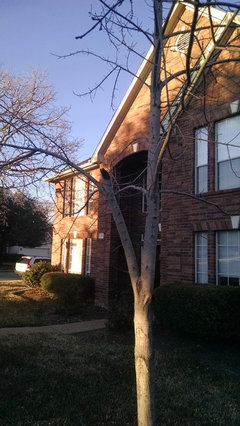
    first two pix.. are contrary.. how far is this thing from the house ... one looks a good 20 or so feet away .. the other.. real close ... go figure.. you are a camera wizard.. lol ...


    ken

    Scott Z8 CenTex thanked ken_adrian Adrian MI cold Z5
  • 10 years ago

    Yes, tempted to do it all at once. What I don't quite understand is, regardless of when I make that final cut next to the trunk, won't there be a chance of decay (whether I do it now or do it a year from now)?

  • 10 years ago

    The answer is, if you have first reduced the size of that (whichever) branch via subordination, a branch collar/branch bark ridge can then develop. Takes a few years. The advantage to the tree is that the type of wounds caused by branch removal close up primarily via processes that originate in those previously mentioned structures. In codominant stems, like these two are in relation to each other, there is no such branch collar/branch bark ridge, so the impatient way is far more likely to leave a wound that can lead to internal decay. All just depends on how much that matters to you. The tree sure doesn't care!

    +oM

    Scott Z8 CenTex thanked wisconsitom
  • 10 years ago

    Brilliant - I get it now. THANKS a million for the advice and education.

  • 10 years ago
    last modified: 10 years ago

    That's really interesting Tom, about the subordination pruning business.

    I didn't know that a second leader could make a collar, therefore effectively making it a branch. I think your advice is great.

  • 10 years ago

    Thanks. Yeah, it's become a big thing among those interested in the very best "leader training" techniques in our open-grown trees-which is all of them. In other words, when trees grow up together in the forest, they have no need of these "corrective" pruning methods, the lateral shading along with their innate apical dominance keeping them growing upward for sunlight. But take that same forest species and plunk it down in a lot somewhere where the sun hits it from all sides every day, they just naturally crotch out much lower. All of these methods seek to delay that fact for a number of years, allowing the tree to develop a good trunk and a higher crown. Obviously, less a factor in most ornamental treecare, since these by design crotch out low.

    The idea of temporary branches is important here too. You may wish to have the lowest branches start at-just making this up-12 feet ultimately, but that doesn't mean shave the tree trunk up mercilessly! Instead, using subordination pruning, you can keep all these branches acting as branches, not competing leaders, and then just gradually raise the tree up, the way you should. Much better in the long run.

    +oM

  • 10 years ago

    Do you have a sense of how many seasons it will take for the tree to develop the branch collar for the co-leader I'm shortening? I'm wondering if I partially trim it now whether I can do the second/final cut a year from now. Thanks again.

  • 10 years ago
    last modified: 10 years ago

    Since there is a bark ridge the crotch isn't necessarily one that is doing to split later. Maples and other trees with up-swept branching habits often consist primarily of narrowly angled branches, if all of these are to be eliminated from a given specimen then that may leave little else to work with.

    And anyway this example looks like a mediocre red maple seedling to me, one that may not ever have red fall color. If I bought this place I would cut it down, before it started to loom large and kill out the lawn. Big maple species such as this are too dominating and competitive for small suburban lawns.

  • 10 years ago

    Js, I'd plan on waiting a couple years. This tree looks to be of good vigor, so things shouldn't take too awful long, but may as well err on the conservative side. Two, maybe even three years. But all the time the branch remains on the tree, its remaining foliage is helping the plant manufacture food to grow.

    +oM

  • 10 years ago

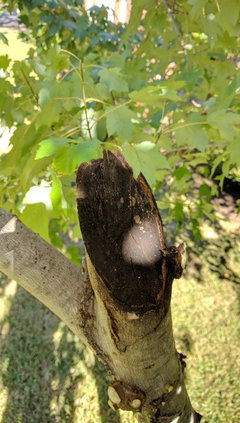
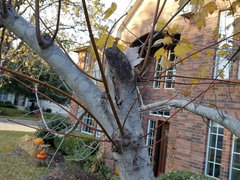
    Well, I did it - here is what it looks like. We'll now see how much patience I have to wait before taking the rest of the co-leader...

  • 10 years ago

    Good deal. Now the perfectionist in me wants to say, "hey, what about that stub you left"! But here's where that pesky temporary branch concept sneaks back in. There's little likelihood you're going to not remove that whole branch at some point, so believe it or not, the stubbage really doesn't mean beans. The whole works will be gone in a few years anyway. Rankles some folks but it's the truth. Nor will the little bit of rot that may get going in the branch have any chance whatsoever of traveling all the way down into the main stem (trunk) of the tree. It just doesn't travel that fast, even in the worst compartmentalizing (wound-closing) tree species.

    Another thing about subordination pruning is, it most definitely does not "make the tree look pretty" or any number of other malapropisms people will utter when they see you working on a young tree. God I hate that phrase...and that way of thinking, as if the things we do with these plants that will in most cases outlive us is trivial and unimportant. No, for a while, it actually makes the tree look kind of rough. This is for the future structure of the tree, and will improve its appearance, durability, and persistence in the landscape for decades to come.

  • 10 years ago

    While the cut may not really hurt, it wasn't really done "correctly". The reason I bring that up is to say that when the rest of that leader is removed, a better job will need to be done. You won't want to leave a stub beyond the branch collar / branch bark ridge. And, you'll want to make the cut so that the cuts surface area is relatively small. This will mean a cut, not perpendicular to the branch, but a little more perpendicular than the one in the picture (so that it will closely follow the branch collar).

  • 10 years ago

    Agreed. The future/final cut will be cleaner and at an angle that makes sense vis a via the trunk.


  • 10 years ago

    That's fine, jscaldwell. Clean it up when the weather gets better.

  • 10 years ago

    So long as he understands-this is only acceptable because of the temp. branch status-it's good. Now js, when you do get to pruning that or any other branches off from "permanent" portions of the tree, you'll want one of those good tri-edge saw blades and you'll want to make sure no bark rips, all that. Maybe you're on top of it-just making sure. As far as the type of pruning saw I'm talking about-and for all I know, you may already have such a tool-the good news is these things have become ubiquitous. Even hardware stores these days have pretty decent little folding pruning saws.

  • 10 years ago

    Got it and yes I understand I need to really make a clean edge on the final cut. Thanks for you feedback.

  • 9 years ago

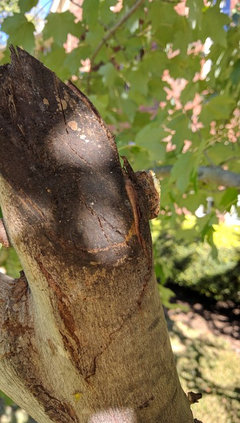
    Here we are a year later after cutting the coleader. I still don't see any evidence of a branch collar forming on the cut, but a few of you said it could take 2-3 years? So now the question is whether I should cut more/all of the remaining coleader now, or if I have the patience to wait (or is it even necessary to wait)?

  • 9 years ago

    for a better pic.. just snip out some of the small branches on the part you are going opt cut off.. just so you can get a better pic ...and better advice ..ken


  • 9 years ago
    last modified: 9 years ago

    Yeah, cut a few suckers, but I'd say wait on doing anymore. Branch collar/branch bark ridge formation varies with species and even from tree to tree. Some formation present. It should-you took quite a bit of. That's good. We found in early sub. pruning that we never hit hard enough. This should work. Just be patient. Work on some other trees!

  • 9 years ago

    Here is a better look...suckers removed.


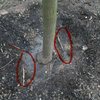
    This is interesting, as I think I see a branch collar creeping in on the lower right side of the cut, yes?


  • 9 years ago

  • 9 years ago
    last modified: 9 years ago

    If it were my tree, I would do it like this. A small vertical cut may be necessary at the top but it's mostly bark layers there so it should release on it's own. Avoid cutting into the main trunk. Do it this spring after leaf bud break.

  • 9 years ago

    The cut should be 90 degrees to the branch, probably about an inch lower. Do not remove the adventitious shoots (suckers) around the main wound until the wound is closed up. When the next round of suckers sprouts, leave them alone. Remove them one by one as each approaches about 1/2 the diameter of the original wound. The tree doesn't send these out for fun or to annoy you. It's attempting to minimize wound closure time. Notice the cambium callous next to the sucker removed? This is what you want.


    As its stands, this stub cut that is continually pruned of "suckers" will not close for a long time. You want the smallest theoretical cut (think circular, not ovular) and lots epicormic shoots. Will it look kinda ugly for a couple of years... depends on your point of view. In my view, these shoots cover large and obvious pruning cuts.

    Scott Z8 CenTex thanked Trent A (9a/Gulf coast)
  • 9 years ago

    I had no idea the suckers had any real value in the process at all, thanks.

  • 9 years ago

    Trent is right-wounds will close-not heal-faster when suckers (if present) are allowed to remain. I would not do this after leaf bud break. In fact, that's one of the few (2 actually) times of year to not be pruning trees. Best overall time for what you contemplate here is late winter/early spring, before an bud swelling or other growth activity has become obvious. Stay away from bud/leaf expansion and leaf-drop time in fall, and you're good to go with most types of pruning.

    Scott Z8 CenTex thanked wisconsitom
  • 9 years ago

    I wasn't planning to wait until the wound closed before taking the rest of the coleader. Are you guys saying I should? I thought the idea was to wait long enough for the coleader to start acting like a branch (wound starting to heal).


  • 9 years ago

    There's a range of things that can happen. What you see first is wound wood, which can in turn become callus tissue, which has the ability to become whatever type of tissue the tree needs. So that's the first thing you will see. You can remove co-dominant at any time but if possible, wait for the beginnings of a branch collar/branch bark ridge to form. In any case, the tree has a range of responses to what happens to it, not one set point. But no, you don't have to wait for the previous wound to close before removing the branch. But you might wait a bit to see if the two items I reference above begin to form where the co-dominant diverges from main stem.

  • 9 years ago
    last modified: 9 years ago

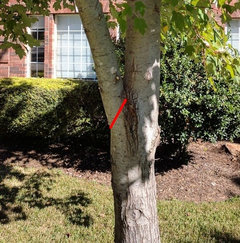
    'The cut should be 90 degrees to the branch, '

    I would agree with this anywhere else except where the branch or co-dominate leader in this case, meets the main trunk at such a sharp angle. Note that the bottom of the red line is exactly where the trunk ends and the co-leader starts. This will give the cleanest closure to the wound, albeit a slight elliptical in the shape of exposure. A 90d cut to the top of the red line will leave considerable protrusion at the bottom, leaving the wound open for a longer period of time and more deformation to the appearance of the trunk. As previously mentioned, letting things go for a couple of years will make everything apparent as the new branch collar will form and you will be able to follow standard procedure for pruning a branch at the collar, which basically will be the same angle of cut I illustrated in the OP's picture.

  • 9 years ago

    Branch collar and branch bark ridge are two unfortunately-named features of a tree's anatomy, since both are part of the trunk or stem from which said branch diverges, not a part of that branch! So it goes with naming....some makes sense, some doesn't. In any case, these won't form where an entire branch has been removed. If you start to think about slowing down the growth of a branch, by removing its most distal parts-its growing tip or tips-the main stem will see greater growth by comparison, hence the building up of that ridge of bark, etc. So this can only happen where a branch is not growing at the same rate as the main stem.

  • 9 years ago
    last modified: 9 years ago

    My biggest concern, with this particular tree problem, is once this branch is removed and the top increases in lush top growth, the tree could, in a stiff wind, snap off at the point of surgery. This would be more likely to happen if one even slightly extended the cut into the main trunk. Which I suppose could happen whatever technique is used. But cutting this branch an inch lower and at a 90, could prove to be tricky business to one not familiar with such a thin barked tree as a red maple.

  • 9 years ago

    I should have clarified which photo I was referring to when I made the 90 degree cut suggestion, as I don't believe any more large cuts are necessary in the immediate future. Looking back to the sequence of posts, my suggestion appears to be in direct response to the final removal cut of the codominant leader.


    However, I'm not sure why a large, oval wound - following the lines of the now single lead stem - would be desired, other than aesthetics. 90 degrees just outside the collar if/when it forms or slightly above the bark ridge would still drain and be swallowed in several years. Especially if those fantastic epicormic shoots are left.


  • 9 years ago

    'would be desired, other than aesthetics" My only reason for it. :)

    You guys are the experts. I've done this type of work on maples multiple times but only as a private gardener. It may be we're not as susceptible to pathogens/molds up here in our colder, dryer climate, dunno. I just know I've never had problems doing things this way.

  • 9 years ago

    Truth is, it's hard to know where to make such cuts. I advocate for subordination pruning in such cases precisely because there are no branch bark ridges or collars apparent in such cases, to use as guides for where to make the cut. Rather than attempt to remove the entire offending limb, just shorten it up some. That will slow it down and make it behave as a branch rather than a co-dominant stem. Then, later, perhaps some years, the anatomical features will have developed on the tree-branch bark ridge/branch collar-enabling you then to see exactly where to make a pruning cut to remove entire branch. A staged process, not one and done.

  • 8 years ago

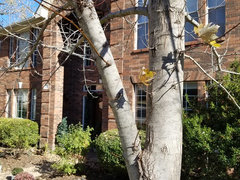
    Here we are now in late 2017, so time for an update. Here is how it looks now. I have managed to resist the temptation several times to whack the rest of this thing off. Any opinions on whether it's time yet?

  • 8 years ago
    last modified: 8 years ago

    I'm a fan of removing excessively tight co-doms immediately on young high vigor plants (like pictured) otherwise you end up with too much included bark and have a tougher cut to begin with.

    I'm not an expert but IME subordination pruning is great for low vigor or older trees. I also like to do this with overly vigorous laterals on very young trees to develop trunk caliper.

    My advice is to prune that entire branch off using the 3 cut method. This is a spring bleeder so do it once it fully leafs out. I find that my maples heal quicker during this time.

  • 8 years ago

    I’d just take it off now, or around April in your zone...

  • 8 years ago
    last modified: 8 years ago

    Agree with Whaas. Though I generally thought "+oM"'s advice was excellent, in this case I wonder if this technique was necessary, or even desirable.

    I do think controlling co-dominance is, generally speaking, incredibly important. My biggest challenge at the moment is a 'Phelan Bright' magnolia, with which I'm sort of taking the subordination approach. I'm sure this will perk up the ears of our resident magnolia expert, but I'm convinced that many of the "Gresham type" Magnolia hybrids, involving large species like M. sargentiana, are meant to be stately, large trees with a clear central leader (albeit still branching fairly low) but end up looking dumpy and blob shaped, with too many stems just above the graft, because they aren't property trained. The probably even applies, to a lesser degree, to plain old M. grandiflora, too. My grafted (of course) 'Phelan Bright' at first tried to have tons of leaders and co-doms. By controlling for almost 10 years, a clear leader has emerged, which has really taken off...growing almost 3' a year now. And co-doms have almost given up, but there are still a couple I will try to control over the next 2-3 years. If you google various Magnolia cultivars, you see that some were subject to this kind of care and some were not. Sometimes the original cultivars, grexes or species clones have a good form (at places like Caerhays) but in that case it's probably because, as with hollies, seedlings naturally form a leader better than cutting or grafted grown specimens.

  • 8 years ago

    I believe the original idea was to wait for a branch collar to develop but I still don't see one...

  • 8 years ago
    last modified: 8 years ago

    I understand why the idea would apply in some cases, I just don't think it was needed for this one. I think it would have quickly grown out of the original cut if it had been done correctly. All of the hideous old maples in my 3 acre yard that I've spent over 10k to remove over the past 10 years, were afflicted with these sort of problems. (of course, a couple of them removed themselves, when a split collapsed at the crotch...both times revealing a rotted interior) So, at least you had the presence of mind to deal with the problem now.

  • 8 years ago

    I have to remind myself as others do here, that plants don't always do what you think they will do. Branch collars aren't always as obvious as you'd think.

    Post an up close as you might have one. In addition we can give advice on where to make the cut.

    Time to cut down some buckeyes!

  • 8 years ago

    Here is the up close requested. I'm going to take this whole thing off it's just a matter of whether I do it now or wait until after it's leafed out as someone suggested...

  • 8 years ago

    Maple tend to bleed a far bit in spring when pruned in winter and early spring. If you wait until it's leafed out in early April (you're in TX, right?), it'll bleed less or not at all. The bleeding is aesthetic issue more than anything but if one can avoid it, why not.

  • 5 years ago
    last modified: 5 years ago

    Well, that worked out well. Thanks for the update.

    tj

  • 5 years ago

    Good work...

    Scott Z8 CenTex thanked bengz6westmd
  • 5 years ago

    tree time is counted in decades ... and that is sometimes the hardest concept to explain ...


    5 years for it to heal ... is actually pretty fast ... but that is what a maple can do.. compared to the slower trees ..


    good work.. you were a good student ... and thx for reporting back ... i miss some of those guys ....


    ken

    Scott Z8 CenTex thanked ken_adrian Adrian MI cold Z5
  • 5 years ago

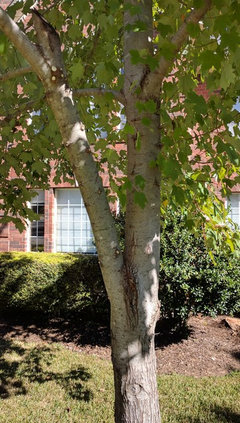
    Thanks for the update. Tree looks great. It's got some mean surface roots

    Scott Z8 CenTex thanked L Clark (zone 4 WY)
  • 4 years ago

    Yes L Clark, major surface roots probably due to lawn irrigation I suppose (which I try to minimize).

Sponsored
AIS Renovations
Average rating: 4.5 out of 5 stars15 Reviews
Custom Craftsmanship & Construction Solutions in Franklin County, Ohio