Software
Houzz Logo Print
leholmes8

Raised Beds

10 years ago
last modified: 10 years ago

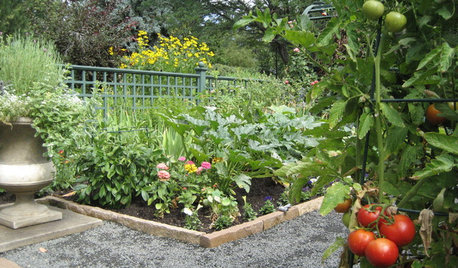
Planning our first veggie garden, will be doing raised beds. Our yard soil is very rocky and very hard clay, so I'm concerned about some of the deeper rooted vegetables being able to extend their roots into it, like I read is what is supposed to happen in a raised bed. I would prefer not to have to dig up the soil underneath because it is very difficult to dig into! I plan on making several 3 x 8' beds and would like to build them in varied depths to accommodate different root lengths (going to have a little of everything) and not build things deeper than needed to save soil/water. What depth beds would you recommend for each vegetable in this kind of a situation?


Also, I would like to do raised beds along our back fence ideally with vine veggies (squash, cucumbers, melons) growing up trellis' and other taller vegetables (maybe tomatoes, okra?) so our tiny yard isn't overwhelmed with tall plants on tall beds in the middle of it. However we have a power box in our yard and according to the hoa, can't build any "permanent structures" along the fence on the rare chance they need to dig it up. I was considering making tall but short lengthwise and narrow boxes that could fit one row of each vegetable, but could be moved if it was necessary, without damaging the plants. This would mean having to put some kind of bottom on the beds so the soil wouldn't all fall out if moved. Would a wood bottom be ok (drainage? root depth?) or perhaps wire (if the roots grow deeper than the box and have to be moved, would ripping those deeper roots kill/damage the plant)? Do bush varieties or vining varieties have shallower roots, and what vegetables would be best/worst to adapt better to this situation? How tall to make these boxes? Ideas for making moving them easier? Thank you for any suggestions/advice!

Comments (6)

  • 10 years ago

    There seems to be two contradictory ideas. First you want the roots to go down, but also you want to limit them by building a closed box. If you were to build wooden frames with, say, 10"/25cm boards, there's very little you can't plant. VERY little. Also over time solutes and the finer particles in the bed soil can leach down and make both root penetration and rock digging easier.

    If you do some weight estimation and math you may find that a bottomed box of damp dirt is way too heavy to move, limited both by your strength and the box's strength (especially once rot starts to set in). Sometimes things just have to be dug up, but since the utility work would be a "rare chance", ignore it..

  • 10 years ago

    We have heavy clay (but no rocks). What we do when building a new bed is to fork the area as deep as possible, top with horse manure and compost, water in several times, build the bed with hardware cloth for gophers, add a good rich vegetable mix from the soil store, water in again to fill any gaps, fill the box as full as possible (it will settle) water in some more, plant and enjoy!

    The couple of times we've had to replace a bed had great soil underneath! Were able to dig way down farther than ever! Nancy

  • 10 years ago

    Most vegetables have a life span measured in months, so if you do have to move some, it's not as if you're digging up a mature fruit tree that took years to produce fruit. I would leave some space near the box, and just bite the bullet in the rare chance that digging has to be done. You can always transfer your vegetables into some 5 gallon plastic pots. The beds don't have to be very deep (less than 1 foot) except for a few plants and soil is much too heavy to try to move a whole planter. Read Square Foot Gardening for more information on raised beds.


    My raised bed

  • 10 years ago

    The square foot gardening book says you can build boxes with bottoms and they only need to be 6 inches deep, I know some who made 4x4 boxes with wood bottoms, holes put in for drainage, and then they put them on top of saw horses in the back yard and moved them as necessary. But 6 inches may limit you for some of the root crops

  • 10 years ago

    I think you would be better off having beds of equal depth because next year you should rotate your crops to grow in different places. As for the amount of soil, read about lasagna gardening which is basically composting in place. You can start your beds with layers of chopped leaves, grass clippings, kitchen scraps, etc. I grew winter squash in a fairly new lasagna bed this year, digging a hole and filling with compost for the planting "hills". If the roots were happy going into old leaves, that was fine and they must have been because we had a terrific crop.

    For shallow, look into plans for salad tables. I have friends who rave about them. Saw one at the Common Ground Fair in Maine last September and was surprised at the size of the plants yet shallow table.

  • 10 years ago

    If I read your post correctly you are confusing two very different types of gardening. At least insofar as the two terms are normally used.

    Raised beds are 6" (minimal)-12" deep boxes with NO bottom other than the ground. Sides only. That way the soil mix in them has full drainage into the ground below, the roots can penetrate into the soil below the level of the box if necessary, and the box sets permanently (or for the life of the box) in the same location. The only possible exception to bottom material is the coarse hardware cloth or fencing some have to use to control for vole/gopher damage. But even that has some effect on drainage and root development.

    A box with a bottom in it, even with some drain holes, is a container and requires using container gardening methods. They are quite different. Any bottom structure interferes with drainage and root development. So generally containers are structured in a size to be moved as necessary, is watered and fed in a very different manner, and is filled with a soil-less container mix, not soil.

    So first it seems you need to decide which type of gardening you wish to do - inground or in containers. It sounds as if you may need a mix of the two methods - movable containers along the fence where permanent beds aren't allowed and permanent raised beds with no bottoms out in the yard area.

    Lasagna gardening is yet another method of small gardening which while not the ideal, can work in permanent beds but not for containers. It is something that often appeals to new gardeners until they come to understand that it isn't a long term solution unless one has ready access to plenty of the various materials required to keep it going.

    Lastly you need to evaluate the costs involved with this as that often catches many off-guard. Don't jump into the deep end of the pool. :) Go for a single good bed and maybe a few containers this year and see how it goes. You can always expand next year based on all you will learn this first time out.

    Dave

Sponsored
Hope Restoration & General Contracting
Average rating: 4.7 out of 5 stars35 Reviews
Columbus Design-Build, Kitchen & Bath Remodeling, Historic Renovations