Software
Houzz Logo Print
davelayoj

Do fungus gnats damage roots?

10 years ago
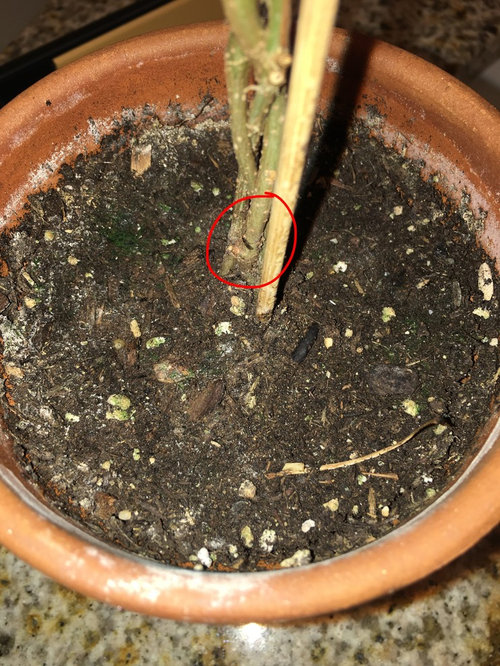
Noticed one small ficus in a 4" pot had lots of these crawling around on the top of the soil. Nothing else seemed affected so I segragted said plant.

Would having these in the soil be a cause for my trees dropping young fresh leaves?

The affected small trees soil was dry to the touch on the top.

Pic is kind of hard to see and you can't see them on the soil in the pic. Just on the bottom of the tree circled.

Comments (26)

  • 10 years ago

    I don't see anything in the photo that would indicate fungus gnats (not sure what that is that is circled but it is not a fungus gnat). Fungus gnats are tiny little midge-like flies and any sort of movement around infested houseplants typically stirs up a cloud of them. The adults do not bother the plants but the larvae can - they feed on organic matter in the soil and plant roots - although it would take a very large infestation to do significant damage.

    Generally fungus gnats appear when soil is kept too wet or drainage is compromised. A fast draining, durable potting mix - like the 5-1-1 or gritty mix - usually eliminates the potential of fungus gnats as the soil never remains water-logged or retains moisture long enough to give the gnats a suitable egg laying habitat. If you can't repot now in a better quality mix, try spreading a layer of coarse sand over the top of the potting soil. That will discourage the adult gnats from laying eggs and the adults themselves are very short-lived, only about a week or so, but they can lay a lot of eggs during that period.


  • 10 years ago

    Just wanted to say I tried grit previously (grower size) on top, 1" thick and it did not work for me. Never tried sand, but it might help!

  • 10 years ago

    I can't see much in the photo either, just a small black elongated thing that could be some particle from the soil?

    Fungus gnats fly pretty fast if disturbed.

    Rhizo said it - well draining mix with very little organic matter is the best; other methods may help but are only temporary. Cleaning away any debris from plant and making sure there isn't any standing water (besides not over saturating potting medium) are other good practices.

    Another temp method would be using BT - either sprinkle on top of soil or water with it; the grubs will be eventually eliminated. Needs to be done few times to get rid of all eggs (they are laid by flies continuously).

  • 10 years ago

    I know it's hard to see, but it's a small black fly. They don't really fly very far when touched. There was also a bunch crawling around on the soil.

    I sprayed the very top layer of the soil with peppermint oil and they seem to have died. A bunch of small larvae also came to the top and appeared dead.

    ps what is BT?

  • PRO
    10 years ago

    I have had this problem and when those flies lay eggs they really lay them. I never gave them a chance to nptice any real root damage to my plants but they do lay a lot of eggs. Just recentely I noticed them on my up and coming seedlings I started for this spring and I placed coffee grounds around the seedlings and they are reluctant to burrow down into them and lay eggs. The flies do not live long but when they lay eggs they lay them and they can do damage to plants.

  • 10 years ago

    I have the same insects on some FLF I have in my house. They are in the gritty mix so I don't know how the plant could be waterlogged. Is it ok to spray an insecticide on the soil?

  • 10 years ago
    last modified: 10 years ago

    Bt is safer and more effective than other insecticides used on house plants. It needs to be used as a soil drench because the larva are in the soil, not on top. Are you sure the problem is fungus gnats? They live on rotting organic matter that stays moist, and there shouldn't be much or any of that in true gritty mix. Another way to kill them off is to allow the top inch of the soil to dry out between waterings.

  • 10 years ago

    Rcates - Honestly, I still see occasional fungus gnats in my grow area even though I am using gritty mix (60% grit+) with grow lights and fans. Putting all pots on plastic grating helped because I found the gnats can still survive with that tiny bit of water held where the pot meets whatever they are sitting on.

    Since I need to water so often (every 5 days) they are resilient and I gave up on full eradication. Just a couple haven't hurt my plants (to my knowledge) and it's much easier than spraying insecticide all over everything in my home (for the winter).

    There's a bottle of Bt in my cupboard, but it can be a little messy and I only use it when things get really bad (which hasn't happened in a long time).

  • 10 years ago

    Regular soil watering with peroxide seems to work to cut down larvae; fly spray & yellow sticky traps for the flyers.

    Had a real bad infestation in recent spring whilst trying to germinate seeds in peat/coir, so bad they'd eat the roots clean off the sprouts.

  • 10 years ago

    I have them pretty bad right. I'm using the gritty. I'm growing brugmansia from cuttings, 8 of them. I always have a dunk in my watering can. Didn't seem to help this winter. Bought some gnatrol. I soaked them four times so far. That hasen't helped either. If there is any water in the saucer its got BT in it, so I don't think they would like that. How about a VERY small amount of bleach?

  • 10 years ago

    filix

    Not sure about bleach - never used it for plants.

    I really think there is too much moisture around - in your growing area, and too much organic matter (soil, fallen leaves and similar).

    I use mostly gritty mix (for succulents), but have many other plants that are not in gritty. I have 9 brugmansias, 5 large figs, 7 olives, passion flower and many more - all inside now for the winter - and hardly see any fungus gnats. I don't leave any standing water around at all, and try to pick any debris.

    Rina

  • 10 years ago

    Chlorine Bleach will burn your plant's cells better than a flamethrower.

    I just bought bottle of Scarid 10 which is 10g/L Deltamethrin

  • 10 years ago

    I increased the number of days between waterings and this has greatly reduced my gnat population. It was suggested to me to take a wooden dowel and stick it down in the bottom few inches of soil. When it comes out clean and dry, time to water again. Hope this helps!

  • 10 years ago

    Dry soil only deters them for short while until next rain :( and they'll just go for my seedling pots which have to remain damp

    Bug spray kills the flying adults... which I suspect are laying eggs into the pots' bottom drain holes where it's always damp. Their hatched wrigglers can probably travel the 3-4" from bottom to top as larvae. Lately I've been bugspraying both top & bottom of the pots, gotta repeat weekly or after every heavy rain.

    Yellow sticky traps aren't catching many flyers.


  • 10 years ago

    Tamiya - Not sure if bug spray kills the flying adults; BT will kill the hatched larvae and that will (eventually) kill them out.

    The aim should be to eliminate environment that gnats like - moist, organic - most of the remedies are only temporary help. They will be always back otherwise. (I know that's easier said than done...)

  • 10 years ago

    I can't buy BT, mosquito dunks or Gnatrol downunder... don't think it's locally distributed &/nor permitted. All weblinks point to North American usage :/

    Scarid10 found at a specialist horticulturist supplier, bloody expensive! Haven't worked out how to use it yet... (should've bought a singlemalt instead)

    Bug spray works just fine on flyers, tested it again recently. Point blank range, it wasn't a fair fight ;)

    after rain I've also started burning mosquito coils. Big smoke cloud of pyrethrum & citronella seems to cut down numbers too

  • 10 years ago
    last modified: 10 years ago

    Tamyia

    I am surprised that the mosquito dunks are not available to you. But every country has their own laws and rules. The active ingredient is Bacillus Thuringiensis subspecies Israelensis (BTI). BTI is a bacterium that is deadly to mosquito larvae but harmless to other living things. I believe that mosquito coils may be more harmful? - there are some chemicals used like formaldehyde, burning which produces fumes/gases I rather don't inhale...but this is just my opinion, I am not trying to start a big debate. I really don't even have enough info - and as anything else, there is always two sides to a coin :)

    I guess I am just a strong believer to using as little 'strong medicine' as possible - for humans and plants. Sometimes, it is difficult to avoid...I use rubbing alcohol (for bugs like scale), cinnamon powder (if any fungus) and plain water to wash off aphids (if any) off, and try to keep debris picked and no standing water around. Easier to do indoors than outdoors I guess. I have used mosquito dunks about year ago, but don't have gnats to fight anymore (very seldom I see fly around! - usually fruit flies when I cut some fruit :) And I have used some horticultural insecticidal soap that I bought in the past.

    Rina

    ps: I was googling mosquito dunks in Australia and found -this link-

    There are more.

  • 10 years ago

    i have had fungus gnats before i use alot of organic soil and water every 4 days i have found that sand is the best and cheapest way to control them.I started out growing under lights and the place where i would buy my organics at taught me this way.Put about a 1/2 in of sand around the top of the soil so when you water the sand compacts and sufficates the eggs.The gnats cant get into the soil to lay eggs now and the eggs that were layed can not get air to live.I hope this helps you

  • 10 years ago

    @rina

    thanks for link but that shop is "fakeOzzie" ;) it's based in Medford ORegon

    we do find some local specialist grey importers of American products... but we end up paying like $160-200k for a RHD-converted Furd Mustang :/

    perhaps demand is insufficient, which is strange as up north there's issues with mozzies & dengue. Easily "solved" by nuking with DDT traditionally? Had thought BT Dunks would be handy for watering into bromeliad puddles, which the dengue patrol are looking out for nowadays, or so I'm told.

    yeah mosquito coils are probably as bad/worse than secondary smoking... so I don't hang around when they're lit ;) they're out on the balcony when I'm not - the plants aren't complaining. Unlike up in Asia where ppl often sleep in a closed room with mozzie coil for 8hrs (and they wonder why their walls stain yellow).

  • 10 years ago

    shawn

    ..."sand around the top of the soil so when you water the sand compacts and sufficates the eggs"...

    suffocating the eggs would be good idea, but compacted sand is not doing anything good for plant roots...it impairs aeration and decreases drainage.

    It is better, in the long run, to aim for elimination of environment that fungus gnats like - wet and organic. Using mix that drains well and is aerated would allow grower to water well but will not stay too moist for too long.

    In their natural environment, succulents grow in gravely substrates. Putting them into small pots makes the choice of substrate even more important.


  • 10 years ago
    last modified: 10 years ago

    rina

    I was answering the ? on a ficus. it is my opinion a thin layer of sand ON TOP about a 1/2in you still get airation you just do not have to water as often. You will have to experiment with how much water you give it cause it will be less and sand still compacts enough to kill the eggs (has to be coarse sand) .does not effect drainage if using right medium with good pots with alot of drainage holes it take alil longer to go threw the sand if you pouring water on top and get a more even watering to go threw the sand. But when i use organics and also making compost tea with the heat from the lights i got this problem.But I am activating the micro organisms with air pump to maximize the organics that im buying and using in media and teas so i go threw alot less fertilizers when i feed and when I water the roots are getting air h20 from the water.But this is how i got fungus gnats with the organics and the heat from my lights and how i cured my problem was with sand. I dont water every day or every other day cause in my soil i use coconut fiber,sand, and other media which retains some moisture and it gives it more time before I water again. I only feed once or twice a month and water in between depending on my plants When i have grown lilac trees using organics i had a good pearl white root zone.It also depends on what you are growing succulents most of them only get watered twice a month . Also some succlulents do prefer a sandy soil cactus is part of the succulent family what do they grow in?Also there are other succulents that prefer sandy soil too or peat or rock. Check further down in container gardening there is a thread called water release curve for growing media ingredent. But in the end it is what works best for you and what results you want to achieve and how much you want to experiment,research and read . This is what works good for me.

  • 10 years ago

    shawn

    My mistake for assuming it is a fine sand...thank you for pointing that out.

    I have many other plants besides succulents and I do not use sand. Succulents are in gritty mix, including few cacti, without any organic ingredients and other plants in 5.1.1. I do not 'combat' fungus gnats since I switched to 5.1.1 few years ago. I also make sure there isn't any water standing in saucers and pick up any debris (fallen leaves and so on). All plants have to spend winter indoors, under many lights.

    I use lots of compost, but only in the garden. Not in pots/containers, regardless if they are indoors or outdoors.

  • 10 years ago

    your right you have to keep debris up and no standing water. it will only make the problem worse got to keep everything clean and tools sterile

  • 10 years ago

    Wow, do I hate fungus gnats!

    I thought I was rid of them but like Tamiya said, it's impossible to germinate seeds without simultaneously creating ideal conditions for the gnats to multiply.

    And if I were to dry out some of my tropicals the plants would be dead before the fungus gnat lifecycle completes.

    Fungus Gnat larva WILL kill plants! I lost an entire patch of club moss to those little turds. I guess any plants with tiny roots. Big plants might not show symptoms overall but the damage to any feeder roots near the surface and near the drainage holes is certainly being done.

    The flying gnats are easy to trap or kill in large numbers, but it doesn't stop the infestation. My favorite method is my sundew! I highly recommend getting as many sundews as you have room for. At the very least you will get a sick satisfaction from seeing the sundew feasting on piles of gnat corpses!

    I'm not a believer in relying on gritty mixes to prevent fungus gnats. Sure it helps but I have a few clay planters where the top inch and a half is all dry coarse non-organic substances and I see the gnats all climbing in and out of, and dancing around the rim of the pot like they're defying me. I've heard they are attracted to the colors... well, whether or not they are actually hatching from underneath I cannot be certain but they sure love to hang out there and do whatever it is that gnats do when they're not eating, resting or laying eggs.

    Anyways this is making me ill, I'd better go find some spray that is perfectly safe for all plants but lethal to those annoying pests and let 'em have it!

  • 4 years ago

    I know this post is 5 years old but this is thrips.

Sponsored
J.Holderby - Renovations
Average rating: 5 out of 5 stars4 Reviews
Franklin County's Leading General Contractors - 2X Best of Houzz!