Software
Houzz Logo Print
chuckerfly

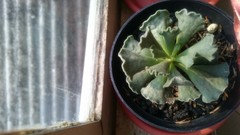
Help, please, this lil guy looks deflated..

10 years ago
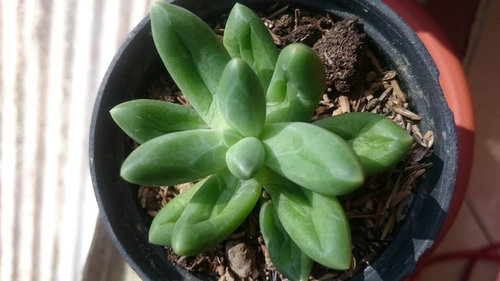
I bought this lil guy last October (the guy who sold it just said it's a succulent [duh..], after some online search I think it's a pachyphytum), along with some echeverias and haworthias. At first, I water them twice a week per the seller's direction, but then a couple of echeverias rotted due to overwatering. So now I water them less frequently (once a week) and I make sure the soil is dry between waterings.

My haworthias are doing just fine, but this lil guy just looks deflated? Underwatered maybe? Should I water more frequently?

I live in tropical climate, by the way, where the temperature is around 25-30ish degrees celcius year round. The succulents are on my windowsill facing east. Thanks in advance..

Comments (13)

  • 10 years ago

    The above advice is great but may I ask how you're watering? You mentioned once a week but are you watering from above or are you soaking it to water from below? The peaty mix that comes from most sellers is very hard to re-wet after it's dried out. It becomes what's known as hydrophobic and tends to repel water. This may be causing some areas of the roots to remain dry for very long periods.

    A word of warning though, if the roots have been remaining dry then it may have lost a substantial portion of its original roots and suddenly giving it a "normal" drink of water could rot it.

    chuckerfly thanked Nicholas C.
  • 10 years ago

    I water from above until I see the water comes through the drainage holes.

  • 10 years ago

    Good advice from both previous posters. I'll just add to it. I think it's Pachyphytum or Pachyveria, which is a hybrid of the former with Echeveria. I have a similar plant, Pachyveria glouca 'little jewel' that's very hardy.


    i suspect your plant is rotting from too much water, but I'm a little surprised you didn't first see some chlorotic leaves (yellowing). An eastern window might not be sunny enough. If it's dormant, it's very easy to overwater. I agree that it's better to water too little than too much. Soaking the pots in a dish of warm water instead of watering from above will minimize the problem of hydrophobic patches in peat souls. How many hours of direct sun does it get? Is the windowsill very bright the rest of the day?


    In any case, you can usually propagate leaves even from sick plants. I carefully remove a few leaves and start them on perlite as soon as I see a plant isn't thriving. That way I'll have a little backup plant if it fails. The deflated leaves on your plant are likely toast, but you can probably salvage a couple healthy ones. Since we don't know if your plant will make it, you might want to start some leaves.

    chuckerfly thanked kwie2011
  • 10 years ago

    Thank you for the identification, I become more sure now that the plant I have is a pachyphytum or pachyveria as you mentioned.

    The plant itself stays green since I bought it and the leaves are still quite firmly attached to the stem, that's why I think it's probably not getting enough water rather than rotting. As I live in the equator, we get approximately 12 hours of sunlight daily all year round, so my windowsill gets roughly 6 hours of direct sunlight (behind tinted window, since the light and heat can be pretty harsh on cloudless sunny days) and stays bright for the rest of the day (just not quite as hot as in the am). The picture I posted above was taken around 10 am in its natural light.

    Watering once a week may seem too much in other part of the world. But where I live under this condition, the top soil can get dry in just a day or two after watering and it usually takes 5-6 days (I give it a day more just to be sure, so usually it's one week overall) for the soil to be completely dry (I check by using the toothpick method).

    As a beginner in succulent care, I have no first hand experience with plants dormancy. From perusing various sources, I understand that some plants go dormant in spring and summer, while others in winter. Here we have only two seasons, dry season (normally around the same time of spring-summer in northern hemisphere) and rainy season (around fall-winter). I'm not sure which dormancy period my plant belongs to. Any insights on this will be deeply appreciated.


  • 10 years ago

    I believe your plant would normally be summer-dormant. Most succulents are. It's an adaptation to protect the plant during the intense heat and drought of summer.

    Different plants have different environmental triggers to tell them when to flower, go into and out of dormancy, etc., and I don't know what cues the different species use. Some might go dormant when they don't get enough water; others might go dormant when the day or night reaches a certain critical length, etc.. Since we don't know your species, or the dormancy cues even if we did know, that's not going to be helpful. You'll just have to watch for growth. For "short night" plants, screwing up their photoperiods with house lights can be enough to confuse them.


    Soaking your our plant when you water it will eliminate the possibility of hydrophobic spots in the soil.


    The window tint might be a problem. Some tints block certain wavelengths. You might not be able to see that with the naked eye. Do you have other plants in the house that use that window as the sole source of light? That might be the only way to know if your window tint allows adequate spectrum for plant growth.


    If you want to be sure the roots are healthy, just lift the whole root ball out of the pot. It'll likely be a solid, cylindrical mass of soil that's held together by roots. If the roots are strong and firms and don't come off easily when you pull at them, then it's fine, and it's probabky safe to water it a bit more. If they're mushy, you have rot and it's time to salvage what you can.


    since everything is firm above the soil; you're testing it with a toothpick and letting it dry, and you don't have any yellowing, it seems more likely now to be too little water than too much. Has it grown at all since you got it?

    chuckerfly thanked kwie2011
  • 10 years ago

    Thank you all for the quick responses and great advice. I'll do a more thorough check up on my plant asap when I'll be around at home. In the meantime, I assume it's safe to water more (for now at least, I'll delay the soaking until after I've taken necessary measures, in case my poor plant doesn't make it.. :( )


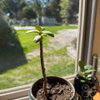
    For reference, this was how my plant looked when I got him, only grows a little bit since then.

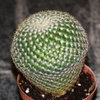
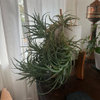
    And these are a couple of plants that share the same windowsill

  • 10 years ago

    I believe they are - Adromischus cristatus and Haworthia limifolia...

    chuckerfly thanked rina_Ontario,Canada 5a
  • 10 years ago

    Thank you, Rina, for the identification, that confirmed my initial guess on their species names after looking online for pictures of similar looking plants. Btw, they do look okay, don't they? I got them around the same time as the pachyphytum and they definitely have grown since then, especially the H. limifolia with the offset.

    A little update re the pachyphytum (species? I'm guessing P. compactum..), it seems the lil guy was thirsty afterall. I've been watering him a bit more than usual and some of the leaves have starting to plump up a bit (just need to be more careful not to overwater now!). I'll update with more pictures in due course. Hopefully this lil guy will make it alright.

  • 10 years ago

    I don't recognize what kind of mix that is at all, can you tell us pls what is. The mix in the last pic looks too bark-like for succulents & Haworthias In particular.

    chuckerfly thanked lmontestella
  • 10 years ago
    last modified: 10 years ago

    That is nice growth on your other plants, especially limifolia - I have one I got about 4mo ago but so far no sign of pup...

    I am wondering about your potting mix too - in your climate, perhaps little more water-retentive mix is appropriate? What is used for top-dressing for pachy? (or is it the actual mix?). How about your rainy season - that is the time to worry about drainage, but if you keep plants indoors, they won't get soaked.

    Rina

    chuckerfly thanked rina_Ontario,Canada 5a
  • 10 years ago

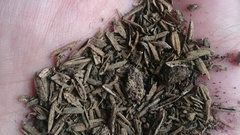
    As far as my knowledge, the potting mix is a combination of little gravels, cow manure (processed, so the final product is like dry, black, burnt grass, it's also commonly used as fertilizer), and rice husk (is this the correct term? It's the outer skin of rice grains, separated when milled to get the white rice). I think it's pretty standard mix for succulents from nurseries. This is a shot of the husk

    Re pachy, yes Rina, that's the actual mix. None of my plants have top dressing. As for rainy season, in fact here we're actually in the middle of it right now, but where I live it's not raining all the time though. Sometimes we only get an hour or 2 of rain, also not every day. Sometimes we get heavy rain all day long. The temperature is still in high 20s to 30s degrees Celcius (70s to 90s degrees Fahrenheit) and the top soil can be dry in 2-3 days or so.

    And since all my plants are indoor, it won't be a problem.

  • 10 years ago

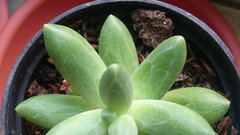
    Update: this is how the lil guy look this morning, most of the leaves have plumped up nicely.. :p

Sponsored
Kuhns Contracting, Inc.
Average rating: 5 out of 5 stars26 Reviews
Central Ohio's Trusted Home Remodeler Specializing in Kitchens & Baths