Software
Houzz Logo Print
dianemck

Caulking between baseboards and hardwood???!!!

10 years ago
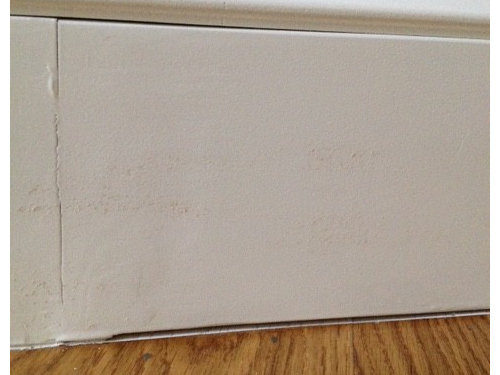
Our painter did not caulk between the baseboards and new hardwood floor. In some places there is up to 1/8" gap. He told us he never caulks this area because of the movement of the floor can pull the caulk away.

I'd love to hear what a professional painter has to say!

Is this standard procedure not to caulk between the hardwood and baseboards?

If you have caulked this area, has it been successful? Has it held up?

Does the caulk attract dirt?

Any other tips or information you can tell me? What would you do?


Thanks very much!


Comments (21)

  • PRO
    10 years ago
    I would never caulk that for the reason he stated. In traditional interiors there is quarter round here as the quarter round can follow the floor a little more than baseboard can.
    dianemck thanked Ellsworth Design Build
  • 10 years ago
    I've been wondering the same thing in my house. Just went through a remodel and the baseboards definitely float a bit off the hardwood. After looking through photos on house (just search baseboards) I realized I was over focusing on a minor detail. Most of the photos I saw has minor gaps between floors and baseboards; we just don't pay attention to it because the rest of the details in a room are more interesting.
    dianemck thanked Ryan
  • 10 years ago
    last modified: 10 years ago

    There is supposed to be a gap to allow for expansion and shrinkage of the wood floor. I've never heard of caulk being used, although shoe moulding is often used to cover it.

    dianemck thanked Bookwoman
  • 10 years ago

    That's what 1/4 round is for! If at all, caulking should be done between the baseboard and the wall for a clean look.

    dianemck thanked ebouchard
  • PRO
    10 years ago

    If it bothers you then run shoe mold along the bottom of the baseboard I agree i like caulking between the top of the baseboard and the wall If there is a space between the floor and the baseboard then the floor was not perfectly level which is very often the case and caulking will not help.

    dianemck thanked Patricia Colwell Consulting
  • 10 years ago
    Someone should sand the woodwork down first to get everything smooth before you add another coat of paint.
    dianemck thanked Katbv Vero
  • 10 years ago
    I am not a professional but by the looks of this picture you also have other issues. I would agree that a bead of caulk is appropriate where the mouldings meets the wall, you seem to be missing that. Also what's with those goops of paint?/caulk? where one trim meets the other?
    And why is there a visible seam? This seems to be more of an issue with painting work to me then the (appropriately) lack of caulk at the lever of the floor.
    You may feel differently about the overall look if you can get those bits fixed up.
    dianemck thanked dum7117
  • 10 years ago

    I am so disappointed with the paint job on my brand new stairway. The painter came back once and it is a bit better but still needs some work. He's coming back tomorrow. I'm going to leave the gaps for now and try caulking behind a sofa and see how that looks after about 6 months. But as several of you pointed out the gaps are the least of my worries.

    The fine carpenter who built the stair case uses a painter who does in fact caulk these gaps when the stain on the hardwood is darker than ours.


    Thanks for your help.

  • 9 years ago

    Yes, it should be. Of course painters/contractors don't want to. It is difficult to get it right and time consuming and of course materials. Go to an expensive model home, it will always be caulked. Caulking is flexible so saying no because wood expands/shrinks is false as well.

  • 9 years ago

    Oh Brian... a wood floor expands and contracts in the opposite direction as the wood base so no, you don't caulk the gap, silly! And even "expensive" model homes are still tract homes, and they do all kinds of sloppy fixes for poor or mediocre craftsmanship. Saying otherwise is simply false... #fakenews ;o)

  • PRO
    9 years ago

    Yes, you do caulk the gap. It looks fine for years.

  • PRO
    9 years ago

    Beautiful Remodel LLC said it perfectly. That is all accurate and true! Well said Beautiful Remodel.

  • 7 years ago
    First of all, the quality of what you are showing is terrible. Secondly you would not caulk that area as he is correct it would eventually crack. Even if it didn't it would not look good at all. You should have base shoe installed to hide the imperfections of your floor meeting the base. That is actually what is intended for.
  • PRO
    7 years ago

    Beautiful remodel is correct. I often do not have 1/4 round installed unless age or poor quality of sub floor require it be installed to cover the gaps. The caulk between the floor and molding will crack as the floor expands and contracts.


    Prep work is 90% of any job especially a paint job. First the contractor who installed your floor should have leveled the sub floor within 1/8 inch over 8 feet. Your contractor who installed the moldings did not complete his install which should have included the caulking filling and sanding. The painter should have also prepped what the contractor missed. Paint does not cover any imperfections it makes bad prep more noticeable.


    Once painted with latex, fixing the poor prep work afterward becomes more difficult as latex paint remains rubbery for years so sanding makes it peel. You should get a new high quality painter come in and fix the bad prep work and repaint your baseboards, but you will pay dearly for their time. Absolutely do not caulk between the floor and base!


    If your physically able, to save money, look at YouTube videos on how to do paint prep, buy a good detail sander with various grits of sand paper and do this work yourself. it's not difficult, just time consuming. Also, you need to know if the base molding is word or MDF. Do not sand beyond the top finish of the MDF as the surface texture will be rough and show through the finished paint Job. Be light handed when sanding to only remove the high spots and then fill the gaps With waterbase spakle. Use wet cloth to sand down the spakle. Use white paintable caulk to fill cracks and wipe smooth with damp microfiber cloth. Then prime and paint.

  • 7 years ago
    The only time/place I would caulk between the base and floor is in a bathroom or if the floor flexes so much, any paint under the base shoe makes crackling noises. It's best to not get much if any paint on the bottom of base shoe for this reason. No matter how tightly you think you nailed it, if the floor flexes it will make noise from the paint sticking then releasing from the floor, that almost never goes away. Use clear latex caulk and wipe clean with a damp sponge so the caulk is nearly invisible. Test your skill at this first or hire a professional so that it doesnt end up making things worse.
  • 6 years ago

    What about a hardwood scraped floor with uneven surfaces? Distressed? Natural undulations in the woods will create gaps no matter what you do. Seems it would look unfinished without that tiny bead of finishing caulk. The floor will still expand and contract regardless - it's not cement, right?

  • 5 years ago

    I have a related question for everyone who says not to caulk that gap, or to cover it with a shoe mold/quarter round: what about sealing it to prevent water damage in the event of spills and insect infestations? I've read elsewhere on the internet that caulking is recommended to make the baseboards water tight and prevent insect infestations.

  • 5 years ago

    I am wondering the same thing as Britny. I live in central CA where the weather doesn't fluctuate that much, but where insects are a common concern for almost everybody. I would like to caulk to reduce the entrances where insects can enter our home.

  • PRO
    4 years ago

    Caulking at the bottom of the base board can also improve air quality in a home that has a crawl space below.

  • 4 years ago

    To Beautiful Space Company or anyone else kind enough to answer: what is an acceptable gap between the floor and a baseboard that has been properly scribed? Would you expect it to be mostly flush? Is an 1/8” gap acceptable? I’m asking because I’m talking to a carpenter about doing my baseboards (2 piece) and I told him I don’t want to caulk the baseboards to the floor or use QR or shoe mold. I told him that I wanted the 1x6 boards scribed and he agreed that they should be scribed, but then said “the gap at the bottom should be no more than 1/8” since the base would need to be caulked to the floor and you won’t see a thing”. Isn’t the point of scribing to eliminate big gaps? 1/8” gaps seem big to me.

Sponsored
AIS Renovations
Average rating: 4.5 out of 5 stars15 Reviews
Custom Craftsmanship & Construction Solutions in Franklin County, Ohio