Software
Houzz Logo Print
edubya

POLL: What's your No. 1 priority when starting a project?

10 years ago
last modified: 10 years ago
Early Classical · More Info

Getting ready to start a new project at home, from a small update to a full scale rebuild entails a huge number of considerations before you get started hiring a professional or team. Do you prioritize scheduling? Maybe cost? What's your top concern?

VOTE and tell us about it in the comments! (photos of your projects encouraged)

Cost / Budget
Scheduling / Availability
Design
Rapport with your designer / builder etc.
Reviews
Other - tell us below!

Comments (58)

  • 10 years ago

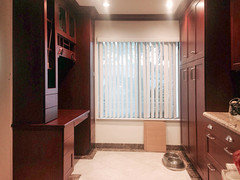
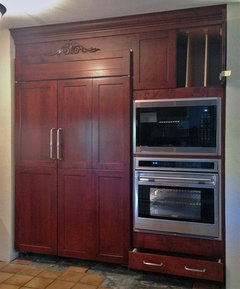
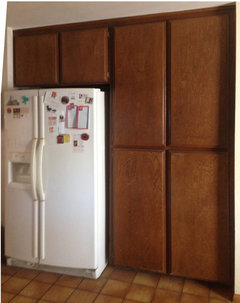
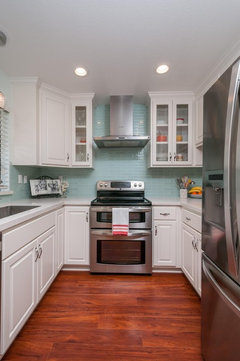
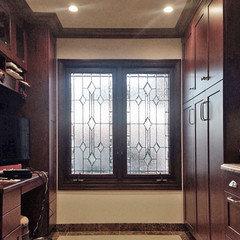
    I chose "Other". When we began our K reno, we thought we'd basically follow what a neighbor w/ same floor plan had done. He did a lot but his was based upon keeping and refacing the existing cabinetry. We wanted to do a bit more, especially move the peninsula 10" twd DR to open up the U-shaped K b/c the d/w & oven doors fought w/ each other in the corner by the DR. We wanted a high quality reno and didn't want to take out a 2nd or equity line at our age (68-y.o. at start), so we planned on doing it in phases. Thus we needed a CKD who was willing to go along w/ that. To keep costs down, my wife wanted to keep our existing fridge & d/w as both were fairly young in appliance years. B/c of our emphasis on quality, I began researching cabinet makers. When I found one I liked, I found a CKD who is authorized dealer, & willing to go in phases. Phase I was to convert breakfast nook to a pantry so we could demo existing pantry cupboard for GE wall oven & speed oven for Ph II. This worked out hugely better than expected b/c while we were doing Ph I our CKD turned me on to some clearance deals on a Wolf single L-series oven and Sub-Zero 48" built-in fridge. The Wolf cost about the same as the GE would've so no budget impact there, but I raided my 401(k) to take advantage of the S-Z opportunity as a new fridge hadn't been in budget. This necessitated a re-design of that wall b/c the original plan used the existing fridge. When our CKD first came to the house to take measurements and discuss plans, etc. she took one look and suggested instead of moving the peninsula to demo it altogether and install an island. So the island w/ rangetop, which I'd bought a year before to avoid price increases, became Ph III. The sink wall became Phase IV, and on the source where I bought oven & fridge, Farmhomestore.com, I found a Miele d/w so the 4-y.o. one went to Salvation Army. Phase V was a hutch across from the pantry w/ desk area and broom closet w/ storage for step-stool. Ph VI was to replace the patchwork of flooring in the front of the house w/ tile. The LR, entry, K & DR were re-surfaced in travertine-esque tile w/ Emperador dark marble border and baseboards. Ph VII is new windows, which will be delivered forthwith. Doing it in phases ultimately resulted in a much better result than originally planned. Another advantage to doing it in phases was we were never fully w/o cooking. When the peninsula was demo'd we had the outdoor K for cooking and still had sink & d/w. When the sink wall was demo'd, we had utility sink in laundry room. That made the whole experience much more tolerable for my wife who was working 12-hr. days at the time (now retired) and had low threshold for inconveniences. And we didn't have to borrow to do it. Below are pics of the nook, now home to Phases I & V, and before and almost-after pics of Phase II wall.


  • 10 years ago

    Design and cost are equal for me. I hired a designer for my kitchen and living room because why spend all that money and not have it be perfect for you.

  • 10 years ago

    Design, particularly exactly how spaces will function, has to come first. Otherwise how can you possibly get quotes? Finishes and decoration are quite another matter, although often confused with design. But the same design can be implemented in many different ways and at many different price levels. Most of the time, of course, one must compromise on finishes or size, but if the overall design is wrong you have wasted your money.

    Quality should also remain uppermost in mind: not necessarily fancy, but lasting quality. Like metal hardware on blinds rather than plastic that will not last. Quality is not necessarily expensive either, and definitely not long range.

    In my opinion starting out with the budget belies inexperience and fear of the unknown. Figure out what you really need and then design for that within your budget. You can definitely do this.

    Resale must also always be kept in mind.

  • 10 years ago
    Return on investment.
    I've always made sure that on any major remodeling project on the that when I resell the house I'm able to get most (if not more) than I actually invested in the original remodel.
  • 10 years ago

    We plan on living in our house until we're "toes up", so the impact of our K reno on resale value was not a driving factor. However, I feel we gained equity w/ ours. Based on what I've seen on HGtv, a well-done reno should yield a 30% gain over cost of reno, i.e. a $1,000 job increases value $1,300. Some jobs on HGtv have produced 100% gains, i.e. a $1,000 job increased value $2,000 for a net $1,000 gain. I guesstimate we got a 50% gain, boosted in part by fabulous deals I got on top-of-line appliances.

  • 10 years ago

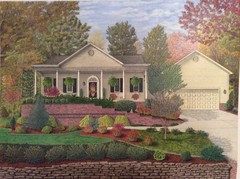
    I voted for rapport with the designer and/or builder because I think it's crucial to have people on your project who share your vision. Having done a complete rebuild of a lakeside cottage, I can vouch for the fact that my relationship with the architect made the project run quite seamlessly. I am using the same architect and builder on my kitchen renovation of a 1900 Victorian. You can see the Cottage Rebuild here.

  • 10 years ago

    SOW, scope of work. I usually first decide what I want to accomplish when all is said and done. Then initial budget based on ROI (although not as much as I age). Just getting my head around these two things can be challenging. Usually the budget is not high enough to accomplish all, so I narrow down my SOW to accomodate budget. Then I do research for hired services.

  • 10 years ago

    I chose design as my starting point in any project. You cannot cost anything out until you know what you want. I also believe that having a design concept in place when meeting with prospective contractors allows you to better assess whether or not that contractor will be the right one for you to work with. There is nothing I dislike more than a contractor telling me that what I envision for my home is not the right decision and that his/her ideas are better. Only I know what works for me, what I am comfortable with, and what I want the end result to look like.

  • 10 years ago
    I voted design first then budget would have to be next. When we renovated our kitchen, I worked on the design for a long time incorporating all my needs as well as an efficient flow into the space I had available. Once that was done, we looked for affordable ways to build the design. I'm very satisfied with the results!
  • 10 years ago
    In my opinion its hard to do or worry about most of those items before you have your design intentions figured out. once you know what you want to do, you can pull the others together with it. i try to avoid reno's as much as possible. nobody likes living in a reno.
  • PRO
    10 years ago

    Design. Addressing the function of the space, how you want to use it, and any special concerns related to your lifestyle in my opinion should be the first starting point. As a designer, I always design the functionality first, to make sure the space works best for your needs. Budget can easily be adjusted by the materials chosen to complete the design (example, I've done kitchen back splashes that range from a couple hundred dollars, to over $25,000. They both turned out stunning -- different clients, different priorities.)

  • 10 years ago

    The beginning step that doesn't get enough attention is the planning stage! People (myself included) want to dive right in, start deconstructing before they really know what the goals (especially the "little goals") are for the room. If you put more time and attention on this part of the project, you will save yourself a lot of time, energy, money and frustration when you get to the "doing" part. Take the time to explore the space you are about to change, look for potential problems that could make the project bigger, do some research on the materials you plan to use (there may be something better out there), and make sure you know how you want it to look in the end and what it's functional goals are. All of this takes time and patience which we all seem to have a shortage of these days!!

  • 10 years ago

    I have to know how much money I can spend before I can even consider design. Once I know how much money I have, I can fit a design to that budget - be it $1000 or $100000.

  • PRO
    10 years ago
    Budget first. My design depends on how much my client wants to spend.
  • 10 years ago

    I chose other. Scope of work, design, budget -

  • 10 years ago

    First, don't tell yourself that you will never ever sell this house. You will. That in mind, live in the property at least 6 months so you can see what is truly important to you to do. If you cannot do that, then visit it every day in every light. I am looking at doing my 6th house in 15 years. I have loved every scary, dirty moment. They turn out great. Houses rock!

  • PRO
    10 years ago

    All of these hold importance, but there needs to be a give and take. A rough idea of a realistic budget needs to be known before doing anything so you don't waste time/money, but most contractors will give you a very wide-range budget if they don't know what you really plan to do (are you moving plumbing, walls, structure, or not?). Contact a Residential Designer (or licensed Architect if required) first to get an overview of the basics. As an RD, I provide my clients with a thorough consultation to go over ALL the realities of a project including costs, timeline, materials, permits, etc. Then design just a floor plan of their project in order to get better ballpark bids from contractors. At this point if the bids are too high, the homeowners can scale back or take some more time to save up, having spent a minimal amount for the design. If the bids are within budget, then move forward into the project.


    Having a good rapport with your contractor is very important as they will be working with you one-on-one, inside your home, and being paid with your hard-earned money. A rule of thumb: work with professionals that are busy - if they're not busy, they're probably not that good. You can glean feedback by reading reviews, but always get specific references from your contractor in order to ask about their work, how were they with sticking to the budget/time-line, did they clean up, respect your house-rules, provide knowledgeable advice, and finish the job completely. Scheduling and availability of the contractor will depend somewhat upon your readiness... do you have the approved permits, how much of the materials are on-site, is there a season for your project (anything outside is best in dry weather, not rain or snow). It's important to realize demolition happens very quickly, so you may not want to demolish your Kitchen (takes a day or two) just to sit around for weeks waiting for the cabinets, flooring, counter-tops, etc. to be ordered and delivered. If you would like more information and get a comprehensive, discounted 2-hour consultation, contact TANGERINEdesign directly at 415.531.0374.

  • PRO
    10 years ago
    Along the way you should definitly change or recalculate the project. When I propose an offer to a cliënt its already calculated with extra unseen work
  • PRO
    10 years ago

    I voted Other, The first thing is get in sync totally with client then you know what to build for them. This question is what would you do to start a project. You just got hired. Get to know the clients likes. Then walk them through what needs to be done to give them there look.

    Ken

  • PRO
    10 years ago

    I voted for the Other option, because it is the sum of factors that determine whether a project is successful or not. Of course it all starts with proper pre-production planning, and the hiring process is so much more than just checking reviews, or reviewing prices, or considering the rapport with your contractor. Here why - - - The reviews can be 'doctored' - or posted by friends and family of the contractor. The prices can be deceptive and have unmentioned hidden costs, or the quote is not fully itemized BECAUSE THE CONTRACTOR KNOWS THIS IS TO HIS OR HER ADVANTAGE. And rapport can lead to emotional traps - and frankly, you should not hire a home improvement professional because you like them - you should hire them because you respect them as professionals, and BECAUSE THEY SERVICE YOU...AND I MEAN...THEY SERVICE YOU AND YOUR HOME WITH G-R-E-A-T SERVICE. This service starts from returning your calls immediately and ends with great execution on all phases of the project, including cleanup. So, my Other option would actually be a Service Option - start by finding a service-oriented provider who will give you "that personalized touch" (and not just treat your project like a job). All the best!

  • PRO
    10 years ago
    When I started with my project I had everything mentioned above 'Others' sorted. Initially I teamed up with a designer for the Layout Plan, however due to commitment constraints I didn't get the support I hoped for,from the designer. We parted ways obviously but I was still sorted because of meticulous planning and more importantly due to the fact that I had visited quite a few folks around the complex to understand that how they had done up their houses. My project is completed half way now and I have maintained a daily report for the work done each day to help keep the project on time. I sincerely thank Houzz for being with me for all the times I was stuck in a situation. I will be posting pictures of the project soon. Namaste.
  • 10 years ago

    You have to know what the budget is before you do anything. You can design a castle but if all you can afford is a cottage, the design is second.

  • 10 years ago

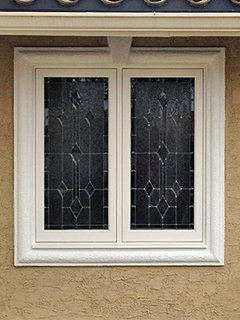
    I understand SylvesterCat's comments, and it's probably true in most cases. But in our case, the design sort of came first. We knew what we wanted to do and then waited until we could afford it. If budget had been driving factor, we would have done our K reno earlier, but on a smaller scale, and still wouldn't have had a functional K. Since my post a couple months ago, our new windows are in. Here're pics from inside & out of K windows. LR windows similar but 8'W. These are 5'W.


  • 10 years ago

    Emily, When you say "prioritize," do you mean "what is most important" or "what comes first in your process?"

    The "process" stuff seem to happen in a non-linear way. I start with a design, get bids from contractors who have good reviews, adjust the design based on the costs and recommendations from the bidding contractors while simultaneously determining which contractor I have the best feeling about (meaning: do they listen to me, care about quality, and are they engaged enough in the project to provide suggestions for improvement). Once the design has been tweaked, I get a "real" bid and we talk about availability and schedule. Generally, schedule is the least of my concerns.

    As for "what is most important," you know that saying: quality, cost, schedule - pick any two. For me, schedule is always the one that drops out.

  • 10 years ago

    Quality and having the job done right.

  • 10 years ago

    Rapport with your designer/builder etc. because if you do not have one, your design, budget, and availability could be compromised.

  • 10 years ago
    Design first to know what I want and then go find a choice that matches within my budget. Having a husband who can do the labor helps us to upgrade as much as possible
  • 10 years ago

    Why isn't environmental sustainability and safety for my family one of the choices?

  • 10 years ago

    I'd say it's a combination of budgeting and planning. Before I go crazy, I need to stop and ask myself: 1. Is this project even feasible? 2. Do I need to scale up or down? (It's usually down) and then 3. How much will this cost, both in terms of money and time? After going through those questions, I like to sleep on it to make sure the project isn't some spur-the-moment, whimsical, random, impulsive idea and it's something I really want. If the project idea falls out of my head after a couple days, it wasn't worth it; if I'm still thinking about it, then it's time to start.

  • 10 years ago
    last modified: 10 years ago

    "Other" ....that the contractor(s) involved are the best in their field in our area. that they have good references and good accountability during the job and a good work ethic. i want to be consulted on each and every change necessary as snags develop. and NO CIGARETTE SMOKING while on our property.

  • 10 years ago

    We have renovated many houses and built a house. My top tips are : plan the project in detail, considering cost, time and design. Be very clear with the builder and stick to the plan. Consider how you will work around the disruption of the renovation/extension period. We currently live in a house that needs renovating everywhere and extending. We are having a large extension across the back of our house and it will put our kitchen out of order for a few months. We plan to use the utility room as a make shift kitchen with a fridge, microwave and portable hob in there. Also we decorated our office and all the bedrooms (including fitting wardrobes) so that the washing can be put away and our paperwork can still be organised. Without clean clothes and the bills being paid, it can really be chaotic. The bedrooms will be our sanctuary among all the mess downstairs too. One more thing, try to get deliveries in between the rush hour as this will help with neighbour relationships.

  • 10 years ago

    its an iterative loop for me. Design first with what I want, then cost. Play the cost against the budget to do cost benefit trade offs. Find the optimum cost benefit ratio then try to work the budget.

  • 10 years ago

    I have several priorities.......will it function? Necessity or nice to have.....Does it fit in or sit like a sore thumb? Can we do it ourselves? Cost of course......also, we are getting up there in age......can it be finished before we croak and still have time to enjoy the efforts? Will it enhance sellability in the future.....bottom line.......how much do we want it.......how much pleasure will be derived from it. Personally, it is always nice to improve.....to create, to enhance.....keeps a person vibrant. My husband and i are always starting new projects.....with the garden....always tweeking, the house....same thing....in our hobbies, i write and draw....my husband carves and has really gotten into art of late....never stagnate. Stay vital.....when you are in your golden years it is so important......i wrote poetry all winter...now i am doing garden projects....my husband just finished two works of art he will show soon:

    always challenge oneself.

  • 10 years ago

    When starting a project, the thing I always like to get down to straight away is procrastinating.

  • 10 years ago

    Most often, I can come up with my own design but if it's not in my budget $$ becomes the most important issue.

  • 10 years ago

    Since we do most of our own work, it's 1. Design; 2. Availability & Cost (when will we have the time and the money to complete the task).

  • 10 years ago

    Cost, design and collaboration with the designer. They all have to work together or the project is a flop. You need to be able to afford the project without straining your finances. Your design needs should be met to the best your budget will allow. You and your designer need to be able to work together ( if you use one) in such a way that you both know what the final outcome will be. Don't be afraid to say this is too much either design or cost .

  • 10 years ago
    First design. At my age I don't think about the budget. I just get what I want. I blame that attitude on my daddy.
  • 10 years ago

    Considering budget and function, it's the project that screams loudest.

  • PRO
    10 years ago
    I would say rapport with the designers is quintessential to any project. Investing in professional services will keep the project within all important parameters.
  • 10 years ago

    Finishing.

  • 10 years ago

    OTHER - I prefer/demand local craftpeople, local materials whenever I can get them.

  • PRO
    10 years ago

    Your budget will likely affect your design and vice versa. Therefore, it's important to keep both in mind and flexible in the early stages.

  • 10 years ago
    time
  • PRO
    10 years ago
    last modified: 10 years ago

    Similar poll (worded differently) - surprisingly different [POLL: What made you hire your contractor? What set them apart?[(https://www.houzz.com/discussions/poll-what-made-you-hire-your-contractor-what-set-them-apart-dsvw-vd~3712993)

  • PRO
    10 years ago

    Another similar poll suggesting Reputation/Reviews are more important than anything else: [POLL: What is the most important factor when hiring a contractor?[(https://www.houzz.com/discussions/poll-what-is-the-most-important-factor-when-hiring-a-contractor-dsvw-vd~3155795)

  • 10 years ago

    All of the above need to be considered. The more informed I am about design, materials and construction the easier it is to figure out budget and look for and interview a contractor. Change orders are the death of a budget. Down to what gauge metal in an exterior door. Type of windows. Floor or counter material etc..

  • 9 years ago

    I have been working on my house for the past year and a half, with someone who I trust, BUT, with each project I have taken on budget is where I start. From there, I research what I want and whether I have to save more money before doing that project or not.

    I have about 5 projects left, but I have put two off, which I can't afford without financing. Those projects might be next year or the year after.

  • 9 years ago

    I voted for "other". My first priority is to find an architect/designer with a full spectrum of experience in the market. That person needs to know both about design AND be able to do it, to the budget at hand.

    From my latest experience, I also love to work with an architect who is willing to do a bit of project management, including leading me to two-three "finalists", in the GC category, who are capable, willing and PROVEN to execute his/her designs, without random changes, cutting corners etc- one who would respect the design I just paid good money for-, and also one who bills in the way I prefer- who also has deep, deep connections into the local sub market for the best who will do it on budget, on time.

    Last trip around, I got it all and more. I was led by the hand, listened to intently, and supported at every turn. And it all started with my architect, although the builder was a life saver, too, in a very hot building market. He never wavered on standing tall with our concept, kept us on budget. Beauty for less, and that means a whole bunch of equity in my hands, in a market where many told me well, you just might have to wait for a few years before you see any equity.

    Bottom line- to make my projects worthwhile, I need pros who can play a great game.

  • 9 years ago

    Because I'm no longer a "spring chicken" I hire out some of what I formerly did myself. All of the list above is important but, you left something out. Make sure you have all materials on hand before the job begins. Once, when doing a studs out kitchen remodel, my entire dining room was devoted to materials. Every box was opened and checked as they were delivered. Every appliance and light fixture was plugged in. By the time I was ready to demo all was on hand...even the dumpster. Then the LR furniture was parceled among the bedrooms so I could "set up" in there. I only had to make TWO runs for things I needed. It was "take out" for 4 1/2 weeks.