Software
Houzz Logo Print
kacey_ong

Did I propagate Jade succulent correctly?

10 years ago

i used these two small containers.

First pot:

I trimmed branches off of the mother succulent plant, trimmed leaves near the bottom of the stem and dipped the ends into Garden Safe rooting hormone. Then I let the ends callus.

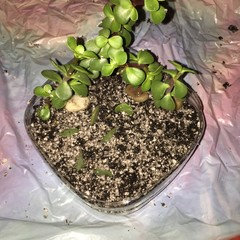
i used a small clear plastic cup. It's not drainable from the bottom but the cup is cracked so when I watered the soil, I saw the water drain out. For this pot I did layers of cactus soil and perlite. Then I watered the pot. Then I planted the jade branches that have been drying out to callus.

second pot:

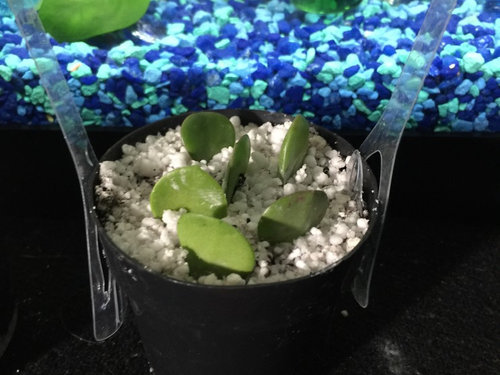
The smaller black one is drainable and has a small layer of small rocks at the bottom and then a mixture of miracle grow cactus soil mixed with miracle grow perlite.

The top layer is just perlite, I watered the container and then planted the small jade leaves that have been dipped in rooting hormone and callused for 24 hours.

Just wondering if I followed all the steps correctly?

Comments (13)

  • 10 years ago
    last modified: 10 years ago

    If you're curious at all, this looks to be "Dwarf Jade" or Portulicaria afra which isn't the same family as normal Jade Crassula ovata. Rina seems to have cleared up all the propagation questions but I just wanted to comment on your nice looking plant.

    Kacey Ong thanked Nicholas C.
  • 10 years ago
    last modified: 10 years ago

    The reason why I watered the container before I added the trimmings is because that was the instructions for planting trimmings on the perlite bag. And for the rooting hormone, I followed the instructions on the bottle.

    But I'll probably replant the trimmings in a different container with better drainage and I'll mix the soil and perlite together.

    As for rocks on the bottom of each pot for drainage, I'm just following my grandmas advice because that is what she taught my mom to do when planting something. When I use rocks at the bottom of the pot, I can see water drain immediately if I water the soil. Just my preference I guess.


  • 10 years ago

    down here P.Afra propagates better from stem cuttings of 4-6"... still takes a fair white 2-3mths to get going from scratch

    single leaves I don't get much success... they're so small IMHO they've got barely enough energy reserves to sprout before rot/pests get them. Also when they rip off the stem often leaves the "good" part behind, so leaves do nothing. I processed a batch of about 60 twigs 4 mths ago giving me a pile of about 500 single leaves... which I just layered on top of the soil as mulch. The twigs rooted after 3 mths but the mulch hasn't shown any signs of life since - stayed green but.

    Kacey Ong thanked Tamiya #1 (AU, SG, MY & ZZZzzzz...)
  • 10 years ago

    In concern of 'Rocks On the Bottom of the pot.'

    Rocks On the Bottom of a pot is commonly avoided by many ( Dismissed as an old wives tail perhaps ) I imagine over time the layers of soils become compacted between the open areas and cavities of the rocks at the bottom of a pot blocking drainage holes and may result in clogging up the works. In turn the clogged pot bottoms would provide for ( have) a higher PWT ( perched watering table) or standing water .

    root tone : As mentioned root tone is nothing I would use for this type of succulent plant


    Single leaf P afra propagating You might find rooting any to all leaves this way to be very daunting and/ or overly time consuming. Very difficult to do chances are better each single leaf wont have enough stored energy in it to start a viable root as each leaf will dry out quicker than the time it takes to root any single leaf. Second thought ( 100 % opinion) the root tone ( if applied) would be a faster way to dry the single leaves out.

    Why you see water draining so quickly: The water you see draining quickly is, after water is used some of it is running down the side walls of the pot and out the drainage holes Or to say natural laws allow for easier travel via the path of least resistance. Same laws also allow for soil to settle and clog rocks on the bottom.

    Kacey Ong thanked nomen_nudum
  • 10 years ago

    Yes, we (at least the oldies) were told to use rocks on the bottom. My mother did that too, and so did I. I think it all started with the idea of putting a piece/shard of broken pot over the drainage hole not to improve drainage but to stop soil washing out. And, sometimes, large rocks are added to the pot to weigh it down. To stop mix from washing out, a piece of mosquito screening (my favored) is very practical to use. Or mesh-type tape used for mudding drywall. There is also 'plastic canvass' available in craft stores that will work well. Or even coffee filter, or a piece of newspaper (these will eventually degrade). But to improve drainage, the soil needs to be grainy. Fine particulates of soil will fill space between the larger ones and eventually, the whole purpose is defeated.

    Preference of the plant (not the preference of the grower) is to have good drainage and good aeration, so the roots could also breathe. And not to be surrounded by wet soil - that happens with very fine soils that take ages to dry out.

    There are many instructions on the containers/packaging that may not be best for the plant. And same with info available on the net, which is, at times, totally incorrect. So, one can't be blamed...

    To grow succulents, it is better to get a potting mix that contains grit (not rocks - grit should be size of similar to aquarium gravel), perlite, turface, scoria, pumice - few of these ingredients mixed together will make a very good mix. There is no need for lots of 'soil'. Quite a few of us don't use any organic component at all.

    Kacey Ong thanked rina_Ontario,Canada 5a
  • 10 years ago

    Hi Kacey, it seems you posted this thread asking if you had done things correctly. However when given certain advice from great growers here, you get slightly defensive with your reasoning. At the end of the day, we are all here to share our experiences with you. If you would prefer to do things the way it already is, it beats the point posing the question to ask if you had done it right.

    My advice is similar to Rina and Nomen and I grow plenty of cuttings, including jades and they all rooted very successfully. I would avoid clear plastic cups, they attract algae growing within your soil due to moisture and light. The last thing you would want baby roots to combat is algae.

    Drainage holes are a must for circulation, if anything breatheable pots like cardboard/terra cotta is going to benefit your cuttings even more.

    Rocks or no rocks in the bottom, that's your choice. I always add a little bit of perlite in the bottom because it wicks perched water much quicker than regular stones. Anyhow, you will still need drainage holes regardless.

    I lay most of my cuttings in very shallow trays, occasionally with a light humidity tray underneath to encourage moisture to entice the roots to grow, but I NEVER water the soil touching the cuttings.

    Light is also important for young plantlets, not too intense, just shaded light is sufficient.

  • 10 years ago

    I'm not sure if it's because it's over text or because we are typing words and not hearing the actual tone, but I'm not getting defense. I'm simply explaining why I did what I did because I was following the instructions on the products bag... The way your acting makes it seem like I'm not allowed to reply to people who comment on my post. I was just updating how I fixed it and how I repotted it.


    Also btw I made holes in all my plastic containers. I do not have or seen a terra cotta pot that is also shallow. So I made my own container and made drainage holes in it.

  • 10 years ago
    last modified: 10 years ago

    I actually just went back and read all the comments from the beginning. I cannot see anywhere where I am defensive. I simply explained why I watered the container and why I used rooting hormone... So I'm just not sure what your talking about. Also I appreciated what everyone had to say. I hear different opinions and different ways that people do the same thing on this site and all over the Internet and I take each person into consideration.

  • 10 years ago
    last modified: 10 years ago

    Kacey

    There is no problem - it is true that it's difficult to 'read' sometimes true meaning on the net. And pls. post your comments and/or questions.

    I have used many similar containers as you, poking holes in it. As long as drainage is good, they will do for quite a while. See-thru ones are not the best because of algae growth as pointed out, but that will not happen overnight (eventually, you may see some green stuff growing). Plastic pots are just fine too (ones the plants come in). I have almost 200 succulents and vast majority is in plastic pots.

    You could also use cache pot - decorative container that your existing one fits into. Problem with those is that ppl forget about water draining out of the pot that stays in decorative/cache pot (these don't have drainage holes). But if one makes sure that it is emptied, there is no problem. Using cache pot would also solve the problem of the see-thru container.

    If you use very gritty mix, watering thoroughly will work great (and better for the plant) since any extra water will drain out. Any water that is in the saucer (or cache pot) should be emptied after about 15-30 min after the watering.

    Couple of 'mantras' to think about: "no roots - no water"

    "when in doubt - don't (water)"

  • 10 years ago

    I'm curious. What exactly does the perlite bag say about layering with soil? Also a coffee filter or a piece of window screen in the bottom of you pot will help keep the soil from washing out. Shallow pots are called bulb pots or azalea pots. They are fairly easy to find online if you know the name.

  • 10 years ago
    last modified: 10 years ago

    Quote : I do not have or seen a terra cotta pot that is also shallow.

    True for most TC pots, Although ( depending on the size of ) an Azalea pot are wider and sometimes shallower than a standard TC.

    'Plant stuff' is more and more making it's way on the shelves here and sure enough we'll will have an over stock of plant supplies early April Mentioning cause you don't need to hurry out there and get new pots per say just something to consider if seen on a passing by shopping trip .

    As in your first pic a standard 2.5 inch - 3 inch terra cotta will work for rotting up and establishing growth.

  • 10 years ago

    Perhaps I read your response a tad too quickly and I apologize for that. Best of luck with your propagation and share your results with us.

Sponsored
Peabody Landscape Group
Average rating: 3.5 out of 5 stars8 Reviews
Franklin County's Reliable Landscape Design & Contracting